
Filter
1277
Text search:
Глобальный
Featured
51
45
Language
Document type
425
206
128
115
102
70
67
52
38
19
17
14
13
10
1
Countries
1270
25
16
16
13
11
10
10
9
9
8
8
7
6
6
5
5
4
4
4
4
4
4
3
3
3
3
3
2
2
2
2
2
2
2
2
2
2
2
2
2
1
1
1
1
1
1
1
1
1
1
1
1
1
1
1
1
1
1
1
1
1
1
1
1
1
1
1
1
1
1
1
1
Authors & Publishers
Publication Years
Category
414
193
84
41
36
20
9
Toolboxes
391
226
148
115
79
67
38
32
22
22
21
18
14
11
10
10
9
4
3
3
2
1

This results report for the biennium 2020–2021 presents the progress towards the triple billion targets, outcomes and outputs, based on the GPW 13 results framework and indicators. It uses structured methodologies, both quantitative and qualitative, for measuring and analysing the achievements and
...
As of December 2018, CEPI has secured more than USD $747million towards its USD $1billion funding target, with financial support provided by the Bill & Melinda Gates Foundation, the Wellcome Trust, the European Commission, and the governments of Australia, Belgium, Canada, Germany, Japan, Norway, an
...
Background:Tracking aid fl ows helps to hold donors accountable and to compare the allocation of resources in relation to health need. With the use of data reported by donors in 2015, we provided estimates of offi cial development assistance and grants from the Bill & Melinda Gates Foundation (coll
...
Die Finanzierung der allgemeinen Gesundheitsversorgung in den wirtschaftlich benachteiligten Ländern
Die weltweite Ungleichheit bei der Verteilung von Einkommen und Vermögen weit jenseits dessen, was sich durch Unterschiede der Belastung oder Verantwortung durch die jeweilige Arbeitstätigkeit begründen ließe, stellt schon für sich genommen eine gewaltige Ungerechtigkeit dar. Sie steht auch in
...

UNAIDS Total Contributions by donor - details of revenue including core, supplemental and XB for 2021
The UK government hosted the Global Vaccine Summit on June 4, 2020 under the patronage of the Rt. Hon. Boris Johnson, Prime Minister of the United Kingdom of Great Britain and Northern Ireland. The meeting was held by videoconference in light of the ongoing COVID-19 pandemic. 2. The Summit brought
...

Background: Foreign aid continues to play an essential role in health sector development in low-resource countries, particularly in terms of providing a vital portion of their health expenditures. However, the relationship between foreign aid allocation and malaria policy formulation and/or implemen
...
There has been no systematic comparison of how the policy response to past infectious disease outbreaks and epidemics was funded. This study aims to collate and analyse funding for the Ebola epidemic and Zika outbreak between 2014 and 2019 in order to understand the shortcomings in funding reporting
...
The present information document supplements the WHO audited financial statements for 2018. It contains information on WHO's voluntary contributions by fund and by contributor in the year 2018.
WHO’s total revenue in 2020 was US$ 4299 million and total expenses were US$ 3561 million, resulting in a surplus of US$ 824 million, which includes finance revenue (e.g. interest and investment income) of US$ 86 million, representing increases of 38% and 15% in revenue and expenses respectively.
...
The Director-General has the honour to transmit to the Seventy-fifth World Health Assembly the report of the seventh meeting of the Working Group on Sustainable Financing, which met in a hybrid format, from 25 to 27 April 2022.
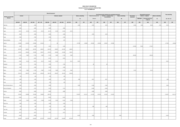
Overview on the assessed contributions for all World Health Organization Member States As at 31 December 2021.
Six months after its launch on 24 April, the Access to COVID-19 Tools (ACT) Accelerator has already delivered concrete results in speeding up the development of new therapeutics, diagnostics, and vaccines. Now mid-way through the scale-up phase, the tools we need to fundamentally change the course o
...
In October 2021, the ACT-Accelerator (ACT-A) published its 12-month Strategic Plan and budget for the period October 2021 to September 2022. Building on the investment needs outlined in that document, the ACT-A Facilitation Council Financial and Resource Mobilization Working Group developed this Fin
...
In 2021 ACT-Accelerator will intensify its drive for equity and scale in the delivery of essential COVID-19 tools, while managing emerging viral risks. To address these major shifts and maintain momentum, ACT-Accelerator has defined four strategic priorities for 2021: Rapidly scale up the delivery o
...
This document is intended for countries, foundations, and civil society. It provides a consolidated overview of the Access to COVID-19 Tools (ACT) Accelerator, its goals, and the investments that partners have calculated are required to carry out its mission. Emergency responses are dynamic by natur
...
The 2022 Aid Transparency Index reveals that more aid organisations than ever before are publishing good quality information and score “very good” or “good” in the global ranking. However, the whole data set could be under threat as the Aid Transparency Index, the only tool driving tangible
...
AidData has developed a set of open source data collection methods to track project-level data on suppliers of official finance who do not participate in global reporting systems. This codebook outlines the version 1.1 set of TUFF procedures that have been developed, tested, refined, and implemented
...
Little is known about foreign aid provided by private donors. This paper contributes to closing this research gap by comparing the allocation of private humanitarian aid to that of official humanitarian aid awarded to 140 recipient countries over the 2000-2016 period. We construct a new database tha
...
Unfortunately, current data available on SDG financing are not sufficient to quantify the distribution of financing for the SDGs.
AidData’s methodology for measuring financing to the SDGs attempts to fill this gap by analyzing development project documentation to estimate project-level contributi
...
