
Filter
1043
Text search:
patient
interview
Featured
91
277
Language
Document type
684
164
92
56
19
14
8
3
2
1
Countries
48
45
38
31
29
27
26
24
23
23
23
20
20
19
17
17
15
14
14
13
12
12
11
11
11
11
10
9
9
9
8
8
8
7
7
6
6
6
6
5
4
4
4
4
4
3
3
3
3
3
3
3
3
3
3
3
2
2
2
2
2
2
2
2
2
2
2
2
2
1
1
1
1
1
1
1
1
1
1
1
1
1
1
1
1
1
1
1
1
1
1
1
1
1
1
1
Authors & Publishers
Publication Years
Category
442
60
48
41
32
24
3
Toolboxes
163
71
63
62
58
39
38
33
27
26
23
19
12
12
11
8
6
5
5
4
4
3
1
DHS Analytical Studies No. 55.
DHS Working Papers No. 110 | Zimbabwe Working Papers No. 11
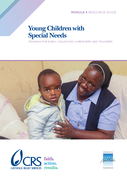
MODULE 5 RESOURCE GUIDE | This guide is part of a series of manuals that focuses on six topics in Early Childhood Development (ECD): different programming approaches, basic concepts, assessments, early childhood environments, children with special needs and child protection, and the health, safety a
...
Families and Societies Working Paper Series Changing families and sustainable societies: Policy contexts and diversity over the life course and across generations
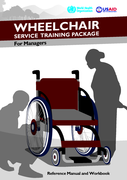
WHO published and launched the third part of the Wheelchair Service Training Package (WSTP) series consisting of two sub-packages: the Wheelchair Service Training Package for Managers (WSTPm) and the Wheelchair Service Training Package for Stakeholders (WSTPs). WHO recognises that in order to develo
...

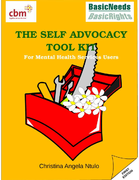
First Edition~ This self advocacy toolkit for persons with mental, neurological and substance abuse disorders, developed by Basic Needs and CBM, is the end product of an action research intervention that tracked and documented processes for Self Advocacy in low resourced communities of Uganda. Th
...
02 - Series on Disability-Inclusive Development
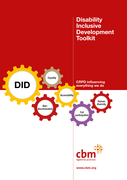
Disability-inclusive development policy and practice is constantly changing and evolving. It is a foundational part of our work in CBM, underpinning all that we do. It requires us to be constantly reflecting, learning and improving our practice. In particular looking to the deeper questions: of the
...
As part of the Mental Health Gap Action Programme, WHO has developed training manuals (Training of trainers and supervisors training manual and Training of health-care providers training manual) to support implementation of the mhGAP Intervention Guide for mental, neurological and substance use (MNS
...
Overview
Learning objectives
• Understand the mental health treatment gap in low-, middle- and high-income countries.
• Understand the principles and aims of the Mental Health Gap Action Programme.
• Acquire an introduction to mhGAP Intervention Guide (mhGAP-IG).
• Learn about mhGAP ToH
...
The aim of this publication is to provide practical guidance for the first responders who will respond during the first few hours to a radiological emergency and for the national officials who would support this early response. This publication provides guidance in the form of action guides, instruc
...
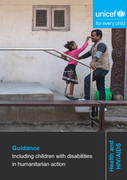
Guidance | Preparedness - Response and early recovery - Recovery and reconstruction
International Development vol. 11. DOI 10.4073/csr.2015.15
The World Health Organization Disability Assessment Schedule (WHODAS 2.0) is a generic assessment instrument developed by WHO to provide a standardized method for measuring health and disability across cultures. It was developed from a comprehensive set of International Classification of Functioning
...
Exposure draft for comment October 2013
Krank und ohne Papiere: Fallsammlung
recommended
Immer wieder hören wir – in der inzwischen jahrzehntelangen
Lobbyarbeit der BAG – aus der Politik die Bitte, das Problem
der medizinischen Unterversorgung von Menschen ohne Papiere
zu „bebildern“: Wer sind diese Menschen? Wo liegen die Probleme in der gesundheitlichen Versorgung? Vor
...
