Filter
729
Text search:
climate
resilient
development
Featured
52
186
Language
Document type
276
261
68
55
45
10
9
4
1
Countries
71
34
16
12
11
11
11
10
10
10
9
9
9
9
9
8
8
7
7
7
6
6
6
6
6
6
6
5
5
5
5
5
4
4
4
4
4
4
4
4
4
4
3
3
3
3
3
3
2
2
2
2
2
2
2
2
2
2
2
1
1
1
1
1
1
1
1
1
1
1
1
1
1
1
1
1
1
1
1
1
1
1
1
1
Authors & Publishers
Publication Years
Category
215
63
43
20
11
5
4
2
Toolboxes
193
63
55
42
35
33
24
21
21
18
18
11
8
7
6
5
5
3
2
2
1
1
1
1
In September 2021, the UN and its partners presented a response plan to mitigate the impact of the water crisis in northern and north-east Syria which requested US$200 million to assist up to 3.4 million of the over five million people estimated to be affected by the water crisis in northern Syria b
...
During the year 2022, COVID-19 continued to be a significant challenge in Eritrea as in many other countries across the world. As COVID-19 devastated communities around the world, WHO worked with the MoH to strengthen the National and Sub-National health systems in order to meet community needs and
...
The overall objective of the framework is to support WHO and Members States in meaningful engagement of people living with NCDs, and mental health and neurological conditions to co-create and enhance related policies, programmes and services. This framework will contribute to advancing understanding
...

Strengthening rehabilitation in health emergency preparedness, response, and resilience: policy brief outlines the evidence for rehabilitation in emergencies and the need for greater preparedness of rehabilitation services. It shows how existing guidelines support the integration of rehabilitation i
...
This report presents findings from research conducted by Economist Impact to assess the health, demographic, social and economic impacts associated with different scenarios for financing the HIV epidemic across 13 selected countries in Sub-Saharan Africa. The sponsorship of UNAIDS towards this repor
...
The backsliding of immunization coverage during the COVID-19 pandemic, combined with delayed catch-up efforts has resulted in a large and growing immunity gap. There is an urgent need to close this gap, and enable millions of missed children to be vaccinated. The Essential Immunization Recovery Plan
...
Health system resilience is not an inevitable byproduct of any investment in health but must be intentionally programmed and developed with necessary input, investment and contextualization. This technical product aims to guide national, subnational, and global health actors to operationalize the co
...
This UNAIDS 2024 report brings together new data and case studies which demonstrate that the decisions and policy choices taken by world leaders this year will decide the fate of millions of lives and whether the world’s deadliest pandemic is overcome.
Continuing a worrying decade-long rising trend, the number of people forced to flee due to persecution, conflict, violence, human rights violations and events seriously disturbing public order climbed to 89.3 million by the end of 2021. This is more than double the 42.7 million people who remained f
...
Guinea’s 450 megawatt Souapiti dam, scheduled to begin operating in September 2020, is the most advanced of several new hydropower projects planned by the government of President Alpha Condé. Guinea’s government believes that hydropower can significantly increase access to electricity in a cou
...
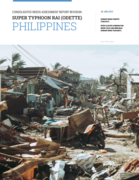
Eight years after Super Typhoon Haiyan, the most destructive storm to ever hit the Philippines, Super Typhoon Rai brought similar torrential rains, violent winds, mudslides, floods and storm surges to central parts of the Philippines, leaving a wide path of destruction and debris in its wake. While
...
Safe drinking-water management must consider drinking-water quality, acceptability and quantity in the context of public health protection. In this manual, the term “safety” encompasses these three elements. Although the principles in this manual can be broadly applied to all types of drinking-w
...
Global Trends: Forced Displacement in 2023
recommended
At the end of 2023, an estimated 117.3 million people worldwide were forcibly displaced due to persecution, conflict, violence, human rights violations and events seriously disturbing the public order. The latest Global Trends report, published in June 2024, provides key statistical trends on forc
...
The key to a lasting world free of all forms of poliovirus lies in rapidly interrupting all remaining endemic transmission of WPV in the endemic areas of Pakistan and Afghanistan. This is the only way to ensure that such strains do not re-emerge globally through international spread. It lays the cor
...
The objective of the 2022 Compendium is to compile and highlight emerging innovative health technologies for low-resource settings. It presents a snapshot of technologies that are solutions to an unmet medical/health technology need or are likely to improve health outcomes and the quality of life. H
...
Almost 30 countries vulnerable to a new Ebola-style Epidemic, jeopardising the future of millions of Children. The report ranks the world’s poorest countries on the state of their public health systems, finding that 28 have weaker defences in place than Liberia where, alongside Sierra Leone and Gu
...
Fills a gap in current guidance on how to implement humanitarian standards in urban situations. In Arabic, English, French and Spanish available