
Filter
1091
Text search:
Mali
Featured
63
272
Language
Document type
603
280
68
49
28
13
13
11
11
7
4
4
Countries
167
155
154
135
105
96
85
84
76
62
58
56
52
49
43
42
39
30
24
20
20
18
18
16
16
15
15
14
14
14
13
13
13
13
11
11
10
10
10
9
8
8
8
8
7
7
7
7
6
6
6
6
6
6
6
6
5
5
5
4
4
4
4
4
4
4
4
4
3
3
3
3
3
3
2
2
2
2
2
2
2
2
2
2
2
2
2
1
1
1
1
1
1
1
1
1
1
1
1
1
1
1
Authors & Publishers
Publication Years
Category
309
91
71
64
58
14
7
1
Toolboxes
207
84
52
52
48
42
39
37
33
33
28
28
20
14
11
11
9
6
6
6
4
2
2
1
The Global Vaccine Action Plan (GVAP) 2011-2020, endorsed by Member States during the May 2012 World Health Assembly, has set ambitious targets to improve access to immunization and tackle vaccine-preventable diseases. This responsibility has been translated into firm commitments in February 2016, t
...
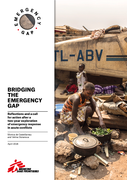
Reflections and a call for action after a two-year exploration of emergency response in acute conflicts
There is general consensus that the humanitarian sector is failing to mount timely and adequate responses in the acute phase of conflict-related emergencies, according to the two-year Emergen ...
There is general consensus that the humanitarian sector is failing to mount timely and adequate responses in the acute phase of conflict-related emergencies, according to the two-year Emergen ...

(African Development Bank policy research document 1)
The report examines financing in the battle against malaria, focusing on the role of foreign aid. It analyzes whether or not a disease such as malaria can be controlled or eliminated in Africa without health aid. It also presents a theoretic ...
The report examines financing in the battle against malaria, focusing on the role of foreign aid. It analyzes whether or not a disease such as malaria can be controlled or eliminated in Africa without health aid. It also presents a theoretic ...

Globally, in low-income countries, the average newborn mortality rate is 27 deaths per 1,000 births, the report says. In high-income countries, that rate is 3 deaths per 1,000. Newborns from the riskiest places to give birth are up to 50 times more likely to die than those from the safest places.
...
...
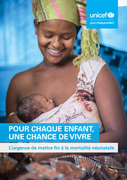
Chaque année, 2,6 millions de bébés meurent avant l’âge d’un mois. Un million d’entre eux rendent leur dernier souffle le jour même de leur naissance. Pourtant, des millions de jeunes vies pourraient être épargnées chaque année si les mères et les bébés avaient accès à des soins
...
ECDC Technical Report
In line with ECDC’s recommendations provided in the ’Risk Assessment of HTLV-1/2 transmission by tissue/cell transplantation’ dated 14 March 2012, this Directive replaces the term ‘incidence’ with ‘prevalence’ in the description of endemic areas of HTLV-1/2 i ...
In line with ECDC’s recommendations provided in the ’Risk Assessment of HTLV-1/2 transmission by tissue/cell transplantation’ dated 14 March 2012, this Directive replaces the term ‘incidence’ with ‘prevalence’ in the description of endemic areas of HTLV-1/2 i ...
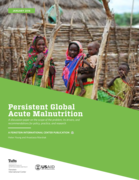
A discussion paper on the scope of the problem, its drivers, and strategies for moving forward for policy, practice, and research
In many protracted emergencies, the prevalence rates of global acute malnutrition (GAM) regularly exceed the emergency threshold of > 15% of children with acute malnutri
...
Vitamin A supplementation (VAS) programs targeted at children aged 6–59 months are implemented in many countries. By improving immune function, vitamin A (VA) reduces mortality associated with measles, diarrhea, and other illnesses. There is currently a debate regarding the relevance of VAS, but a
...
The World Health Organization (WHO) endorses the use of population-based prevalence surveys for estimating the prevalence of trachoma. In general, the prevalence of TF in children aged 1–9 years and the prevalence of TT in adults aged ≥ 15 years are measured at the same time in any district bein
...
The World Health Organization (WHO) endorses the use of population-based prevalence surveys for estimating the prevalence of trachoma. In general, the prevalence of TF in children aged 1–9 years and the prevalence of TT in adults aged ≥ 15 years are measured at the same time in any district bein
...
When setting national drinking-water quality regulations and standards, many countries consider the WHO Guidelines for drinking-water quality (GDWQ). To better understand the extent to which the GDWQ are used and reflected in these standards, this global review summarizes information from 104
...

This toolkit for integrated vector management (IVM) is designed to help national and regional programme managers coordinate across sectors to design and run large IVM programmes.
The toolkit provides the technical detail required to plan, implement, monitor and evaluate an IVM approach. IVM can ...
The toolkit provides the technical detail required to plan, implement, monitor and evaluate an IVM approach. IVM can ...
This toolkit for integrated vector management (IVM) is designed to help national and regional programme managers coordinate across sectors to design and run large IVM programmes.
The toolkit provides the technical detail required to plan, implement, monitor and evaluate an IVM approach. IVM can be
...

This year marked the beginning of the WHO biennium 2016-2017 action plan; this annual report highlights WHO’s key achievements in 2016
It also documents the extraordinary efforts by a broad coalition of government ministries, municipalities, international agencies, community groups, women’s or
...
This study highlights the challenges and areas in need of improvement as perceived by CHWs and beneficiaries, in regards to a nationwide scale-up of CHW interventions in a resource-challenged country. Identifying and understanding these barriers, and addressing them accordingly, particularly within
...

Findings on maternal and child health in Nepal, Mozambique and
Rwanda, and neglected tropical diseases in Cambodia and Sierra Leone | This report synthesises findings from five country case studies from the health dimension of this project, which focus on maternal and child health (MCH) (Mozambique
...
There is no guarantee that a successful pilot program introducing a reproductive health innovation can also be expanded successfully to the national or regional level, because the scaling-up process is complex and multilayered. This article describes how a successful pilot program to integrate the S
...
Through public-private partnerships, the government of Rwanda can make more efficient use of public resources by targeting and meeting the needs of specific populations and thus help ensure family planning services and products will be available to all Rwandans in the long term. This report aims to
...
