
Filter
837
Text search:
Health
and
WASH
Cluster
Featured
Recommendations
98
New Publications
320
Language
Document type
No document type
455
Studies & Reports
115
Guidelines
95
Strategic & Response Plan
64
Manuals
41
Situation Updates
38
Fact sheets
20
Training Material
7
Resource Platforms
1
Infographics
1
Countries / Regions
Myanmar / Burma
36
Nepal
28
South Sudan
28
Syria
28
Bangladesh
28
Sierra Leone
27
Yemen
27
Global
25
Liberia
20
Ethiopia
20
Kenya
20
Malawi
19
Mozambique
19
Congo, Democratic Republic of
18
Ukraine
18
Philippines
16
Nigeria
15
India
15
Uganda
14
Zimbabwe
12
Central African Republic
11
Venezuela
11
Haiti
10
Sudan
10
Madagascar
9
Somalia
8
South Africa
8
Africa
8
Ghana
7
Tanzania
7
Rwanda
7
West and Central Africa
6
Latin America and the Carribbean
6
Guinea
5
Mali
5
Jordan
5
Colombia
5
East and Southern Africa
5
Burkina Faso
4
Cameroon
4
Niger
4
Pakistan
4
Iraq
4
Lebanon
4
Burundi
4
Senegal
3
Zambia
3
Indonesia
3
Papua New Guinea
3
Peru
3
Brazil
3
Lesotho
3
South–East Asia Region
3
Western and Central Europe
3
Palestine
3
Laos
3
Afghanistan
2
Vanuatu
2
Namibia
2
Eswatini/ Swaziland
2
Eastern Europe and Central Asia
2
Asia
2
Iran
2
Guinea-Bissau
1
Côte d’Ivoire / Ivory Coast
1
Morocco
1
Saudi Arabia
1
Togo
1
Turkey
1
Cambodia
1
Malaysia
1
Singapore
1
Argentina
1
Hungary
1
Bolivia
1
Greece
1
Libya
1
Guatemala
1
Sri Lanka
1
Chile
1
Middle East and North Africa
1
Western Pacific Region
1
Poland
1
Albania
1
Russia
1
Romania
1
Moldova
1
Georgia
1
Tunisia
1
Belarus
1
Authors & Publishers
Publication Years
Category
Countries
399
Key Resources
88
Women & Child Health
39
Public Health
29
Clinical Guidelines
28
Capacity Building
15
Pharmacy & Technologies
1
Toolboxes
COVID-19
129
Conflict
86
Natural Hazards
59
Ebola
40
Rapid Response
35
Cholera
32
Disability
29
Planetary Health
27
Refugee
19
HIV
14
Mental Health
13
TB
11
AMR
10
Global Health Education
8
Caregiver
8
Zika
5
Pharmacy
5
NTDs
5
Typhoon
4
Polio
2
Specific Hazards
2
NCDs
2
South Sudan
1
Health Financing Toolbox
1
This brief presents and addresses some of the challenges that prevent internally displaced persons with disabilities and other vulnerable population groups (elderly, injured persons, pregnant women,
...
This document is produced by the Humanitarian Country Team and the United Nations Resident
Coordinator’s Office in Mozambique, with the support of the United Nations Office for the Coordination of
Humanitarian Affairs (OCHA). The projects reflec
...
(15 April 2020, BST 17:00 hours)
Actions Taken from Bangladesh Red Crescent Society (BDRCS):
9292 Number of staff and RCY/ CPP/ Camp/ Community volunteers being mobilized throughout the country.
10116 Set of PPE provided to individuals working
...
The 2019 Humanitarian Response Plan (HRP) sets out the framework within which the humanitarian community will respond to the large-scale humanitarian and protection needs in Syria throughout 2019, on the basis of the prioritization undertaken across
...
The Facilitator's Guide has been piloted in Borno (Nigeria) and in Fafan zone (Somali region, Ethiopia) and improved iteratively after each test.
What does the ROAP have that you won't find in ot
...
What school closures under COVID-19 mean for children and young people in
crisis-affected contexts
Following flood levels of the hydrological stations monitored in Niamey (Niger Republic) and Malan Ville (Benin Republic) reaching the red alert zone, torrential rainfall and ensuing floods affected
...
The Facilitator’s Guide for the basic-needs based Response Options Analysis and Planning (ROAP) is a step-by-step guide comprising tools and templates to carry out a multi-sectoral response analys
...
This revision to the Disaster Management Team’s (DMT) multi-sector response plan for COVID-19 is meant to align the multi-sector plan with the Department of Health’s COVID-19 Emergency Response Plan issued on 24 April 2020.
The official death toll had risen to 493 people as of 29 March, according to the Government.
A new cholera outbreak was reported in Nhamatande; nine Cholera Treatment Centres have been established in Beira and other locations.
More than 140,000 pe
...
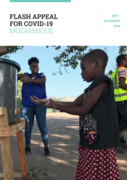
The first case of COVID-19 was reported in Mozambique on 22 March 2020. As of 26 May, Mozambique had 194 confirmed cases of COVID-19, of which 168 were locally transmitted. The country’s capital, Maputo, and the province of Cabo Delgado are curren
...
7 June 2020 Version 1
Women in Myanmar have traditionally been underrepresented in public decision-making processes, a trend which is continuing in structures established to respond to COVID-19. This means that even as women are disproportionately affected by the crisis, they have less say in how t
...
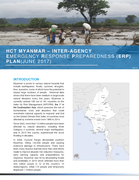
The ERP approach seeks to improve effectiveness by reducing both time and effort, enhancing predictability through establishing predefined roles, responsibilities and coordination mechanisms. The Em
...

Accessed on 31.03.2020
This Guidance Note aims to provide humanitarian child protection practitioners, particularly child protection advisors and program managers, with guidance on how to engage in responses to infectious disease outbreaks to ens
...
Almost two years after the signing of the Political Accord for Peace and Reconciliation (APPR), the Central African population is still hostage to an unstable and unpredictable security environment.
...
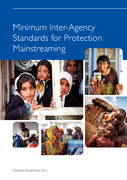
The Minimum Standards for Protection Mainstreaming are a set of international standards designed to provide practical assistance to humanitarian actors to mainstream protection in the assessment, design, implementation, monitoring and evaluation of humanitarian programmes, projects
...
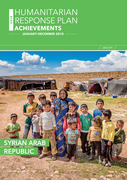
The 2018 Humanitarian Response Plan (HRP) aimed to assist 10.5 million people with direct assistance and 11.2 million people with improved access to basic services. In an effort to meet humanitarian needs, humanitarian partners provided various ty
...

The “United Nations Framework for the immediate socio-economic response to COVID-19: Shared responsibility, global solidarity and urgent action for people in need” calls for protecting jobs, businesses
...
Cholera is a diarrheal disease caused by the bacterium Vibrio cholera. The infection primarily spreads through contaminated water and food. Symptoms include the onset of acute diarrhea and/or vomiti
...
The report offers an overview of the progress the humanitarian sector has made and the obstacles it has faced over the past 10 years. Accountability is no longer just a fashionable term, there is now a shared understanding of what it takes to be acc
...
