
Filter
6178
Text search:
Quality
rights
Featured
560
1513
Language
5987
166
134
94
78
55
37
23
9
9
8
8
8
8
7
6
6
6
5
5
5
4
4
4
4
4
3
3
3
3
3
3
3
3
3
3
3
3
3
3
3
3
2
2
2
2
2
2
2
2
2
2
2
1
1
1
1
1
1
1
1
1
1
1
1
1
Document type
3467
1056
728
372
254
107
104
43
19
10
10
2
1
Countries
287
181
176
121
104
103
102
102
99
97
94
91
82
81
79
78
77
74
72
68
64
54
47
46
45
45
44
43
37
37
37
36
29
28
27
25
24
24
24
23
23
22
22
22
21
20
19
19
18
17
17
16
16
16
14
14
13
12
12
12
12
12
12
11
11
10
10
9
9
8
8
7
7
7
7
6
6
6
5
5
5
5
5
5
5
5
4
4
4
4
4
4
4
4
4
3
3
3
3
3
3
3
3
3
3
3
3
3
2
2
2
2
2
2
2
2
2
2
2
2
2
2
2
2
2
2
2
1
1
1
1
1
1
1
1
1
1
1
1
1
1
1
1
1
Authors & Publishers
1053
430
278
250
219
158
148
141
87
71
48
47
46
32
30
29
28
27
27
26
25
24
24
23
23
22
22
21
21
20
19
19
19
19
17
17
16
16
16
15
15
15
14
14
14
14
14
13
13
13
13
12
12
12
12
12
11
11
11
11
11
11
11
11
11
10
10
10
10
10
10
10
10
9
9
9
9
9
9
9
9
9
9
9
8
8
8
8
8
8
8
8
8
8
8
7
7
7
7
7
7
7
7
7
7
7
7
7
7
7
7
7
7
7
7
7
7
7
6
6
6
6
6
6
6
6
6
6
6
6
6
6
6
6
6
5
5
5
5
5
5
5
5
5
5
5
5
5
5
5
5
5
5
5
5
5
5
5
5
5
5
5
5
5
5
5
5
5
5
5
5
5
5
5
5
5
4
4
4
4
4
4
4
4
4
4
4
4
4
4
4
4
4
4
4
4
4
4
4
4
4
4
4
4
4
4
4
4
4
4
4
4
4
4
4
4
4
4
4
4
4
4
4
4
4
4
4
4
4
4
4
4
4
4
4
4
4
4
3
3
3
3
3
3
3
3
3
3
3
3
3
3
3
3
3
3
3
3
3
3
3
3
3
3
3
3
3
3
3
3
3
3
3
3
3
3
3
3
3
3
3
3
3
3
3
3
3
3
3
3
3
3
3
3
3
3
3
3
3
3
3
3
3
3
3
3
3
3
3
3
3
3
3
3
3
3
3
3
3
3
3
3
3
3
3
3
3
3
3
3
3
3
3
3
3
3
3
3
3
3
3
3
3
3
3
3
3
3
3
3
3
3
3
3
2
2
2
2
2
2
2
2
2
2
2
2
2
2
2
2
2
2
2
2
2
2
2
2
2
2
2
2
2
2
2
2
2
2
2
2
2
2
2
2
2
2
2
2
2
2
2
2
2
2
2
2
2
2
2
2
2
2
2
2
2
2
2
2
2
2
2
2
2
2
2
2
2
2
2
2
2
2
2
2
2
2
2
2
2
2
2
2
2
2
2
2
2
2
2
2
2
2
2
2
2
2
2
2
2
2
2
2
2
2
2
2
2
2
2
2
2
2
2
2
2
2
2
2
2
2
2
2
2
2
2
2
2
2
2
2
2
2
2
2
2
2
2
2
2
2
2
2
2
2
2
2
2
2
2
2
2
2
2
2
2
2
2
2
2
2
2
2
2
2
2
2
2
2
2
2
2
2
2
2
2
2
2
2
2
2
2
2
2
2
2
2
2
2
2
2
2
2
2
2
2
2
2
2
2
2
2
2
2
2
2
2
2
2
2
2
2
2
2
2
2
2
2
2
2
2
2
2
2
2
2
2
2
2
2
2
2
2
2
2
2
2
2
2
2
2
2
2
2
2
2
2
2
2
2
2
2
2
2
2
2
2
2
2
2
2
2
2
2
2
2
2
2
2
2
2
2
2
2
2
2
2
2
2
2
2
2
2
2
2
2
2
2
2
2
2
2
2
2
2
2
2
2
1
1
1
1
1
1
1
1
1
1
1
1
1
1
1
1
1
1
1
1
1
1
1
1
1
1
1
1
1
1
1
1
1
1
1
1
1
1
1
1
1
1
1
1
1
1
1
1
1
1
1
1
1
1
1
1
1
1
1
1
1
1
1
1
1
1
1
1
1
1
1
1
1
1
1
1
1
1
1
1
1
1
1
1
1
1
1
1
1
1
1
1
1
1
1
1
1
1
1
1
1
1
1
1
1
1
1
1
1
1
1
1
1
1
1
1
1
1
1
1
1
1
1
1
1
1
1
1
1
1
1
1
1
1
1
1
1
1
1
1
1
1
1
1
1
1
1
1
1
1
1
1
1
1
1
1
1
1
1
1
1
1
1
1
1
1
1
1
1
1
1
1
1
1
1
1
1
1
1
1
1
1
1
1
1
1
1
1
1
1
1
1
1
1
1
1
1
1
1
1
1
1
1
1
1
1
1
1
1
1
1
1
1
1
1
1
1
1
1
1
1
1
1
1
1
1
1
1
1
1
1
1
1
1
1
1
1
1
1
1
1
1
1
1
1
1
1
1
1
1
1
1
1
1
1
1
1
1
1
1
1
1
1
1
1
1
1
1
1
1
1
1
1
1
1
1
1
1
1
1
1
1
1
1
1
1
1
1
1
1
1
1
1
1
1
1
1
1
1
1
1
1
1
1
1
1
1
1
1
1
1
1
1
1
1
1
1
1
1
1
1
1
1
1
1
1
1
1
1
1
1
1
1
1
1
1
1
1
1
1
1
1
1
1
1
1
1
1
1
1
1
1
1
1
1
1
1
1
1
1
1
1
1
1
1
1
1
1
1
1
1
1
1
1
1
1
1
1
1
1
1
1
1
1
1
1
1
1
1
1
1
1
1
1
1
1
1
1
1
1
1
1
1
1
1
1
1
1
1
1
1
1
1
1
1
1
1
1
1
1
1
1
1
1
1
1
1
1
1
1
1
1
1
1
1
1
1
1
1
1
1
1
1
1
1
1
1
1
1
1
1
1
1
1
1
1
1
1
1
1
1
1
1
1
1
1
1
1
1
1
1
1
1
1
1
1
1
1
1
1
1
1
1
1
1
1
1
1
1
1
1
1
1
1
1
1
1
1
1
1
1
1
1
1
1
1
1
1
1
1
1
1
1
1
1
1
1
1
1
1
1
1
1
1
1
1
1
1
1
1
1
1
1
1
1
1
1
1
1
1
1
1
1
1
1
1
1
1
1
1
1
1
1
1
1
1
1
1
1
1
1
1
1
1
1
1
1
1
1
1
1
1
1
1
1
1
1
1
1
1
1
1
1
1
1
1
1
1
1
1
1
1
1
1
1
1
1
1
1
1
1
1
1
1
1
1
1
1
1
1
1
1
1
1
1
1
1
1
1
1
1
1
1
1
1
1
1
1
1
1
1
1
1
1
1
1
1
1
1
1
1
1
1
1
1
1
1
1
1
1
1
1
1
1
1
1
1
1
1
1
1
1
1
1
1
1
1
1
1
1
1
1
1
1
1
1
1
1
1
1
1
1
1
1
1
1
1
1
1
1
1
1
1
1
1
1
1
1
1
1
1
1
1
1
1
1
1
1
1
1
1
1
1
1
1
1
1
1
1
1
1
1
1
1
1
1
1
1
1
1
1
1
1
1
1
1
1
1
1
1
1
1
1
1
1
1
1
1
1
1
1
1
1
1
1
1
1
1
1
1
1
1
1
1
1
1
1
1
1
1
1
1
1
1
1
1
1
1
1
1
1
1
1
1
1
1
1
1
1
1
1
1
1
1
1
1
1
1
1
1
1
1
1
1
1
1
1
1
1
1
1
1
1
1
1
1
1
1
1
1
1
1
1
1
1
1
1
1
1
1
1
1
1
1
1
1
1
1
1
1
1
1
1
1
1
1
1
1
1
1
1
1
1
1
1
1
1
1
1
1
1
1
1
1
1
1
1
1
1
1
1
1
1
1
1
1
1
1
1
1
1
1
1
1
1
1
1
1
1
1
1
1
1
1
1
1
1
1
1
1
1
1
1
1
1
1
1
1
1
1
1
1
1
1
1
1
1
1
1
1
1
1
1
1
1
1
1
1
1
1
1
1
1
1
1
1
1
1
1
1
1
1
1
1
1
1
1
1
1
1
1
1
1
1
1
1
1
1
1
1
1
1
1
1
1
1
1
1
1
1
1
1
1
1
1
1
1
1
1
1
1
1
1
1
1
1
1
1
1
1
1
1
1
1
1
1
1
1
1
1
1
1
1
1
1
1
1
1
1
1
1
1
1
1
1
1
1
1
1
1
1
1
1
1
1
1
1
1
1
1
1
1
1
1
1
1
1
1
1
1
1
1
1
1
1
1
1
1
1
1
1
1
1
1
1
1
1
1
1
1
1
1
1
1
1
1
1
1
1
1
1
1
1
1
1
1
1
1
1
1
1
1
1
1
1
1
1
1
1
1
1
1
1
1
1
1
1
1
1
1
1
1
1
1
1
1
1
1
1
1
1
1
1
1
1
1
1
1
1
1
1
1
1
1
1
1
1
1
1
1
1
1
1
1
1
1
1
1
1
1
1
1
1
1
1
1
1
1
1
1
1
1
1
1
1
1
1
1
1
1
1
1
1
1
1
1
1
1
1
1
1
1
1
1
1
1
1
1
1
1
1
1
1
1
1
1
1
1
1
1
1
1
1
1
1
1
1
1
1
1
1
1
1
1
1
1
1
1
1
1
1
1
1
1
1
1
1
1
1
1
1
1
1
1
1
1
1
1
1
1
1
1
1
1
1
1
1
1
1
1
1
1
1
1
1
1
1
1
1
1
1
1
1
1
1
1
1
1
1
1
1
1
1
1
1
1
1
1
1
1
1
1
1
1
1
1
1
1
1
1
1
1
1
1
1
1
1
1
1
1
1
1
1
1
1
1
1
1
1
1
1
1
1
1
1
1
1
1
1
1
1
1
1
1
1
1
1
1
1
1
1
1
1
1
1
1
1
1
1
1
1
1
1
1
1
1
1
1
1
1
1
1
1
1
1
1
1
1
1
1
1
1
1
1
1
1
1
1
1
1
1
1
1
1
1
1
1
1
1
1
1
1
1
1
1
1
1
1
1
1
1
1
1
1
1
1
1
1
1
1
1
1
1
1
1
1
1
1
1
1
1
1
1
1
1
1
1
1
1
1
1
1
1
1
1
1
1
1
1
1
1
1
1
1
1
1
1
1
1
1
1
1
1
1
1
1
1
1
1
1
1
1
1
1
1
1
1
1
1
1
1
1
1
1
1
1
1
1
1
1
1
1
1
1
1
1
1
1
1
1
1
1
1
1
1
1
1
1
1
1
1
1
1
1
1
1
1
1
1
1
1
1
1
1
1
1
1
1
1
1
1
1
1
1
1
1
1
1
1
1
1
1
1
1
1
1
1
1
1
1
1
1
1
1
1
1
1
1
1
1
1
1
1
1
1
1
1
1
1
1
1
1
1
1
1
1
1
1
1
1
1
1
1
1
1
1
1
1
1
1
1
1
1
1
1
1
1
1
1
1
1
1
1
1
1
1
1
1
1
1
1
1
1
1
1
1
1
1
1
1
1
1
1
1
1
1
1
1
1
1
1
1
1
1
1
1
1
1
1
1
1
1
1
1
1
1
1
1
1
1
1
1
1
1
1
1
1
1
1
1
1
1
1
1
1
1
1
1
1
1
1
1
1
1
1
1
1
1
1
1
1
1
1
1
1
1
1
1
1
1
1
1
1
1
1
1
1
1
1
1
1
1
1
1
1
1
1
1
1
1
1
1
1
1
1
1
1
1
1
1
1
1
1
1
1
1
1
1
1
1
1
1
1
1
1
1
1
1
1
1
1
1
1
1
1
1
1
1
1
1
1
1
1
1
1
1
1
1
1
1
1
1
1
1
1
1
1
1
1
1
1
1
1
1
1
1
1
1
1
1
1
1
1
1
1
1
1
1
1
1
1
1
1
1
1
1
1
1
1
1
1
1
1
1
1
1
1
1
1
1
1
1
1
1
1
1
1
1
1
1
1
1
1
1
1
1
1
1
1
1
1
1
1
1
1
1
1
1
1
1
1
1
1
1
1
1
1
1
1
1
1
1
1
1
1
1
1
1
1
1
1
1
1
1
1
1
1
1
1
1
1
1
1
1
1
1
1
1
1
1
1
1
1
1
1
1
1
1
1
1
1
1
1
1
1
1
1
1
1
1
1
1
1
1
1
1
1
1
1
1
1
1
1
1
1
1
1
1
1
1
1
1
1
1
1
1
1
1
1
1
1
1
1
1
1
1
1
1
1
1
1
1
1
1
1
1
1
1
1
1
1
1
1
1
1
1
1
1
1
1
1
1
1
1
1
1
1
1
1
1
1
1
1
1
1
1
1
1
1
1
1
1
1
1
1
1
1
1
1
1
1
1
1
1
1
1
1
1
1
1
1
1
1
1
1
1
1
1
1
1
1
1
1
1
1
1
1
1
1
1
1
1
1
1
1
1
1
1
1
1
1
1
1
1
1
1
1
1
1
1
1
1
1
1
1
1
1
1
1
1
1
1
1
1
1
1
1
1
1
1
1
1
1
1
1
1
1
1
1
1
1
1
1
1
1
1
1
1
1
1
1
1
1
1
1
1
1
1
1
1
1
1
1
1
1
1
1
1
1
1
1
1
1
1
1
1
1
1
1
1
1
1
1
1
1
1
1
1
1
1
1
1
1
1
1
1
1
1
1
1
1
1
1
1
1
1
1
1
1
1
1
1
1
1
1
1
1
1
1
1
1
1
1
1
1
1
1
1
1
1
1
1
1
1
1
1
1
1
1
1
1
1
1
1
1
1
1
1
1
1
1
1
1
1
1
1
1
1
1
1
1
1
1
1
1
1
1
1
1
1
1
1
1
1
1
1
1
1
1
1
1
1
1
1
1
1
1
1
1
1
1
1
1
1
1
1
1
1
1
1
1
1
1
1
1
1
1
1
1
1
1
1
1
1
1
1
1
1
1
1
1
1
1
1
1
1
1
1
1
1
1
1
1
1
1
1
1
1
1
1
1
1
1
1
1
1
1
1
1
1
1
1
1
1
1
1
1
1
1
1
1
1
1
1
1
1
1
1
1
1
1
1
1
1
1
1
1
1
1
1
1
1
1
1
1
1
1
1
1
1
1
1
1
1
1
1
1
1
1
1
1
1
1
1
1
1
1
1
1
1
1
1
1
1
1
1
1
1
1
1
1
1
1
1
1
1
1
1
1
1
1
1
1
1
1
1
1
1
1
1
1
1
1
1
1
1
1
1
1
1
1
1
1
1
1
1
1
1
1
1
1
1
1
1
1
1
1
1
1
1
1
1
1
1
1
1
1
1
1
1
1
1
1
1
1
1
1
1
1
1
1
1
1
1
1
1
1
1
1
1
1
1
1
1
1
1
1
1
1
1
1
1
1
1
1
1
1
1
1
1
1
1
1
1
1
1
1
1
1
1
1
1
1
1
1
1
1
1
1
1
1
1
1
1
1
1
1
1
1
1
1
1
1
1
1
1
1
1
1
1
1
1
1
1
1
1
1
1
1
1
1
1
1
1
1
1
1
1
1
1
1
1
1
1
1
1
1
1
1
1
1
1
1
1
1
1
1
1
1
1
1
1
1
1
1
1
1
1
1
1
1
1
1
1
1
1
1
1
1
1
1
1
1
1
1
1
1
1
1
1
1
1
1
1
1
1
1
1
1
1
1
1
1
1
1
1
1
1
1
1
1
1
1
1
1
1
1
1
1
1
1
1
1
1
1
1
1
1
1
1
1
1
1
1
1
1
1
1
1
1
1
1
1
1
1
1
1
1
1
1
1
1
1
1
1
1
1
1
1
1
1
1
1
1
1
1
1
1
1
1
1
1
1
1
1
1
1
1
1
1
1
1
1
1
1
1
1
1
1
1
1
1
1
1
1
1
1
1
1
1
1
1
1
1
1
1
1
1
1
1
1
1
1
1
1
1
1
1
1
1
1
1
1
1
1
1
1
1
1
1
1
1
1
1
1
1
1
1
1
1
1
1
1
1
1
1
1
1
1
1
1
1
1
1
1
1
1
1
1
1
1
1
1
1
1
1
1
1
1
1
1
1
1
1
1
1
1
1
1
1
1
1
1
1
1
1
1
1
1
1
1
1
1
1
1
1
1
1
1
1
1
1
1
1
1
1
1
1
1
1
1
1
1
1
1
1
1
1
1
1
1
1
1
1
1
1
1
1
1
1
1
1
1
1
1
1
1
1
1
1
1
1
1
1
1
1
1
1
1
1
1
1
1
1
1
1
1
1
1
1
1
1
1
1
1
1
1
1
1
1
1
1
1
1
1
1
1
1
1
1
1
1
1
1
1
1
1
1
1
1
1
1
1
1
1
1
1
1
1
1
1
1
1
1
1
1
1
1
1
1
1
1
1
1
1
1
1
1
1
1
1
1
1
1
1
1
1
1
1
1
1
1
1
1
1
1
1
1
1
1
1
1
1
1
1
1
1
1
1
1
1
1
1
1
1
1
1
1
1
1
1
1
1
1
1
1
1
1
1
1
1
1
1
1
1
1
1
1
1
1
1
1
1
1
1
1
1
1
1
1
1
1
1
1
1
1
1
1
1
1
1
1
1
1
1
1
1
1
1
1
1
1
1
1
1
1
1
1
1
1
1
1
1
1
1
1
1
1
1
1
1
1
1
1
1
1
1
1
1
1
1
1
1
1
1
1
1
1
1
1
1
1
1
1
1
1
1
1
1
1
1
1
1
1
1
1
1
1
1
1
1
1
1
1
1
1
1
1
1
1
1
1
1
1
1
1
1
1
1
1
1
1
1
1
1
1
1
1
1
1
1
1
1
1
1
1
1
1
1
1
1
1
1
1
1
1
1
1
1
1
1
1
1
1
1
1
1
1
1
1
1
1
1
1
1
1
1
1
1
1
1
1
1
1
1
1
1
1
1
1
1
1
1
1
1
1
1
1
1
1
1
1
1
1
1
1
1
1
1
1
1
1
1
1
1
1
1
1
1
1
1
1
1
1
1
1
1
1
1
1
1
1
1
1
1
1
1
1
1
1
1
1
1
1
1
1
1
1
1
1
1
1
1
1
1
1
1
1
1
1
1
1
1
1
1
1
1
1
1
1
1
1
1
1
1
1
1
1
1
1
1
1
1
1
1
1
1
1
1
1
1
1
1
1
1
1
1
1
1
1
1
1
1
1
1
1
1
1
1
1
1
1
1
1
1
1
1
1
1
1
1
1
1
1
1
1
1
1
1
1
1
1
1
1
1
1
1
1
1
1
1
1
1
1
1
1
1
1
1
1
1
1
1
1
1
1
1
1
1
1
1
1
1
1
1
1
1
1
1
1
1
1
1
1
1
1
1
1
1
1
1
1
1
1
1
1
1
1
1
1
1
1
1
1
1
1
1
1
1
1
1
1
1
1
1
1
1
1
1
1
1
1
1
1
1
1
1
1
1
1
1
1
1
1
1
1
1
1
1
1
1
1
1
1
1
1
1
1
1
1
1
1
1
1
1
1
1
1
1
1
1
1
1
1
1
1
1
1
1
1
1
1
1
1
1
1
1
1
1
1
1
1
1
1
1
1
1
1
1
1
1
1
1
1
1
1
1
1
1
1
1
1
1
1
1
1
1
1
1
1
1
1
1
1
1
1
1
1
1
1
1
1
1
1
1
1
1
1
1
1
1
1
1
1
1
1
1
1
1
1
1
1
1
1
1
1
1
1
1
1
1
1
1
1
1
1
1
1
1
1
1
1
1
1
1
1
1
1
1
1
1
1
1
1
1
1
1
1
1
1
1
1
1
1
1
1
1
1
1
1
1
1
1
1
1
1
1
1
1
1
1
1
1
1
1
1
1
1
1
1
1
1
1
1
1
1
1
1
1
1
1
1
1
1
1
1
1
1
1
1
1
1
1
1
1
1
1
1
1
1
1
1
1
1
1
1
1
1
1
1
1
1
1
1
1
1
1
1
1
1
1
1
1
1
1
1
1
1
1
1
1
1
1
1
1
1
1
1
1
1
1
1
1
1
1
1
1
1
1
1
1
1
1
1
1
1
1
1
1
1
1
1
1
1
1
1
1
1
1
1
1
1
1
1
1
1
1
1
1
1
1
1
1
1
1
1
1
1
1
1
1
1
1
1
1
1
1
1
1
1
1
1
1
1
1
1
1
1
1
1
1
1
1
1
1
1
1
1
1
1
1
1
1
1
1
1
1
1
1
1
1
1
1
1
1
1
1
1
1
Publication Years
1748
3812
590
25
1
1
1
Category
1925
504
436
392
288
127
81
10
3
3
Toolboxes
572
556
442
412
281
244
209
197
161
150
136
128
126
103
99
90
90
49
38
25
23
20
19
4
2
Building on the 2021 Interim guidance, this second version and update, incorporates the lessons and feedback from the hepatitis pilots that successfully demonstrated the feasibility of measuring hepatitis B and C impact targets to demonstrate elimination, whilst highlighting challenges caused by hig
...
h disease burden in some countries, as well as delays in reaching mortality targets due to the long natural history of disease progression to liver cirrhosis and hepatocellular carcinoma.
The path to elimination provides a framework with 3 levels of achievements for which WHO certification is available. Each stepwise progression from bronze to silver to gold tiers will promote an iterative expansion of prevention, diagnosis and treatment services for viral hepatitis services and strengthen measurement systems to support attainment of the 2030 elimination goals.
This updated version also includes changes, clarifications and new guidance on alternative measurement approaches for country validation of elimination. Through the validation process, WHO and partners continue to provide country support for strengthening health system capacity and patient-centred services that respect and protect the human rights of people living with viral hepatitis and ensures meaningful engagement of communities in the national, regional and global viral hepatitis response.
more
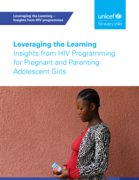
Pregnancy and childbirth during adolescence profoundly affects the lives of millions of girls worldwide, and is a leading cause of maternal mortality and morbidity, and infant and child mortality. Every year, an estimated 21 million girls aged 15–19 years old in low- and middle-income countries be
...
come pregnant, and approximately 12 million give birth.
For many adolescent girls, the ability to control their sexual lives remains limited. Long-standing gender inequalities and discrimination, marginalization, harmful social and gender norms, and denial of rights, compounded by poverty and violence, render them vulnerable to early pregnancy, HIV and other health threats. Lack of age-appropriate sexual and reproductive health and rights (SRHR) information and services create additional barriers to care and support; as a result, adolescent girls who become pregnant are much more likely to go on to have rapid repeated births.
more
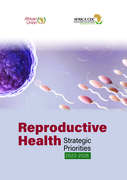
In 2006, the Special Session of African Union Health Ministers adopted the Maputo Plan of Action for implementing the Continental Policy Framework on sexual and reproductive health and rights (SRHR), which expired at the end of 2015. The goal was fo
...
r all stakeholders and partners to join forces and re-double efforts, so that together, the effective implementation of the Continental Policy framework including universal access to sexual and reproductive health by 2015 in all countries in Africa can be achieved. The Revised Maputo Plan of Action (MPoA) 2016 – 2030 was subsequently endorsed by the African Union Heads of State at the 27th AU Summit in July 2016 in Kigali, Rwanda. The plan reinforces the call for universal access to comprehensive sexual and reproductive health services in Africa and lays foundation to the Sustainable Development Goals, particularly Goal 3 and 5, as well as the African Union Agenda 2063.
more
Since the discovery of insulin nearly 100 years ago, advances in diabetes treatments and therapies have transformed the lives of people
with diabetes (PwD), notably reducing the daily burden of its management.
Newer technologies, including those driven by artificial intelligence, have the potentia
...
l to further improve the quality of life of PwD and help
identify and diagnose people at risk of developing Type 2 diabetes and diabetes-related complications early. However, medical and technological advances alone are not enough to fix the diabetes challenge. It is also critical to acknowledge the complexity and the seriousness of diabetes, its impact on the quality of life and well-being of over 32 million PwD in the EU and the financial burden it represents for health systems and society at large.
more
Global Trends: Forced Displacement in 2023
recommended
At the end of 2023, an estimated 117.3 million people worldwide were forcibly displaced due to persecution, conflict, violence, human rights violations and events seriously disturbing the public order. The latest Global Trends report, published in
...
June 2024, provides key statistical trends on forced displacement. It includes the latest official statistics on refugees, asylum-seekers, internally displaced and stateless people, as well as the number of refugees who have returned home
more
Asthma is the most common chronic condition in children worldwide. It affects daytime activities, sleep and school attendance and causes anxiety to parents, families and other carers. The quality of asthma diagnosis and management globally still nee
...
ds substantial improvement. From infancy to the teenage years, there are age-specific challenges, including both underdiagnosis and overdiagnosis with stigma-related barriers to treatment in some cultures and in adolescents. The Paediatric Asthma Project Plan has been initiated to strengthen diagnosis and management of asthma. This encompasses a vision for the next 10–15 years, building on the knowledge and experience from previous educational projects. It will take into account the educational needs of patients, carers and healthcare professionals as well as the accessibility and affordability of medication, particularly in low and middle-income countries where the prevalence of asthma is rising more rapidly. This overview presents a first step for those involved in the diagnosis and management of childhood asthma to strengthen care for children globally.
more
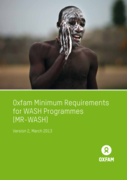
This paper is Oxfam’s essential guide for WASH staff and partners. It describes the processes and standards that Oxfam WASH programmes should follow if they are to be carried out effectively, consistently and in a way which treats affected communities with respect.
All WASH staff members are expe
...
cted to understand and follow these Minimum Requirements. However, it is recognised that in acute emergencies it is preferable to start work on the basics immediately, and build up a comprehensive, quality programme in the following days and weeks. There will, therefore, be some programmes in which certain individual requirements are not appropriate or relevant; in such cases staff members responsible should be able to justify why she/he did things differently, or how the minimum requirement was achieved over time.
more
2nd edition. This new edition provides policy-makers, programme managers and health-service providers with the latest evidence-based guidance on clinical care. It includes information on how to establish and strengthen services, and outlines a human-rights
...
-based approach to laws and policies on safe, comprehensive abortion care. This guidelines is available in English; French, Spanish; Japanese; Russian; Portuguese; Romanian and Ukrainian
more
A broad range of UNHCR’s key priorities overlap with MHPSS issues – for example, child protection and sexual and gender-based violence [SGBV] prevention and response.
Despite all these existent synergies, UNHCR’s current policies and guidelines do not sufficiently link with MHPSS principles.
...
For example, the Community Services section, which is closely aligned to the principles of MHPSS and could be well-positioned to guide the implementation of related programs, has not adopted the MHPSS language or approach.
There are opportunities for UNHCR to engage more strongly and clearly in this field. However, this requires a vision for how the organisation as a whole, and particular sectors within the organisation, will engage within the field of MHPSS activities. For a start, UNHCR can work to improve its understanding and framing of mental health and psychosocial issues, and how these issues fit within its broader mandate.
While the majority of MHPSS activities are delivered by implementing partners, UNHCR staff require familiarity with core principles in the field, such as the Intervention Pyramid contained in the IASC Guidelines, in order to support and monitor quality MHPSS activities.
more
The NGO Safety and Security Training Report provides a narrative of the research findings, an updated curriculum, and guidance tools for training. It is based on extensive research and interviews with members of the NGO community. The report draws upon existing training materials, community consulta
...
tions, survey responses, job descriptions, as well as relevant trends in humanitarian and development practice. It captures good practice and global understanding in regard to quality and consistency of NGO security training.
more
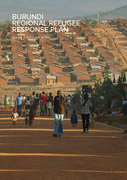
As the Burundi refugee crisis enters its fourth year, some 430,000 Burundian refugees are being hosted across the region by the governments and people of Tanzania, Rwanda, the Democratic Republic of the Congo, and Uganda. Although the spectre of mass violence in Burundi has receded, with the politic
...
al situation still unresolved and the persistence of significant human rights concerns, refugee arrivals are expected to continue in 2018, albeit at lower levels than in previous years.
more
Vol 5 No 27 | ISSN 2039-2117 (online) | ISSN 2039-9340 (print) | The rate of sexual victimization of mentally retarded children is alarming and it goes unnoticed because the perpetrators could be parents, step- parents, relatives, well-respected individuals by family members, neighbours and educator
...
s. Drawing from labelling theory that the mentally retarded have low IQ, majority of perpetrators tend not to get arrested because of lack of evidence. Research indicates that educators struggle to identify the psychological, behavioural and physical symptoms of sexual abuse owing to their limited training. Having employed systematic review as methodology, this research study found that mentally retarded children are prone to HIV/AIDS, PTSD and feelings of helplessness owing to uninvolvement of parents, dysfunctional communities, poverty and their inability to differentiate between abuse and affection. Based on the findings, the recommendations are that: (1) extensive training for professionals, families and community members be executed to protect children with intellectual disability. Furthermore, the rights of the mentally retarded children must be respected in the court of law when reporting sexual abuse.
more

Commissioned by Plan International the report draws on data from research conducted in Bangladesh in April 2018. It explores how adolescent girls within two age brackets (10-14 and 15-19) understand the unique impact the crisis has upon them, and how they have responded to the challenges they face.
... Despite the numbers of adolescent girls affected so profoundly by the ongoing Rohingya crisis, and of course, by many crises around the world, it is rare that either their own communities or the humanitarian sector at large pay much attention to them. This research is an attempt to rectify that: to acknowledge that girls and young women do have rights and that their ideas are worth listening to and acting upon.
Among the many learnings, we discovered that girls feel isolated. They have settled among strangers, and parents worry about their safety, keeping them even more trapped inside their new, makeshift homes.
75% of girls interviewed said they have no ability to make decisions about their own lives. more
... Despite the numbers of adolescent girls affected so profoundly by the ongoing Rohingya crisis, and of course, by many crises around the world, it is rare that either their own communities or the humanitarian sector at large pay much attention to them. This research is an attempt to rectify that: to acknowledge that girls and young women do have rights and that their ideas are worth listening to and acting upon.
Among the many learnings, we discovered that girls feel isolated. They have settled among strangers, and parents worry about their safety, keeping them even more trapped inside their new, makeshift homes.
75% of girls interviewed said they have no ability to make decisions about their own lives. more

The Newborn Situational Analysis reports of 2009 and 2011, as well as the “Bottleneck analysis on neonatal health” of 2013, culminated in the Nigeria launch of “Call to action on Newborn health” at the first National Newborn Health Conference in 2014. This call to action provided the framewo
...
rk for the development of the Nigeria Every Newborn Action
Plan (NiENAP). The NiENAP lays out a vision to end preventable stillbirths and newborn deaths by accelerating progress and scaling up evidence- based high-impact and cost effective interventions. The plan is guided by the principles of country-leadership, integration, accountability, equity, human rights, innovation and research. This blue print outlines our commitment as government and stakeholders to repositioning newborn health as we implement approaches that impact on the lives of newborns for improved health outcome.
more

The role of an essential health benefit in health systems in east and southern Africa: Learning from regional research
R. Loewenson, M. Mamdani and others
Regional Network for Equity in Health in east and southern Africa (EQUINET)
(2018)
C1
Regional Network for Equity in Health in east and southern Africa (EQUINET): Disussion Paper 113
This report synthesises the learning across the full programme of work. It presents the methods used, the context and policy motivations for developing EHBs; how they are being defined, costed, di ... sseminated and used in health systems, including for service provision and quality, resourcing and purchasing services and monitoring and accountability on service delivery and performance, and for learning, useful practice and challenges faced. more
This report synthesises the learning across the full programme of work. It presents the methods used, the context and policy motivations for developing EHBs; how they are being defined, costed, di ... sseminated and used in health systems, including for service provision and quality, resourcing and purchasing services and monitoring and accountability on service delivery and performance, and for learning, useful practice and challenges faced. more
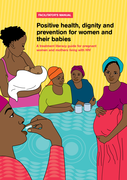
A treatment literacy guide for pregnant women and mothers living with HIV
Positive Health, Dignity and Prevention for Women and their Babies is intended for use by networks of women living with HIV, women’s groups, peer educators and others wishing to help guide women living with HIV t ... hrough the decisions they will need to take before, during and after their pregnancy. It is not intended as a substitute for going to a health facility and seeking information from a healthcare worker.
The facilitator’s manual and flipchart are intended to be used by leaders of support groups, peer educators or lay counsellors to facilitate small groups or community sessions with women living with HIV. Together, they provide accurate and comprehensive information to enable pregnant women and mothers living with HIV to know their rights and make informed decisions about their health, and the health of their baby. more
Positive Health, Dignity and Prevention for Women and their Babies is intended for use by networks of women living with HIV, women’s groups, peer educators and others wishing to help guide women living with HIV t ... hrough the decisions they will need to take before, during and after their pregnancy. It is not intended as a substitute for going to a health facility and seeking information from a healthcare worker.
The facilitator’s manual and flipchart are intended to be used by leaders of support groups, peer educators or lay counsellors to facilitate small groups or community sessions with women living with HIV. Together, they provide accurate and comprehensive information to enable pregnant women and mothers living with HIV to know their rights and make informed decisions about their health, and the health of their baby. more

USAID/KENYA Evaluation Services and Program Support (ESPS)
The United States Agency for International Development (USAID) has a solid track record of supporting health and development initiatives in Kenya. AIDS, Population, and Health Integrated Assistance (APHIA) is the agency’s flagship hea ... lth initiative in the country. APHIA is currently in its third iteration, APHIAPlus, which began in January 2011 and is slated to end in December 2015. APHIAPlus was designed to contribute to Result 3 (“Increased use of quality health services, products, and information”) and Result 4 (“Social determinants of health”) of USAID/Kenya’s implementation framework. The main technical areas of focus are HIV/AIDS; malaria; family planning (FP); tuberculosis (TB); maternal, newborn, and child health (MNCH); and water, sanitation, and hygiene (WASH). more
The United States Agency for International Development (USAID) has a solid track record of supporting health and development initiatives in Kenya. AIDS, Population, and Health Integrated Assistance (APHIA) is the agency’s flagship hea ... lth initiative in the country. APHIA is currently in its third iteration, APHIAPlus, which began in January 2011 and is slated to end in December 2015. APHIAPlus was designed to contribute to Result 3 (“Increased use of quality health services, products, and information”) and Result 4 (“Social determinants of health”) of USAID/Kenya’s implementation framework. The main technical areas of focus are HIV/AIDS; malaria; family planning (FP); tuberculosis (TB); maternal, newborn, and child health (MNCH); and water, sanitation, and hygiene (WASH). more

Women and Health Initiative Working Paper No. 1. Women and Health Initiative
Improving maternal health in the context of the sub-Saharan African HIV epidemic requires greater understanding of the relationships between HIV disease and maternal morbidity and mortality, integrated and effective resp ... onses by the health system, and a social context which promotes quality care and encourages use of MCH and HIV services. Advancing the proposed research agenda will make an invaluable contribution by generating needed evidence for policy and practice that improves the maternal health of women who are living with HIV, as well as those who are not. Bringing together maternal health and HIV researchers, policy-makers and program implementers to reduce HIV-related maternal morbidity and mortality and improve the HIV response for women represents an opportunity and a challenge. more
Improving maternal health in the context of the sub-Saharan African HIV epidemic requires greater understanding of the relationships between HIV disease and maternal morbidity and mortality, integrated and effective resp ... onses by the health system, and a social context which promotes quality care and encourages use of MCH and HIV services. Advancing the proposed research agenda will make an invaluable contribution by generating needed evidence for policy and practice that improves the maternal health of women who are living with HIV, as well as those who are not. Bringing together maternal health and HIV researchers, policy-makers and program implementers to reduce HIV-related maternal morbidity and mortality and improve the HIV response for women represents an opportunity and a challenge. more

The National Strategic Plan is based on the following guiding principles:
1) Life-course approach: adolescence is a key decade in the course of life that influences the health outcomes later in life.
2) Comprehensive approach: It recognizes the cross cutting health and development needs o ... f young people such as intentional and unintentional injuries and violence, SRH, HIV/AIDS, mental health, substance use, violence, substance use and substance use disorders, infectious diseases and common conditions.
3) Equity and rights-based approach: focusing on equitable access to services to all adolescents including vulnerable groups and the recognizing the need to move from aspirations to obligations in fulflling young people rights for the highest attainable standard of health.
4) Multisectoral approach: recognizing cognizant of the fact that holistic development of young people requires multisectoral approach involving education, social welfare. more
1) Life-course approach: adolescence is a key decade in the course of life that influences the health outcomes later in life.
2) Comprehensive approach: It recognizes the cross cutting health and development needs o ... f young people such as intentional and unintentional injuries and violence, SRH, HIV/AIDS, mental health, substance use, violence, substance use and substance use disorders, infectious diseases and common conditions.
3) Equity and rights-based approach: focusing on equitable access to services to all adolescents including vulnerable groups and the recognizing the need to move from aspirations to obligations in fulflling young people rights for the highest attainable standard of health.
4) Multisectoral approach: recognizing cognizant of the fact that holistic development of young people requires multisectoral approach involving education, social welfare. more
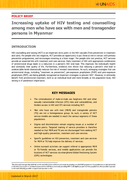
Policy Brief, Updated in March 2017
Key messages
• The criminalisation of male-to-male sex heightens HIV and other sexually transmissible infection (STI) risks and vulnerabilities, and hinders access to HIV and STI services including HCT.
• Men who have sex with men (MSM) and tran ... sgender persons (TG) are not a homogeneous group. As such, a variety of HCT service models are needed to reach the various segments of these populations.
• Stigma and discrimination remain ongoing issues at a number of service points. Targeted training of service providers is therefore needed so that MSM and TG are not discouraged from seeking HCT and high-quality prevention, treatment and care services.
• Specific guidelines on HIV prevention, treatment and care services for MSM or TG help improve the delivery of services. more
Key messages
• The criminalisation of male-to-male sex heightens HIV and other sexually transmissible infection (STI) risks and vulnerabilities, and hinders access to HIV and STI services including HCT.
• Men who have sex with men (MSM) and tran ... sgender persons (TG) are not a homogeneous group. As such, a variety of HCT service models are needed to reach the various segments of these populations.
• Stigma and discrimination remain ongoing issues at a number of service points. Targeted training of service providers is therefore needed so that MSM and TG are not discouraged from seeking HCT and high-quality prevention, treatment and care services.
• Specific guidelines on HIV prevention, treatment and care services for MSM or TG help improve the delivery of services. more
