
Filter
684
Text search:
Miller,
C.
Featured
Recommendations
52
New Publications
106
Language
Document type
No document type
398
Studies & Reports
133
Guidelines
84
Manuals
40
Training Material
9
Strategic & Response Plan
9
Situation Updates
5
Fact sheets
5
Resource Platforms
1
Countries / Regions
India
15
Russia
15
Global
15
South Africa
14
Ukraine
14
Kenya
13
Eastern Europe
12
Latin America and the Carribbean
9
Africa
9
Uganda
8
Zambia
8
Malawi
8
Western and Central Europe
8
Sierra Leone
7
Brazil
7
Zimbabwe
6
Indonesia
6
Mozambique
6
Colombia
6
Liberia
5
Germany
5
Rwanda
5
Asia
5
Nigeria
4
Philippines
4
Tanzania
4
Angola
4
Burkina Faso
3
Senegal
3
USA
3
Ethiopia
3
Ghana
3
Nepal
3
South Sudan
3
China
3
Myanmar / Burma
3
Guinea
2
Congo, Democratic Republic of
2
Guinea-Bissau
2
Cameroon
2
Syria
2
Cambodia
2
Benin
2
Argentina
2
Eswatini/ Swaziland
2
Chile
2
West and Central Africa
2
Eastern Europe and Central Asia
2
Paraguay
2
Southern Africa
2
Spain
2
Mali
1
Haiti
1
Jordan
1
Afghanistan
1
Lebanon
1
Egypt
1
Thailand
1
Bangladesh
1
Singapore
1
Sudan
1
Central African Republic
1
Namibia
1
Burundi
1
Honduras
1
Botswana
1
El Salvador
1
Bolivia
1
Mexico
1
Sri Lanka
1
Yemen
1
Middle East and North Africa
1
South–East Asia Region
1
Venezuela
1
Albania
1
Canada
1
Tajikistan
1
Romania
1
Vietnam
1
Portugal
1
Authors & Publishers
Publication Years
Category
Countries
144
Clinical Guidelines
86
Public Health
40
Women & Child Health
33
Key Resources
17
Capacity Building
7
Pharmacy & Technologies
5
Toolboxes
Mental Health
118
HIV
69
TB
60
COVID-19
45
Planetary Health
30
Disability
29
Caregiver
25
NCDs
24
Ebola
20
AMR
19
Rapid Response
15
NTDs
14
Conflict
12
Global Health Education
9
Pharmacy
9
Natural Hazards
8
Refugee
7
Social Ethics
7
Zika
5
Specific Hazards
4
Cholera
3
Health Financing Toolbox
3
Polio
1
Canadian Journal of Microbiology 25 June 2021 https://doi.org/10.1139/cjm-2020-0572
This document, Programme and curriculum development guide, presents a systematic approach to developing programmes and curricula for implementation of the family planning (FP) and comprehensive abortion care (CAC) competencies,and the theory behind the approach. Specifically, the aim is for effectiv
...
Although Shiga toxin-producing Escherichia coli (STEC) have been isolated from a variety of food production animals, they are most commonly associated with ruminants from which we derive meat and milk. Because of the widespread and diverse nature of ruminant-derived food production, coupled with the
...
This manual provides a framework for morbidity management and disability prevention of patients affected by NIDs and gives specific guidance for the proper care of patients suffering from chronic conditions caused by lymphatic filariasis, leprosy, trachoma, and Chagas disease. It is intended to be u
...

A qualitative assessment of knowledge gaps about female genital schistosomiasis among communities living in Schistosoma haematobium endemic districts of Zanzibar and Northwestern Tanzania.
PloS Neglected Tropical Diseases September 30, 2021 https://doi.org/10.1371/journal.pntd.0009789
Schistosoma
...

Epidemiology
Chagas disease (American trypanosomiasis) is caused by the protozoan parasite Trypanosoma cruzi, and transmitted to humans by infected triatomine bugs, and less commonly by transfusion, organ transplant, from mother to infant, and in rare instances, by ingestion of contaminated food or
...

Chagas disease (American trypanosomiasis) is caused by the protozoan parasite Trypanosoma cruzi, and transmitted to humans by infected triatomine bugs, and less commonly by transfusion, organ transplant, from mother to infant, and in rare instances, by ingestion of contaminated food or drink.1-4 The
...
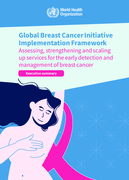
Breast cancer is the most common cancer worldwide and the leading cause of cancer deaths among women, disproportionately affecting low- and middle-income countries. The Global Breast Cancer Initiative strives to reduce breast cancer mortality by 2.5 percent per year, which over a 20-year period can
...
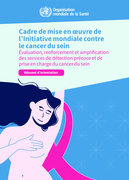
Le cancer du sein est le cancer le plus courant dans le monde et la première cause de mortalité imputable cette maladie chez les femmes. Il touche de façon disproportionnée les pays à revenu faible et intermédiaire. L’Initiative mondiale contre le cancer du sein met tout en œuvre pour faire
...
El objetivo de este conjunto de herramientas técnicas básicas es delinear una trayectoria para lograr mejoras acumulativas y sostenibles adaptadas a las necesidades específicas de cada país a partir de tres estrategias y objetivos clave: la promoción de la salud para una detección precoz; el d
...
Female Genital Schistosomiasis (FGS) is a gynaecological disease caused by Schistosoma haematobium, a parasitic worm that is acquired by skin contact with freshwater contaminated by schistosome cerceriae. Communities in which the infection is most endemic have limited access to clean water and healt
...
Este manual se ha elaborado en el marco de la Iniciativa Global de la Organización Mundial de la Salud (OMS) para el Cáncer Infantil, CureAll Americas, con el propósito de mejorar la situación de los niños, niñas y adolescentes con cáncer en todo el mundo, para que puedan tener las mejores po
...
Snakebite envenoming affects millions of people worldwide annually and is a significant source of mortality. Preventing and treating the problem is complex and requires collaboration among the fields of public health, medicine, ecology, and laboratory science. After being removed from the category A
...
Hand hygiene is vital for safe health care delivery, yet practices at the point of care remain suboptimal worldwide. A comprehensive research agenda is therefore necessary to improve our understanding of factors influencing hand hygiene behaviour and to strengthen appropriate interventions. This age
...

Adolescence, defined as the period between 10 and 19 years of age, is a developmental stage during which many psychosocial and mental health challenges emerge. There is a well-established link between mental health and HIV outcomes. Adolescents and young adults living with HIV typically have additio
...

The standards define 10 key competencies for health and care workers to support self-care in their clinical practice as well as the specific, measurable behaviours that demonstrate those competencies, focusing on people-centredness; decision-making; effective communication; collaboration; evidence-i
...
Diets are changing everywhere, and the burden of disease associated with unhealthy diets is a worldwide concern. Measurement and monitoring of diets across countries and population groups is critical. However, there are no harmonized metrics for tracking how the healthfulness of diets around the wor
...
The waves of yellow fever transmission in the Region of the Americas in 2016–2018 involved the largest number of human and epizootic cases to be reported in several decades. Yellow fever is a serious viral hemorrhagic disease that poses a challenge for health professionals. It requires early recog
...
Las olas de transmisión de la fiebre amarilla ocurridas en la Región de las Américas entre el 2016 y el 2018 causaron el mayor número de casos humanos y epizoóticos registrados en varios decenios. La fiebre amarilla es una enfermedad hemorrágica viral grave que representa un desafío para el p
...
The environment in which young people live, learn and play significantly affects their decisions about whether to consume alcohol. Environmental factors are the main risk factors driving alcohol consumption and related harm among young people. Environments that normalize alcohol consumption – term
...
