
Filter
1983
Featured
164
469
Language
Document type
775
497
303
135
134
42
37
36
13
5
5
1
Countries
122
79
60
50
49
49
49
45
45
44
40
35
34
32
31
29
29
27
26
23
22
22
20
20
19
19
18
18
18
17
16
14
14
13
13
12
12
12
11
11
10
10
10
10
10
9
9
9
8
8
8
8
8
7
7
7
7
7
6
5
5
4
4
4
4
4
4
4
3
3
3
3
3
3
3
3
3
3
3
3
2
2
2
2
2
2
2
2
2
2
2
2
2
1
1
1
1
1
1
1
1
1
1
1
1
1
1
1
1
1
1
1
1
1
1
1
Authors & Publishers
Publication Years
Category
894
136
126
122
51
29
10
2
1
1
Toolboxes
322
161
133
93
78
74
71
57
55
41
38
33
21
21
16
15
14
9
7
7
5
2
2
Education is UNESCO’s top priority because
it is a basic human right and the foundation
on which to build peace and drive sustainable
development. UNESCO is the United Nations’
specialized agency for education and the
Education Sector provides global and
regional leadership in education, s
...
This guidance note developed by UNICEF explains how the WASH sector can implement infection prevention and control measures in households and community settings. It focuses on reducing the exposure to the disease in vulnerable community settings and public spaces, and the transmission of the disease
...
This note provides information and practical guidance to support gender-based violence (GBV) practitioners to integrate attention to disability into GBV prevention, risk mitigation and response efforts during the COVID-19 pandemic. This document complements other resources relating to GBV and COVID-
...
School health programmes are the most cost-effective way to influence health behaviours in young people. The purpose of this two-part handbook is to support schools as they seek to implement interventions in order to reduce the main modifiable risk behaviours for noncommunicable disea
...
The “United Nations Framework for the immediate socio-economic response to COVID-19: Shared responsibility, global solidarity and urgent action for people in need” calls for protecting jobs, businesses and livelihoods to set in motion a safe recovery of societies and economies as soon as possibl
...
This technical brief was developed by the UNFPA Global Ageing Network to complement the UN Department of Economic and Social Affairs' (UN DESA) Issue Brief: Older Persons and COVID-19, which emphasized the humanitarian imperative of addressing older persons' specific needs within preparedness and re
...
COVID-19! How Can I Protect Myself and Others?
recommended
This curriculum will help you, and your community, understand the science of the virus that causes COVID-19 and other viruses like it. It will help you to figure out how this virus is impacting or affecting you or may impact you in the future. It will help you to understand the actions that you can
...
El plan de estudios le ayudará a usted, y a su comunidad, a entender la ciencia del virus que causa el COVID-19 y otros virus similares. Le ayudará a descubrir cómo este virus le afecta o puede afectarle en el futuro. Le ayudará a comprender las medidas que puede tomar para mantenerse a salvo y
...
While the full effects of COVID-19 remain unknown, the pandemic continues to profoundly impact regional migration and mobility dynamics, with deep health, social and economic consequences for the most vulnerable, including migrants, displaced populations and their host communities, and returnees.
The focus of the current quarterly edition of Eurohealth (from the European Observatory on Health Systems and Policies) is Antimicrobial Resistance (AMR) and contains the following articles:
• Strengthening implementation of AMR national action plans
• Fostering clinical developmen
...
This guide contains recommendations for health and safety practices and approaches to COVID-19 prevention, based on materials developed by many organisations.
The United Nations Network on Migration is committed to supporting all partners in pursuit of the implementation of the Global Compact for Safe, Orderly and Regular Migration, recognizing that this cooperative framework provides an invaluable tool for ensuring inclusive, collective responses to COVI
...
This paper is an initial compilation of the promising practices on risk communication and community engagement that have developed in Europe during the COVID pandemic, in complementarity to the UNHCR’s Practical Recommendations and Good Practice to Address Protection Concerns in the Context of the
...
This Interim Guidance outlines how key public health and social measures needed to reduce the risk of COVID-19 spread and the impact of the disease can be adapted for use in low capacity and humanitarian settings. The recommendations outlined here need to be adjusted to the scale of transmission, co
...
Recognizing the extent to which the COVID-19 outbreaks affects women and men differently is hugely important. Some preliminary data suggested that more men than women are dying, potentially due to sex-based immunological differences, higher rates of cardiovascular disease for men and lifestyle choic
...
ACT Alliance appeal: Global Response to the COVID-19 Pandemic – ACT201 - Sub-Appeal - ACT 201-BGD -
How to respond to Covid19 pandemic in West and Central Africa
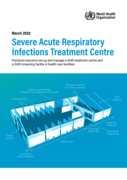
Severe acute respiratory infections treatment centre: practical manual to set up and manage a SARI treatment centre and a SARI screening facility in health care facilities

This document provides guidance to Member States in the WHO European Region that wish to conduct behavioural insights studies related to COVID-19. Studies can be used to monitor public knowledge, risk perceptions, behaviours and trust with the overall aim to inform national COVID-19 outbreak respons
...
