
Filter
3325
Filtered Results: 3325
Text search:
Department
of
Health,
South
Africa
Featured
Recommendations
257
New Publications
756
Language
Document type
No document type
1895
Studies & Reports
694
Guidelines
360
Manuals
158
Strategic & Response Plan
89
Training Material
53
Fact sheets
34
Situation Updates
20
Resource Platforms
10
Infographics
8
Brochures
3
App
1
Countries / Regions
South Africa
299
Global
165
Kenya
92
Nigeria
84
Africa
79
Uganda
67
Ethiopia
63
Malawi
60
Liberia
52
India
50
Zambia
47
Sierra Leone
46
Ghana
43
Tanzania
43
Lesotho
38
Rwanda
35
South Sudan
33
Congo, Democratic Republic of
31
Zimbabwe
30
Namibia
26
Mozambique
25
East and Southern Africa
24
Latin America and the Carribbean
24
Western and Central Europe
24
Nepal
23
Botswana
23
Bangladesh
21
Myanmar / Burma
21
West and Central Africa
21
Senegal
20
Syria
20
Asia
19
Middle East and North Africa
17
Guinea
16
Cameroon
16
Yemen
16
South–East Asia Region
16
Eswatini/ Swaziland
14
Ukraine
13
Colombia
12
Eastern Europe
12
Russia
12
Pakistan
11
Burkina Faso
10
Cambodia
10
Haiti
9
Philippines
9
Central African Republic
9
Brazil
9
Madagascar
9
Somalia
8
Afghanistan
8
China
8
Sudan
8
Venezuela
7
Southern Africa
7
Indonesia
6
Benin
6
Angola
6
Vietnam
6
Thailand
5
Mali
4
Iraq
4
Jordan
4
Germany
4
Lebanon
4
Sri Lanka
4
Albania
4
USA
3
Togo
3
Chad
3
Peru
3
Eastern Europe and Central Asia
3
Côte d’Ivoire / Ivory Coast
2
Turkey
2
Gambia
2
Papua New Guinea
2
Burundi
2
Libya
2
Western Pacific Region
2
Palestine
2
Laos
2
Canada
2
Tajikistan
2
Iran
2
Georgia
2
North America
2
Japan
2
United Kingdom
2
Portugal
2
Spain
2
Guinea-Bissau
1
Morocco
1
Saudi Arabia
1
Niger
1
Egypt
1
Malaysia
1
North Macedonia
1
Serbia
1
Ecuador
1
Bolivia
1
Greece
1
Mexico
1
Italy
1
Djibouti
1
Armenia
1
Timor Leste/ East Timor
1
Qatar
1
Estonia
1
Moldova
1
Gabon
1
Turkmenistan
1
Belgium
1
France
1
Mauritius
1
Tunisia
1
South Korea
1
Belarus
1
Israel
1
Authors & Publishers
Publication Years
Category
Countries
1115
Clinical Guidelines
285
Public Health
204
Women & Child Health
203
Key Resources
131
Capacity Building
60
Pharmacy & Technologies
28
Toolboxes
HIV
370
Mental Health
275
COVID-19
218
TB
217
Disability
170
Planetary Health
149
AMR
99
Rapid Response
98
NTDs
87
Caregiver
86
Ebola
83
Global Health Education
83
NCDs
69
Refugee
58
Pharmacy
57
Conflict
54
Health Financing Toolbox
50
Natural Hazards
31
Zika
19
Cholera
18
Polio
13
Specific Hazards
11
Social Ethics
10
Typhoon
2
South Sudan
1
Donor financing to low- and middle-income countries for reproductive, maternal, newborn, and child health increased substantially from 2008 to 2013. However, increased spending by donors might not improve outcomes, if funds are delivered in ways tha...
The Food and Agriculture Organization of the United Nations has launched a new Compendium of forgotten foods in Africa which is a first-...-its-kind comprehensive collection of 100 African forgotten food crops.
Also referred to as neglected, underutilized or orphan crops, these species offer valuable benefits, including nutrition and diet diversification, while supporting resilient, climate-smart agriculture but they are at risk of being lost as foods such as maize, rice and wheat dominate African diets.
The compendium list includes details on each crop's botanical classification, agroecological suitability, agronomic requirements, traditional and medicinal uses, value-added prospects and nutritional content. Among the entries are: African locust beans, African nightshade, baobab, Bambara nut, bush mango, cassava, fonio, marula, moringa, teff and tigernut.
Produced by the Food and Agriculture Organization (FAO)'s Regional Office for Africa with the Forum for Agricultural Research in Africa (FARA), the Compendium is a direct response to the UN Food Systems Summit and the Call for Collective Action in the Global Manifesto on Forgotten Foods.
Embracing both agricultural heritage and innovation can transform agrifood systems across Africa. By cataloguing these forgotten or underutilized crops, traditional knowledge is being honoured in the push to unlock the potential for better nutrition, sustainable agriculture, and resilience against the climate crisis.
In a joint foreword to the publication, FAO Assistant Director-General and Regional Representative for Africa Abebe Haile-Gabriel and FARA Executive Director Aggrey Agumya urged the mainstreaming of forgotten foods into African agrifood systems.
Psychol Behav Sci Int J 5(5): PBSIJ.MS.ID.555675 (2017)

Community health nurses have the potential to make significant contributions to meet the health care needs of various population groups in a variet...
Human Resources for Health201816:49; https://doi.org/10.1186/s12960-018-0315-7
Lancet Glob Health 2015; 3: e396–409. Open Access
Levels and Inequities
DHS Further Analysis Reports No. 110
This study shows large variations in maternal health indicators across high-priority counties in Kenya. Nairobi exceeds the national average on all maternal ... indicators in this study, while other highpriority counties consistently are disadvantaged compared with Kenya as a whole in most maternal health indicators. Kisumu exceeds the national average in use of antenatal care, delivery in a health facility, and postnatal care, but not other indicators. Nakuru has fewer women with fertility risk and fewer women who report that the distance they must travel to reach a health facility is a problem.
This study identifies a number of inequities in maternal health indicators across socio-demographic characteristics in the high-priority counties—most in the distribution of delivery care and least in antenatal care. Inequities are also observed in fertility risk and postnatal care.
DHS Further Analysis Reports No. 110
This study shows large variations in maternal health indicators across high-priority counties in Kenya. Nairobi exceeds the national average on all maternal ... indicators in this study, while other highpriority counties consistently are disadvantaged compared with Kenya as a whole in most maternal health indicators. Kisumu exceeds the national average in use of antenatal care, delivery in a health facility, and postnatal care, but not other indicators. Nakuru has fewer women with fertility risk and fewer women who report that the distance they must travel to reach a health facility is a problem.
This study identifies a number of inequities in maternal health indicators across socio-demographic characteristics in the high-priority counties—most in the distribution of delivery care and least in antenatal care. Inequities are also observed in fertility risk and postnatal care.
Gurejeet al. BMC Health Services Research (2015) 15:242
DOI 10.1186/s12913-015-0911-3
Int J Environ Res Public Health. 2018 Jun; 15(6): 1279.
Published online 2018 Jun 16. doi: 10.3390/ijerph15061279
Int J Health Policy Manag 2017, 6(10), 587–600
Low-income countries face many contextual challenges to manage healthcare technologies effectively, as the majority are imported and resources are constrained to a greater extent. Previous healthca...
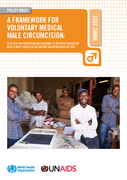
Revised Version 2011
COVID-19 disproportionately affects the poor and vulnerable. Community health workers are poised to play a pivotal role in fighting the pandemic, especially in countries with less resilient health s...
