Filter
865
Text search:
Ministry
de
la
Santé
Featured
Recommendations
45
New Publications
338
Language
Document type
No document type
565
Studies & Reports
128
Guidelines
52
Training Material
41
Manuals
36
Fact sheets
18
Strategic & Response Plan
16
Situation Updates
5
Infographics
2
Online Courses
1
Videos
1
Countries / Regions
India
89
Kenya
54
Nepal
43
Rwanda
43
Tanzania
35
Nigeria
34
Uganda
32
Malawi
32
Ethiopia
30
Sierra Leone
27
Bangladesh
26
Senegal
25
Myanmar / Burma
24
Zambia
20
Congo, Democratic Republic of
18
Indonesia
16
Burkina Faso
15
Haiti
14
Ghana
13
Namibia
13
Liberia
12
Cameroon
12
Cambodia
11
Global
11
Zimbabwe
9
Benin
8
Syria
7
Lesotho
7
Mali
5
Pakistan
5
Afghanistan
5
Mozambique
5
Africa
5
South–East Asia Region
4
Latin America and the Carribbean
4
Guinea
3
South Sudan
3
South Africa
3
Ukraine
3
Botswana
3
Western and Central Europe
3
Togo
2
Eswatini/ Swaziland
2
Sri Lanka
2
Asia
2
Tajikistan
2
Guinea-Bissau
1
Niger
1
Somalia
1
Germany
1
Chad
1
Central African Republic
1
Argentina
1
North Macedonia
1
Yemen
1
East and Southern Africa
1
Paraguay
1
Venezuela
1
Eastern Europe
1
Southern Africa
1
Russia
1
Estonia
1
Romania
1
Iran
1
Kyrgyzstan
1
North America
1
Jamaica
1
Belarus
1
Latvia
1
Authors & Publishers
Publication Years
Category
Countries
667
Women & Child Health
98
Capacity Building
50
Public Health
35
Clinical Guidelines
32
Key Resources
9
Pharmacy & Technologies
1
Toolboxes
Mental Health
35
Caregiver
26
COVID-19
22
Conflict
12
Refugee
10
Disability
9
Rapid Response
9
TB
9
Ebola
8
HIV
8
Planetary Health
8
Global Health Education
7
Cholera
5
AMR
5
Pharmacy
4
Health Financing Toolbox
4
Natural Hazards
3
Zika
3
NTDs
3
NCDs
3
Polio
1
Pharmaceutical regulators are at the forefront of ensuring that only safe and effective medicines are authorized and available in the market. This document builds on the recommendations in the above publication and has been prepared to specifically assist national medicines regulatory authorities to
...
Building the competence and confidence of nurse and midwife educators
ICAP Nurse Capacity Initiative offers its Campus to Clinic Curriculum to empower nursing educators and mentors with a new area of expertise. It opens the door to teach in new ways with confidence. It can be adapted to different c
...

In 2014, GHS/NACP, with support from UNICEF and other partners, conducted a situation analysis on paediatric HIV care and treatment in Ghana. The purpose of this analysis was to identify the gaps within the current delivery of paediatric HIV care and support system and develop a road map for effecti
...
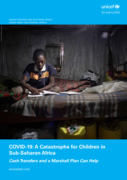
The well-being of children in sub-Saharan Africa is under siege from all directions since the advent of the COVID-19 pandemic. The region is now suffering its first-ever economic recession, pushing about 50 million people into extreme poverty, a majority of whom are children.
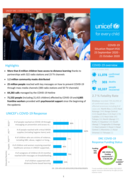
More than 8 million children have access to distance learning thanks to partnerships with 322 radio stations and 23 TV channels
1.2 million community masks distributed
25 million people reached with key messages on how to prevent COVID-19 through mass media channels (300 radio stations and
...

Childhood obesity is a major public health problem globally, which could undermine progress towards achieving the Sustainable Development Goals. Prevention is recognized as the most efficient means of curbing the epidemic; however, given the scale of the problem and the many children who need profes
...
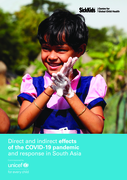
It estimates that there have been 228,000 additional deaths of children under five in these six countries [Afghanistan, Nepal, Bangladesh, India, Pakistan and Sri Lanka] due to crucial services, ranging from nutrition benefits to immunisation, being halted.
It says the number of children being tr
...
Abridged version. In this abridged version of the Evidence-based Clinical Practice Guidelines for the Follow-Up of at-risk neonates, we provide recommendations for the care of newborns up to 2 years of age, corresponding to the first phase of their follow-up. The recommendations are intended for all
...
The situation in South Sudan has proven to be unpredictable and volatile. New hotspots of violent conflict and civil unrest have continued to emerge and levels of severe acute food insecurity have become progressively worse. In addition to years of fighting and political instability, the country fac
...
Due to Nepal’s difficult geographic structure, rapid urbanization, varied groundwater level, and increasing population the country is prone to earthquakes, floods, landslides, fires, lightning, hailstone, drought, epidemic, and other disasters. These disasters cause a huge
loss of li
...

The Covid-19 pandemic has so far infected more than 30 million people in the world, having major impact on global health with collateral damage. In Mozambique, a public state of emergency was declared at the end of March 2020. This has limited people's movements and reduced public services, leading
...
The Report describes the evaluation of WHO's contribution to the Maternal Health Program in South-East Asia Region. This was an independent evaluation conducted in 2015 by Amaltas, a Delhi based organization. The evaluation highlights the progress in five countries, namely Bangladesh, Indonesia, Mya
...

At the threshold of Sustainable Development Goals (SDG) era, this document captures the remarkable achievements by Member States towards achieving MDGs 4 and 5. It acknowledges new opportunities in the post-2015 phase shaped by the SDGs and the Global Strategy for women’s, children’s and adoles
...