
Filter
910
Text search:
World
Health
Organization
WHO,
Western
Pacific
Region
Featured
Recommendations
94
New Publications
224
Language
Document type
No document type
432
Studies & Reports
239
Guidelines
116
Manuals
44
Strategic & Response Plan
35
Fact sheets
10
Training Material
9
Situation Updates
9
Resource Platforms
9
Infographics
6
Online Courses
1
Countries / Regions
Global
78
Philippines
32
Western Pacific Region
28
South–East Asia Region
25
India
17
Myanmar / Burma
17
Western and Central Europe
17
Asia
17
Africa
17
Cambodia
16
Nepal
15
Bangladesh
10
Latin America and the Carribbean
10
Kenya
9
Liberia
7
Nigeria
7
Ethiopia
6
Afghanistan
6
Syria
6
China
6
Indonesia
6
Russia
6
Thailand
5
South Africa
5
Eastern Europe
5
Somalia
4
Pakistan
4
Papua New Guinea
4
Ukraine
4
Yemen
4
West and Central Africa
4
Sierra Leone
3
Congo, Democratic Republic of
3
Ghana
3
South Sudan
3
Tanzania
3
Rwanda
3
East and Southern Africa
3
Middle East and North Africa
3
Eastern Europe and Central Asia
3
Guinea
2
Uganda
2
Zimbabwe
2
Zambia
2
Malawi
2
Mozambique
2
Madagascar
2
Sri Lanka
2
Fiji
2
Venezuela
2
Mongolia
2
Vietnam
2
Burkina Faso
1
Senegal
1
USA
1
Cameroon
1
Haiti
1
Iraq
1
Jordan
1
Egypt
1
Sudan
1
Benin
1
Central African Republic
1
Vanuatu
1
Namibia
1
Eswatini/ Swaziland
1
Serbia
1
Colombia
1
Ecuador
1
Botswana
1
Mexico
1
Solomon Islands
1
Bhutan
1
Palestine
1
North Korea
1
Laos
1
Timor Leste/ East Timor
1
Iran
1
North America
1
Japan
1
Authors & Publishers
Publication Years
Category
Countries
170
Clinical Guidelines
118
Public Health
77
Women & Child Health
59
Key Resources
27
Capacity Building
15
Pharmacy & Technologies
15
General Guidelines
1
Toolboxes
HIV
102
Mental Health
84
COVID-19
64
Planetary Health
54
Rapid Response
50
TB
43
Global Health Education
39
NTDs
37
AMR
35
Disability
32
Caregiver
28
NCDs
22
Pharmacy
21
Natural Hazards
17
Refugee
15
Zika
13
Conflict
12
Polio
9
Ebola
8
Health Financing Toolbox
6
Cholera
3
Typhoon
2
Specific Hazards
2
Social Ethics
1
Compared to the previous five-year assessment period 2011–2015, the current five-year period 2015–2019 has seen a continued increase in carbon dioxide (CO2 ) emissions and an accelerated increase in the atmospheric concentration of major greenhouse gases (GHGs), with growth rates nearly 20% high
...
The second edition of the WHPCA Global Atlas of Palliative Care was launched during World Hospice & Palliative Care Day 10 October. The Atlas is an update of the original WHPCA/WHO Global Atlas of P
...
ABSTRACT
More than 500 million people worldwide live with cardiovascular disease (CVD). Health systems today face fundamental challenges in delivering optimal care due to ageing populations, healthcare workforce constraints, financing, availability
...

As the Americas undergo profound demographic change and there are more persons aged 65 years or older than children younger than 5 years, it is crucial to recognize that national immunization programs must be redesigned to ensure comprehensive protection for individuals across the lifespan. By adopt
...
The guidance in this publication consists of generic definitions and methodologies for the characterization of extreme weather and climate events. This publication contribute to ensuring consistent exchange of information that underpins the WMO State of the Climate Reports, Climate Watches, climate
...
ESCAP Project on improving disability measurement and statistics in the Asia Pacfic Region
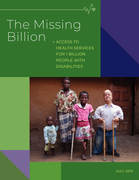
One billion people around the world live with disabilities. This report makes the case that they are being “left behind” in the global community’s work on health. This lack of access not only
...
Health, Rights and Drugs
recommended
Harm Reducation, Decriminalization and Zero Discrimination for People who use Drugs
The GHS Index is intended to be a key resource in the face of increasing risks of high-consequence and globally catastrophic biological events and in light of major gaps in international financing for preparedness. These risks are magnified by a rapidly changing and interconnected
...

The world is not on track to end the AIDS pandemic. New infections are rising and AIDS deaths are continuing in too many communities. This report reveals why: inequalities are holding us back. In frank terms, the report calls the
...
Background: Atherosclerotic cardiovascular diseases (ASCVD) including myocardial infarction, stroke and peripheral arterial disease continue to be major causes of premature death, disability and healthcare expenditure globally. Preventing the accumulation of cholesterol-containing atherogenic lipopr
...
This report provides an overview of air pollution levels and associated health impacts in cities around the world. Since urban areas are often hotspots for poor air quality, city-level data can help
...
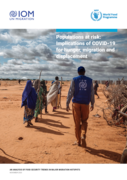
The report – the first of its kind – shows how the pandemic has driven up food insecurity and increased vulnerability among migrants, families reliant on remittances and communities forced from their homes by conflict, violence and disasters.
The two UN agencies warn the social and economic
...
Annals of Global Health, 87(1), p.43. DOI: http://doi.org/10.5334/aogh.3269;
The aim of this study was to examine the prevalence of mental health symptoms (anxiety, depression, and stress) in Bang
...
: Development assistance for health (DAH) is one of the most important means for Japan to promote
diplomacy with developing countries and contribute to the international community. This study, for the first time,
estimated the gross disbursement o
...

Front. Med., 27 November 2020 | https://doi.org/10.3389/fmed.2020.594728. The Checklist included eight actions for implementing rural pathways in LMICs: establishing community needs; policies and partners; exploring existing workers and scope; selecting he
...

English Analysis on World about Agriculture, Climate Change and Environment and more; published on 29 Sep 2021 by FAO and NEPAD
English Analysis on World and 19 other countries about Agriculture, Food and Nutrition and Drought; published on 13 Jan 2021 by FAO
This document serves to provide interim guidance/ recommendations to carry out mpox surveillance activities mainly case investigation, contact tracing and isolation. For the development of this document WHO, UKHSA and CDC guidelines were referred to
...
