
Filter
4065
Filtered Results: 4065
Text search:
Communication
for
Devleopment4
Network
Featured
Recommendations
351
New Publications
1173
Language
Document type
No document type
2405
Studies & Reports
607
Guidelines
433
Manuals
236
Strategic & Response Plan
204
Training Material
73
Situation Updates
44
Fact sheets
40
Resource Platforms
12
Brochures
4
Infographics
4
Online Courses
2
App
1
Countries / Regions
India
167
Global
150
Kenya
127
Sierra Leone
97
Western and Central Europe
95
Uganda
93
Liberia
90
Nigeria
84
Myanmar / Burma
83
Nepal
80
Ethiopia
77
South Africa
67
Zambia
66
Syria
66
Bangladesh
65
Rwanda
55
Ukraine
53
Africa
51
Latin America and the Carribbean
48
Tanzania
45
Malawi
45
Ghana
42
Philippines
37
South–East Asia Region
34
Guinea
33
Congo, Democratic Republic of
31
Eastern Europe
31
South Sudan
29
Namibia
27
Cambodia
26
Indonesia
26
Lesotho
26
Senegal
25
Botswana
22
Mozambique
21
East and Southern Africa
21
Asia
21
Zimbabwe
20
Haiti
20
Brazil
20
Germany
18
West and Central Africa
18
Cameroon
17
Pakistan
16
Jordan
16
Russia
16
Lebanon
15
Middle East and North Africa
15
Eastern Europe and Central Asia
14
Venezuela
14
Vietnam
14
Eswatini/ Swaziland
13
Yemen
13
Afghanistan
12
Iraq
11
Thailand
11
Western Pacific Region
11
USA
10
Moldova
10
Burkina Faso
9
Somalia
9
Central African Republic
9
Colombia
9
Laos
9
Georgia
8
China
7
Peru
7
Sri Lanka
7
Albania
7
Tajikistan
7
Turkey
6
Benin
6
Chad
4
Sudan
4
Argentina
4
North Macedonia
4
Hungary
4
Ecuador
4
Bolivia
4
Chile
4
United Kingdom
4
Mali
3
Côte d’Ivoire / Ivory Coast
3
Togo
3
Gambia
3
Papua New Guinea
3
Croatia
3
El Salvador
3
Madagascar
3
Mexico
3
Paraguay
3
Bhutan
3
Poland
3
Palestine
3
Southern Africa
3
Romania
3
Iran
3
Turkmenistan
3
Portugal
3
Spain
3
Guinea-Bissau
2
Morocco
2
Egypt
2
Malaysia
2
Serbia
2
Honduras
2
Greece
2
Angola
2
Canada
2
Timor Leste/ East Timor
2
Bulgaria
2
Estonia
2
Slovakia
2
Kyrgyzstan
2
Japan
2
Belarus
2
Saudi Arabia
1
Niger
1
Vanuatu
1
Burundi
1
Other region
1
Fiji
1
North Korea
1
Mongolia
1
Qatar
1
Lithuania
1
Uzbekistan
1
Kazakhstan
1
Gabon
1
Jamaica
1
Denmark
1
France
1
Maldives
1
Mauritius
1
Tunisia
1
Norway
1
Azerbaijan
1
Bosnia and Herzegovina
1
Authors & Publishers
Publication Years
Category
Countries
1505
Public Health
248
Key Resources
238
Women & Child Health
213
Clinical Guidelines
203
Capacity Building
69
Pharmacy & Technologies
28
Toolboxes
COVID-19
327
Mental Health
313
HIV
294
Disability
244
TB
175
Rapid Response
161
Planetary Health
154
Conflict
141
AMR
128
Ebola
117
Caregiver
99
Refugee
85
Global Health Education
83
Natural Hazards
75
NTDs
70
NCDs
47
Pharmacy
46
Cholera
27
Specific Hazards
27
Polio
25
Zika
24
Health Financing Toolbox
22
Social Ethics
14
Typhoon
3
South Sudan
1
Health Financing
1
A WHO-ITU Standard.
Nearly 50% of people aged 12-35 years – or 1.1 billion young people – are at risk of hearing loss due to prolonged and excessive exposure to loud sounds, including music they listen to through personal audio devices. Ahead of World Hearing Day (3 March), the World Health Org...

Traditionally, understanding of the psychiatric and psychological effects of trauma have been developed from studies with adults and then applied to trauma-exposed children with some modifications. While this is an important step to understanding the sequelae of trauma in children and adolescents, t...

22 December 2020
The COVID-19 vaccine safety guidance manual has been developed upon recommendation and guidance of GACVS members, as well as by experts incorporating current and available information critical to all stakeholders when COVID-19 vaccines will be introduced.
... ease of use, the manual is available in a compiled form and in several separate modules that can be consulted individually. For each module, specific training material is also available to facilitate implementation.
Governments have dedicated a pivotal role to the private sector in the implementation and financing of the 2030 Agenda and the SDGs. This has pushed a turn towards the private sector, the promotion of multi-stakeholder partnerships between public and private actors. However, far too often there is a...

Census data shows that Myanmar can harness a double dividend – both youth and gender. This year’s annual report provides many facets of the journey to gender equality. It tells a story of widening horizons for women and girls who are capable in ...

Many features of the environment have been found to exert an important influence on cardiovascular disease (CVD) risk, progression, and severity. Changes in the environment due to migration to different geographic locations, modifications in lifestyle choices, and shifts in social policies and cultu...
The main objective of the 2014-15 RDHS was to obtain current information on demographic and health indicators, including family planning; maternal mortality; infant and child mortality; nutrition status of mothers and children; prenatal care, delivery, and postnatal care; childhood diseases; and ped...
The Vision 2020 is a reflection of our aspiration and determination as Rwandans, to construct a united, democratic and inclusive Rwandan identity, after so many years of authoritarian and exclusivist dispensation. We aim, through this Vision, to transform our country into middle - income nation in w...
Chronic kidney disease (CKD) is an important contributor to mortality from noncommunicable diseases. No decrease has been seen for CKD mortality contrary to many other important non-communicable diseases (e.g., cardiovascular disease). The prevalenc...
The document, "Sustainable Management of Radiotherapy Facilities and Equipment," by WHO and IAEA, provides guidelines for managing radiotherapy equipment and facilities to ensure effective and safe cancer treatment. It covers essential aspects like ...
This Manual is primarily intended for Local Government, Community Based Organizations and Civil Society Organizations (CSO) supporting or implementing Community Based Disaster Risk Management (CBDRM) program.
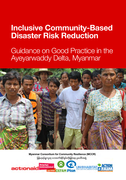
This publication presents guidance on good practice from the Ayeyarwaddy Delta in Myanmar, outlining the key factors which contributed to the successful implementation and outcome of a range of community-based Disaster Risk Reduction initiatives implemented by the Myanmar Consortium ... Community Resilience (MCCR).
The content was developed over a period of two months between November-December 2015, involving a desk review of MCCR project documents including impact studies, monitoring reports and newsletters. Field visits were undertaken to the Ayeyarwaddy Delta to document the perspectives of key stakeholders at community level, including a total of 93 adults (men and women) and 57 children (girls and boys) from eight communities targeted under the DIPECHO IX project.
The content was developed over a period of two months between November-December 2015, involving a desk review of MCCR project documents including impact studies, monitoring reports and newsletters. Field visits were undertaken to the Ayeyarwaddy Delta to document the perspectives of key stakeholders at community level, including a total of 93 adults (men and women) and 57 children (girls and boys) from eight communities targeted under the DIPECHO IX project.
Strengthening competency based training of health care providers for Reproductive Maternal Newborn Child & Adolescenct Health (RMNCH + A) services
This Case Study explores flood forecasting systems from the perspective of its position within the flood warning process. A method for classifying the different approaches taken in flood forecasting is introduced before the elements of a present-day...
English Analysis on World and 9 other countries about Food and Nutrition, Drought and Other; published on 13 Oct 2021 by ECHO, FAO and 3 other organizations
