
Filter
6415
Text search:
Supply
Featured
630
1899
Language
6156
174
129
101
90
64
40
22
11
10
8
7
7
7
5
5
5
5
5
4
4
4
4
3
3
3
3
3
3
2
2
2
2
2
2
2
2
2
2
2
2
2
2
2
1
1
1
1
1
1
1
1
1
1
1
1
1
1
1
1
1
1
1
1
Document type
3496
1075
823
308
277
178
94
93
26
21
11
6
1
1
Countries
322
241
203
172
163
145
143
139
132
127
111
111
103
102
96
93
91
90
90
82
80
67
63
59
59
54
50
50
47
46
46
45
44
43
41
41
38
37
37
36
34
34
32
32
30
30
26
25
23
20
20
18
17
16
16
15
15
14
14
14
13
12
11
10
10
10
9
9
9
8
8
7
7
7
7
7
7
7
6
6
6
6
6
6
6
6
5
5
5
5
5
5
5
4
4
4
4
4
4
4
4
4
4
3
3
3
3
3
3
3
3
3
2
2
2
2
2
2
2
2
2
2
1
1
1
1
1
1
1
1
1
1
1
1
1
1
1
1
1
1
1
1
1
1
1
1
1
Authors & Publishers
855
318
222
178
150
147
121
119
97
60
43
38
35
34
28
27
27
25
25
25
24
24
24
24
23
23
23
22
22
21
21
21
21
21
20
20
20
19
19
19
19
19
18
18
17
17
17
17
17
16
16
16
15
15
15
14
14
14
14
14
14
14
13
13
13
13
13
12
12
12
12
12
11
11
11
11
11
11
11
10
10
10
10
10
10
9
9
9
9
9
9
8
8
8
8
8
8
8
8
8
8
8
8
8
8
8
8
8
8
8
7
7
7
7
7
7
7
7
7
7
7
7
7
7
7
7
7
7
7
7
7
6
6
6
6
6
6
6
6
6
6
6
6
6
6
6
6
6
6
6
6
6
6
6
6
6
6
6
6
6
6
6
6
6
6
6
5
5
5
5
5
5
5
5
5
5
5
5
5
5
5
5
5
5
5
5
5
5
5
5
5
5
5
5
5
5
5
5
5
5
5
5
5
5
4
4
4
4
4
4
4
4
4
4
4
4
4
4
4
4
4
4
4
4
4
4
4
4
4
4
4
4
4
4
4
4
4
4
4
4
4
4
4
4
4
4
4
4
4
4
4
4
4
4
4
4
4
4
4
4
4
4
4
4
4
4
4
4
4
3
3
3
3
3
3
3
3
3
3
3
3
3
3
3
3
3
3
3
3
3
3
3
3
3
3
3
3
3
3
3
3
3
3
3
3
3
3
3
3
3
3
3
3
3
3
3
3
3
3
3
3
3
3
3
3
3
3
3
3
3
3
3
3
3
3
3
3
3
3
3
3
3
3
3
3
3
3
3
3
3
3
3
3
3
3
3
3
3
3
3
3
3
3
3
3
3
3
3
3
3
3
3
3
3
3
3
3
3
3
3
3
3
3
3
3
3
3
3
3
3
3
3
3
3
3
3
3
3
3
3
3
3
3
3
3
3
3
3
3
3
3
3
3
2
2
2
2
2
2
2
2
2
2
2
2
2
2
2
2
2
2
2
2
2
2
2
2
2
2
2
2
2
2
2
2
2
2
2
2
2
2
2
2
2
2
2
2
2
2
2
2
2
2
2
2
2
2
2
2
2
2
2
2
2
2
2
2
2
2
2
2
2
2
2
2
2
2
2
2
2
2
2
2
2
2
2
2
2
2
2
2
2
2
2
2
2
2
2
2
2
2
2
2
2
2
2
2
2
2
2
2
2
2
2
2
2
2
2
2
2
2
2
2
2
2
2
2
2
2
2
2
2
2
2
2
2
2
2
2
2
2
2
2
2
2
2
2
2
2
2
2
2
2
2
2
2
2
2
2
2
2
2
2
2
2
2
2
2
2
2
2
2
2
2
2
2
2
2
2
2
2
2
2
2
2
2
2
2
2
2
2
2
2
2
2
2
2
2
2
2
2
2
2
2
2
2
2
2
2
2
2
2
2
2
2
2
2
2
2
2
2
2
2
2
2
2
2
2
2
2
2
2
2
2
2
2
2
2
2
2
2
2
2
2
2
2
2
2
2
2
2
2
2
2
2
2
2
2
2
2
2
2
2
2
2
2
2
2
2
2
2
2
2
2
2
2
2
2
2
2
2
2
2
2
2
2
2
2
2
2
2
2
2
2
2
2
2
2
2
2
2
2
2
2
2
2
2
2
2
2
2
2
2
2
2
2
2
2
2
2
2
2
2
2
2
1
1
1
1
1
1
1
1
1
1
1
1
1
1
1
1
1
1
1
1
1
1
1
1
1
1
1
1
1
1
1
1
1
1
1
1
1
1
1
1
1
1
1
1
1
1
1
1
1
1
1
1
1
1
1
1
1
1
1
1
1
1
1
1
1
1
1
1
1
1
1
1
1
1
1
1
1
1
1
1
1
1
1
1
1
1
1
1
1
1
1
1
1
1
1
1
1
1
1
1
1
1
1
1
1
1
1
1
1
1
1
1
1
1
1
1
1
1
1
1
1
1
1
1
1
1
1
1
1
1
1
1
1
1
1
1
1
1
1
1
1
1
1
1
1
1
1
1
1
1
1
1
1
1
1
1
1
1
1
1
1
1
1
1
1
1
1
1
1
1
1
1
1
1
1
1
1
1
1
1
1
1
1
1
1
1
1
1
1
1
1
1
1
1
1
1
1
1
1
1
1
1
1
1
1
1
1
1
1
1
1
1
1
1
1
1
1
1
1
1
1
1
1
1
1
1
1
1
1
1
1
1
1
1
1
1
1
1
1
1
1
1
1
1
1
1
1
1
1
1
1
1
1
1
1
1
1
1
1
1
1
1
1
1
1
1
1
1
1
1
1
1
1
1
1
1
1
1
1
1
1
1
1
1
1
1
1
1
1
1
1
1
1
1
1
1
1
1
1
1
1
1
1
1
1
1
1
1
1
1
1
1
1
1
1
1
1
1
1
1
1
1
1
1
1
1
1
1
1
1
1
1
1
1
1
1
1
1
1
1
1
1
1
1
1
1
1
1
1
1
1
1
1
1
1
1
1
1
1
1
1
1
1
1
1
1
1
1
1
1
1
1
1
1
1
1
1
1
1
1
1
1
1
1
1
1
1
1
1
1
1
1
1
1
1
1
1
1
1
1
1
1
1
1
1
1
1
1
1
1
1
1
1
1
1
1
1
1
1
1
1
1
1
1
1
1
1
1
1
1
1
1
1
1
1
1
1
1
1
1
1
1
1
1
1
1
1
1
1
1
1
1
1
1
1
1
1
1
1
1
1
1
1
1
1
1
1
1
1
1
1
1
1
1
1
1
1
1
1
1
1
1
1
1
1
1
1
1
1
1
1
1
1
1
1
1
1
1
1
1
1
1
1
1
1
1
1
1
1
1
1
1
1
1
1
1
1
1
1
1
1
1
1
1
1
1
1
1
1
1
1
1
1
1
1
1
1
1
1
1
1
1
1
1
1
1
1
1
1
1
1
1
1
1
1
1
1
1
1
1
1
1
1
1
1
1
1
1
1
1
1
1
1
1
1
1
1
1
1
1
1
1
1
1
1
1
1
1
1
1
1
1
1
1
1
1
1
1
1
1
1
1
1
1
1
1
1
1
1
1
1
1
1
1
1
1
1
1
1
1
1
1
1
1
1
1
1
1
1
1
1
1
1
1
1
1
1
1
1
1
1
1
1
1
1
1
1
1
1
1
1
1
1
1
1
1
1
1
1
1
1
1
1
1
1
1
1
1
1
1
1
1
1
1
1
1
1
1
1
1
1
1
1
1
1
1
1
1
1
1
1
1
1
1
1
1
1
1
1
1
1
1
1
1
1
1
1
1
1
1
1
1
1
1
1
1
1
1
1
1
1
1
1
1
1
1
1
1
1
1
1
1
1
1
1
1
1
1
1
1
1
1
1
1
1
1
1
1
1
1
1
1
1
1
1
1
1
1
1
1
1
1
1
1
1
1
1
1
1
1
1
1
1
1
1
1
1
1
1
1
1
1
1
1
1
1
1
1
1
1
1
1
1
1
1
1
1
1
1
1
1
1
1
1
1
1
1
1
1
1
1
1
1
1
1
1
1
1
1
1
1
1
1
1
1
1
1
1
1
1
1
1
1
1
1
1
1
1
1
1
1
1
1
1
1
1
1
1
1
1
1
1
1
1
1
1
1
1
1
1
1
1
1
1
1
1
1
1
1
1
1
1
1
1
1
1
1
1
1
1
1
1
1
1
1
1
1
1
1
1
1
1
1
1
1
1
1
1
1
1
1
1
1
1
1
1
1
1
1
1
1
1
1
1
1
1
1
1
1
1
1
1
1
1
1
1
1
1
1
1
1
1
1
1
1
1
1
1
1
1
1
1
1
1
1
1
1
1
1
1
1
1
1
1
1
1
1
1
1
1
1
1
1
1
1
1
1
1
1
1
1
1
1
1
1
1
1
1
1
1
1
1
1
1
1
1
1
1
1
1
1
1
1
1
1
1
1
1
1
1
1
1
1
1
1
1
1
1
1
1
1
1
1
1
1
1
1
1
1
1
1
1
1
1
1
1
1
1
1
1
1
1
1
1
1
1
1
1
1
1
1
1
1
1
1
1
1
1
1
1
1
1
1
1
1
1
1
1
1
1
1
1
1
1
1
1
1
1
1
1
1
1
1
1
1
1
1
1
1
1
1
1
1
1
1
1
1
1
1
1
1
1
1
1
1
1
1
1
1
1
1
1
1
1
1
1
1
1
1
1
1
1
1
1
1
1
1
1
1
1
1
1
1
1
1
1
1
1
1
1
1
1
1
1
1
1
1
1
1
1
1
1
1
1
1
1
1
1
1
1
1
1
1
1
1
1
1
1
1
1
1
1
1
1
1
1
1
1
1
1
1
1
1
1
1
1
1
1
1
1
1
1
1
1
1
1
1
1
1
1
1
1
1
1
1
1
1
1
1
1
1
1
1
1
1
1
1
1
1
1
1
1
1
1
1
1
1
1
1
1
1
1
1
1
1
1
1
1
1
1
1
1
1
1
1
1
1
1
1
1
1
1
1
1
1
1
1
1
1
1
1
1
1
1
1
1
1
1
1
1
1
1
1
1
1
1
1
1
1
1
1
1
1
1
1
1
1
1
1
1
1
1
1
1
1
1
1
1
1
1
1
1
1
1
1
1
1
1
1
1
1
1
1
1
1
1
1
1
1
1
1
1
1
1
1
1
1
1
1
1
1
1
1
1
1
1
1
1
1
1
1
1
1
1
1
1
1
1
1
1
1
1
1
1
1
1
1
1
1
1
1
1
1
1
1
1
1
1
1
1
1
1
1
1
1
1
1
1
1
1
1
1
1
1
1
1
1
1
1
1
1
1
1
1
1
1
1
1
1
1
1
1
1
1
1
1
1
1
1
1
1
1
1
1
1
1
1
1
1
1
1
1
1
1
1
1
1
1
1
1
1
1
1
1
1
1
1
1
1
1
1
1
1
1
1
1
1
1
1
1
1
1
1
1
1
1
1
1
1
1
1
1
1
1
1
1
1
1
1
1
1
1
1
1
1
1
1
1
1
1
1
1
1
1
1
1
1
1
1
1
1
1
1
1
1
1
1
1
1
1
1
1
1
1
1
1
1
1
1
1
1
1
1
1
1
1
1
1
1
1
1
1
1
1
1
1
1
1
1
1
1
1
1
1
1
1
1
1
1
1
1
1
1
1
1
1
1
1
1
1
1
1
1
1
1
1
1
1
1
1
1
1
1
1
1
1
1
1
1
1
1
1
1
1
1
1
1
1
1
1
1
1
1
1
1
1
1
1
1
1
1
1
1
1
1
1
1
1
1
1
1
1
1
1
1
1
1
1
1
1
1
1
1
1
1
1
1
1
1
1
1
1
1
1
1
1
1
1
1
1
1
1
1
1
1
1
1
1
1
1
1
1
1
1
1
1
1
1
1
1
1
1
1
1
1
1
1
1
1
1
1
1
1
1
1
1
1
1
1
1
1
1
1
1
1
1
1
1
1
1
1
1
1
1
1
1
1
1
1
1
1
1
1
1
1
1
1
1
1
1
1
1
1
1
1
1
1
1
1
1
1
1
1
1
1
1
1
1
1
1
1
1
1
1
1
1
1
1
1
1
1
1
1
1
1
1
1
1
1
1
1
1
1
1
1
1
1
1
1
1
1
1
1
1
1
1
1
1
1
1
1
1
1
1
1
1
1
1
1
1
1
1
1
1
1
1
1
1
1
1
1
1
1
1
1
1
1
1
1
1
1
1
1
1
1
1
1
1
1
1
1
1
1
1
1
1
1
1
1
1
1
1
1
1
1
1
1
1
1
1
1
1
1
1
1
1
1
1
1
1
1
1
1
1
1
1
1
1
1
1
1
1
1
1
1
1
1
1
1
1
1
1
1
1
1
1
1
1
1
1
1
1
1
1
1
1
1
1
1
1
1
1
1
1
1
1
1
1
1
1
1
1
1
1
1
1
1
1
1
1
1
1
1
1
1
1
1
1
1
1
1
1
1
1
1
1
1
1
1
1
1
1
1
1
1
1
1
1
1
1
1
1
1
1
1
1
1
1
1
1
1
1
1
1
1
1
1
1
1
1
1
1
1
1
1
1
1
1
1
1
1
1
1
1
1
1
1
1
1
1
1
1
1
1
1
1
1
1
1
1
1
1
1
1
1
1
1
1
1
1
1
1
1
1
1
1
1
1
1
1
1
1
1
1
1
1
1
1
1
1
1
1
1
1
1
1
1
1
1
1
1
1
1
1
1
1
1
1
1
1
1
1
1
1
1
1
1
1
1
1
1
1
1
1
1
1
1
1
1
1
1
1
1
1
1
1
1
1
1
1
1
1
1
1
1
1
1
1
1
1
1
1
1
1
1
1
1
1
1
1
1
1
1
1
1
1
1
1
1
1
1
1
1
1
1
1
1
1
1
1
1
1
1
1
1
1
1
1
1
1
1
1
1
1
1
1
1
1
1
1
1
1
1
1
1
1
1
1
1
1
1
1
1
1
1
1
1
1
1
1
1
1
1
1
1
1
1
1
1
1
1
1
1
1
1
1
1
1
1
1
1
1
1
1
1
1
1
1
1
1
1
1
1
1
1
1
1
1
1
1
1
1
1
1
1
1
1
1
1
1
1
1
1
1
1
1
1
1
1
1
1
1
1
1
1
1
1
1
1
1
1
1
1
1
1
1
1
1
1
1
1
1
1
1
1
1
1
1
1
1
1
1
1
1
1
1
1
1
1
1
1
1
1
1
1
1
1
1
1
1
1
1
1
1
1
1
1
1
1
1
1
1
1
1
1
1
1
1
1
1
1
1
1
1
1
1
1
1
1
1
1
1
1
1
1
1
1
1
1
1
1
1
1
1
1
1
1
1
1
1
1
1
1
1
1
1
1
1
1
1
1
1
1
1
1
1
1
1
1
1
1
1
1
1
1
1
1
1
1
1
1
1
1
1
1
1
1
1
1
1
1
1
1
1
1
1
1
1
1
1
1
1
1
1
1
1
1
1
1
1
1
1
1
1
1
1
1
1
1
1
1
1
1
1
1
1
1
1
1
1
1
1
1
1
1
1
1
1
1
1
1
1
1
1
1
1
1
1
1
1
1
1
1
1
1
1
1
1
1
1
1
1
1
1
1
1
1
1
1
1
1
1
1
1
1
1
1
1
1
1
1
1
1
1
1
1
1
1
1
1
1
1
1
1
1
1
1
1
1
1
1
1
1
1
1
1
1
1
1
1
1
1
1
1
1
1
1
1
1
1
1
1
1
1
1
1
1
1
1
1
1
1
1
1
1
1
1
1
1
1
1
1
1
1
1
1
1
1
1
1
1
1
1
1
1
1
1
1
1
1
1
1
1
1
1
1
1
1
1
1
1
1
1
1
1
1
1
1
1
1
1
1
1
1
1
1
1
1
1
1
1
1
1
1
1
1
1
1
1
1
1
1
1
1
1
1
1
1
1
1
1
1
1
1
1
1
1
1
1
1
1
1
1
1
1
1
1
1
1
1
1
1
1
1
1
1
1
1
1
1
1
1
1
1
1
1
1
1
1
1
1
1
1
1
1
1
1
1
1
1
1
1
1
1
1
1
1
1
1
1
1
1
1
1
1
1
1
1
1
1
1
1
1
1
1
1
1
1
1
1
1
1
1
1
1
1
1
1
1
1
1
1
1
1
1
1
1
1
1
1
1
1
1
1
1
1
1
1
1
1
1
1
1
1
1
1
1
1
1
1
1
1
1
1
1
1
1
1
1
1
1
1
1
1
1
1
1
1
1
1
1
1
1
1
1
1
1
1
1
1
1
1
1
1
1
1
1
1
1
1
1
1
1
1
1
1
1
1
1
1
1
1
1
1
1
1
1
1
1
1
1
1
1
1
1
1
1
1
1
1
1
1
1
1
1
1
1
1
1
1
1
1
1
1
1
1
1
1
1
1
1
1
1
1
1
1
1
1
1
1
1
1
1
1
1
1
1
1
1
1
1
1
1
1
1
1
1
1
1
1
1
1
1
1
1
1
1
1
1
1
1
1
1
1
1
1
1
1
1
1
1
1
1
1
1
1
1
1
1
1
1
1
1
1
1
1
1
1
1
1
1
1
1
1
1
1
1
1
1
1
1
1
1
1
1
1
1
1
1
1
1
1
1
1
1
1
1
1
1
1
1
1
1
1
1
1
1
1
1
1
1
1
1
1
1
1
1
1
1
1
1
1
1
1
1
1
1
1
1
1
1
1
1
1
1
1
1
1
1
1
1
1
1
1
1
1
1
1
1
1
1
1
1
1
1
1
1
1
1
1
1
1
1
1
1
1
1
1
1
1
1
1
1
1
1
1
1
1
1
1
1
1
1
1
1
1
1
1
1
1
1
1
1
1
1
1
1
1
1
1
1
1
1
1
1
1
1
1
1
1
1
1
1
1
1
1
1
1
1
1
1
1
1
1
1
1
1
1
1
1
1
1
1
1
1
1
1
1
1
1
1
1
1
1
1
1
1
1
1
1
1
1
1
1
1
1
1
1
1
1
1
1
1
1
1
1
1
1
1
1
1
1
1
1
1
1
1
1
1
1
1
1
1
1
1
1
1
1
1
1
1
1
1
1
1
1
1
1
1
1
1
1
1
1
1
1
1
1
1
1
1
1
1
1
1
1
1
1
1
1
1
1
1
1
1
1
1
1
1
1
1
1
1
1
1
1
1
1
1
1
1
1
1
1
1
1
1
1
1
1
1
1
1
1
1
1
1
1
1
1
1
1
1
1
1
1
1
1
1
1
1
1
1
1
1
1
1
1
1
1
1
1
1
1
1
1
1
1
1
1
1
1
1
1
1
1
1
1
1
1
1
1
1
1
1
1
1
1
1
1
1
1
1
1
1
1
1
1
1
1
1
1
1
1
1
1
1
1
1
1
1
1
1
1
1
1
1
1
1
1
1
1
1
1
1
1
1
1
1
1
1
1
1
1
1
1
1
1
1
1
1
1
1
1
1
1
1
1
1
1
1
1
1
1
1
1
1
1
1
1
1
1
1
1
1
1
1
1
1
1
1
1
1
1
1
1
1
1
1
1
1
1
1
1
1
1
1
1
1
1
1
1
1
1
1
1
1
1
1
1
1
1
1
1
1
1
1
1
1
1
1
1
1
1
1
1
1
1
1
1
1
1
1
1
1
1
1
1
1
1
1
1
1
1
1
1
1
1
1
1
1
1
1
1
1
1
1
1
1
1
1
1
1
1
1
1
1
1
1
1
1
1
1
1
1
1
1
1
1
1
1
1
1
1
1
1
1
1
1
1
1
1
1
1
1
1
1
1
1
1
1
1
1
1
1
1
1
1
1
1
1
1
1
1
1
1
1
1
1
1
1
1
1
1
1
1
1
1
1
1
1
1
1
1
1
1
1
1
1
1
1
1
1
1
1
1
1
1
1
1
1
1
1
1
1
1
1
1
1
1
1
1
1
1
1
1
1
1
1
1
1
1
1
1
1
1
1
1
1
1
1
1
1
1
1
1
1
1
1
1
1
1
1
1
1
1
1
1
1
1
1
1
1
1
1
1
1
1
1
1
1
1
1
1
1
1
1
1
1
1
1
1
1
1
1
1
1
1
1
1
1
1
1
1
1
1
1
1
1
1
1
1
1
1
1
1
1
1
1
1
1
1
1
1
1
1
1
1
1
1
1
1
1
1
1
1
1
1
1
1
1
1
1
1
1
1
1
1
1
1
1
1
1
1
1
1
1
1
1
1
1
1
1
1
1
1
1
1
1
1
1
1
1
1
1
1
1
1
1
1
1
1
1
1
1
1
1
1
1
1
1
1
1
1
1
1
1
1
1
1
1
1
1
1
1
1
1
1
1
1
1
1
1
1
1
1
1
1
1
1
1
1
1
1
1
1
1
1
1
1
1
1
1
1
1
1
1
1
1
1
1
1
1
1
1
1
1
1
1
1
1
1
1
1
1
1
1
1
1
1
1
1
1
1
1
1
1
1
1
1
1
1
1
1
1
1
1
1
1
1
1
1
1
1
1
1
1
1
1
1
1
1
1
1
1
1
1
1
1
1
1
1
1
1
1
1
1
1
1
1
1
1
1
1
1
1
1
1
1
1
1
1
1
1
1
1
1
1
1
1
1
1
1
1
1
1
1
1
1
1
1
1
1
1
1
1
1
1
1
1
1
1
1
1
1
1
1
1
1
1
1
1
1
1
1
1
1
1
1
1
1
1
1
1
1
1
1
1
1
1
1
1
1
1
1
1
1
1
1
1
1
1
1
1
1
1
1
1
1
1
1
1
1
1
1
1
1
1
1
1
1
1
1
1
1
1
1
1
1
1
1
1
1
1
1
1
1
1
1
1
1
1
1
1
1
1
1
1
1
1
1
1
1
1
1
1
1
1
1
1
1
1
1
1
1
1
1
1
1
1
1
1
1
1
1
1
1
1
1
1
1
1
1
1
1
1
1
1
1
1
1
1
1
1
1
1
1
1
1
1
1
Publication Years
1
1
1911
3811
637
48
3
1
1
1
Category
2748
427
362
306
285
116
94
9
2
1
Toolboxes
754
358
298
277
246
228
194
190
187
177
174
151
126
111
100
85
82
75
59
44
44
23
21
10
2
1
To enhance health co-benefits across urban policies which tackle air pollution and climate change, WHO, in cooperation with various international, national, and local partners, implemented the Urban Health Initiative (UHI) pilot project in Accra, Ghana. The Initiative prompted the health sector to u
...
se its influential position to demonstrate to decision-makers and the public the full range of health, environmental and economic benefits that can be achieved from implementing local emission reduction and energy access policies and strategies. Policy tracking, although not always considered, is a fundamental component of this procedure. It assesses the planning, implementation and progress of a policy to refine or adjust policies with the final objective of increasing the likelihood of the policy being successful. This report is an outcome of the last component of the UHI model process, Policy tracking and monitoring outcomes. The report proposes a framework for tracking urban health policies, with a special focus on the impacts of air quality and energy access on human health and well-being in African countries, giving some examples from the pilot project in Accra. The report also provides resources to survey air quality in cities and other tools to assess public health and the environmental impacts of urban policies and monitor or track their effects.
more
Improving the survival chances and quality of life of women, newborns, and children remains an urgent global challenge. Since 2012, substantial progress has been made in reducing maternal and under-5 deaths, and a only handful of countries are on target to meet the SDG targets in 2030. Yet, 5 millio
...
n children still die each year under the age of 5, and nearly half of those are newborns less than a month old. Worse still, the global maternal mortality ratio is going in the wrong direction.
A Decade of Progress and Action for the Future will examine the tenacity and innovation that helped us make gains, the lessons learned through monitoring, country-led adaptation and leadership, analysis, and reflection, as well as the approaches we must take to reinvigorate the momentum and global commitment to improving maternal and child survival. Increasing coverage, strengthening the quality of care, and enhancing equity will be tantamount to our global progress.
more

Since the beginning of the Ukraine crisis on 24 February 2022, WHO has supported Government-led efforts and initiatives alongside key partners on the ground. Building on efforts to date, and working alongside Bulgaria’s health authorities to bring added value to existing mechanisms, the WHO Countr
...
y Office Bulgaria, the WHO Regional Office for Europe and the WHO Health and Migration Programme, in close collaboration with the Ministry of Health of Bulgaria and key partners, undertook a joint review mission to support Bulgaria, with a focus on addressing the health system needs of refugees, migrants, asylum seekers and vulnerable host populations in Bulgaria.
The assessment team developed this report on the key findings and a package of potential interventions based on the opportunities identified and the need for technical support and assistance. The report summarizes concrete areas of work for which collaborations can be further strengthened. The joint review team identified key recommendations for consideration across 8 priority areas. The report and the outcomes of the review mission serve as a basis for future technical collaboration in the area of refugee health, to address the health needs of refugees and third-country nationals fleeing from Ukraine.
more
National Disability Mainstreaming Strategy and Implementation Plan (NDMS&IP) 2018-2023
Department of Disability and elderly affairs
Ministry of Gender, Children, Disability and Social Welfare
(2019)
CC
The NDMS&IP focuses on mainstreaming disability to promote equitable access to services in the six thematic areas of health, education, livelihoods, empowerment, and social inclusion and cross-cutting issues.
The first part of the NDMS&IP outlines incongruences between national and sectoral policie
...
s and pieces of legislation on one hand, and practice on the other and identifies key priority areas/themes of the strategy,
medium-term outcomes and strategies for each identified priority area/ theme. This process is largely informed by key findings and recommendations from a study on the Situation of Persons with Disabilities
in Malawi (CBMM/NAD, 2011). The study provides background descriptive information on existing national and sectoral policy and legal framework, level of access by children, adult women and males with disabilities to services in the areas of education, health, livelihoods and other social services as well as of participation by persons with disabilities through self-representation in development activities at various levels. A review of relevant documents at the international level further describes the disability situation in Malawi in the global context.
The second part of the NDMS&IP consists of the operational matrix, (Annex 1), a monitoring and evaluation framework (Annex 2) and budget estimates (Annex 3). This part outlines specific actions by various actors both in the public, private and civil society sectors to prioritise disability in their routine policy, programming, resource mobilisation and allocation, monitoring, evaluation and reporting routines. The action plan lays out priority sectors and concrete actions by setting out implementation schedules, defining targets, assigning responsibility to key duty bearers and rights holders for coordination, decision-making, monitoring and reporting, mobilisation and allocation and control of resources.
more
Human Rights based research into COVID-19 related violations with focus on persons with disabilities
The goal of the study was to assess the feasibility of the COVID-19 measures and their resultant impact on Persons with Disabilities in Malawi.
Specifically, the study addressed the following objectives:
a) To evaluate Government’s response to COVID-19 following the adoption of the new measures
...
of COVID-19 in January 2021 in line with principles and norms of human rights. (This includes establishing the extent to which the new measures have been implemented)
b) To assess the extent to which the provision health service delivery specifically access to health for PWDs including vaccine inflammation and facilities.
c) To establish the key COVID-19 related human rights violations during the pandemic period affecting PWDs
d) To assess the extent to which Government (and other nonstate actors) have implemented the recommendations from the preliminary MHRC statement
e) To provide advice and make recommendations to the Executive, Parliament and other stakeholders on how they can improve their response to COVID-19 from a rights perspective with a focus on PWDs.
more
World Health Organization. (2021). Minimum technical standards and recommendations for reproductive, maternal, newborn and child health care for emergency medical teams. World Health Organization.
The revision of the SRHR Policy is based on the results of the analysis of the implementation process of the past policy, which has provided evidence to
ensure that the revised policy is relevant and effective. The revision has also been done with the participation of all national stakeholders who
...
have
also international experience on SRHR issues. The Ministry urges all public and private institutions to use this policy as a guide in the implementation of
SRHR services in the country.
more
The longlist of knowledge gaps is based on existing research agendas published in 2015 or later and expert input from reviewers of the first draft of the longlist. It only includes knowledge gaps focussing on a better
understanding of the relationship between global environmental change and human h
...
ealth, and finding an answer to the question of how best to protect human health against these new threats.
more
Report of a global meeting on yaws eradication surveillance, monitoring and evaluation: Geneva, 29–30 January 2018. World Health Organization.
Training in monitoring and epidemiological assessment of mass drug administration for eliminating lymphatic filariasis: learners’ guide. World Health Organization.

Forests and Trees for Human Health: Pathways, Impacts, Challenges and Response Options
Cecil Konijnendijk, Dikshya Devkota, Stephanie Mansourian & Christoph Wildburger (eds.)
International Union of Forest Research Organizations (IUFRO)
(2023)
C2
Forests, trees and green spaces, hereinafter ‘forests and trees’ for short, provide multiple goods and services that contribute to human health. These include medicines, nutritious foods and other non-wood forest products (NWFPs). Globally, at least 3.5 billion people use NWFPs, including medici
...
nal plants, which are particularly important for vulnerable groups and Indigenous Peoples and local communities (IPLCs).
During periods of crises, such as the COVID-19 pandemic, demand for forest products typically increases amongst these groups. Forests and trees also contribute to better health by playing a role in climate change
mitigation and adaptation, contributing to regulating the carbon cycle, but also moderating the micro-climate, filtering pollutants from the air and protecting settlements against the effects of extreme events such as droughts and flash floods.
more

During the 17 years since Surgical approaches to the urogenital manifestations of lymphatic filariasis was first published, there has been heightened awareness of the physical, economic and emotional burden of the genitourinary manifestations of filariasis. With the impetus to provide better guidanc
...
e for care of those suffering from LF, this update was both warranted and timely.
At the outset, the Committee noted that barriers continue to exist in care of patients affected by LF-associated morbidity. These barriers include lack of information for patients as well as for many healthcare providers, including general surgeons and others within health systems
This update offers a new consensus of the Committee regarding the staging of hydroceles caused by LF, also known as “filariceles”. It recommends integrating LF surgery with other efforts to strengthen surgical care by assessing health facilities for their surgical readiness using the WHO surgical assessment tool or “SAT”. It also recommends integratinghernia surgery with hydrocele surgery and integrating standards for prevention of surgical site infection (SSI).
The update revises recommendations for standard procedures and processes, offers an algorithm for diagnosis (including the use of ultrasound) and discusses postoperative care. It recommends collecting data using the staging and grading system described by Capuano and Capuano along with other metrics for public health management of LF.
A multifaceted approach has therefore been recommended to coordinate public health outreach with national surgical planning and local health systems to include supporting partners such as nongovernmental organizations. Surgical camps with mobile teams, as well as training of personnel at DCP3 “first level” or WHO Level II hospitals (depending on region and resources), have important roles for reducing LF morbidity.
more
Rabies remains an under-reported neglected zoonosis with a case-fatality rate of almost 100% in humans and animals. Dog-mediated human rabies causes tens of thousands of human deaths annually despite being 100% preventable. More than 95% of human cases are caused by the bite of a rabies-infected dog
...
. Dog-mediated human rabies disproportionately affects rural communities, particularly children, and economically disadvantaged areas of Africa and Asia, where awareness of the disease and access to appropriate post-exposure prophylaxis (PEP) can be limited or nonexistent.
more
Chagas disease is currently endemic and also predicted to be at increased transmission risk under future climate change scenarios. Similarly, an expansion of areas in the United States at increased risk for Chagas disease transmission is also expected over the next several decades under climate chan
...
ge scenarios. Of particular interest is the predicted northern shift of triatomine species to central regions of the United States with historically unsuitable climates for T. cruzi vectors. The weight of evidence regarding the influences climate change may pose on T. cruzi vector species distributions demonstrates the sensitivity of Chagas disease transmission to future climate variability. In order to advance forecasts for the impact climate change may have on Chagas disease transmission in the Americas, it is imperative to
further develop, utilize, and perhaps combine predictive species distribution modeling approaches that integrate accurate, long term data on climate variables, vector species distributions, Chagas disease incidence, as well as other socio-ecological variables.
more
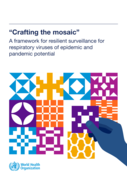
It is impossible to address the many complex needs of respiratory virus surveillance with a single surveillance system. Multiple systems, investigations and studies must each be fit-for-purpose to specific priority surveillance objectives, and only together can they provide essential information to
...
policy-makers. In essence, each surveillance approach fit together as “tiles in a mosaic” that provides a complete picture of respiratory viruses and the impact of associated illnesses and interventions at the country level. This mosaic framework demonstrates how surveillance approaches may be implemented as coordinated and collaborative systems, well-matched to specific priority objectives.
more
Operational guide: use of referral laboratories for the analysis of foodborne hazards in the Pacific
The Operational guide: use of referral laboratories for the analysis of foodborne hazards in the Pacific aims to strengthen the food analysis capacity of Pacific Island countries and areas by identifying national and reference laboratories capable of testing for priority foodborne hazards. The Pacif
...
ic Island countries and areas are often vulnerable to food safety incidents and emergencies due to their geographical distribution and dependence on food imports. The guide outlines key considerations for selecting referral laboratories and submitting samples to them, enabling continuous improvement of food safety systems and providing safe food for all. The target audiences are health and food safety authorities.
more
Integrating the prevention and control of noncommunicable diseases in HIV/AIDS, tuberculosis, and sexual and reproductive health programmes: implementation guidance
This volume contains monographs prepared at the ninety-first meeting of the Joint FAO/WHO Expert Committee on Food Additives (JECFA), which met virtually online from 1 to 12 February 2021.
The detailed monographs in this volume summarize data on specific contaminants in food. Individual monographs
...
present the assessment of exposure to cadmium from all food sources, the technical, analytical, dietary exposure and toxicological data on ergot alkaloids, an assessment of five substances that may occur as previous cargoes, and a revision of the specifications for steviol glycosides. This volume and others in the WHO Food Additives series contain information that is useful to those who produce and use food additives and veterinary drugs and those involved with controlling contaminants in food, government and food regulatory officers, industrial testing laboratories, toxicological laboratories and universities.
more
Accessed on 04.04.2023
The Drugs for Neglected Diseases initiative (DNDi) is an international
non-profit organization that discovers, develops, and delivers safe,
effective, and affordable treatments for the most neglected patients
The Pharmaceutical Forum of the Americas (PFA) has previously published guidelines and organised campaigns for community pharmacists on the prevention, detection and control of arbovirus infections in 2018 with a grant from the FIP Foundation for Pharmacy Education and Research. Building on that exp
...
ertise, FIP joined efforts with the PFA and is now publishing its first-ever handbook to support pharmacists in the
area of vector-borne diseases. As the integration of the regional forums in FIP advances, such collaborative projects are tangible results of an increasingly regionally informed and regionally targeted work by FIP.
more
