
Filter
1483
Text search:
Applied
Behaviour
Analysis
Featured
122
426
Language
Document type
932
226
165
80
38
20
12
5
4
1
Countries
55
42
40
38
36
31
29
29
28
27
24
21
21
18
18
17
17
15
15
15
14
13
13
11
10
10
10
9
8
8
8
8
6
6
6
6
5
5
5
5
5
4
4
4
4
4
4
4
3
3
3
3
3
3
2
2
2
2
2
2
2
2
2
2
2
2
2
2
1
1
1
1
1
1
1
1
1
1
1
1
1
1
1
1
1
1
1
1
1
1
1
1
1
1
1
1
1
1
1
1
1
1
1
1
Authors & Publishers
Publication Years
Category
440
117
102
90
90
30
6
1
Toolboxes
160
123
86
80
62
55
46
42
39
38
37
33
26
26
17
12
10
9
9
8
5
4
3
An Independent Report
of the West Africa Commission on Drugs
Formularies are lists of antibiotics that are suggested for certain healthcare settings. In developing a recommended formulary, countries should consider the needs of patients and facilities where they receive care. For example, clinicians in rural or primary health centers may need wide access to f
...
This handbook has been compiled as a source of ideas and experiences that can be used for CLTS orientation workshops, advocacy to stakeholders, training facilitators and natural leaders and implementing CLTS activities. It is a resource book especially for field staff, facilitators and trainers for
...

Guidelines on sanitation and health
recommended
The new WHO Guidelines on Sanitation and Health summarize the evidence on the effectiveness of a range of sanitation interventions and provide a comprehensive framework for health-protecting sanitation, covering policy and governance measures, implementation of sanitation technologies, systems and b
...
Moving from accelerated burden reduction to malaria elimination in Zambia

The Community Action Research on Disability (CARD) programme in Uganda embraced and modified the EDR approach, recognising the need for including people with disability in the research process from concept to outcome, and nurturing participation and collaboration between all the stakeholders in achi
...
This document aims to provide concrete, pragmatic guidance for how TB modelling and related technical assistance is undertaken to support country decision-making. The target audience for this document are the participants and stakeholders in country-level TB modelling efforts, including the individu
...
This article identifies the three core defining characteristics of healing environments for children and young people who have been exposed to chronic adversity and trauma. A large body of evidence highlights the pervasive and devastating developmental impacts of such exposure but there is also emer
...
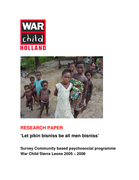
The community based programme aims to address the psychosocial needs of children and youth through helping to rebuild peaceful child- and youth-friendly communities through the use of cultural, creative, recreational, sportive and social activities. Within War Child, the community-based approach is
...
Guiding framework for development cooperation, Working paper 2017.
This document was drawn up on the basis of expert publications and inputs from partners in the
GIZ regional programme Psychosocial Support for Syrian and Iraqi Refugees and Internally
Displaced People1 in order to serve as guidanc
...
Communities can play a critical role in suicide prevention. Facilitating community engagement in suicide prevention is an important task. The toolkit is a step-by-step guide for communities to engage in suicide prevention activities and have ownership of the process and keep efforts sustained. It is
...
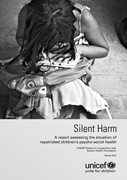
The principle of “the best interest of the child” should guide decisions by politicians whenever
children are affected. This is one of the basic ideas in the UN Convention on the Rights
of the Child. Decision makers should assess the consequences for children before taking
action. Today, this
...
Q9: For carers of people with dementia, do interventions (psychoeducational, cognitive-behavioural therapy counseling/case management, general support, training of caregivers, multi-component interventions and miscellaneous interventions) when compared to placebo/comparator, produce benefits/harm in
...
Q8: For people with dementia, what is the role of a medical review (including comorbid physical and mental conditions and medication use)?
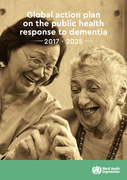
Areas for action include: increasing prioritisation and awareness of dementia; reducing the risk of dementia; diagnosis, treatment and care; support for dementia carers; strengthening information systems for dementia; and research and innovation.
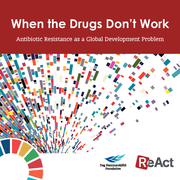
This paper focuses on the Sustainable Development Goals related to poverty, economic growth, inequality, health, food production and the environment. It presents concrete examples of the underlying and complex aspects of antibiotic resistance and its impacts across different Sustainable Development
...
Out of the shadows
SCOPING QUESTION: Which psychosocial interventions are effective in the management of cannabis dependence?
