
Filter
389
Text search:
syrian
refugees
Featured
24
132
Language
Document type
172
130
26
19
16
11
7
4
2
2
Countries
111
31
24
23
22
11
10
9
7
7
6
6
6
6
5
5
5
4
4
4
4
3
3
3
3
3
3
3
2
2
2
2
2
2
2
2
1
1
1
1
1
1
1
1
1
1
1
1
1
1
1
1
1
1
1
1
Authors & Publishers
Publication Years
Category
68
19
15
12
6
3
1
Toolboxes
120
78
41
37
25
23
8
8
7
6
4
4
3
3
3
3
2
2
2
1
Accessed: 08.11.2020
The objectives of NAP are aligned with the global action plan based on national needs and priorities. The emphasis is on One Health approach with all sectors especially human health, animal health and environment contributing towards minimizing the emergence and impact of AMR in Jordan.
English Analysis on World and 9 other countries about Food and Nutrition, Drought and Other; published on 13 Oct 2021 by ECHO, FAO and 3 other organizations
The consequences of the failing health system has immediate and longer-term impacts on children . April 2022
Available in English and Arabic
Economic conditions in Syria are projected to continue to be mired by prolonged armed conflict, turmoil in Lebanon and Turkey, COVID-19, and the war in Ukraine. Subject to extraordinarily high uncertainty, we project that Syria’s real GDP will contract by 2.6 percent in 2022 (to US$ 15.5 billion i
...
This document contains guidance for strengthening the disability inclusiveness of MHPSS responses and programmes in emergency settings. It is intended to supplement the IASC Guidelines on Mental Health and Psychosocial Support in Emergency Settings (2007).
Overall Objective
To consider and add
...

The standard operating procedures (SOP) for referral care cover all the refugee populations living in Lebanon. These SOPs outline the policies and procedures for referral care in Lebanon, including the limits in health assistance that can be provided.
Lessons from the IRC’s Early Emergency Response in the Urban Areas of Lesbos between September 2015 and March 2016

Report on the symposium 26–28 May 2015, New Babylon Meeting Center, The Hague
Current Opinion in Psychiatry: May 2018 - Volume 31 - Issue 3 - p 256–257
May 2020 International Journal of Infectious Diseases 96 DOI: 10.1016/j.ijid.2020.05.003
The purpose of the toolkit is to bring together existing learning and guidance as a starting point for stakeholders to begin SRH preparedness work. Within the SRH sector the field of preparedness is relatively new and growing. More collective effort is required to further evaluate the impact of prep
...
Ein Positionspapier des bundesweiten Netzwerks Flucht, Migration und Behinderung
Globalization and Health (2021) 17:74 https://doi.org/10.1186/s12992-021-00722-3
Women and children, especially pregnant girls and women, infants and young children and postpartum women, are populations that are extremely vulnerable in emergencies. Breastfeeding provides children with hydration, comfort, connection, high quality nutrition and protection against disease, shieldin
...
Report commissioned by the IASC Inter-Agency Humanitarian Evaluations Steering Group as part of the Syria Coordinated Accountability and Lessons Learning Initiative
Examining the needs of at‐risk youth in the Middle East and North Africa: A multi‐method landscape analysis and systematic literature review
A joint FAO/WFP update for the United Nations Security Council, January 2018. ISSUE N.3. Six months on from the last joint report for the United
Nations Security Council (UNSC), this report by the
Food and Agriculture Organization of the United
Nations (FAO) and the World Food Programme (WFP)
...
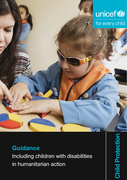
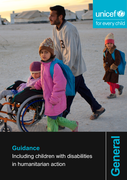
Guidance | Preparedness - Response and early recovery - Recovery and reconstruction
Guidance | Preparedness - Response and early recovery - Recovery and reconstruction
Guidance | Preparedness - Response and early recovery - Recovery and reconstruction

OECD Development Policy Tools
Recognising that donor policies and responses constantly evolve, this guidance recommends that donors operating in situations of forced displacement prioritise three broad areas of work, where they can best contribute to existing capacities at the national, regiona ...
Recognising that donor policies and responses constantly evolve, this guidance recommends that donors operating in situations of forced displacement prioritise three broad areas of work, where they can best contribute to existing capacities at the national, regiona ...
We created this booklet to share our patients’ stories with a larger community. Too many historical injustices go unacknowledged in Iraq, and human rights abuses continue to this day. We feel it is essential to uncover these injustices and help our patients speak out, in the hope that one day all
...
The figures and findings reflected in the 2019 Humanitarian Needs Overview (HNO) represent the independent analysis
of the United Nations (UN) and its humanitarian partners based on information available to them. While the HNO aims
to provide consolidated humanitarian analysis and data to help inf
...
Early childhood matters.
This document looks at specific issues regarding the development of young children, in particular from a psychosocial perspective. It is published twice per year by the Bernard van Leer Foundation. The views expressed in Early Childhood Matters are those of the authors and
...
Listening to what children in crisis have to say is not only a moral and ethical responsibility for donor and humanitarian actors, it is also a humanitarian obligation. Children’s right to participation is recognised in the United Nations Convention on the Rights of the
Child (UNCRC), which provi
...
The rapid arrival of millions of asylum seekers and migrants in Europe in 2015–16 forced cities both large and small to rethink their approach to immigrant inclusion.
COVID-19 pandemic has taken the entire world by surprise, creating the greatest global catastrophe since WWII, impacting all spheres of our societies, including health, economy, social protection, as well as security, and human rights. The virus affects people and communities indiscriminately in all
...
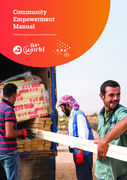
The present Community Empowerment Manual draws upon the lessons learned of the Community Protection Approach implementation in Lebanon, the occupied Palestinian territory and Central America during the period 2015-2020 by WeWorld – GVC and its partners.
The Manual means to accompany Field Staff i
...
BMJ Global Health2020;5:e002014. doi:10.1136/bmjgh-2019-002014
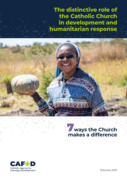
7 Febr. 2021
As COVID-19 continues to wreak havoc in countries – decimating people’s livelihoods, and leaving health systems struggling to provide healthcare and vaccines for the entire population - governments and donors should look to the Church as a partner. The essential Church networks, tr
...
The Lancet Published Online September 13, 2016 http://dx.doi.org/10.1016/S0140-6736(16)31404-0
Global Report on Food Crises 2023
recommended
The Global Report on Food Crises (GRFC) 2023 highlights that the number of people experiencing high levels of acute food insecurity and requiring urgent food and livelihood assistance increased for the fourth consecutive year in 2022. Over a quarter of a billion people were estimated to face acute h
...
Since February 24th, 2022, the beginning of Russia’s aggression against Ukraine, more than 80,000 women were expected to give birth. Therefore, understanding the impact of war on the perinatal health of women is an important requisite to improve perinatal care. This narrative synthesis has two mai
...
Food Security And Nutrition In Emergency
recommended
Chapter 9: Public health guide for emergencies
Emergencies, in spite of their tragic nature and adverse effects on mental health, are unparalleled opportunities to build better mental health systems for all people in need. This WHO publication shows how this was done in 10 diverse emergency-affected areas
All photos in this report were taken by Ahmad Baroudi/Save the Children
Health Workers and Health Facilities under Attack 2015, and Early 2016
The Global Early Warning – Early Action (EWEA) report on food security and agriculture is developed by the Food and Agriculture Organization of the United Nations (FAO). The report is part of FAO’s EWEA system, which aims to translate forecasts and early warnings into anticipatory action.
This is the 19th annual Landmine Monitor report. It is the sister publication to the Cluster Munition Monitor report, first published in November 2010.
Landmine Monitor 2016 provides a global overview of the landmine situation. Chapters on developments in specific countries and other areas are ava
...
The unmet need for palliative care in Cox’s Bazar

Humanitarian emergencies and crises (Humanitarian emergencies and crises) are large-scale events that may result in the breakdown of health care systems and society, forced displacement, death, and physical, psychological, social and spiritual suffering on a massive scale. Current responses to Human
...
In its resolution 34/16, the Human Rights Council decided to focus its next full-day meeting on “Protecting the rights of the child in humanitarian situations” and invited the Office of the High Commissioner to prepare a report on that issue, in close collaboration with relevant stakeholders. Th
...
The present report, which covers the period from January to December 2018, is submitted pursuant to Security Council resolution 2427 (2018). The preparation of the report involved broad consultations within the United Nations, in the field and at Headquarters, and with relevant Member States. It hig
...
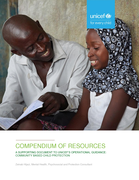
For applying the new operational guidance on CB-MHPSS in the field, UNICEF country offices and partners will need ready access to tools and resources that can be used to implement the programs. By bringing together resources from different contexts, the compendium makes options available to country
...
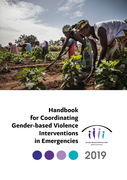
This handbook is a quick-reference tool that provides practical, field-level guidance to establish and maintain a GBV sub-cluster in a humanitarian emergency. It provides the foundations for coordination. More in-depth information can be pursued through resources referenced in this handbook. The GBV
...
Thirty years ago, the United Nations General Assembly adopted the Convention on the Rights of the Child at a moment of rapid global change marked by the end of apartheid, the fall of the Berlin Wall and the birth of the World Wide Web. These developments and more brought momentous and lasting evolut
...
This edition of UNICEF’s annual Humanitarian Action for Children highlights UNICEF’s funding appeal, which sets out an ambitious agenda to address the major challenges facing children and young people living through conflict and crisis. It presents the investments needed in 2021 to save their li
...
Only 8,730 asylum applications were registered in the EU+ in April, the lowest since at least 2008, and a massive 87% decrease from pre-COVID-19 levels in January and February.
The European Asylum Support Office (EASO) has released a special report which shows that the COVID-19 related travel restr
...

Monitoring and evaluation framework
recommended
COVID‑19 strategic preparedness and response
Today, more children than ever before are displaced within their own countries. Their harrowing stories of displacement are unfolding every day, and with increasing frequency. At the end of 2019, approximately 45.7 million people were internally displaced by conflict and violence (Fig. 1.1). Nearly
...
The European Commission against Racism and Intolerance (ECRI) was established by the Council of Europe. It is an independent body which ensures respect for human rights in the fight against racism, discrimination (based on "race", ethnic/national origin, colour, nationality, religion, language, sexu
...
Every year, nearly 250 million people move across borders temporarily or permanently for a job opportunity, studying, to flee a crisis back home, or for other reasons. Another 750 million move for similar reasons within the borders of their countries. With the understanding that human mobility affec
...
More than 700 000 people lose their life to suicide every year. The world is not on track to reach the 2030 suicide reduction targets. WHO advocates for countries to take action to prevent suicide, ideally through a comprehensive national suicide prevention strategy. Governments and communities can
...
Analysis on World about Agriculture, Food and Nutrition and more; published on 23 Sep 2021 by ECA, ECLAC and 3 other organizations
National-scale databases and reliability issue
Background report

WHO needs US$2.54 billion to provide life-saving assistance to millions of people around the world facing health emergencies. WHO’s Health Emergency Appeal is a consolidation of WHO’s priorities and financial requirements for 2023 to carry out health interventions in emergency and humanitarian r
...
This action plan is intended for senior-level decision-makers in ministries of health, malaria
programme managers, entomologists, and epidemiologists working on malaria and other vectorborne diseases programmes. It is also intended for decision-makers and technical and advocacy
staff at other orga
...
World Humanitarian Data and Trends presents global- and country-level data-and-trend analysis about humanitarian
crises and assistance. Its purpose is to consolidate this information and present it in an accessible way, providing policymakers, researchers and humanitarian practitioners with an evid
...
Disabled people in developing countries are the poorest of the poor: if we are serious about tackling extreme poverty, our development work has to target them. The post-2015 development framework offers hope that disabled people will finally get the prominence they deserve on the global development
...
A survey was conducted in countries in all six WHO regions and focused on the building blocks that are considered prerequisites to combat antimicrobial resistance: a comprehensive national plan, laboratory capacity to undertake surveillance for resistant microorganisms, access to safe, effective ant
...
Camps is intended to help address the absence of public and standardized training resources for those seeking to use high resolution satellite imagery in support of refugee/IDP assistance operations. Students, general audiences, and volunteers studying and analyzing satellite imagery of displaced po
...
Independent Monitoring Board of the Global Polio Eradication Initiative (Twelfth Report: October 2015)
Integrating WASH and MHCP interventions will always require imagination and creativity to adapt the approach to specific conditions, opportunities and constraints in each context. The book is designed to stimulate reflection and encourage initiatives to seek opportunities for closer integration of t
...
Fills a gap in current guidance on how to implement humanitarian standards in urban situations. In Arabic, English, French and Spanish available
Background paper for the Oslo Summit on Education for Development
VADEMECUM | This Vademecum is intended to provide a benchmark for aid workers—whether working in the field or at a strategic level—in particular concerning the formulation and implementation of programmes of prevention or response to humanitarian crises. It is not solely a theoretical document b
...
Background paper for the Oslo Summit on Education for Development.
This paper covers the four topics of the Oslo Summit: investment in education, quality of learning, education in emergencies and girls’ education. Disability continues to be one of the primary causes of educational disadvantage a
...
Globally, it is estimated that 128.6 million people are currently in need of humanitarian assistance. Of these individuals, approximately one-fourth are women and girls of reproductive age. Although family planning is one of the most life-saving, empowering, and cost-effective interventions for wome
...
This companion to the ALNAP EHA Guide offers protection-specific insights for evaluators and evaluation commissioners across the humanitarian sector. It covers the planning, data management and analysis phases of evaluation and addresses a range of challenges that – whilst not all unique to protec
...
In the last five years, i.e. how old turned the Campaign “Indifesa” (Defenceless) in 2016, that was launched by Terre des Hommes in 2012, the world has become smaller. One can actually say that the derangements following the Arab Spring in 2011 reshuffled what is stable and what produces instabi
...
Diese Studie liefert einschlägige Informationen aus erster Hand über die Lebenswirklichkeit von syrischen Kindern, die arbeiten müssen: in ihrem Heimatland, in den Nachbarstaaten oder in Europa. Der syrische Bürgerkrieg ist die schlimmste humanitäre Katastrophe unserer Zeit. Hunderttausende Men
...


WHO would like to express its gratitude and appreciation to all Member States that provided information to the WHO survey on policies and activities at the national level in the area of antimicrobial resistance. The contribution of staff in WHO Regional and Country Offices has been invaluable: in ga
...
This report looks at how the current implications of COVID-19 is exacerbating key challenges for people who menstruate around the world and provides recommendations on how to include menstrual hygiene management (MHM) within a COVID-19 response.
This report outlines and analyses the implementation of the Bridge Builder Model. This is a two-way, capacity-sharing model aimed at bringing together local faith actors (LFAs) and international humanitarian actors to increase understanding, trust, coordination and collaboration.
Group psychological help for adults impaired by distress in communities exposed to adversity
With this manual, the World Health Organization (WHO) is responding to requests from colleagues around the world for a group version of the manual Problem Management Plus (PM+), which was developed for adul
...
BMJ Global Health2020;5:e001980. doi:10.1136/bmjgh-2019-00198

Oxfam’s report found that Covid-19 has the potential to increase economic inequality in almost every country at once, the first time this has happened since records began over a century ago. It sets out how a rigged economy is enabling a super-rich elite to amass wealth in the middle of the worst
...
What school closures under COVID-19 mean for children and young people in
crisis-affected contexts
39 examples of field practices, and learnings from 20 countries, for all phases of humanitarian response. The report shows that deliberate and proactive action is required to ensure that persons with disabilities from all constituencies are systematically included and meaningfully participate in DRR
...
The recommendations cover the level of blood pressure to start medication, what type of medicine or combination of medicines to use, the target blood pressure level, and how often to have follow-up checks on blood pressure. In addition, the guideline provides the basis for how physicians and other h
...
Self-help Plus (SH+)
recommended
A group-based stress managment course for adults.
Self-Help Plus (SH+) is WHO’s 5-session stress management course for large groups of up to 30 people. It is delivered by supervised, non-specialist facilitators who complete a short training course and use pre-recorded audio and an illustrated gui
...
The COVID-19 pandemic led to school closures around the world, affecting almost 1.6 billion students. The effects of even short disruptions in a child’s schooling on their learning and well-being have been shown to be acute and long lasting. The capacities of education systems to respond to the cr
...
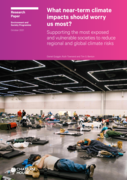
What near-term climate impacts should worry us most?
Supporting the most exposed and vulnerable societies to reduce
regional and global climate risks
