Filter
2578
Text search:
standard
precautions
Featured
377
620
Language
Document type
1259
560
294
232
105
48
32
13
13
6
5
4
2
Countries
119
114
65
53
51
50
48
44
41
38
35
35
30
29
26
25
23
22
20
20
20
19
16
16
16
16
16
16
15
14
13
13
13
13
12
11
9
8
8
8
7
6
6
6
6
6
6
6
5
5
5
5
5
4
4
4
4
4
4
4
4
4
4
3
3
3
3
3
2
2
2
2
2
2
2
2
2
2
2
2
2
2
2
2
2
1
1
1
1
1
1
1
1
1
1
1
1
1
1
1
1
1
1
1
1
1
Authors & Publishers
Publication Years
Category
670
391
219
193
159
78
77
2
1
1
Toolboxes
276
194
191
146
129
120
116
97
80
70
53
48
42
38
37
29
29
25
23
21
20
10
1
1
Accessed June 2014
Available in: English, French, Chinese, Spanish, Russian, Arabic, Thai, Korean, Tajik, Vietnamese, Uzbek
http://www.who.int/disabilities/cbr/guidelines/en/
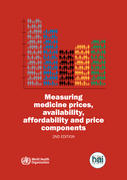
2nd edition - Published in 2003, the first WHO/HAI medicine prices manual Medicine Prices – A
New Approach to Measurement Draft for field-testing provides a draft methodology and tools to conduct national medicine prices and availability surveys. This second edition of the survey manual has been
...


The new WHO guidelines provide recommended steps for safe phlebotomy and reiterate accepted principles for drawing, collecting blood and transporting blood to laboratories/blood banks.

Ebola Response Roadmap
recommended
The World Health Organization is issuing a "roadmap" to guide and coordinate the international response to the outbreak of Ebola virus disease in West Africa.
The aim is to stop ongoing Ebola transmission worldwide within 6–9 months, while rapidly managing the consequences of any further interna
...
The aim is to provide early detection of potentially infected persons; to assist in implementing WHO recommendations related to Ebola management; and to prevent the international spread of the disease while allowing PoE authorities to avoid unnecessary restrictions and delays
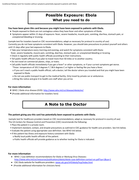
Possible Exposure: Ebola: What you need to do
IPC TRaining Day 2
This document builds on the Background document prepared for the September 4-5, 2014 Consultation. It includes proposed elements to consider during the development of a framework to assist decision-making at global and national level.
The aim of the document is to assist Member States and releva
...
This publication gives a broad vision of what a comprehensive approach to cervical cancer prevention and control means. In particular, it outlines the complementary strategies for comprehensive cervical cancer prevention and control, and highlights the neners. This new guide updates the 2006 edition
...
Kenya: Guidelines on use of antiretroviral drugs for treating and preventing HIV infection
recommended
2018 Edition
In light of the decline in new Ebola cases, strategies are now needed to scale down the activities and bed capacities in Ebola care facilities. These facilities include Ebola treatment units, community care centres, Ebola treatment centres and isolation centres. The Governments of Guinea, Liberia an
...
Advising principles. The purpose of this document is to support competent authorities in charge of IHR implementation to improve national capacities for the prevention, detection and control of events, by strengthening communications and coordination between points of entry and the national health s
...

The goals of Ebola virus disease (EVD) surveillance during Phase 3 of the Ebola response are to promptly detect new, suspected EVD cases and deaths so as to trigger appropriate response, including rapid diagnosis, case isolation and management, contact tracing, safe burials, and the identification o
...
The document covers: introduction on contact tracing in the Ebola response; general considerations for contact tracing; case definition; planning and preparation; personnel; implementation, and tools for contact tracing.
This manual is designed primarily to assist managers of national malaria programmes and national reference laboratory responsible for quality assurance of malaria microscopy control. The information is also applicable to non-governmental organizations and funding agencies investing in quality manage
...
Currently there is no publicly available source of consolidated information on attacks on health care in emergencies. This report is a first attempt to consolidate and analyse the data that is available from open sources. While the data are not comprehensive, the findings shed light on the severity
...

This document presents a strategic framework, aimed towards the development of sustainable global, regional and national plans relating to laboratory biorisk management.
This is a detailed manual giving a step by step approach to undertaking the pharmacovigilance of antiretrovirals. It is intended to be a source of practical advice for Pharmacovigilance Centres and health professionals involved in HIV/AIDS prevention and treatment programmes. A number of WHO publica
...
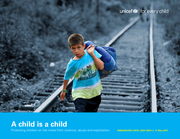
Protecting children on the move from violence, abuse and exploitation
This summary brief highlights key messages from the updated World Health Organization’s recommendation on tranexamic acid (TXA) for the treatment of postpartum haemorrhage (PPH), including policy and program implications for translating the TXA recommendation into action at the country level. In 2
...

Joining efforts to control two trelated global epidemics.
Circumcision – consultative review of additional information, 12 August 2016
21 September 2016
he WHO global disability action plan 2014-2021 is a significant step towards achieving health and well-being and human rights for people with disabilities. The action plan was endorsed by WHO Member States in 2014 and calls for them to remove barriers and improve access to health services and progra
...
Technical Information & Safety Data on Chlorine
Polymerase Chain Reaction (PCR) has significantly helped in early diagnosis and commencement of specific interventions for diseases control. It also plays a critical role in understanding the disease epidemiology and unraveling the transmission dynamics of the disease. This manual intends to p
...
Birth defect has been an emerging major cause of child mortality in the region. Scarcity of the birth defects information hampers policy decisions and control measures at national level. In order to create evidence for action for birth defects prevention in the region, WHO-SEARO in collaboration wit
...
Birth defect has been an emerging major cause of child mortality in the region. Scarcity of the birth defects information hampers policy decisions and control measures at national level. In order to create evidence for action for birth defects prevention in the region, WHO-SEARO in collaboration wit
...

This toolkit for integrated vector management (IVM) is designed to help national and regional programme managers coordinate across sectors to design and run large IVM programmes.
The toolkit provides the technical detail required to plan, implement, monitor and evaluate an IVM approach. IVM can ...
The toolkit provides the technical detail required to plan, implement, monitor and evaluate an IVM approach. IVM can ...

The review’s objectives are to review progress in TB control with emphasis on DOTS strategy implementation, summarize the experience, lessons learnt and methods of work and to make recommendations for international donors, technical agencies and the Ministry of Health.
One key aim of tuberculosis (TB) prevention and care is to render them more people-centred, which means further boosting and improving ambulatory care models across the countries of Eastern Europe and central Asia. This note is intended to remind interested parties of the evidence that shows that am
...
Assessing and improving quality and human rights in mental health and social care facilites
A guide to help you create an Action Plan specific for your health-care facility
This operational guidance on MHPSS provides a practical orientation and tools for UNHCR country operations. It covers specific points of good practice to consider when developing MHPSS programming and offers advice on priority issues and practical difficulties, while also providing some background i
...

Accessed: 03.09.2019
Treat 3 Million by 2005
WHO/HIV/2005.02
African Region
Evaluation report
December 2014
30 April 2020
| COVID-19: Essential health services

Instruction for Use

9 April 2020
WHO has published the guidance “Clinical management of severe acute respiratory infection (SARI) when COVID-19 disease is suspected” This document is intended for clinicians taking care of hospitalized adult and paediatric patients with severe acute respiratory infection (SARI) whe
...
N95 or equivalent respirators are single-use personal protective equipment (PPE) designed for use by health workers that provide direct care to patients with diseases transmitted by aerosols or during aerosol generating procedures (AGP) for patients with acute respiratory disease, as is the case of
...
Most shelters in the Caribbean are community centers, schools, or churches that are limited in size. The novel coronavirus disease (COVID-19) distancing requirements subsequently reduced the number of persons a shelter can accommodate during the hurricane season. This document reinforces some measur
...
December 2020 — May 2021

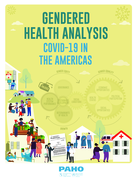
This document focus on the direct consequences of the virus (morbidity and mortality) in specific populations and on the results of measures aimed at mitigating the spread of the virus, with indirect impacts on socio-economic conditions. In this complex scenario, the gender approach has not received
...
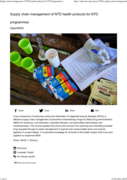
A key component of achieving control and elimination of neglected tropical diseases (NTDs) is effective supply chain management of preventive chemotherapy drugs for Mass Drug Administration (MDA) for trachoma, river blindness, lymphatic filariasis, soil-transmitted helminthiasis and schistosomiasis.
...
Tuberculosis (TB) is the deadliest infectious disease in most low- and middle-income countries, claiming more than 4,000 lives each day. The unprecedented COVID-19 pandemic has seriously impacted people with pre-existing health conditions. People with TB are usually more vulnerable to other infectio
...
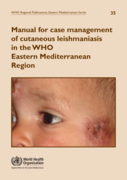
This publication represents a key step forward in translating Control of the leishmaniases (WHO Technical Report Series, No. 949) into a more practical tool for health personnel directly involved in the case management of cutaneous leishmaniasis. With this manual, countries will have, for the first
...
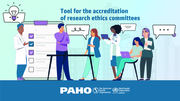
The ethical governance of research assumes the existence of a national entity (or subnational if applicable, according to the constitution of a country) in charge of supervising the research ethics committees (RECs) that review and monitor research with human beings. This supervision includes the ac
...
Hey Facts about the disease

This Clinic Supervisor’s Manual is helpful for focusing managers on the key elements of integrated primary health care as they simultaneously integrate new interventions for HIV/AIDS, tuberculosis, and malaria. This tool contains 12 sections. Section 1 explains how to use the manual. Section 2 hel
...


In this guideline, natural ventilation is considered
among one the effective measures to control infections in health care. This guideline provides
a design and operation guide for hospital planners, engineers, architects and infection control
personnel. The recommendations in this guidelin
...
A consolidated set of reproductive health kits for use by humanitarian agencies. These kits are intended to speed up the provision of appropriate reproductive health services in emergency and refugee situations.

This section deals with implementing and improving infection control practices in hospitals, health centres and other health services in the outbreak area. It explains the need for, and implementation of, effective triage procedures, and basic requirements for infection control and supporting activi
...
CDC has developed this slide set for use by staff development, infection control, and occupational health personnel for training healthcare personnel on how to select and use personal protective equipment PPE to protect themselves from exposure to microbiological hazards in the healthcare setting

Malaria is a prevalent cause of febrile illnesses in areas with high transmission, and its clinical presentation overlaps with initial signs of Ebola disease. For this reason, the effectiveness of the Ebola response in Guinea, Liberia and Sierra Leone can be optimized through the deployment of targe
...

The preparedness strengthening team deployed to Ghana focused on specific objectives in order to assist the country in becoming as operationally prepared as possible to detect, investigate and report potential EVD cases effectively and safely and to mount an effective response to prevent a larger o
...
The Early Essential Newborn Care Pocket Guide was developed by the WHO Regional Office for the Western Pacific for introducing and scaling-up Early Essential Newborn Care. This step-by-step Guide is intended to provide a portable and practical summary of the up-to-date global evidence for newborn ca
...
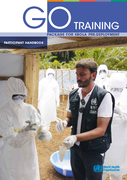
GO pre-deployment training: participant handbook
recommended
This is a pre-deployment training, tailored specially to the Ebola outbreak in West Africa, offered to WHO personnel, consultants, and key partners. The material covered in modules 1-4 is applicable and useful to frontline response workers, national and international. Only Module 5, which focuses on
...
Essential obstetric and newborn care
recommended
Essential obstetric and newborn care is designed as a tool to help protect mothers and their children in adverse environments. It is intended for midwives, doctors with obstetrics training, and health care personnel who deal with obstetric emergencies.