Filter
4647
Text search:
standard
list
Featured
498
1417
Language
Document type
2839
661
569
290
141
68
39
18
9
5
4
2
Countries
247
153
139
121
118
117
114
97
95
92
86
81
81
77
76
74
74
73
62
50
50
48
48
35
33
32
31
29
28
28
23
23
23
23
22
21
20
19
18
17
17
16
15
15
15
13
13
12
12
12
11
11
10
10
10
8
8
8
8
7
7
7
6
6
6
5
5
5
5
5
5
5
5
4
4
4
4
4
4
4
4
4
3
3
3
3
3
3
2
2
2
2
2
2
2
2
2
2
2
2
2
2
2
1
1
1
1
1
1
1
1
1
1
1
1
1
1
1
1
1
1
1
1
1
1
1
1
1
1
1
1
1
1
1
1
1
1
1
1
Authors & Publishers
Publication Years
Category
1889
411
274
241
215
124
71
5
2
2
Toolboxes
300
284
267
228
191
185
160
147
135
130
112
97
92
71
64
59
56
36
32
24
23
15
13
2
CARE International’s Personal Safety & Security Handbook has been developed to provide practical personal safety and security advice and guidance to all staff working in CARE offices and field sites throughout the world.
Each section has a detailed ...
Each section has a detailed ...
The SAFE Paediatric Anaesthesia course is an 'off the shelf package' supported by a facilitator manual, teaching materials and standard operating procedures. It is hoped that the course is clinically relevant and will improve the practice of anaesth
...
Barriers to the prompt and effective diagnosis and treatment of malaria exist at both the community and health facility level. Household surveys measure malaria case management at the population level with standard indicators that assess treatment-s
...
Human rights must be at the centre of all prevention, preparedness, containment and treatment efforts from the start, in order to best protect public health and support the groups and people who are most at risk. States have an obligation to protect and guarantee everyone the right to the highest at
...
The purpose of this document is to provide guidance on the cleaning and disinfection of environmental surfaces in the context of COVID-19. This guidance is intended for health care professionals, public health professionals and health authorities that are developing and implementing policies and
...
Infection prevention and control practices need to be implemented to guarantee the safety of healthcare workers and patients in healthcare settings, it is fundamental to prevent cross contamination and containment of spread of COVID 19. As of the day of this publication, the following precautions ar
...
In December 2019 a novel coronavirus (2019-nCoV) was identified as the causative agent of a severe acute respiratory illness among people exposed in a seafood market in Wuhan, China; • Human-to-human transmission has been documented, including in healthcare workers, and aerosol-generating procedur
...
The content of the tool has been updated to reflect new WHO technical guidance and new evidence on both COVID-19 pandemic and mass gatherings, as well as feedback from end-users. This revision of the risk assessment tool was developed and reviewed by the WHO Mass Gathering Technical Expert Group wit
...
HIV-1 drug resistance (HIVDR) genotyping is an essential component of the WHO global HIVDR surveillance strategy. Plasma “gold standard” specimen type for HIVDR genotyping, but its use may not be feasible in rural, remote areas in low- and middl
...
Licensed pharmaceutical products (marketing authorization) should be manufactured only by licensed manufacturers (holders of a manufacturing authorization) whose activities are regularly inspected by competent national authorities. This guide to GMP shall be used as a
...
Ghana's attempt to regulate health care waste management started in 2002 with the development of guidelines on health care waste manage-ment by the Environmental Protection Agency (EPA). In 2006, the Ghana Health Service (GHS) also developed the Health Care Waste Management Policy and Guidelines as
...
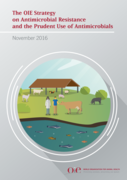
The OIE has been working on the AMR issue for a long
time. In undertaking its role as a standard- setting organisation*
for animal health, including zoonoses, the OIE has developed
a wide range of international standards on antimicrobial
agents,
...
PlosOne https://doi.org/10.1371/journal.pone.0161576; Zoonotic diseases have varying public health burden and socio-economic impact across time and geographical settings making their prioritization for prevention and control important at the national level. We conducted systematic prioritization of
...
Therapeutics for Ebola virus disease
recommended
The WHO Ebola Virus Disease (EVD) Clinical management: living guidance contains the Organization’s most up-to-date recommendations for the clinical management of people with EVD. Providing guidance that is comprehensive and holistic for the optimal care of patients with EVD throughout their il
...
The major neglected tropical diseases, Taenia solium taeniosis/cysticercosis and schistosomiasis caused by Schistosoma mansoni or S. haematobium are presumed to be widely distributed in Africa. Taenia solium taeniosis/ cysticercosis has been reported as an emerging disease in different regions of Af
...

During the 17 years since Surgical approaches to the urogenital manifestations of lymphatic filariasis was first published, there has been heightened awareness of the physical, economic and emotional burden of the genitourinary manifestations of filariasis. With the impetus to provide better guidanc
...

Benchmarking is a strategic process often used by businesses and institutes to standardize performance in relation to the best practices of their sector. The World Health Organization (WHO) and partners have developed a tool with a list of benchmark
...
The Implementation toolkit for accessible telehealth services provides practical guidance to support governments, industry partners, health service providers and civil society groups in the use and implementation of the WHO-ITU Global standard for a
...
Childhood Respiratory Diseases & the Environment learning objectives
•To understand how the respiratory tract is affected by the environment
•To describe respiratory diseases linked to the environment
•To list one population-level int
...

The purpose of this booklet is to assist WHO and other
Public Health workers in the field when an emergency
occurs. The booklet provides technical hints on how to
carry out a rapid health assessment, how to facilitate
coordination, how departments in WHO can assist, etc.
...
Millennium Development Goal 8E aims for affordable access to essential medicines. Essential medicines, as defined by WHO, are those that “satisfy the health-care needs of the majority of the population” and that should therefore “be available at all times in adequate amounts”. However, there
...
The Participation Handbook for humanitarian field workers contains detailed practical advice on the participation of affected people in humanitarian action. It has three sections:
Developing a participatory approach (main issues, key factors, building mutual respect, communication methods and
...
The publication of the Second Edition of the Emergency Drug Guidelines represents the culmination of the efforts of the National Drugs and Therapeutics Committee (NDTC) to publish clinical drug guidelines for common diseases seen in Fiji. These guidelines are targeted for health care professionals w
...

The main objective of this mission was to assess the level of preparedness of Guinea-Bissau in respect of the WHO consolidated checklist. The checklist helps countries to assess and test their level of readiness it is being used to identify concrete action to be taken and where countries will requir
...
2nd edition .
This Framework applies to the sharing of H5N1 and other influenza viruses with human pandemic potential and the sharing of benefits. This Framework does not apply to seasonal influenza viruses or other non-influenza pathogens or biological substances that may be contained in clinical
...
The purpose of this document is to inform the public about biological and chemical hazards and thereby prepare the population for an immediate response in the event of an incident until public health support is provided.
The agents reported here are: Anthrax, Botulism, Haemorrhagic Fever,
...

Cryptococcal disease is one of the most common opportunistic infections among people living with advanced HIV disease and is a major contributor to severe illness, morbidity, and mortality, particularly in sub-Saharan Africa.
These guidelines update the recommendations that were first released i
...
The ERP approach seeks to improve effectiveness by reducing both time and effort, enhancing predictability through establishing predefined roles, responsibilities and coordination mechanisms. The Emergency Response Preparedness Plan (ERPP) has four main components: i) Risk Assessment, ii) Minimum Pr
...

The BRACED Myanmar Alliance was a three-year project aiming to ‘build the resilience of 350,000 people across Myanmar to climate extremes’. The project worked in 7 states, 8 townships and 155 communities. The main impact for project populations was intended to be ‘improved well-being and reduc
...
This scoping study done in Myanmar offers the chance for FoodSTART+ to explore prospects for future partnerships in another important country of the region. The study was done from October 2016 to February 2017 and included visits to selected major potato and cassava production areas to meet with re
...

WHO, in partnership with the International Society for Prosthetics and Orthotics (ISPO) and the United States Agency for International Development (USAID), has published global standards for prosthetics and orthotics. Its aim is to ensure that prosthetics and orthotics services are people-centred an
...

WHO, in partnership with the International Society for Prosthetics and Orthotics (ISPO) and the United States Agency for International Development (USAID), has published global standards for prosthetics and orthotics. Its aim is to ensure that prosthetics and orthotics services are people-centred an
...
The present report, which covers the period from January to December 2018, is submitted pursuant to Security Council resolution 2427 (2018). The preparation of the report involved broad consultations within the United Nations, in the field and at Headquarters, and with relevant Member States. It hig
...
Sexual and gender-based violence (SGBV) threatens displaced women and girls, as well as men and boys, in all regions of the world. Creating safe environments and mitigating the risk of SGBV can only be achieved by addressing gender inequality and discrimination. While the scourge of SGBV is receivin
...
Rwanda: Ebola Preparedness Emergency Plan of Action (EPoA) Final Report - DREF Operation n° MDRRW017
Eleven (11) districts in Rwanda were initially were considered most at risk of the outbreak, namely:
• Rusizi, Nyamasheke, Karongi, Rutsiro, Rubavu (bordering DRC)
• Musanze, Burera, Gicumbi and Nyagatare (bordering Uganda)
• Kigali city (comprised of 3 localities) due to the presence of Ki
...
In many low- and middle-income countries, there is a wide gap between evidencebased recommendations and current practice. Treatment of major CVD risk factors remains suboptimal, and only a minority of patients who are treated reach their target levels for blood pressure, blood sugar and blood choles
...
The report and an accompanying series of studies show the global uptake of the World Health Organization (WHO) Surgical Safety Checklist in its first ten years since its launch and recommend ways the Checklist can be more effectively used to improve surgical safety for millions at risk.
The report
...
Antimicrobial resistance (AMR) is an important public health concern shared by developed and developing countries. In developing countries the burden of infectious diseases is greater and exacerbated by limited access to, and availability and affordability of, antimicrobials required to treat infect
...
Interim Version 24, February 2020
This checklist has been prepared with the aim of supporting hospital managers and emergency planners in achieving the above by defining and initiating actions needed to ensure a rapid response to the COVID-19 outbreak. The checklist is structured on eleven key co
...
This document provides a decision-making framework for implementation of mass treatment interventions, active case-finding campaigns and population-based surveys for neglected tropical diseases in the context of the COVID-19 pandemic. A two-step approach is proposed: a risk–benefit assessment, to
...
In the strategies for effective infection prevention and control (IPC), what does triage entail at hospitals?
Triage includes screening at the entrance, identification of cases and isolation if necessary. There should be a triage (screening) area where visitors to the hospital are interviewed using
...
WHO published guidance for clinicians and health care decision-makers on the use of corticosteroids in patients with COVID-19.
We recommend systemic corticosteroids for the treatment of patients with severe and critical COVID-19. We suggest not to use corticosteroids in the treatment of patients
...
Birth defects surveillance: quick reference handbook of selected congenital anomalies and infections
This Quick Reference Handbook of Selected Congenital Anomalies and Infections is a companion tool to Birth defects surveillance: a manual for programme managers, and is intended for use by front-line health care professionals who are diagnosing and collecting data on congenital defects and infection
...
The document is structured into five sections. The first presents the key experiences and challenges that justify a renewal of the EPHFs. The second section updates the groundwork for the exercise of public health and provides a framework to inform the exercise of the new essential functions. The th
...
Since the emergence of COVID 19 in December 2019, various public health responses measures have been implemented to control the pandemic. Among measures taken by the Africa CDC was the launch of PACT initiative to accelerate COVID 19 testing. Key to the initiative is the engagement of Community Heal
...
The United Nations Commission on Life-Saving Commodities (UNCLSC, 2012) defined 13 health products to end preventable deaths of woman and children. One of those 13 products is the neonatal resuscitator, is indispensable medical device to save newborns from asphyxia at birth. For the efficient use of
...
5 April 2022, Addendum. This policy brief confirms WHO guidance and policy on injection safety in the context of the extraordinary increase in global injections resulting from COVID-19 immunization campaigns. It also calls attention to information on specialized syringes for COVID-19 vaccines and br
...

This version of the glossary is substantially changed from the original. Some terms have been omitted, many have been modified in light of practical experiences and the evolution in concepts, and new terms have been added. The list of terms is not i
...
In the face of rapid increases in the number of hospitalizations due to COVID-19 in Latin America and the Caribbean, coupled with shortages of human and material resources, including medical equipment and gases, there is a need to redesign models of care in the Region to optimize available resources
...

The World Health Organization (WHO) is releasing the second edition of its Global Accelerated Action for the Health of Adolescents (AA-HA!) guidance. The document aims to equip governments to respond to the health and well-being challenges, opportunities and needs of adolescents.
The guidance pro
...
Azraq refugee camp located in Zarqa governorate was established in April 2014. As of June 2023, the camp continues to hosts 40,600 Syrian refugees, with 61% of the population children, and 25% of all households female-headed (UNHCR, 2023).
The water supply system in Azraq has been operational sin
...
Prompt, effective antimalarial treatment, and supportive care can substantially reduce the rate of mortality from severe malaria. However, many children in malaria-endemic countries do not have access to health facilities or a qualified health care provider and do not receive the necessary care in a
...
The World Heart Federation (WHF) Roadmap series covers a large range of cardiovascular conditions. These Roadmaps identify potential roadblocks and their solutions to improve the prevention, detection and management of cardiovascular diseases and provide a generic global framework available for loca
...
The Food and Agriculture Organization of the United Nations has launched a new Compendium of forgotten foods in Africa which is a first-of-its-kind comprehensive collection of 100 African forgotten food crops.
Also referred to as neglected, underutilized or orphan crops, these species offer valua
...
One of the principles underpinning the delivery of all essential services and coordination of those services is the “survivor-centered approach”, which places the human rights, needs, and wishes of women and girl survivors at the centre of service delivery.
A key challenge faced by many entit
...
Climate change is one of the most urgent challenges for people and ecosystems worldwide. The recently published sixth Assessment Report (AR6) of the Intergovernmental Panel on Climate Change (IPCC) stresses the occurrence of widespread adverse impacts of climate change. Increased frequency and inten
...

Responding to a poliovirus event and outbreak, Part 1: General (SOPs) describes the general principles and steps to facilitate timely and effective responses to poliovirus events and outbreaks, and incorporate lessons learned from recent previous outbreak response efforts. This document summarizes r
...
The main objectives of the SOPs are to: (i) establish standards and timelines for response activities; and (ii) guide national governments and GPEI partners in key support functions.
This new version of the SOPs presents overall response requirements for dealing with type 1, 2 and 3 poliovirus fo
...
WHO Regional EVD Preparedness Meeting Presentations January 14-16, 2015
Anxiety disorders
recommended
Accessed 15th of October 2015

Policy and Manual

The application of digital health technology is growing at a rapid rate in Africa, with the goals of improving the delivery of healthcare services and more effectively reaching out to remote and underserved communities. The lack of enabling guidelines and standards across the continent, on the other
...
Personal protective equipment for Ebola outbreak. - Sample of coveralls available on the market
recommended
Last updated, 20/01/2015

PQDx 0179-012-00 WHO
PQDx Public Report
June/2017, version 4.0
Selection and Use of Essential Medicines 2021
recommended
The 23rd meeting of the WHO Expert Committee on Selection and Use of Essential Medicines was coordinated from Geneva, Switzerland, and held virtually from 21 June to 2 July 2021. The Committee considered 88 applications proposing additions, changes and deletions of medicines, medicine classes and fo
...
Offers information on the assessment of complex trauma in children. This fact sheet provides general guidelines for assessing complex trauma such as gathering information, a variety of approaches and techniques, how to work with a child's family and care team, and assessing over time. It also gives
...

PQDx 0027-012-00 WHO
PQDx Public Report
May/2017, version 4.0
SOP- Quality Assurance of Malaria Diagnostic Tests
The Sierra Leone National Infection Prevention and Control Guidelines were jointly developed and updated by the Ministry of Health and Sanitation in collaboration with the World Health Organization and the US Centers for Disease Control and Prevention.

Submitted to The Lesotho National Federation of Disabled (LNFOD)

Situational Analysis: 13-23 October 2014
Report prepared using the WHO/SEARO workbook tool for undertaking a situational analysis of medicines in health care delivery in low and middle income countries
Report prepared using the WHO/SEARO workbook tool for undertaking a situational analysis of medicines in health care delivery in low and middle income countries
Large File 66 MB!!!