Filter
7521
Text search:
staff
management
Featured
732
2247
Language
7291
173
117
86
77
44
38
18
9
9
8
8
8
8
8
6
6
6
6
5
5
5
5
5
4
4
4
4
4
4
4
3
3
3
3
3
3
3
3
3
2
2
2
2
2
2
2
2
2
1
1
1
1
1
1
1
1
1
1
1
1
1
1
Document type
4501
984
962
429
280
117
107
89
18
10
9
9
1
Countries
369
237
236
200
187
167
165
164
164
158
157
138
118
118
116
112
111
107
96
80
78
76
75
67
67
62
59
51
46
45
45
43
42
40
39
38
38
36
35
34
30
29
29
26
25
24
24
24
23
23
23
21
21
21
20
18
18
17
16
16
16
14
14
14
13
13
12
12
11
10
10
10
9
9
9
8
8
8
7
7
7
7
6
6
6
6
6
6
5
5
5
5
5
5
5
4
4
4
4
4
4
4
4
4
3
3
3
3
3
3
3
3
3
2
2
2
2
2
2
2
2
2
2
2
2
2
2
2
2
2
1
1
1
1
1
1
1
1
1
1
1
1
1
1
1
1
1
1
Authors & Publishers
988
431
284
223
192
167
154
146
96
68
56
41
36
36
35
34
32
31
31
30
28
28
28
27
27
27
27
26
25
25
24
24
24
24
24
23
23
23
23
23
22
22
21
21
21
20
20
20
20
20
19
19
19
19
18
18
18
17
17
17
17
17
16
15
15
14
14
14
14
14
13
13
13
13
13
13
13
13
13
13
12
12
12
12
12
12
12
12
12
11
11
11
11
11
11
11
11
10
10
10
10
10
10
10
10
10
10
9
9
9
9
9
9
9
9
9
9
9
9
9
9
9
8
8
8
8
8
8
8
8
8
8
7
7
7
7
7
7
7
7
7
7
7
7
7
7
7
7
7
7
7
7
7
7
7
7
6
6
6
6
6
6
6
6
6
6
6
6
6
6
6
6
6
6
6
6
6
6
6
6
6
6
6
6
6
6
6
6
6
6
5
5
5
5
5
5
5
5
5
5
5
5
5
5
5
5
5
5
5
5
5
5
5
5
5
5
5
5
5
5
5
5
5
5
5
5
5
5
5
5
5
5
5
5
5
4
4
4
4
4
4
4
4
4
4
4
4
4
4
4
4
4
4
4
4
4
4
4
4
4
4
4
4
4
4
4
4
4
4
4
4
4
4
4
4
4
4
4
4
4
4
4
4
4
4
4
4
4
4
4
4
4
4
4
4
4
4
4
4
4
4
4
4
4
4
4
4
4
4
4
4
4
4
4
4
4
4
4
3
3
3
3
3
3
3
3
3
3
3
3
3
3
3
3
3
3
3
3
3
3
3
3
3
3
3
3
3
3
3
3
3
3
3
3
3
3
3
3
3
3
3
3
3
3
3
3
3
3
3
3
3
3
3
3
3
3
3
3
3
3
3
3
3
3
3
3
3
3
3
3
3
3
3
3
3
3
3
3
3
3
3
3
3
3
3
3
3
3
3
3
3
3
3
3
3
3
3
3
3
3
3
3
3
3
3
3
3
3
3
3
3
3
3
3
3
3
3
3
3
3
3
3
3
3
3
3
3
3
3
3
3
3
3
3
3
3
3
3
3
3
3
3
3
3
2
2
2
2
2
2
2
2
2
2
2
2
2
2
2
2
2
2
2
2
2
2
2
2
2
2
2
2
2
2
2
2
2
2
2
2
2
2
2
2
2
2
2
2
2
2
2
2
2
2
2
2
2
2
2
2
2
2
2
2
2
2
2
2
2
2
2
2
2
2
2
2
2
2
2
2
2
2
2
2
2
2
2
2
2
2
2
2
2
2
2
2
2
2
2
2
2
2
2
2
2
2
2
2
2
2
2
2
2
2
2
2
2
2
2
2
2
2
2
2
2
2
2
2
2
2
2
2
2
2
2
2
2
2
2
2
2
2
2
2
2
2
2
2
2
2
2
2
2
2
2
2
2
2
2
2
2
2
2
2
2
2
2
2
2
2
2
2
2
2
2
2
2
2
2
2
2
2
2
2
2
2
2
2
2
2
2
2
2
2
2
2
2
2
2
2
2
2
2
2
2
2
2
2
2
2
2
2
2
2
2
2
2
2
2
2
2
2
2
2
2
2
2
2
2
2
2
2
2
2
2
2
2
2
2
2
2
2
2
2
2
2
2
2
2
2
2
2
2
2
2
2
2
2
2
2
2
2
2
2
2
2
2
2
2
2
2
2
2
2
2
2
2
2
2
2
2
2
2
2
2
2
2
2
2
2
2
2
2
2
2
2
2
2
2
2
2
2
2
2
2
2
2
2
2
2
2
2
2
2
2
2
2
2
2
2
2
2
2
2
2
2
2
2
2
2
2
2
2
2
2
2
2
2
2
2
2
2
2
2
2
2
2
2
2
2
2
2
2
2
2
2
2
2
2
2
2
2
2
2
2
2
2
2
2
2
2
2
2
2
2
2
2
2
2
2
2
2
2
2
2
2
2
2
2
2
2
2
2
2
2
2
2
2
2
2
1
1
1
1
1
1
1
1
1
1
1
1
1
1
1
1
1
1
1
1
1
1
1
1
1
1
1
1
1
1
1
1
1
1
1
1
1
1
1
1
1
1
1
1
1
1
1
1
1
1
1
1
1
1
1
1
1
1
1
1
1
1
1
1
1
1
1
1
1
1
1
1
1
1
1
1
1
1
1
1
1
1
1
1
1
1
1
1
1
1
1
1
1
1
1
1
1
1
1
1
1
1
1
1
1
1
1
1
1
1
1
1
1
1
1
1
1
1
1
1
1
1
1
1
1
1
1
1
1
1
1
1
1
1
1
1
1
1
1
1
1
1
1
1
1
1
1
1
1
1
1
1
1
1
1
1
1
1
1
1
1
1
1
1
1
1
1
1
1
1
1
1
1
1
1
1
1
1
1
1
1
1
1
1
1
1
1
1
1
1
1
1
1
1
1
1
1
1
1
1
1
1
1
1
1
1
1
1
1
1
1
1
1
1
1
1
1
1
1
1
1
1
1
1
1
1
1
1
1
1
1
1
1
1
1
1
1
1
1
1
1
1
1
1
1
1
1
1
1
1
1
1
1
1
1
1
1
1
1
1
1
1
1
1
1
1
1
1
1
1
1
1
1
1
1
1
1
1
1
1
1
1
1
1
1
1
1
1
1
1
1
1
1
1
1
1
1
1
1
1
1
1
1
1
1
1
1
1
1
1
1
1
1
1
1
1
1
1
1
1
1
1
1
1
1
1
1
1
1
1
1
1
1
1
1
1
1
1
1
1
1
1
1
1
1
1
1
1
1
1
1
1
1
1
1
1
1
1
1
1
1
1
1
1
1
1
1
1
1
1
1
1
1
1
1
1
1
1
1
1
1
1
1
1
1
1
1
1
1
1
1
1
1
1
1
1
1
1
1
1
1
1
1
1
1
1
1
1
1
1
1
1
1
1
1
1
1
1
1
1
1
1
1
1
1
1
1
1
1
1
1
1
1
1
1
1
1
1
1
1
1
1
1
1
1
1
1
1
1
1
1
1
1
1
1
1
1
1
1
1
1
1
1
1
1
1
1
1
1
1
1
1
1
1
1
1
1
1
1
1
1
1
1
1
1
1
1
1
1
1
1
1
1
1
1
1
1
1
1
1
1
1
1
1
1
1
1
1
1
1
1
1
1
1
1
1
1
1
1
1
1
1
1
1
1
1
1
1
1
1
1
1
1
1
1
1
1
1
1
1
1
1
1
1
1
1
1
1
1
1
1
1
1
1
1
1
1
1
1
1
1
1
1
1
1
1
1
1
1
1
1
1
1
1
1
1
1
1
1
1
1
1
1
1
1
1
1
1
1
1
1
1
1
1
1
1
1
1
1
1
1
1
1
1
1
1
1
1
1
1
1
1
1
1
1
1
1
1
1
1
1
1
1
1
1
1
1
1
1
1
1
1
1
1
1
1
1
1
1
1
1
1
1
1
1
1
1
1
1
1
1
1
1
1
1
1
1
1
1
1
1
1
1
1
1
1
1
1
1
1
1
1
1
1
1
1
1
1
1
1
1
1
1
1
1
1
1
1
1
1
1
1
1
1
1
1
1
1
1
1
1
1
1
1
1
1
1
1
1
1
1
1
1
1
1
1
1
1
1
1
1
1
1
1
1
1
1
1
1
1
1
1
1
1
1
1
1
1
1
1
1
1
1
1
1
1
1
1
1
1
1
1
1
1
1
1
1
1
1
1
1
1
1
1
1
1
1
1
1
1
1
1
1
1
1
1
1
1
1
1
1
1
1
1
1
1
1
1
1
1
1
1
1
1
1
1
1
1
1
1
1
1
1
1
1
1
1
1
1
1
1
1
1
1
1
1
1
1
1
1
1
1
1
1
1
1
1
1
1
1
1
1
1
1
1
1
1
1
1
1
1
1
1
1
1
1
1
1
1
1
1
1
1
1
1
1
1
1
1
1
1
1
1
1
1
1
1
1
1
1
1
1
1
1
1
1
1
1
1
1
1
1
1
1
1
1
1
1
1
1
1
1
1
1
1
1
1
1
1
1
1
1
1
1
1
1
1
1
1
1
1
1
1
1
1
1
1
1
1
1
1
1
1
1
1
1
1
1
1
1
1
1
1
1
1
1
1
1
1
1
1
1
1
1
1
1
1
1
1
1
1
1
1
1
1
1
1
1
1
1
1
1
1
1
1
1
1
1
1
1
1
1
1
1
1
1
1
1
1
1
1
1
1
1
1
1
1
1
1
1
1
1
1
1
1
1
1
1
1
1
1
1
1
1
1
1
1
1
1
1
1
1
1
1
1
1
1
1
1
1
1
1
1
1
1
1
1
1
1
1
1
1
1
1
1
1
1
1
1
1
1
1
1
1
1
1
1
1
1
1
1
1
1
1
1
1
1
1
1
1
1
1
1
1
1
1
1
1
1
1
1
1
1
1
1
1
1
1
1
1
1
1
1
1
1
1
1
1
1
1
1
1
1
1
1
1
1
1
1
1
1
1
1
1
1
1
1
1
1
1
1
1
1
1
1
1
1
1
1
1
1
1
1
1
1
1
1
1
1
1
1
1
1
1
1
1
1
1
1
1
1
1
1
1
1
1
1
1
1
1
1
1
1
1
1
1
1
1
1
1
1
1
1
1
1
1
1
1
1
1
1
1
1
1
1
1
1
1
1
1
1
1
1
1
1
1
1
1
1
1
1
1
1
1
1
1
1
1
1
1
1
1
1
1
1
1
1
1
1
1
1
1
1
1
1
1
1
1
1
1
1
1
1
1
1
1
1
1
1
1
1
1
1
1
1
1
1
1
1
1
1
1
1
1
1
1
1
1
1
1
1
1
1
1
1
1
1
1
1
1
1
1
1
1
1
1
1
1
1
1
1
1
1
1
1
1
1
1
1
1
1
1
1
1
1
1
1
1
1
1
1
1
1
1
1
1
1
1
1
1
1
1
1
1
1
1
1
1
1
1
1
1
1
1
1
1
1
1
1
1
1
1
1
1
1
1
1
1
1
1
1
1
1
1
1
1
1
1
1
1
1
1
1
1
1
1
1
1
1
1
1
1
1
1
1
1
1
1
1
1
1
1
1
1
1
1
1
1
1
1
1
1
1
1
1
1
1
1
1
1
1
1
1
1
1
1
1
1
1
1
1
1
1
1
1
1
1
1
1
1
1
1
1
1
1
1
1
1
1
1
1
1
1
1
1
1
1
1
1
1
1
1
1
1
1
1
1
1
1
1
1
1
1
1
1
1
1
1
1
1
1
1
1
1
1
1
1
1
1
1
1
1
1
1
1
1
1
1
1
1
1
1
1
1
1
1
1
1
1
1
1
1
1
1
1
1
1
1
1
1
1
1
1
1
1
1
1
1
1
1
1
1
1
1
1
1
1
1
1
1
1
1
1
1
1
1
1
1
1
1
1
1
1
1
1
1
1
1
1
1
1
1
1
1
1
1
1
1
1
1
1
1
1
1
1
1
1
1
1
1
1
1
1
1
1
1
1
1
1
1
1
1
1
1
1
1
1
1
1
1
1
1
1
1
1
1
1
1
1
1
1
1
1
1
1
1
1
1
1
1
1
1
1
1
1
1
1
1
1
1
1
1
1
1
1
1
1
1
1
1
1
1
1
1
1
1
1
1
1
1
1
1
1
1
1
1
1
1
1
1
1
1
1
1
1
1
1
1
1
1
1
1
1
1
1
1
1
1
1
1
1
1
1
1
1
1
1
1
1
1
1
1
1
1
1
1
1
1
1
1
1
1
1
1
1
1
1
1
1
1
1
1
1
1
1
1
1
1
1
1
1
1
1
1
1
1
1
1
1
1
1
1
1
1
1
1
1
1
1
1
1
1
1
1
1
1
1
1
1
1
1
1
1
1
1
1
1
1
1
1
1
1
1
1
1
1
1
1
1
1
1
1
1
1
1
1
1
1
1
1
1
1
1
1
1
1
1
1
1
1
1
1
1
1
1
1
1
1
1
1
1
1
1
1
1
1
1
1
1
1
1
1
1
1
1
1
1
1
1
1
1
1
1
1
1
1
1
1
1
1
1
1
1
1
1
1
1
1
1
1
1
1
1
1
1
1
1
1
1
1
1
1
1
1
1
1
1
1
1
1
1
1
1
1
1
1
1
1
1
1
1
1
1
1
1
1
1
1
1
1
1
1
1
1
1
1
1
1
1
1
1
1
1
1
1
1
1
1
1
1
1
1
1
1
1
1
1
1
1
1
1
1
1
1
1
1
1
1
1
1
1
1
1
1
1
1
1
1
1
1
1
1
1
1
1
1
1
1
1
1
1
1
1
1
1
1
1
1
1
1
1
1
1
1
1
1
1
1
1
1
1
1
1
1
1
1
1
1
1
1
1
1
1
1
1
1
1
1
1
1
1
1
1
1
1
1
1
1
1
1
1
1
1
1
1
1
1
1
1
1
1
1
1
1
1
1
1
1
1
1
1
1
1
1
1
1
1
1
1
1
1
1
1
1
1
1
1
1
1
1
1
1
1
1
1
1
1
1
1
1
1
1
1
1
1
1
1
1
1
1
1
1
1
1
1
1
1
1
1
1
1
1
1
1
1
1
1
1
1
1
1
1
1
1
1
1
1
1
1
1
1
1
1
1
1
1
1
1
1
1
1
1
1
1
1
1
1
1
1
1
1
1
1
1
1
1
1
1
1
1
1
1
1
1
1
1
1
1
1
1
1
1
1
1
1
1
1
1
1
1
1
1
1
1
1
1
1
1
1
1
1
1
1
1
1
1
1
1
1
1
1
1
1
1
1
1
1
1
1
1
1
1
1
1
1
1
1
1
1
1
1
1
1
1
1
1
1
1
1
1
1
1
1
1
1
1
1
1
1
1
1
1
1
1
1
1
1
1
1
1
1
1
1
1
1
1
1
1
1
1
1
1
1
1
1
1
1
1
1
1
1
1
1
1
1
1
1
1
1
1
1
1
1
1
1
1
1
1
1
1
1
1
1
1
1
1
1
1
1
1
1
1
1
1
1
1
1
1
1
1
1
1
1
1
1
1
1
1
1
1
1
1
1
1
1
1
1
1
1
1
1
1
1
1
1
1
1
1
1
1
1
1
1
1
1
1
1
1
1
1
1
1
1
1
1
1
1
1
1
1
1
1
1
1
1
1
1
1
1
1
1
1
1
1
1
1
1
1
1
1
1
1
1
1
1
1
1
1
1
1
1
1
1
1
1
1
1
1
1
1
1
1
1
1
1
1
1
1
1
1
1
1
1
1
1
1
1
1
1
1
1
1
1
1
1
1
1
1
1
1
1
1
1
1
1
1
1
1
1
1
1
1
1
1
1
1
1
1
1
1
1
1
1
1
1
1
1
1
1
1
1
1
1
1
1
1
1
1
1
1
1
1
1
1
1
1
1
1
1
1
1
1
1
1
1
1
1
1
1
1
1
1
1
1
1
1
1
1
1
1
1
1
1
1
1
1
1
1
1
1
1
1
1
1
1
1
1
1
1
1
1
1
1
1
1
1
1
1
1
1
1
1
1
1
1
1
1
1
1
1
1
1
1
1
1
1
1
1
1
1
1
1
1
1
1
1
1
1
1
1
1
1
1
1
1
1
1
1
1
1
1
1
1
1
1
1
1
1
1
1
1
1
1
1
1
1
1
1
1
1
1
1
1
1
1
1
1
1
1
1
1
1
1
1
1
1
1
1
1
1
1
1
1
1
1
1
1
1
1
1
1
1
1
1
1
1
1
1
1
1
1
1
1
1
1
1
1
1
1
1
1
1
1
1
1
1
1
1
1
1
1
1
1
1
1
1
1
1
1
1
1
1
1
1
1
1
1
1
1
1
1
1
1
1
1
1
1
1
1
1
1
1
1
1
1
1
1
1
1
1
1
1
1
1
1
1
1
1
1
1
1
1
1
1
1
1
1
1
1
1
1
1
1
1
1
1
1
1
1
1
1
1
1
1
1
1
1
1
1
1
1
1
1
1
1
1
1
1
1
1
1
1
1
1
1
1
1
1
1
1
1
1
1
1
1
1
1
1
1
1
1
1
1
1
1
1
1
1
1
1
1
1
1
1
1
1
1
1
1
1
1
1
1
1
1
1
1
1
1
1
1
1
1
1
1
1
1
1
1
1
1
1
1
1
1
1
1
1
1
1
1
1
1
1
1
1
1
1
1
1
1
1
1
1
1
1
1
1
1
1
1
1
1
1
1
1
1
1
1
1
1
1
1
1
1
1
1
1
1
1
1
1
1
1
1
1
1
1
1
1
1
1
1
1
1
1
1
1
1
1
1
1
1
1
1
1
1
1
1
1
1
1
1
1
1
1
1
1
1
1
1
1
1
1
1
1
1
1
1
1
1
1
1
1
1
1
1
1
1
1
1
1
1
1
1
1
1
1
1
1
1
1
1
1
1
1
1
1
1
1
1
1
1
1
1
1
1
1
1
1
1
1
1
1
1
1
1
1
1
1
1
1
1
1
1
1
1
1
1
1
1
1
1
1
1
1
1
1
1
1
1
1
1
1
1
1
1
1
1
1
1
1
1
1
1
1
1
1
1
1
1
1
1
1
1
1
1
1
1
1
1
1
1
1
1
1
1
1
1
1
1
1
1
1
1
1
1
1
1
1
1
1
1
1
1
1
1
1
1
1
1
1
1
1
1
1
1
1
1
1
1
1
1
1
1
1
1
1
1
1
1
1
1
1
1
1
1
1
1
1
1
1
1
1
1
1
1
1
1
1
1
1
1
1
1
1
1
1
1
1
1
1
1
1
1
1
1
1
1
1
1
1
1
1
1
1
1
1
1
1
1
1
1
1
1
1
1
1
1
1
1
1
1
1
1
1
1
1
1
1
1
1
1
1
1
1
1
1
1
1
1
1
1
1
1
1
1
1
1
1
1
1
1
1
1
1
1
1
1
1
1
1
1
1
1
1
1
1
1
1
1
1
1
1
1
1
1
1
1
1
1
1
1
1
1
1
1
1
1
1
1
1
1
1
1
1
1
1
1
1
1
1
1
1
1
1
1
1
1
1
1
1
1
1
1
1
1
1
1
1
1
1
1
1
1
1
1
1
1
1
1
1
1
1
1
1
1
1
1
1
1
1
1
1
1
1
1
1
1
1
1
1
1
1
1
1
1
1
1
1
1
1
1
1
1
1
1
1
1
1
1
1
1
1
1
1
1
1
1
1
1
1
1
1
1
1
1
1
1
1
1
1
1
1
1
1
1
1
1
1
1
1
1
1
1
1
1
1
1
1
1
1
1
1
1
1
1
1
1
1
1
1
1
1
1
1
1
1
1
1
1
1
1
1
1
1
1
1
1
1
1
1
1
1
1
1
1
1
1
1
1
1
1
1
1
1
1
1
1
1
1
1
1
1
1
1
1
1
1
1
1
1
1
1
1
1
1
1
1
1
1
1
1
1
1
1
1
1
1
1
1
1
1
1
1
1
1
1
1
1
1
1
1
1
1
1
1
1
1
1
1
1
1
1
1
1
1
1
1
1
1
1
1
1
1
1
1
1
1
1
1
1
1
1
1
1
1
1
1
1
1
1
1
1
1
1
1
1
1
1
1
1
1
1
1
1
1
1
1
1
1
1
1
1
1
1
1
1
1
1
1
1
1
1
1
1
1
1
1
1
1
1
1
1
1
1
1
1
1
1
1
1
1
1
1
1
1
1
1
1
1
1
1
1
1
1
1
1
1
1
1
1
1
1
1
1
1
1
1
1
1
1
1
1
1
1
1
1
1
1
1
1
1
1
1
1
1
1
1
1
1
1
1
1
1
1
1
1
1
1
1
1
1
1
1
1
1
1
1
1
1
1
1
1
1
1
1
1
1
1
1
1
1
1
1
1
1
1
1
1
1
1
1
1
1
1
1
1
1
1
1
1
1
1
1
1
1
1
1
1
1
1
1
1
1
1
1
1
1
1
1
1
1
1
1
1
1
1
1
1
1
1
1
1
1
1
1
1
1
1
1
1
1
1
1
1
1
1
1
1
1
1
1
1
1
1
1
1
1
1
1
1
1
1
1
1
1
1
1
1
1
1
1
1
1
1
1
1
1
1
1
1
1
1
1
1
1
1
1
1
1
1
1
1
1
1
1
1
1
1
1
1
1
1
1
1
1
1
1
1
1
1
1
1
1
1
1
1
1
1
1
1
1
1
1
1
1
1
1
1
1
1
1
1
1
1
1
1
1
1
1
1
1
1
1
1
1
1
1
1
1
1
1
1
1
1
1
1
1
1
1
1
1
1
1
1
1
1
1
1
1
1
1
1
1
1
1
1
1
1
1
1
1
1
1
1
1
1
1
1
1
1
1
1
1
1
1
1
1
1
1
1
1
1
1
1
1
1
1
1
1
1
1
1
1
1
1
1
1
1
1
1
1
1
1
1
1
1
1
1
1
1
1
1
1
1
1
1
1
1
1
1
1
1
1
1
1
1
1
1
1
1
1
1
1
1
1
1
1
1
1
1
1
1
1
1
1
1
1
1
1
1
1
1
1
1
1
1
1
1
1
1
1
1
1
1
1
1
1
1
1
1
1
1
1
1
1
1
1
1
1
1
1
1
1
1
1
1
1
1
1
1
1
1
1
1
1
1
1
1
1
1
1
1
1
1
1
1
1
1
1
1
1
1
1
1
1
1
1
1
1
1
1
1
1
1
1
1
1
1
1
1
1
1
1
1
1
1
1
1
1
1
1
1
1
1
1
1
1
1
1
1
1
1
1
1
1
1
1
1
1
1
1
1
1
1
1
1
1
1
1
1
1
1
1
1
1
1
1
1
1
1
1
1
1
1
1
1
1
1
1
1
1
1
1
1
1
1
1
1
1
1
1
1
1
1
1
1
1
1
1
1
1
1
1
1
1
1
1
1
1
1
1
1
1
1
1
1
1
1
1
1
1
1
1
1
1
1
1
1
1
1
1
1
1
1
1
1
1
1
1
1
1
1
1
1
1
1
1
1
1
1
1
1
1
1
1
1
1
1
1
1
1
1
1
1
1
1
1
1
1
1
1
1
1
1
1
1
1
1
1
1
1
1
1
1
1
1
1
1
1
1
1
1
1
1
1
1
1
1
1
1
1
1
1
1
1
1
1
1
1
1
1
1
1
1
1
1
1
1
1
1
1
1
1
1
1
1
1
1
1
1
1
1
1
1
1
1
1
1
1
1
1
1
1
1
1
1
1
1
1
1
1
1
1
1
1
1
1
1
1
1
1
1
1
1
1
1
1
1
1
1
1
1
1
1
1
1
1
1
1
1
1
1
1
1
1
1
1
1
1
1
1
1
1
1
1
1
1
1
1
1
1
1
1
1
1
1
1
1
1
1
1
1
1
1
1
1
1
1
1
1
1
1
1
1
1
1
1
1
1
1
1
1
1
1
1
1
1
1
1
1
1
1
1
1
1
1
1
1
1
1
1
1
1
1
1
1
1
1
1
1
1
1
1
1
1
1
1
1
1
1
1
1
1
1
1
1
1
1
1
1
1
1
1
1
1
1
1
1
1
1
1
1
1
1
1
1
1
1
1
1
1
1
1
1
1
1
1
1
1
1
1
1
1
1
1
1
1
1
1
1
1
1
1
1
1
1
1
1
1
1
1
1
1
1
1
1
1
1
1
1
1
1
1
1
1
1
1
1
1
1
1
1
1
1
1
1
1
1
1
1
1
1
1
1
1
1
1
1
1
1
1
1
1
1
1
1
1
1
1
1
1
1
1
1
1
1
1
1
1
1
1
1
1
1
1
1
1
1
1
1
1
1
1
1
1
1
1
1
1
1
1
1
1
1
1
1
1
1
1
1
1
1
1
1
1
1
1
1
1
1
1
1
1
1
1
1
1
1
1
1
1
1
1
1
1
1
1
1
1
1
1
1
1
1
1
1
1
1
1
1
1
1
1
1
1
1
1
1
1
1
1
1
1
1
1
1
1
1
1
1
1
1
1
1
1
1
1
1
1
1
1
1
1
1
1
1
1
1
1
1
1
1
1
1
1
1
1
1
1
1
1
1
1
1
1
1
1
1
1
1
1
1
1
1
1
1
1
1
1
1
1
1
1
1
1
1
1
1
1
1
1
1
1
1
1
1
1
1
1
1
1
1
1
1
1
1
1
1
1
1
1
1
1
1
1
1
1
1
1
1
1
1
1
1
1
1
1
1
1
1
1
1
1
1
1
1
1
1
1
1
1
1
1
1
1
1
1
1
1
1
1
1
1
1
1
1
1
1
1
1
1
1
1
1
1
1
1
1
1
1
1
1
1
1
1
1
1
1
1
1
1
1
1
1
1
1
1
1
1
1
1
1
1
1
1
1
1
1
1
1
1
1
1
1
1
1
1
1
1
1
1
1
1
1
1
1
1
1
1
1
1
1
1
1
1
1
1
1
1
1
1
1
1
1
1
1
1
1
1
1
1
1
1
1
1
1
1
1
Publication Years
1887
4805
788
38
2
1
Category
2998
552
432
398
371
198
67
9
4
2
Toolboxes
669
472
453
370
304
297
263
256
246
187
172
135
122
122
116
102
88
52
52
51
45
42
24
5
3
2
This module carries pre-training entry level assessment as well as hands on exercise manual on Geographic Information Systems, Remote Sensing, Geographic Positioning System (GPS) and some applications of these technologies on Disaster Risk Management
...
(DRM) especially for hazard mapping, monitoring and risk assessment module as well as the damage assessment module. Practical manual developed using open source products like Quantum GIS , RStudio, Google Earth Pro and Google Earth Engine.
This module can also can be used by other training facilitators, non-technical professionals and selflearners as well. However, it is strongly recommended that training participants and self-learners already have some basic knowledge of Computer Basic, Geoinformatics and disaster management.
No publication year indicated.
Original file: 29,5 MB more
This module can also can be used by other training facilitators, non-technical professionals and selflearners as well. However, it is strongly recommended that training participants and self-learners already have some basic knowledge of Computer Basic, Geoinformatics and disaster management.
No publication year indicated.
Original file: 29,5 MB more
This module carries pre-training entry level assessment as well as hands on exercise manual on Geographic Information Systems, Remote Sensing, Geographic Positioning System (GPS) and some applications of these technologies on Disaster Risk Management
...
(DRM) especially for hazard mapping, monitoring and risk assessment module as well as the damage assessment module. Practical manual developed using open source products like Quantum GIS , RStudio, Google Earth Pro and Google Earth Engine.
This module can also can be used by other training facilitators, non-technical professionals and selflearners as well. However, it is strongly recommended that training participants and self-learners already have some basic knowledge of Computer Basic, Geoinformatics and disaster management.
No publication year indicated.
Original file: 30,5 MB more
This module can also can be used by other training facilitators, non-technical professionals and selflearners as well. However, it is strongly recommended that training participants and self-learners already have some basic knowledge of Computer Basic, Geoinformatics and disaster management.
No publication year indicated.
Original file: 30,5 MB more

Maternal and child malnutrition is a significant public health problem in South Sudan. Among children aged 6-59 months, 31% are stunted, 28% are underweight, and nearly 23% are acutely malnourished of which 13% are estimated to suffer from moderate acute malnutrition and 10% from severe acute malnut
...
rition.
Overall, South Sudan’s nutrition situation is worrisome, with GAM persistently above the emergency threshold in the Greater Upper Nile, Northern Bahr el Ghazal and Warrap states. Though data on micronutrient deficiencies is scanty, Vitamin A Supplementation (VAS) among children 6-59 months stood at only 2.6% in 2010, showing low uptake (SHHS, 2010). This is against a backdrop of high morbidity levels and a negligible proportion of children 6 to 23 months receiving at least the recommended minimum acceptable diet. In order to ensure optimal child growth, it is essential to ensure good nutrition and basic health care from pregnancy through two years of age (the first 1000 days). more
Overall, South Sudan’s nutrition situation is worrisome, with GAM persistently above the emergency threshold in the Greater Upper Nile, Northern Bahr el Ghazal and Warrap states. Though data on micronutrient deficiencies is scanty, Vitamin A Supplementation (VAS) among children 6-59 months stood at only 2.6% in 2010, showing low uptake (SHHS, 2010). This is against a backdrop of high morbidity levels and a negligible proportion of children 6 to 23 months receiving at least the recommended minimum acceptable diet. In order to ensure optimal child growth, it is essential to ensure good nutrition and basic health care from pregnancy through two years of age (the first 1000 days). more
In many humanitarian emergencies, there is a serious lack of access to even the most basic materials needed for managing the blood in addition to a lack of appropriate sanitation facilities (including water), which are critical for addressing menstrual hygiene. Privacy in emergencies is often scarc
...
e, and even if toilets are available they often lack locks, functioning doors, lighting and separation between genders. These barriers are often intensified by cultural beliefs and taboos surrounding menstruation which can restrict the movements and behaviors of girls and women
more
This module should always be used together with the
mhGAP Intervention Guide for Mental, Neurological
and Substance Use Disorders in Non-specialized Health
Settings (WHO, 2010), which outlines relevant general
principles of care and management o
...
f a range of other
mental, neurological and substance use disorders.
(www.who.int/mental_health/publications/mhGAP_
intervention_guide/en/index.html)
In the future, this module may be integrated with other
products in the following ways:
– This module may be integrated – in its full form –
into future iterations of the existing mhGAP Intervention
Guide.
– The module will be integrated –in a simplified structure –
into a new product, the WHO-UNHCR mhGAP Intervention
Guide for Humanitarian Settings (planned for 2014).
more
This document has been developed as a guide to allinstitutions producing health care waste in planning and implementation of interventions that will reduce mismanagement of hazardous waste in Zambia.The National Health-Care Waste Manage
...
ment Plan for 2015 to 2019 provides an overview of the situation analysis, the proposed activities and the health care facility waste generating processes in Zambia and presents options for minimizing health-care waste generation through source reduction. The hazardous wastes generated by health care facilities are a challenge in Zambia as handling, storage, transportation and final disposal leaves much to be desired.
more

This document aims to provide advice on the detection and management of ill travellers suspected of COVID-19 infection, at international airports, ports and ground crossings. It includes the following measures; 1)Detection of ill travellers; 2) Inte
...
rview of ill travellers for COVID-19; 3) Reporting of alerts of ill travellers with suspected COVID-19 infection and 4) Isolation, initial case management and referral of ill travellers with suspected COVID-19 infection.
more
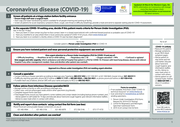
Coronavirus disease (COVID-19) - First Line Facility Management of Possible COVID-19
Western Cape Government (health); Practical Approach to Care Kit (PACK); University of Cape Town; Knowledge Translation Unit (University of Cape Tow Lung Institute)
Western Cape Government (health); Practical Approach to Care Kit (PACK); University of Cape Town; Knowledge Translation Unit (University of Cape Tow Lung Institute)
(2020)
C2
Updated 20 March 2020
Operational considerations for case management of COVID-19 in health facility and community
recommended
This document is intended to guide the care of COVID-19 patients as the response capacity of health systems is challenged; to ensure that COVID-19 patients can access life-saving treatment, without compromising public health objectives and safety of health workers.
It promotes two key messages:
...
1. Key public health interventions regardless of transmission scenario; and
2. Key action steps to be taken by transmission scenario to enable timely surge of clinical operations.
more
The WHO COVID-19 Clinical management: living guidance contains the Organization’s most up-to-date recommendations for the clinical management of people with COVID-19. Providing guidance that is co
...
mprehensive and holistic for the optimal care of COVID-19 patients throughout their entire illness is important. The latest version of this living guideline is available in pdf format (via the ‘Download’ button) and via an online platform, and is updated regularly as new evidence emerges. No further updates to the previous existing recommendations were made in this latest version.
This updated (fifth) version contains 16 new recommendations for the rehabilitation of adults with post COVID-19 condition (see Chapter 24)
This updated (fourth) version contains three new recommendations regarding hospitalized patients with severe or critical COVID-19
more
April 2019
A new publication - Waste Management during the COVID-19 Pandemic: from response to recovery - reviews current practices for managing waste from healthcare facilities, households and quarantine locations accommodating people with confirmed or suspec
...
ted cases of COVID-19. Jointly produced by UNEP, the Institute for Global Environmental Strategies and the International Environmental Technology Centre, the report considers various approaches, identifies best practices and technologies, and provides recommendations for policy-makers and practitioners to improve waste management, over the long term.
more
Integrated Management of Acute Malnutrition National Guidelines
Management of a cholera epidemic
recommended
Practical guide for doctors, nurses,laboratory technicians, medical auxiliaries,water and sanitation specialists and logisticians
Standard operating procedures (SOP) for the management of tuberculosis in children
National Tuberculosis, Leprosy and Lung Disease Program (NTLD-Program), Kenya
Ministry of Health, Kenya
(2017)
C1
2nd edition. Children with TB comprise about 10-12% of the total TB cases diagnosed in the country. This burden is likely to be higher given the challenges in diagnosing TB in children. The symptoms of TB in children mimic those of other childhood diseases. Children do not readily expectorate and th
...
ey have pauci-bacillary TB hence some will be missed using bacteriological tests. The government has however introduced GeneXpert molecular testing that is more sensitive than microscopy in detecting TB. Health care workers therefore need a reference guide to obtaining sputum from children for testing. Treatment of TB in children has been reviewed and now includes Ethambutol. There are now improved paediatric friendly TB medicines for treatment of TB in children and health care workers need a reference guide to enable them accurately dispense the TB medicine to children. Malnutrition is a common predisposing factor for TB in children. On the other hand, TB predisposes children to malnutrition or worsens an existing state of malnutrition. Nutrition care and support forms an integral part of treatment for a child with TB disease.
more
The paper provides the rationale for these recommendations, which are based on analyses of data from the TRACT trial.
Health care waste can be difficult to treat and dispose of safely. The environmental and health impacts of waste put extra pressure on resources. Therefore, it is important to try and reduce the quantities of waste wherever possible. Ensure waste is segregated properly at the point of disposal. It i
...
s cheaper and easier to manage general waste through a municipal waste system than infectious or sharps waste which needs treatment before final disposal. Organic general wastes like food and paper can be composted rather than being wasted. Non- hazardous general waste may also be sorted for recycling.
more
Integrated management of childhood illness. The last update was in the IMCI chart booklet in 2014, but since then there have been significant updates on the management of sick young infant (SYI) age
...
d up to 2 months. This 2019 update of the sick young infant section Management of the sick young infant age up to 2 months: IMCI chart booklet. supersedes the 2014 IMCI chart booklet. The new updates reflect the recent guidelines on Managing possible serious bacterial infection (PSBI) in young infants when referral is not feasible published in 2015. It includes assessment, classification and referral of SYI with PSBI; and outpatient treatment of SYI with local infection or fast breathing (pneumonia) in infants 7-59 days old. Other updates include: a new section on how to reassess, classify and treat SYI with PSBI when referral is not feasible in outpatient health facilities by IMNCI trained health workers; changes in assessment and management of young infants for HIV infection; and identification of infants less than 7 days of who need Kangaroo Care.
more
Integrated management of childhood illness. The last update was in the IMCI chart booklet in 2014, but since then there have been significant updates on the management of sick young infant (SYI) age
...
d up to 2 months. This 2019 update of the sick young infant section Management of the sick young infant age up to 2 months: IMCI chart booklet. supersedes the 2014 IMCI chart booklet. The new updates reflect the recent guidelines on Managing possible serious bacterial infection (PSBI) in young infants when referral is not feasible published in 2015. It includes assessment, classification and referral of SYI with PSBI; and outpatient treatment of SYI with local infection or fast breathing (pneumonia) in infants 7-59 days old. Other updates include: a new section on how to reassess, classify and treat SYI with PSBI when referral is not feasible in outpatient health facilities by IMNCI trained health workers; changes in assessment and management of young infants for HIV infection; and identification of infants less than 7 days of who need Kangaroo Care.
more
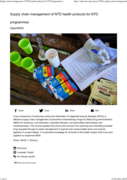
A key component of achieving control and elimination of neglected tropical diseases (NTDs) is effective supply chain management of preventive chemotherapy drugs for Mass Drug Administration (MDA) for trachoma, river blindness, lymphatic filariasis,
...
soil-transmitted helminthiasis and schistosomiasis. This course explains the end-to-end process from planning and submitting donated drug requests through to waste management of expired and unserviceable stock and reverse logistics of unused tablets. It is essential knowledge for all levels of the health system that must work together to implement MDA.
more
Waste Management & Research 39(1) DOI: 10.1177/0734242X211029175
Interim rapid response guidance, 10 June 2022.
It includes considerations for certain populations such as patients with mild disease with considerations for community care, patients with moderate to severe disease, sexually active persons, pregnant or breastfeeding women, children and young persons
...
. The guidance also addresses considerations for clinical management such as the use of therapeutics, nutritional support, mental health services, and post-infection follow-up.
The document provides guidance for clinicians, health facility managers, health workers and infection prevention and control practitioners including but not limited to those working in primary care clinics, sexual health clinics, emergency departments, infectious diseases clinics, genitourinary clinics, dermatology clinics, maternity services, paediatrics, obstetrics and gynaecology and acute care facilities that provide care for patients with suspected or confirmed monkeypox
more
For patients on NIPPV or HFNO with persistent hypoxaemia or respiratory distress:
• Check the equipment: inspect the exterior of the machine, the tubing (circuit), the mask for any sign of mechanical damage, confirm it fits securely without leak (if CPAP/BiPAP) and the filters are in place. Ensur
...
e the settings are appropriate and flow is maximized.
• Check the oxygen source: there is sufficient oxygen available and flowing through the device. If FiO2 > 50% of oxygen is needed, the ventilator must have a blender.
• Check there is no obstruction with secretions: patients with COVID-19 may have very thick secretions which may block small and large airways and cause sudden respiratory deterioration.
more
Update, 23 de junio de 2022

As of 12 December 2022, over 645 million people worldwide have been diagnosed with COVID-19, with over 6.6 million deaths (4).
The Omicron variant, which emerged in late November 2021, and its subvariants, are now the dominant circulating viruses, contributing to the ongoing surge in several countr
...
ies (4). Vaccination has substantially reduced case numbers and hospitalizations in many countries,but limitations in global access to vaccines mean that many populations, including those in low- and middle-income countries, remain vulnerable. Even in vaccinated individuals, uncertainties remain about duration of protection and efficacy, and the degree of crossprotection with new variants.
There remains a need for more effective treatment and management for those affected by COVID-19. The pandemic – and the
explosion of both research and misinformation – has highlighted the need for trustworthy, accessible and regularly updated living
guidelines to place emerging findings into context and provide clear recommendations for clinical practice
more
Safe drinking-water management must consider drinking-water quality, acceptability and quantity in the context of public health protection. In this manual, the term “safety” encompasses these three elements. Although the principles in this manua
...
l can be broadly applied to all types of drinking-water supplies, the guidance is primarily intended for piped water supplies that are professionally managed (by a water supplier or equivalent management entity).The guidance may be applied to existing drinking-water supplies, or adapted for water supplies that are in the planning stage before construction.
more
The content of these guidelines goes beyond the technicalities of medical needs with additional insights into community empowerment, possible access to welfare and economic opportunities and similar issues. If these are adequately explored, the health and quality of life of people affected and their
...
families would be greatly restored.
more
The ongoing COVID-19 pandemic has shown that public financial management (PFM) should be an integral part of the response. Effectiveness in financing the health response depends not only on the level of funding but also on the way public funds are a
...
llocated and spent, this is determined by the PFM rules, and how money flows to health service providers. So far, early assessments have shown that PFM systems ranged from being a fundamental enabler to acting as a roadblock in the COVID-19 health response. While service delivery mechanisms have been extensively documented throughout the pandemic, the underlying PFM mechanisms of the response also merit attention. To highlight the importance of PFM in health emergency contexts, this rapid review analyses various country PFM experiences and identifies early lessons emerging from the financing of the health response to COVID-19. The assessment is done by stages of the budget cycle: budget allocation, budget execution, and budget oversight. Identifying lessons from the varying PFM modalities used to finance the response to COVID-19 is fundamental both for health policy-makers and for finance authorities to prepare for future health emergencies.
more

The WHO COVID-19 Clinical management: living guidance contains the most up-to-date recommendations for the clinical management of people with COVID-19. Providing guidance that is comprehensive and h
...
olistic for the optimal care of COVID-19 patients throughout their entire illness is important.
more
Guidelines for Management of ST-Elevated Myocardial Infarction
Directorate General of Health Services
Ministry of Health & Family Welfare Government of India
(2022)
CC
Myocardial infarctions are generally clinically classified into ST elevation MI (STEMI) and non-ST elevation MI (NSTEMI), based on changes in ECG. When blood flow to a part of the heart stops or the heart is injured and fails to receive enough oxygen required for its adequate functioning the conditi
...
on is termed as STEMI or the ‘heart-attack’ in laymen language. Patients with elevated cardiac troponin levels but negative CK-MB who were formerly diagnosed with unstable angina or minor myocardial injury are now reclassified as non-ST-segment elevation Myocardial Infarction (non-STEMI) even in the absence of diagnostic changes.
more
The document, "Sustainable Management of Radiotherapy Facilities and Equipment," by WHO and IAEA, provides guidelines for managing radiotherapy equipment and facilities to ensure effective and safe cancer treatment. It covers essential aspects like
...
preventive and corrective maintenance, funding, infrastructure, and staffing requirements for sustainable operation. The document aims to support radiotherapy departments, especially in low-resource settings, by outlining strategies for equipment procurement, maintenance, and replacement, emphasizing safety, quality assurance, and optimal patient care.
more
Building on previous guidelines, the People In Aid Code seeks to offer agencies an effective framework for human resources management, helping them assess and raise their performance.
Gender and security is a complex issue, and this research found that there are different levels of comprehension of what it means in humanitarian and development assistance practice. The aims of the paper are twofold: to raise general awareness about gender and how it relates to security risk
...
management, and to provide practical tools for effective integration of gender-specific considerations to the existing security management practices. Document also available in French and Spanish.
more
The purpose of this Operational Guideline is to support state health authorities, programme managers and health care professionals with recommendations on appropriate management of children with SAM in the health facilities. Facility based
...
management includes setting up and managing within the health facility premises, a functional space where these children are cared for. This Facility Based Unit is referred to as Nutritional Rehabilitation Centre or NRC in the document. While the scale and design may vary in a given situation, it is intended that the document provide the basis for a consistent set of principles that can be used by all states for facility based management of children with SAM. The Operational Guideline focuses on the Facility/Hospital based approach for the management of SAM children under 5 years of age based on the WHO and revised IAP protocols.
more

Climate change is a growing concern for Bangladesh because 90 percent of the country is approximately 10 feet above sea level. An evaluation was completed which discovered that high tides in Bangladesh were increasing 10 times more rapidly than the global average. This predicted rapid increase in se
...
a levels places Bangladesh four times higher than the global average. By 2050, approximately 20 percent of the inhabited land in Bangladesh will be inundated by the sea resulting in displacement for nearly 20 million people. The Government of Bangladesh has implemented policies and plans to focus on climate change concerns, but there is still much work to be completed.
Bangladesh is a nation which will continue to experience the devastating effects of climate change. These concerns for the nation are recognized and the Government of Bangladesh is working progressively to implement mitigation and preparedness measures along with making national economic and transportation improvements to better sever and protect the people of Bangladesh. more
Bangladesh is a nation which will continue to experience the devastating effects of climate change. These concerns for the nation are recognized and the Government of Bangladesh is working progressively to implement mitigation and preparedness measures along with making national economic and transportation improvements to better sever and protect the people of Bangladesh. more
European Journal of Biomedical and Pharmaceutical Sciences, vol.3 (2016) 1, 192-206
This review shows that if all sub areas of pharmaceutical waste management can efficiently work back to back environmental pollution and dangers to human health ca
...
n reduce significantly.
more
COVID-19 outbreak is associated with the generation of many types of infectious wastes, including infected masks, gloves and other protective equipment, together with a higher volume of general waste of the same nature.
Management of Dead Bodies After Disasters: A Field Manual For First Responders. Second Edition
recommended
Proper and dignified management of the dead in disasters is one of the three key pillars of humanitarian response and a fundamental factor in facilitating identification of the deceased and helping families discover the fate of their loved ones. Thi
...
s second and updated edition of this hugely successful manual provides practical and easy-to-follow guidelines on the recovery, documentation and storage of the remains of individuals who have died in disasters, helping first responders ensure that the dead are treated with respect and that information crucial for their subsequent identification is recorded. This revised edition incorporates experience gained in recent catastrophes, such as the 2013 Typhoon Haiyan in the Philippines, the 2014/15 Ebola epidemic in West Africa and the 2015 earthquake in Nepal.
more

Environmental Health Management After Natural Disaster
recommended
Ruth Newman, Richard Hansen, John Quigley and Don Schramm
Pan American Health Organization
(2003)
C_WHO
Natural disasters often increase morbidity and mortality rates. Taking appropriate measures to maintain environmental health helps to reduce or eliminate the risks of preventable disease and death. Such measures contribute not only to the health of individuals in and near disaster-stricken areas, bu
...
t they also contribute to decreasing the high costs of providing emergency health services in the aftermath of disaster.
This document is divided into several parts. The first section primarily addresses the effects of natural disasters on environmental health conditions and services. In the second section, environmental health measures are described that should be undertaken in each of three time frames: the predisaster, disaster, and postdisaster periods.
more

An Indicator-based Approach - This manual presents an indicator-based approach for rapidly assessing pharmaceutical management systems and programs. The manual contains a set of 46 indicators of performance, grouped under eight topics of pharmaceuti
...
cal management, with each topic being covered by a subset of indicators. Thirty-four of the indicators are quantitative, that is, expressed as numbers. Twelve are qualitative, in that they describe the presence or absence of a policy or management system, and in some cases, the degree of implementation.
more

Recommendations for management of common childhood conditions
recommended
World Health Organization
(2012)
Evidence for technical update of pocket book recommendations. Newborn conditions, dysentery, pneumonia, oxygen use and delivery, common causes of fever, severe acute malnutrition and supportive care
In-and Out-Patient Treatment
This publication is an updated version of the Management of Tuberculosis and HIV Coinfection clinical protocol released in 2007 by the WHO Regional Office for Europe. It is intended for all health care workers involved in preventing, diagnosing, tre
...
ating and caring for people living with TB and HIV in the specific settings of the WHO European Region.
more
Management of an acute painful sickle cell episode in hospital
National Institute for Health and Clinical Excellence
(2012)
WHO Informal Consultation on Fever Management in Peripheral Health Care Settings
World Health Organization
(2013)
A global Review of evidence and practice

Manual Logistical Management of Humanitarian Supply
The flood of relief supplies that arrive in the aftermath of large-scale disasters often poses serious logistic and management problems for natio
...
nal authorities. SUMA is a tool for the management of humanitarian relief supplies, from the time pledges are made by donors, to their entry into the disaster area and their storage and distribution.
more
National Guidelines For the Management of HIV and AIDS
recommended
Ministry of Health and Social Welfare, Tanzania
Ministry of Health and Social Welfare, Tanzania
(2015)
CC
5th edition.
n Autumn 2013, HHI Executive Director, Vincenzo Bollettino, traveled to the Philippines to participate in an assessment of civil-military engagement in the humanitarian response to Typhoon Haiyan. The report was sponsored by the Center for Excellence in Disaster
...
Management and Humanitarian Assistance.
more
Information and Approaches for developing Country Settings
This Technical Brief focuses on current principles and approaches to Moderate Acute Malnutrition (MAM) management, highlighting key constraints, gaps in knowledge and areas still lacking consensus. It is intended to inform ongoing debates among prac
...
titioners, national partners, donors and analysts on what information and evidence on best practices are currently available, where the gaps are, and priorities for going forward.
more
This clinical management manual for Ebola Viral Disease in Liberia was developed after several ETUs were established in the country following the outbreak early this year. As the outbreak evolved, it became evident that different SOPs were being use
...
d by clinicians across these treatment facilities. As a result of discussions held by the National Case Management Committee of the Incident Management System, various stakeholders were brought together to contribute their time and expertise to the development of this manual.
more
Interventions for management of children with intellectual disabilities
World Health Organization
(2012)
C_WHO
Q3: What approaches are available to enable non-specialized health care providers to identify children with intellectual disabilities, including intellectual disabilities due to specific causes?

NATIONAL TUBERCULOSIS AND LEPROSY PROGRAMME
2nd edition. Known as “Community Case Management of Sick Children” (CCM), this approach sends community-based health workers out to find, diagnose, and successfully treat sick children, in partnership with their families. Inspired by the classic
...
“Immunization Essentials”, this guide methodically documents what is known about CCM and how to make it work. First, health program managers are introduced to the basics. Then, CCM Essentials walks its readers through the process of designing and managing a high-quality CCM program. The ultimate result: lives of newborns, infants and children saved around the world
more
Accessed 15th of October 2015
Updated 22 august 2016. This document aims to provide interim guidance on the case definition of GBS and strategies to manage the syndrome, in the context of Zika virus and its potential association with GBS. This document is intended to inform the development of local clinical protocols and health
...
policies related to the care of patients with GBS
more

Management of Snake Bite. Quick Reference Guide
recommended
Standard Treatment Guideline
Standard Treatment Guideline
This document presents a strategic framework, aimed towards the development of sustainable global, regional and national plans relating to laboratory biorisk management.
Report on assessment of WASH and healthcare waste management in District Sadar Hospital, Cox's Bazar
How safe is our hospital sanitation? An example from a public hospital
"Achieving, maintaining and improving accuracy, timeliness and reliability are major challenges for health laboratories. Countries worldwide committed themselves to build national capacities for the detection of, and response to, public health events of international concern when they decided to eng
...
age in the International Health Regulations implementation process. Only sound management of quality in health laboratories will enable countries to produce test results that the international community will trust in cases of international emergency. This handbook is intended to provide a comprehensive reference on Laboratory Quality Management System for all stakeholders in health laboratory processes, from management, to administration, to bench-work laboratorians. This handbook covers topics that are essential for quality management of a public health or clinical laboratory. They are based on both ISO 15189 and CLSI GP26-A3 documents"--Page 7.
more