
Filter
3214
Text search:
skin
Featured
434
854
Language
Document type
1857
504
317
194
116
89
66
20
19
9
7
7
6
3
Countries
239
104
88
79
71
70
66
61
57
49
48
45
41
40
40
38
36
36
33
31
29
27
23
22
20
15
15
15
15
14
14
13
13
13
13
13
12
12
12
12
11
10
10
10
8
7
7
7
7
6
6
6
5
5
5
5
5
4
4
4
4
4
4
3
3
3
3
3
3
3
3
3
3
3
3
2
2
2
2
2
2
2
2
2
2
2
2
2
2
2
2
2
2
1
1
1
1
1
1
1
1
1
1
1
1
1
1
1
1
1
1
1
1
1
1
1
1
1
1
1
Authors & Publishers
Publication Years
Category
1068
461
226
151
130
119
42
Toolboxes
235
218
181
164
162
149
133
118
94
93
84
71
68
61
60
52
49
44
33
23
15
4
2
Joint WHO/ILO Briefing Note for Workers and Employers updated 5 September 2014
Anyone planning to conduct humanitarian work in areas of Africa where outbreaks of Ebola virus disease are known to occur needs to be familiar with how Ebola virus is transmitted.
This leaflet recommends the precautions that humanitarian workers should take and provides advice on what to do if you
...
This briefing note is based on the existing WHO and ILO guides and recommendations for Ebola Virus
Disease at the time of the publication. It will be updated as new information and recommendations become
available.
Accessed 21 July 2021:The Caregiver Booklet is designed to help patients,family members, and community caregivers in the home-based care of serious long term illness. Home care is best for many people with long term illnesses,including those who are close to the end of life. All patients bein
...
Practical guidance on immunization services and the risks they present for both Ebola affected and non-affected countries. The specific purpose of this document is to assist countries to:
- Maintain immunization services and use immunization contacts and surveillance system as opportunities to
...
Recommendations of the Healthcare Infection Control Practices Advisory Committee and the HICPAC/SHEA/APIC/IDSA Hand Hygiene Task Force
Information for health Workers in West Africa
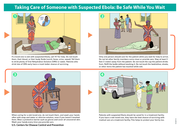
For Families and Caregivers in Sierra Leone
This booklet offers tips for people affected by leprosy who want to prevent disability.
Updated September 2021.
Provision of water and sanitation and good hygiene practices play an essential role in protecting human health during all disease outbreaks, including during Ebola Virus Disease (EVD) outbreaks. This question and answer document provides practical, evidence-based recommend
...
Primary Care: The Community Health System
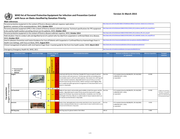
Version 31 March 2015
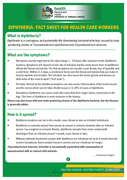
Accessed 7 July 2015
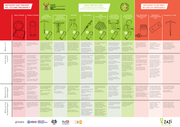
Accessed 7 July 2015

There are existing a new Version published 2014
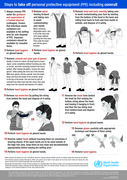

What are the common health problems of refugees and migrants arriving in the European Region?
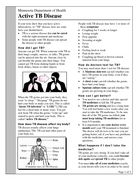

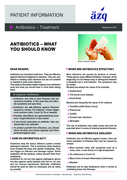
Patient information on treatment with antibiotics. English version. Also available in: Arabic, German, French, Russian, Spanish, Turkish. For other language versions go to: http://www.patienten-information.de/kurzinformationen/arzneimittel-und-impfungen/antibiotika
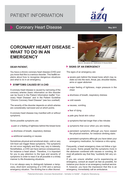
Patient information on coronary heart disease. English version. Also available in: Arabic, French, German, Russian, Turkish, Spanish. For other versions go to: http://www.patienten-information.de/kurzinformationen/herz-und-gefässe/koronare-herzkrankheit-notfall
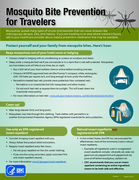
Fact sheet for travelers
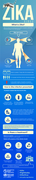
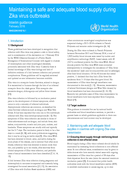
Inerim Guidance. These guidelines have been developed in recognition that infection with Zika virus may present a risk to blood safety, and in consideration of the declaration on 1 February 2016 by the WHO Director-General of a Public Health Emergency of International Concern with regard to clusters
...

tıp doc Anamneseboegen. English
recommended
Die Anamneseboegen stehen zum kostenfreien Download bereit: Albanisch, Amharisch, Arabisch, Bulgarisch, Chinesisch, Englisch, Farsi, Franzoesisch, Griechisch, Italienisch, Japanisch, Kurdisch, Paschtu, Persisch, Polnisch, Portugiesisch, Rumaenisch, Russisch, Serbisch, Somali, Spanisch, Tigrinya,
...
Information sheet for asylum seekers: Hepatitis B
Where There Is No Doctor. New Chapters
recommended
Advance chapters from the new edition
Treatment Recommendations for Adult Inpatients
Incorporating Malawi Essential Medicines List (MEML)
BMC International Health and Human Rights 2012, 12 :12
http://www.biomedcentral.com/1472-698X/12/12
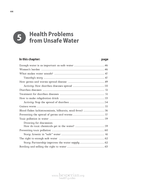
Chapter 5: A Community Guide to Environmental Health
Oral Health and Dental Services

MMWR. Recommendations and Reports:
December 16, 2005 / 54(RR15);49-55

For more information on TB or to get a TB test, call your doctor or local health department www.cdc.gov/tb/links/tboffices.htm. For further information on TB visit: CDC Division of Tuberculosis Elimination Website at www.cdc.gov/tb.
Accessed November 2017

Rev Esp Sanid Penit 2012; 14: 11-16 11
Federal Bureau of Prisons
Clinical Practice Guidelines
January 1010
J HEALTH POPUL NUTR 2010 Aug;28(4):327-332
ISSN 1606-0997
Reprinted from Australian Family Physician Vol. 39, No. 10, october 2010
Interferon-γ Assays - Description and Assessment of a New Tool in the Diagnosis of Tuberculosis.
Haür B et al. Interferon-γ-Tests in der ...Pneumologie 2006; 60: 29-44

Eradication of yaws in India | Éradication du pian en Inde - 17 April 2015, 90th Year / 17 Avril 2015, 90e Année | No. 16, 2015, 90, 161–168 | http://www.who.int/wer
This pocket guide is designed for clinicians, including physicians, nurses, and other health care professionals, who will provide emergency care following a radiological event. It should be used as a supplement to training and practice drills. (Prints on 8½" x 14" paper)
Technical Information & Safety Data on Chlorine
"The Emergency Response Guidelines for Anhydrous Hydrogen Fluoride (Guidelines) were prepared
by the American Chemistry Council’s (ACC) Hydrogen Fluoride Panel (Panel). This document is
intended to provide general information to persons addressing an emergency response in the course
of handling
...

Quick guide on chemical terrorism incl a short overview on chemical terrorism agents and biological toxins

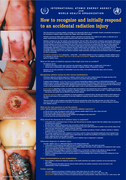
This leaflet is intended to inform physicians — mainly GPs — and medical students on how to recognize a possible radiation injury. It is important to note that radiation injury has no special signs and symptoms. However, the combination of some of them may be typical of radiation injury.
Arabic
...

Public Report
PQMC 0001-001-04 WHO PQMC Public Report November/2016, version 8.0
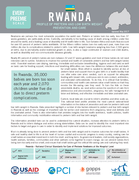
The information provided here can be used to understand the current situation, increase attention to preterm births in Rwanda and to inform dialogue and action among stakeholders. Data can be used to identify the most important risk factors to target and gaps in care in order to identify and impleme
...
The information provided here can be used to understand the current situation, increase attention to preterm births in Rwanda and to inform dialogue and action among stakeholders. Data can be used to identify the most important risk factors to target and gaps in care in order to identify and impleme
...
The information provided here can be used to understand the current situation, increase attention to preterm births in Rwanda and to inform dialogue and action among stakeholders. Data can be used to identify the most important risk factors to target and gaps in care in order to identify and impleme
...
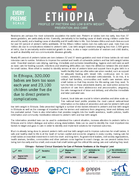
The information provided here can be used to understand the current situation, increase attention to preterm births in Rwanda and to inform dialogue and action among stakeholders. Data can be used to identify the most important risk factors to target and gaps in care in order to identify and impleme
...
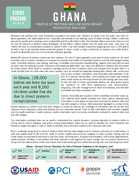
The information provided here can be used to understand the current situation, increase attention to preterm births in Rwanda and to inform dialogue and action among stakeholders. Data can be used to identify the most important risk factors to target and gaps in care in order to identify and impleme
...
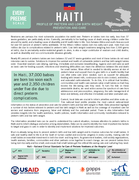
The information provided here can be used to understand the current situation, increase attention to preterm births in Rwanda and to inform dialogue and action among stakeholders. Data can be used to identify the most important risk factors to target and gaps in care in order to identify and impleme
...
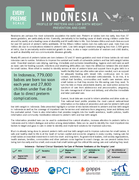
The information provided here can be used to understand the current situation, increase attention to preterm births in Rwanda and to inform dialogue and action among stakeholders. Data can be used to identify the most important risk factors to target and gaps in care in order to identify and impleme
...
The information provided here can be used to understand the current situation, increase attention to preterm births in Rwanda and to inform dialogue and action among stakeholders. Data can be used to identify the most important risk factors to target and gaps in care in order to identify and impleme
...
The information provided here can be used to understand the current situation, increase attention to preterm births in Rwanda and to inform dialogue and action among stakeholders. Data can be used to identify the most important risk factors to target and gaps in care in order to identify and impleme
...
The information provided here can be used to understand the current situation, increase attention to preterm births in Rwanda and to inform dialogue and action among stakeholders. Data can be used to identify the most important risk factors to target and gaps in care in order to identify and impleme
...
The information provided here can be used to understand the current situation, increase attention to preterm births in Rwanda and to inform dialogue and action among stakeholders. Data can be used to identify the most important risk factors to target and gaps in care in order to identify and impleme
...
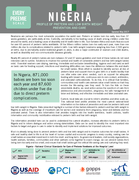
The information provided here can be used to understand the current situation, increase attention to preterm births in Rwanda and to inform dialogue and action among stakeholders. Data can be used to identify the most important risk factors to target and gaps in care in order to identify and impleme
...
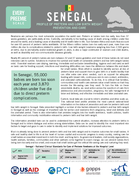
The information provided here can be used to understand the current situation, increase attention to preterm births in Rwanda and to inform dialogue and action among stakeholders. Data can be used to identify the most important risk factors to target and gaps in care in order to identify and impleme
...
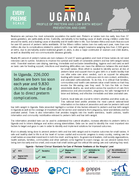
The information provided here can be used to understand the current situation, increase attention to preterm births in Rwanda and to inform dialogue and action among stakeholders. Data can be used to identify the most important risk factors to target and gaps in care in order to identify and impleme
...
