
Filter
2089
Text search:
sexually
transmitted
infections
Featured
153
657
Language
Document type
1478
204
203
61
49
40
18
18
12
2
2
1
1
Countries
115
85
60
58
58
56
50
49
49
38
38
38
38
30
30
29
28
27
23
22
21
21
20
20
20
20
18
17
15
13
12
11
11
10
10
10
9
9
9
8
7
7
6
6
6
5
5
4
4
4
4
3
3
3
3
3
3
3
3
3
3
2
2
2
2
2
2
2
2
2
2
2
2
2
1
1
1
1
1
1
1
1
1
1
1
1
1
1
1
1
1
1
1
1
Authors & Publishers
Publication Years
Category
956
150
145
71
55
28
8
1
1
Toolboxes
503
80
57
52
43
36
30
29
29
27
26
17
17
15
12
11
10
8
7
1
1
Report the Abuse fact sheet
From policy to practice: how the TB-HIV response is working
“The HIV community must place much more focus on TB co-infection than
it has done to date. TB takes the lives of over 1000 people living with HIV
every day, a number which is absolutely unacceptable. This report highlights that
TB d
...
Data from the 2011 Ethiopia Demographic and Health Survey
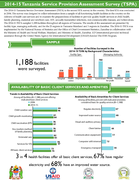
2014-15 Tanzania Service Provision Assessment Survey (TSPA)


DHS Working Papers No. 101
Women’s empowerment, HIV testing, birth in past five years, Tanzania

DHS Working Papers No. 85

Country Progress Report January 2008 - December 2009
For the Fiscal Year 2014-2015, the Health Sector continued to implement interventions and strategies meant to improve the availability, accessibility and utilization of quality healthcare services across public and private health facilities; and to ensure the reduction of the burden of communicable
...
National Tuberculosis Control Program; Mycobacterial Disease Control National AIDS/STD Program
WHO published interim guidelines on the prevention of sexual transmission of Zika virus in September 2016 (1), based on a limited amount of evidence under an emergency process during a public health emergency of international concern. The body of evidence has grown considerably since then and WHO e
...
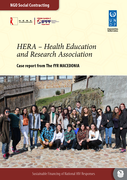
Case report from The fYR MACEDONIA
NGO Social Contracting
Sustainable Financing of National HIV Responses

Country Progress Report
Reporting Period
January – December, 2014
Accessed: 26.09.2019

Analytical report
Mission report April 2016
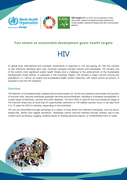
SDG target 3.3: by 2030, end the epidemics of AIDS, tuberculosis, malaria and neglected tropical diseases and combat hepatitis, waterborne diseases and other communicable diseases.
Monitoring implementation of the Dublin Declaration on Partnership to Fight HIV/AIDS in Europe and Central Asia: 2012 progress
Special Report
Accessed: 30.10.2019
Accessed: 30.10.2019
Guidance Brief
Selected findings from ECDC and EMCDDA scientific guidance, 2018
From choice, a world of possibilities

HIV testing services
Policy Brief
December 2016
Operational Guideline
Health Benefits and Associated Risks
Accessed: 02.03.2020
This situation analysis has gathered information about the current state of AMR, contributing factors and antimicrobial use in Zimbabwe from the human, animal, agricultural and environmental sectors. Data has been gathered from different sectors such as the general public, academia, the Ministry of
...
In the time of coronavirus disease (COVID-19), sex and drug use will continue, regardless of physical distancing orders and policies. People who previously met in community gathering venues such as bars and clubs may now meet in different sites, ones that are “hidden” or less accessible. This, i
...
In emergency or humanitarian settings, mobile clinics are used to bring essential lifesaving health care to communities affected by crises. Though there are standard emergency benefit packages for health services during emergencies, there are however no agreed or standard way of running mobile clini
...
Policy Brief. More languages available here https://apps.who.int/iris/handle/10665/179517
The revision of the SRHR Policy is based on the results of the analysis of the implementation process of the past policy, which has provided evidence to
ensure that the revised policy is relevant and effective. The revision has also been done with the participation of all national stakeholders who
...
HIV, viral hepatitis and STI epidemics, particularly among people who inject drugs and other key populations, continue to be fuelled by laws and policies criminalizing sex work; drug use or possession; diverse forms of gender expression and sexuality; stigma and discrimination; gender discrimination
...
Accessed 14 July 2015
Public Health Situation Analysis and Interventions 10 October 2017
Quality Assurance (QA) and Quality Improvement (QI). The guide provides general information on how to organize, implement and follow up on quality assurance/quality improvement clinical facility and service assessments. At the website you will find checklists intended to be used with the clinical fa
...
This WHO Guidance Note advocates for a comprehensive approach to cervical cancer prevention and control and is aimed at senior policy makers and programme managers. It describes the need to deliver effective interventions across the female life course from childhood through to adulthood. These inclu
...
Guidelines
UNAIDS/WHO working group on global HIV/AIDS and STI surveillance
August 2015
HIV strategic information for impact

UNAIDS/WHO Working Group on Global HIV/AIDS and STI Surveillance
Evaluation report
January 2014
Accessed: 26.09.2019
Consolidated Guidelines
Geneva, 2016
The End TB Strategy
Washington, D.C., USA, 23-27 September 2018
Provisional Agenda Item 4.6
CD56/10, Rev. 1 31 August 2018
Original: Spanish
UNAIDS/WHO Working group
HIV/AIDS and STI surveillance 2015 / Reference
This briefing paper provides an overview of pre-exposure prophylaxis (PrEP) for people planning, commissioning or providing HIV prevention activities in the UK. It does this by reviewing thirty key questions about PrEP and how it might be implemented in the UK.
Evaluation report
September 2014

Accessed: 03.09.2019
Accessed: 08.11.2019
Recommendations for a public health approach
2010 revision
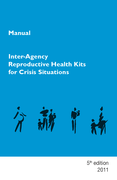
A consolidated set of reproductive health kits for use by humanitarian agencies. These kits are intended to speed up the provision of appropriate reproductive health services in emergency and refugee situations.
This Toolkit is intended to guide humanitarian programme managers and healthcare providers to ensure that sexual and reproductive health interventions put into place both during and after a crisis are responsive to the unique needs of adolescents.
Kenya: Guidelines on use of antiretroviral drugs for treating and preventing HIV infection
recommended
2018 Edition
Option B+
India AIDS Response Report 2014
