Filter
2624
Text search:
sensitivity
Featured
273
654
Language
Document type
1512
397
378
145
76
48
35
15
8
5
3
1
1
Countries
151
111
66
60
53
53
47
45
43
41
36
35
35
34
34
33
32
31
28
26
25
25
24
22
22
21
20
17
17
17
16
16
16
16
15
15
13
12
11
11
10
10
10
10
9
9
9
7
7
7
7
6
6
6
6
6
5
5
5
5
4
4
4
4
4
4
4
4
3
3
3
3
3
3
3
3
3
3
3
2
2
2
2
2
2
2
2
2
2
2
2
2
2
2
2
2
1
1
1
1
1
1
1
1
1
1
1
1
1
1
1
1
1
1
1
1
1
1
1
1
1
1
1
1
1
1
Authors & Publishers
Publication Years
Category
842
297
158
118
69
64
44
2
1
Toolboxes
225
216
196
167
116
103
98
91
63
62
61
61
53
53
35
33
30
27
24
23
20
19
18
This handbook builds on lessons learned from surveys implemented 2015-2017 and advice provided by the Global task force on TB patient cost surveys. It provides a standardized methodology for conducting health facility-based cross-sectional surveys to assess the direct and indirect costs incurred by
...

UNICEF’s support for data collection: the Multiple Indicator Cluster Surveys (MICS)

CBM Strategy Overview
COMPREHENSIVE GUIDE
Disability Fact Sheet #13 (FS13)
This pocket guide is designed for clinicians, including physicians, nurses, and other health care professionals, who will provide emergency care following a radiological event. It should be used as a supplement to training and practice drills. (Prints on 8½" x 14" paper)
The World Health Organization Disability Assessment Schedule (WHODAS 2.0) is a generic assessment instrument developed by WHO to provide a standardized method for measuring health and disability across cultures. It was developed from a comprehensive set of International Classification of Functioning
...
This report investigates the impact of potential misclassification of samples on HIV prevalence estimates for 23 surveys conducted from 2010-2014. In addition to visual inspection of laboratory results, we examined how accounting for potential misclassification of HIV status through Bayesian latent
...
This guide presents information about the 2030 Agenda, how it connects to the UN Convention on the Rights of Persons with Disabilities, and explores potential entry points for persons with disabilities to influence and participate in their implementation, follow-up and review
This guide presents information about the 2030 Agenda, how it connects to the United Nations Convention on the Rights of Persons with Disabilities (UN CRPD) and explores ways for persons with disabilities to be influential and participate in how they are achieved.

This manual summarizes the methodology used to develop WHODAS 2.0 and the findings obtained when the schedule was applied to certain areas of general health, including mental and neurological disorders.
The manual will be useful to any researcher or clinician wishing to use WHODAS 2.0 in their prac
...
Journal of the International AIDS Society, Volume 20, Issue 1 (2017)21796
Qualitative research on HIV self testing among men who have sex with men and transgender women in Yangon, Mynamar.
Global effort to increase early diagnosis and engagement in HIV care emphasize the importance ...
Qualitative research on HIV self testing among men who have sex with men and transgender women in Yangon, Mynamar.
Global effort to increase early diagnosis and engagement in HIV care emphasize the importance ...

This Technical Brief focuses on appraising and prioritising options for climate resilience with a view to informing water, sanitation and hygiene (WASH) programme and project design.
This Technical Brief:
- provides a simple scorecard/checklist approach to use as a starting point for appr ...
This Technical Brief:
- provides a simple scorecard/checklist approach to use as a starting point for appr ...
This guidelines is aimed at humanitarian and human rights actors engaged in protection work, and is intended to act as an easy reference to the minimum standards to be met and the recommended guidelines to be followed in such work.
The 45 standards and 15 guidelines are reproduced in full, together
...
This brief focuses specifically on the Grand Nord (Great North): the Beni and Lubero territories of northern North Kivu that are the epicentre of the outbreak. Further participatory enquiry should be undertaken with the affected populations, but given ongoing transmission, conveying key consideratio
...
This study consists of a descriptive analysis of M. tuberculosis isolates from Beira Central Hospital, Mozambique, during 2014–2015, being the first report of a genotypic testing used to provide information about second line drug resistance in Mozambique.
BMC Infectious Diseases (2016) 16:423 DO
...
With this study, we estimated the burden of serious fungal infections for the general healthy population and for those at risk, including those infected with HIV, patients with asthma, as well as those under intensive care. We also highlight from studies in progress of high incidences of histoplasm
...
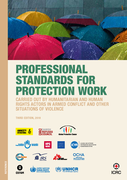
Professional Standards for Protection Work
recommended
Carried out by humanitarian and human rights actors in armed conflict and other situations of violence
This guideline (third edition) constitutes a set of minimum but essential standards aimed at ensuring that protection work is safe and effective. The standards reflect shared thinking and common
...
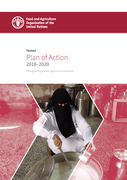
Strengthening resilient agricultural livelihoods
Level 3 responses are activated in the most complex and challenging humanitarian emergencies, when the highest level of mobilization is required across the humanitarian system. Even before the conflict escalated, the country suffered high levels of p
...
CBM strategy overview paper on preventing physical impairment in childhood.
Antimicrobial Resistance Surveillance and Research Network | This document contains detail procedures on sample collection, transport, isolation, identification of fungi for the diagnosis of invasive fungal infections and antifungal susceptibility testing of yeast

DIAGNOSING PTSD IN CHILDHOOD | The following literature review addresses the developmental and domain-specific consequences of previous and current diagnostic criteria for posttraumatic stress disorder (PTSD) in pre-adolescent children. PTSD was introduced in 1980 to capture extreme responses follow
...
Hilfe und Information in der Ulmer Onlineklinik | Accessed Online January 2019. | The CATS questionnaire is a short freely accessible screening instrument directly based on the DSM-5 criteria for Posttraumatic Stress Disorder (PTSD). It is a measure of potentially traumatic events and of posttraumat
...
DOI http://dx.doi.org/ 10.1055/s-0030-1256439 Online-Publikation: 10. 5. 2011 Pneumologie 2011; 65: 359–378
This document aims to provide concrete, pragmatic guidance for how TB modelling and related technical assistance is undertaken to support country decision-making. The target audience for this document are the participants and stakeholders in country-level TB modelling efforts, including the individu
...
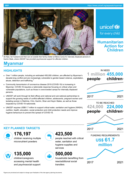
Over 1 million people, including an estimated 450,000 children, are affected by Myanmar’s decade-long conflict and are increasingly vulnerable to gender-based violence, exploitation, abuse, detention and trafficking.
Community transmission of coronavirus disease 2019 (COVID-19) is increasing in
...
A WHO-ITU Standard.
Nearly 50% of people aged 12-35 years – or 1.1 billion young people – are at risk of hearing loss due to prolonged and excessive exposure to loud sounds, including music they listen to through personal audio devices. Ahead of World Hearing Day (3 March), the World Health Org
...
Abstract: Posttraumatic stress disorder (PTSD) is a chronic psychological disorder that can develop after exposure to a traumatic event. This review summarizes the literature on the epidemiology, assessment, and treatment of PTSD. We provide a review of the characteristics of PTSD along with associa
...
Guide to access the National AMR Surveillance Dashboard
Цель настоящих рекомендаций – повышение качества обслуживания больных БАР в специализированных лечебно-профилактических учреждениях при обеспечении надлежащеÐ
...
Q6: Can dementia be diagnosed at first or second level care by non-specialist health care providers? What should be the assessment process for the diagnosis of dementia?
Q5: What is the added advantage of doing an electroencephalography (EEG) in people with convulsive epilepsy in non- specialist settings in low and middle income countries?

Neurology Asia 2008; 13 : 41 – 48

Arq Neuropsiquiatr 2011;69(2-B):342-348
This Plan envisions a future with the elimination of cervical cancer as a public health problem as a result of universal access to sexual health and STI prevention services, HPV vaccines, effective screening and precancer treatment services, treatment of invasive cervical cancer, and palliative care
...
Report for WHO Meningitis guideline revision
Dr Thomas Waite, April 2014
Field Epidemiology Services, Public Health England; UK
19 February 2018
Int J Crit Illn Inj Sci. 2012 May-Aug; 2(2): 82–97.
doi: 10.4103/2229-5151.97273
PMCID: PMC3401822
PMID: 22837896
Last updated on Oct 5, 2018.
EMCDDA Insights - 11
Accessed: 14.03.2019
Development and validation of DSM-5 based diagnostic tool for children with Autism Spectrum Disorder
PLoSONE 14(3):e0213242.https://doi.org/10.1371/journal.pone.0213242
Info from and between Mental Health Workers, NGO's, Institutes, Service Users and others who are interested in improving Mental Health in Low and Middle Income Countries
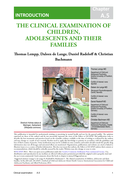
Introduction
Chapter A.5

The concept of mental disorder is determined by many factors, including the historical context, cultural influence, level of scientific knowledge and capacity to carry out scientific enquiry, level of education in certain circumstances, as well as many others. In putting together a method of classif
...
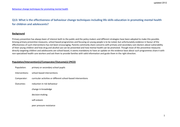
Q13: What is the effectiveness of behaviour change techniques including life skills education in promoting mental health for children and adolescents?
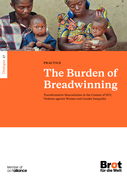
Since the Fourth World Conference on Women in Beijing in 1995, gender mainstreaming has become a widespread strategy for changing unequal social and institutional structures which discriminate against women and girls, with the goal of achieving gender equality. Much has changed for women since 1995:
...
For Strengthening Mental Health In Cultural-Linguistic Communities Projects
Journal of Tuberculosis Research, 2016, 4, 1-8
Published Online March 2016 in SciRes. http://www.scirp.org/journal/jtr
http://dx.doi.org/10.4236/jtr.2016.41001
This guide is a revised edition to the previous version published in 2017.
This updated publication provides programme managers with a user-friendly tool that can: (i) analyse and draw conclusions from historic dengue datasets; (ii) identify appropriate alarm indicators that can predict forthcoming
...
Journal of Child Psychology and Psychiatry60:5 (2019), pp 500–515
Accessed: 03.09.2019
School of Public Health, Fudan University, Key Laboratory of Public Health Safety, Ministry of Education, Shanghai, China
PLOS ONE | www.plosone.org 1, May 2013 | Volume 8 | Issue 5 | e64915

STAATSKOERANT, 5 MEI 2015 No. 38763
No. 38763 GOVERNMENT GAZETTE, 5 MAY 2015
General Notice
Notice 295 of 2015
Department of basic education
National education policy act, 1996 (Act No 27 of 1996)
Call for written submissions from stakeholder bodies and members of the public on Departmen
...
The report discusses the epidemiological and social aspects of ageing, health and functional changes experienced with ageing, the impact of physical activity, assessment of the nutritional status of older persons, and nutritional guidelines for healthy ageing.

PQDx 0018-010-00 WHO
PQDx PR
July/2016, version 3.0
PQDx 0198-071-00
WHO PQDx PR
April/2016, version 2.0

PQDx 0181-031-00
WHO PQ Public Report
March/2017, version 3.0
8th IAS Conference on HIV Pathogenesis 19-22 July 2015 Vancouver
Anita Sands Prequalification Team – Diagnostics Essential Medicines and Health Product
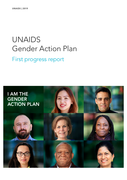
First progress report
UNAIDS 2018 / Guidance
Guidance for policy-makers, and people living with, at risk of or affected by HIV
Policy Brief
HIV testing services
December 2016
WHO/HIV/2016.21

A Summary
Accessed: 23.11.2019
Topics in Antiviral Medicine 25 Issue 2 May/June 2017
SADJ August 2016, Vol 71 no 7 p314 - p318
Clinical Review
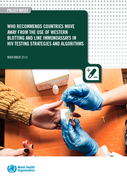
WHO recommends replacing western blotting and line immunoassays with simpler tests in HIV testing services. These simpler tests include rapid diagnostic tests (RDTs) that can be used at the point-of-care, and enzyme immunoassays (EIAs).
These tests get results to the client faster, produce accura
...
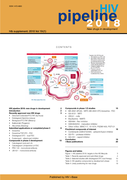
htb supplement: 2018 Vol 19:(1)
New drugs in development
July 2018
www.i-Base.info
Accessed Febr. 6, 2020
Accessed Febr. 6, 2020
Accessed Febr. 6, 2020

Accessed Febr. 6, 2020
Le défi des pays en voie de développement est la disponibilité de méthodes de diagnostic rapide et précis pour le management de la tuberculose. Des techniques moléculaires offrent cet avantage et nous avons utilisé le test GeneXpert MTB/RIF dans le diagnostic de la tuberculose extra-pulmonair
...
Protocol and preliminary evaluationas of Jan 17, 2020
Health Benefits and Associated Risks
Accessed: 02.03.2020
UNAIDS / 2019 Guidance
Eaton JW et al. Journal of the International AIDS Society 2019, 22(S1):e25237 http://onlinelibrary.wiley.com/doi/10.1002/jia2.25237/full | https://doi.org/10.1002/jia2.25237
A Training Curriculum for Providers
In 1998 the Swedish Veterinary Association decided to adopt a general policy for the use of antibiotics in animals. Since then specifi c policies for the use of antibiotics in dogs and cats have been adopted and in 2011 Guidelines for the use of Antibiotics in Production animals – Cattle and Pigs,
...
Временные рекомендации 25 января 2020 г.

Internationally, there is a growing concern over antimicro-bial resistance (AMR) which is currently estimated to ac-count for more than 700,000 deaths per year worldwide. If no appropriate measures are taken to halt its pro-gress, AMR will cost approximately 10 million lives andabout US$100 trillion
...
Antibiotics have been useful in fighting infectious diseases in our country for decades, but because of the overuse and misuse of these agents, an increasing number of organisms are now resistant to them. The Philippines, like other Southeast Asian countries, has already been encountering the many c
...
Scientific brief
8 April 2020
This document provides brief information answering common questions regarding COVID-19 diagnostic tests and how to prioritize them to the patients most in need.
Scientific Brief, 30 June 2020
a systematic review and meta-analysis Derek K Chu et al. on behalf of the COVID-19 Systematic Urgent Review Group Effort (SURGE) study authors.
Published: The Lancet June 01, 2020 DOI: https://doi.org/10.1016S0140-6736(20)31142-9
'We did a systematic review of 172 observational studies in health-
...
The speed of developing diagnostics for SARS-CoV-2, the causative agent of coronavirus disease 2019 (COVID-19), has been quite remarkable. Diagnostics have focused on nucleic acid amplification testing (NAAT) to identify infected individuals in acute-phase disease for timely implementation of mitiga
...
8 July 2020


Indian J Palliat Care. 2011 Jan; 17(Suppl): S39–S41.
doi: 10.4103/0973-1075.76241