Filter
4019
Text search:
physical
activity
Featured
371
1043
Language
Document type
2421
596
469
248
103
85
48
19
10
7
6
2
1
1
1
Countries
199
167
118
87
83
80
72
72
68
68
67
65
63
59
58
55
51
49
46
46
40
38
36
31
27
26
26
26
25
24
21
21
20
19
18
16
16
15
15
14
14
14
13
13
12
12
12
12
12
11
11
11
10
10
9
8
8
8
8
7
7
7
6
6
6
6
6
5
5
5
4
4
4
4
4
3
3
3
3
3
3
3
3
3
3
3
3
3
3
2
2
2
2
2
2
2
2
2
2
2
2
2
2
2
2
1
1
1
1
1
1
1
1
1
1
1
1
1
1
1
1
1
1
1
1
1
1
1
1
1
1
1
1
1
1
1
Authors & Publishers
Publication Years
Category
1504
319
246
206
179
139
27
4
3
Toolboxes
433
298
290
207
187
159
110
105
85
82
77
76
76
74
72
59
30
29
28
18
14
12
11
2
1
Ce document d'orientation explique comment la distance physique (désignée dans les documents d'orientation précédents sous le nom de «distance sociale») peut aider à ralentir la transmission.

Violence - Prevention and response for female sex workers -Take Charge; Be Safe.
It offers tips and suggestions that contribute to mental well-being and maintaining a positive outlook on life. Theyare intended as food for thought – try to incorporate one or more of these suggestions into your daily routine and allow yourself to be surprised!
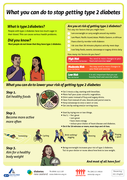
Availabel in Arabic; Amharic; Burmese; Dari; English; Karen; Somali and Tamil
The World Health Organization (WHO) Global Status Report on Noncommunicable Diseases 2010 projects that noncommunicable diseases (NCDs) will be responsible for over 44 million deaths during the next decade, representing an increase of about 15% since 2010. Most of these deaths will occur in the WHO
...
The Rwandan Ministry of Health recognizes the threat that Non-Communicable Diseases (NCDs) pose to health and development in Rwanda and in 2009 articulates strategies to respond to them in the Health Sector Strategic Plan 2012 - 2018 (HSSP3). Among other things, the plan calls for a national prevale
...
Int J Bipolar Disord (2018) 6:6 https://doi.org/10.1186/s40345‑017‑0110‑8
In 2001, the WHO stated that: "The use of mobile and wireless technologies to support the achievement of health objectives (mHealth) has the potential to transform the face of health service delivery across the globe"
...
A Manual for Medical Officer
Developed under the Government of India – WHO Collaborative Programme 2008-2009
Accessed: 11.03.2019
Zambia Report for 2017

The WHO continuously reviews available data on SARS-CoV-2 variants of concern. For this version, the global epidemiological
situation of the COVID-19 pandemic as of 21 January 2022 – at a time when the Omicron VOC had been identified in 171
countries across all six WHO Regions and was rapidly re
...
Primary care health centers and providers who care for individuals with hypertension and cardiovascular disease have an important role to play in ensuring continued access to care, reducing the risk of coronavirus infection, and appropriately managing people with these co-morbidities who acquire COV
...
Recommendations for health care professionals – the experience from Latvia
These guidelines for the prevention and management of cardiovascular diseases are a critical ingredient for streamlining care across the entire health services provision continuum. They are a strategic component in achieving universal health coverage, securing affordable heal
...
This guidance covers diagnosis and care of patients with long-term effects of COVID-19. It makes recommendations for the care of adults and children who have new or ongoing symptoms 4 weeks or more after the start of acute COVID-19. It is meant for health and care practitioners. This interim documen
...
Harmful particle pollution is one of our nation’s most common air pollutants. Use the chart below to help reduce your exposure and protect your health. For your local air quality forecast, visit www.airnow.gov
Infection prevention and control in the context of coronavirus disease (COVID-19): A living guideline
recommended
This second edition of the Infection prevention and control in the context of coronavirus disease (COVID-19): A living guideline provides the most up to date technical guidance on mask use in community settings in the context of COVID-19.
In this edition, new information includes updated mask re
...
Il est prouvé que l’activité physique régulière aide à prévenir et à traiter les maladies non transmissibles (MNT), telles que les cardiopathies,
les accidents vasculaires cérébraux, le diabète, ainsi que les cancers du sein et du côlon. Elle aide également à prévenir l’hypertensi
...
The Urban Health Initiative promotes tools and guidance to assess the health impacts of air pollution and the health benefits of sustainable development in energy, transportation, land-use and waste.
The Urban Health Initiative (UHI) goes beyond improving access to health care and promoting healthy behaviours, and focuses on how to build cities that enable and encourage good health.
22 April 2022, This document provides updated interim recommendations on the use of masks by health workers providing care to patients with suspected or confirmed COVID-19. This update is prompted by new evidence around mask use and COVID-19 transmission, as well as the emergence of variants of conc
...
The Lancet Planetary Health, Vol.5 Issue 2, Feb. 1,2021.
Nationally determined contributions (NDCs) serve to meet the goals of the Paris Agreement of staying “well below 2°C”, which could also yield substantial health co-benefits in the process. However, existing NDC commitments are inadequa
...
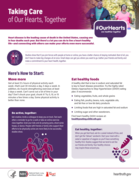
Interested in leading a more heart healthy lifestyle? Small steps go a long way especially when you connect with others to stay motivated. This fact sheet suggests several lifestyle changes you can make starting today and ways to get your friends, family, and colleagues involved.
Diabetes is a significant public health issue that affects approximately one in 10 adults globally, with type 2 diabetes accounting for 90–95% of cases. This chronic condition causes considerable morbidity and mortality and is growing in impact, with cases projected to rise from 537 million in 202
...
Diabetes is a significant public health issue that affects approximately one in 10 adults globally, with type 2 diabetes accounting for 90–95% of cases. This chronic condition causes considerable morbidity and mortality and is growing in impact, with cases projected to rise from 537 million in 202
...
Non-Communicable Diseases (NCDs), including mental disorders, currently pose one of the biggest threats to health and development globally, particularly in low and middle income countries2. It is predicted that unless proven interventions are rapidly implemented in countries, in the short to medium
...
mhGAP Training Manual for the mhGAP Intervention Guide for mental, neurological and substance use disorders in non-specialized health settings – version 2.0 (for field testing)
Accessed 06.03.2019
November 3, 2009https://doi.org/10.1371/journal.pmed.1000176
PLoS Med 6(11): e1000176. https://doi.org/10.1371/journal.pmed.1000176
Accessed 2014
Standard Treatment Guideline

A learning resource for facilitators, parents, caregivers, and persons with cerebral palsy | Version 1 - Released March 2008

Open Access Maced J Med Sci. 2017 Mar 15; 5(1):37-41.
WG Implementation Guidelines Tool2
Inclusive Project Cycle Management
Inclusive Project Cycle Management
Inclusive Project Cycle Management
Living Conditions Among Persons with Disability Survey Report
OECD Family database www.oecd.org/social/family/database
OECD - Social Policy Division - Directorate of Employment, Labour and Social Affairs

Mental Health Information
Accessed: 10.03.2019
mhGAP Training Manual for the mhGAP Intervention Guide for mental, neurological and substance use disorders in non-specialized health settings – version 2.0 (for field testing)
Specific Issues and a Model of Care
Accessed; 08.10.2019
Current and expected problems such as ageing, increased prevalence of chronic conditions and multi-morbidity, increased emphasison healthy lifestyle and prevention, and substitution for care from hospitals by care provided in the community encourage countries worldwide to develop new models of prima
...
Management Plan
Patient information on depression. English version. Also available in: Arabic, French, German, Russian, Turkish, Spanish. For other versions go to: http://www.patienten-information.de/kurzinformationen/psychische-erkrankungen/depression
Policy Brief | April 2015 | This brief accompanies the data sheet, Addressing Risk Factors for Noncommunicable Diseases Among Young People in Africa: Key to Prevention and Sustainable Development, and its data appendix, which provide all available country-specific data on four key NCD risk factors a
...
Reading Material for ASHA no.8
WHO Package of Essential NCD Interventions (PEN)
Accessed March 18,2019
Indian J Psychiatry. 2017 Jan; 59(Suppl 1): S67–S73.
doi: 10.4103/0019-5545.196975: 10.4103/0019-5545.196975
An overview on the health equity impact of policy and action: Is it making a difference? Why or why not?
Social distancing is an action taken to minimise contact with other individuals; social distancing measures comprise one category of non-pharmaceutical countermeasures (NPCs)1 aimed at reducing disease transmission and thereby also reducing pressure on health services.
This document builds upon exi
...
People with underlying noncommunicable diseases (NCDs) such as hypertension, diabetes, cardiovascular disease, chronic respiratory disease and cancer have a high risk for developing severe and even fatal COVID-19. It is important for them to strictly follow basic protective measures and make sure th
...

Climate change presents significant challenges to human health and biodiversity. Increased numbers of extreme climate events, such as heat waves, droughts or flooding, threaten human health and well-being, both directly and indirectly, through impaired ecosystem functioning and reduced ecosystem ser
...
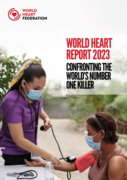
Global progress against cardiovascular disease (CVD) is flatlining.
Though rates of CVD deaths globally have fallen in the last three
decades, this trend has begun to stall and, without concerted
efforts, is at risk of reversing.
Patient information on COPD. English version. Also available in: Arabic, French, German, Russian, Turkish, Spanish. For other versions go to: http://www.patienten-information.de/kurzinformationen/lunge/copd
Tips for Helping a Child or Teen Recover from Trauma to help your child regain emotional balance, restore his or her trust in the world,and move on from the traumatic event.
For the estimated 20 million refugees and 25 million internally displaced people worldwide, well-planned settlements can help to maximise their protection and security, and support them to minimise the spread of disease, manage natural resources sustainably, and maintain good relations with their ho
...
Improve identification, verification, communication and coordination.
This Communications Toolkit is intended to provide practical guidance and support to staff and partners who are looking to increase their communications capacity. It has been developed as a resource for project staff who work at field-level, to help them communicate responsibly, creatively, and effe
...
In view of the ongoing political, peace and reconciliation, administrative and economic reforms as well as plans to establish the United Nations Development Assistance Framework (UNDAF) in 2018, WFP extended the current Protracted Relief and Recovery Operation (PRRO 200299), launched in January 2
...
. To echo this extension and provide a more appropriate response to the country's rapid and multi-pronged transition, WFP adopted a transition strategy with gradually reduced emphasis on humanitarian assistance and greater focus on early recovery and development interventions. WFP's strategic engagement in-country was driven by the overarching goal to assist Myanmar to achieve the national Zero Hunger Challenge by 2025, and was guided by three priorities: emergency preparedness and response; nutrition; and provision of social safety nets.
Handout presentations in PDF for illustrating lectures
Accessed May 2014
IPC TRaining Day 2