Filter
1484
Text search:
marriage
Featured
98
504
Language
Document type
1063
229
66
41
40
19
8
6
5
5
1
1
Countries
95
56
56
54
46
45
44
43
40
39
38
37
33
31
24
24
22
20
18
17
16
15
15
15
15
15
13
12
11
11
11
10
10
10
10
8
8
8
6
6
6
6
6
6
6
6
6
6
5
5
5
4
4
4
4
4
4
3
3
3
3
3
3
2
2
2
2
2
2
2
2
2
2
2
2
2
1
1
1
1
1
1
1
1
1
1
1
1
1
1
1
1
1
1
1
Authors & Publishers
Publication Years
Category
755
152
44
41
22
21
2
1
Toolboxes
138
124
98
87
80
79
28
20
20
17
17
14
14
12
4
3
2
2
1
1
2015-16 Demographic and Health Survey and Malaria Indicator Survey
DHS Qualitative Research Studies No. 19
Male and Female Respondents Interviewed Along the Central and the Eastern Mediterranean Routes in 2017
9,483 surveys conducted with migrants in Italy, Bulgaria, Greece, Hungary, Kosovo, Montenegro, Romania, Serbia and The former Yugoslav Republic of Macedonia, in 2017
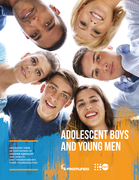
This study of Adolescent Boys and Young Men highlights the importance of engaging adolescent boys and young men in sexual and reproductive health and rights (srhr) and gender equality. This paper establishes a conceptual framework for engaging adolescent boys and young men. It reviews current resea
...
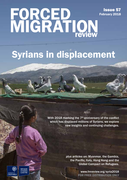
This important issue of Forced Migration Review draws our attention to the current challenges facing displaced Syrians and the continuing search for solutions. The statistics of Syrian displacement are staggering – and the numbers continue to rise. Half of Syria’s population has been displaced:
...
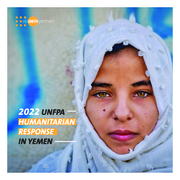
Yemen remains the site of one of the world’s largest humanitarian crises. A staggering 23.4 million people — 73 per cent of the population — require some form of humanitarian assistance in 2022, the result of seven years of escalating conflict.
Millions have been uprooted from their homes,
...
This FAQ responds to questions revolving around the topic of protecting refugee women and girls against violence. It begins with a glossary that clarifies key terms and their consequences for female refugees. The glossary will be amended and updated as required on the websites of b
...
Innocenti Digest No. 13
October 2009 | Volume 6 | Issue 10 | e1000162
www.jogh.org • doi: 10.7189/jogh.02.020405 ~ December 2012 • Vol. 2 No. 2 • 020405
Persons with disabilities are one of the most vulnerable and socially excluded groups in any crisis-affected community. They may be in hidden in homes, overlooked during needs assessments and not consulted in the design of programs.4 While gender-based violence (GBV) affects women, girls, men and bo
...
This resource presents "the minimum level of educational quality and access in emergencies through to recovery. The aim of the handbook is to enhance the quality of educational preparedness, response and recovery; to increase access to safe and relevant learning opportunities for all learners, regar
...
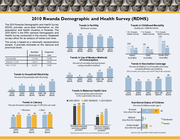
General fact sheet in booklet form about the 2014-2015 Demographic and Health Survey conducted in Rwanda. The 2010 Rwanda Demographic and Health Survey (RDHS) provides up-to-date information on the population and health situation in Rwanda. The 2010 RDHS is the fifth national Demographic and Health
...
Survey finding report
The National Institute of statistics of Rwanda (NISR) in collaboration with the worldwide Demographic and Health Surveys Program implemented the 2014-15 Rwanda Demographic and Health Survey (RDHS) to collect data for monitoring progress on health programs and policies in Rwanda. This publication ill
...
The National Institute of statistics of Rwanda (NISR) in collaboration with the worldwide Demographic and Health Surveys Program implemented the 2014-15 Rwanda Demographic and Health Survey (RDHS) to collect data for monitoring progress on health programs and policies in Rwanda. This publication ill
...
he National Institute of statistics of Rwanda (NISR) in collaboration with the worldwide Demographic and Health Surveys Program implemented the 2014-15 Rwanda Demographic and Health Survey (RDHS) to collect data for monitoring progress on health programs and policies in Rwanda. This publication illu
...
The National Institute of statistics of Rwanda (NISR) in collaboration with the worldwide Demographic and Health Surveys Program implemented the 2014-15 Rwanda Demographic and Health Survey (RDHS) to collect data for monitoring progress on health programs and policies in Rwanda. This publication ill
...
This third edition of the National Gender Statistics Report provides the updated sex-disaggregated data in twelve fields: Population and Youth; Education; Health and Nutrition; Economic Activity and time use; Poverty & Social Protection; Justice & Human rights; Environment and Natural Resources; Dec
...

In the last 5 years, the conflict in South Sudan has displaced 4 million people and placed 7 million in need of humanitarian assistance.
This report commissioned by Plan International draws on research conducted with girls and members of their families and communities in multiple sites in South ...
This report commissioned by Plan International draws on research conducted with girls and members of their families and communities in multiple sites in South ...
The UNFPA Zambia 2017 Annual Report highlights key milestones and achievements recorded with UNFPA support towards improving the health and well-being of women and young people in Zambia.
Contraception and Family Planning, Preventing Unsafe Abortion and Accessing Postabortion Care, and Maternal Health
Comprehensive Sexuality Education and Adolescents Sexual and Reproductive Health
Violence Against Women and HIV/AIDS Prevention and Treatment
A policy brief highlighting key factors associated with adolescent pregnancy. Adolescent pregnancy undermines girls’ human rights and reduces opportunities to realize their full potential.

Policy Note #2: Myanmar Health Systems in Transition Policy Notes Series
Myanmar is a country in which people’s access to health services is determined more by where they live than their need for care – a situation that is fundamentally inequitable. The challenge is to reduce levels of ineq ...
Myanmar is a country in which people’s access to health services is determined more by where they live than their need for care – a situation that is fundamentally inequitable. The challenge is to reduce levels of ineq ...

There are social and environmental barriers faced by persons with disabilities which have been reported in literature. In discussing these barriers, attention is yet to be given to the support from families to members with disabilities. This study aimed to examine family support and its impact on th
...
EVALUATION REPORT | This evaluation is the first comprehensive global exercise to examine UNICEF’s programme response in protecting children in emergencies. Its purpose is to strengthen child protection programming by assessing performance in recent years and to draw lessons and recommendations th
...
This treatment guideline is intended to assist clinicians in the Behavioral Health department in treatment planning and service delivery for patients with Post Traumatic Stress Disorder (PTSD). It may also assist clinicians treating patients who have some of the signs and symptoms of PTSD but who do
...
Briefing Paper
The World Health Organization (WHO) defines mental health as ‘a state of well-being in which the individual realizes his or her own abilities, can cope with the normal stresses of life, can work productively and fruitfully, and is able to make a contribution to his or her community’. Mental illn
...
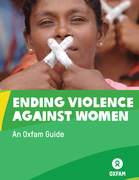
What is Violence Against Women? Why does it happen? What does it have to do with development? What does Oxfam do to end violence against women? What does it mean to do that work with a transformative approach?
Available in: English, Arabic, French, Spanish: https://policy-practice.oxfam.org.uk/publ
...
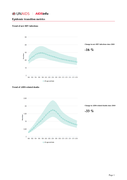
Sources: National Commitment and Policy Instrument, 2019
2017-2018
Republic of Albania
National Statistical Committee of the Kyrgyz Republic Bishkek, Kyrgyz Republic
Ministry of Health Bishkek, Kyrgyz Republic
MEASURE DHS
ICF International Calverton, Maryland, U.S.A.
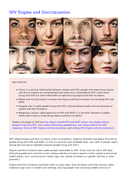
Zero Discrimination Day
#ZERO DISCRIMINATION
1 March 2019
Accessed: 19.10.2019
Medical Journal of Zambia, Volume 36 Number 4 (2009)
Policy and practice for maturity-aligned engagement of children in decisions about HIV-related medical and social services and management of confidential information
Kipling Beardsley, Health Policy Plus
Accessed: 26.10.2019
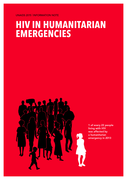
Information Note
1 of every 22 people living with HIV
was affected by
a humanitarian emergency in 2013

Accessed: 17.11.2019
Thirty years ago, the United Nations General Assembly adopted the Convention on the Rights of the Child at a moment of rapid global change marked by the end of apartheid, the fall of the Berlin Wall and the birth of the World Wide Web. These developments and more brought momentous and lasting evolut
...
World Health Organization Department of Reproductive Health and Research
Brocher Foundation, Hermance, Geneva, Switzerland, 27–29 April 2016
Over the reporting period, economic actors continued to carry out their activities with little regard for their impacts on the livelihoods of the communities living in the surrounding areas. In Doo Tha Htoo (Thaton) District, cold dust from a Tatmadaw-run cement factory contaminated nearby waterways
...
How we respond both now and going forward will help mitigate the impact of COVID-19, and to the extent possible preserve children’s rights to Survive, Learn, and Be Protected. We will focus our efforts on the most critical work essential to maintaining these commitments to the extent possible.
This edition of UNICEF’s annual Humanitarian Action for Children highlights UNICEF’s funding appeal, which sets out an ambitious agenda to address the major challenges facing children and young people living through conflict and crisis. It presents the investments needed in 2021 to save their li
...
Kenya reported its first case of COVID-19 on 12 March 2020 and, as at 7 April 2020, 172 cases had been confirmed and 6 deaths reported. The Government of Kenya has taken a number of measures to curb the spread of the virus, including implementing a curfew, restricting movement out and into four coun
...
Many children will not be ‘safe to learn at home’: As of April 2020, 91 percent of the world’s students have been affected by school closures due to COVID-19. While schools are often places where violence occurs, they also offer a comparatively protective and nurturing space for many children.
...
In humanitarian settings, tailoring community engagement interventions for gender, language, and local culture improves communities’ uptake with interventions. Measures taken to prevent and respond to COVID-19 pandemic such as confinement may increase GBV, especially domestic violence and Intimate
...
Afghanistan has one of the largest populations per capita of persons with disabilities in the world. At least one in five Afghan households includes an adult or child with a serious physical, sensory, intellectual, or psychosocial disability. More than 40 years of war have left more than one million
...
It is too early to know the full impact of COVID-19 on Africa. To date the experience has been varied. There are causes for concern, but also reasons for hope. Early estimates were pessimistic regarding the pandemic’s impact on the continent. But the relatively low numbers of COVID-19 cases report
...
The arrival of COVID-19 in Afghanistan has brought heartache to millions of people who are now battling a deadly pandemic while simultaneously fighting for their survival amid poverty, disaster and war. Over my three years as Humanitarian Coordinator, I have marvelled at the resilience of the people
...
Guiding the work of medica mondiale is an attitude of sensitivity towards both trauma and stress.
This stress- and trauma-sensitive approach has a strengthening and relieving effect on the affected
people and also the activists, specialist staff and working groups. For medica mondiale, trauma as a
...
Children in every country, every culture and at every social level face various forms of abuse,
neglect, exploitation and violence1. The abuse takes place at home, in school, in institutions,
at work, in the community, in armed conflict and natural disasters. Much violence against
children, such
...
Today, more children than ever before are displaced within their own countries. Their harrowing stories of displacement are unfolding every day, and with increasing frequency. At the end of 2019, approximately 45.7 million people were internally displaced by conflict and violence (Fig. 1.1). Nearly
...
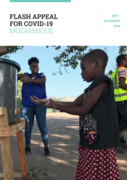
The first case of COVID-19 was reported in Mozambique on 22 March 2020. As of 26 May, Mozambique had 194 confirmed cases of COVID-19, of which 168 were locally transmitted. The country’s capital, Maputo, and the province of Cabo Delgado are currently the epicentres of the outbreak in Mozambique, w
...
Themes from the Catholic Social Teaching. Drawn from ''Sharing Catholic Social Teaching Challenges and Directions 2017" In these brief reflections, several of the key themes are highlighted that are at the heart of the Catholic social tradition.
The COVID-19 pandemic has created challenges for forcibly displaced persons and the humanitarian organizations working to support them. With restrictions on movement and limited access to refugees, asylum-seekers, internally displaced persons (IDPs) and stateless persons across the globe, UNHCR is s
...
TO HIS HOLINESS POPE JOHN PAUL II

The UNAIDS 2020 global report is a call to action. It highlights the scale of the HIV epidemic and how it runs along the fault lines of inequalities.
accessed July 2020
According to the Report, cascading and interlinked crises are putting the 2030 Agenda for Sustainable Development in grave danger, along with humanity’s very own survival. The Report highlights the severity and magnitude of the challenges before us. The confluence of crises, dominated by COVID-19,
...
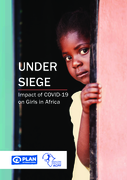
The COVID-19 pandemic has exacerbated and added yet another layer of vulnerability to an already dire web of vulnerabilities of girls in the African continent, which constitute about 49% of the total child population. Critically, gender equality and girls’ multidimensional vulnerability have been
...
La SNPEME définit ainsi les orientations nationales pour la promotion de l‟abandon
total du mariage d‟enfants et comporte un ensemble d‟actions pertinentes retenues
de façon consensuelle. Elle décrit en outre le cadre législatif, les mécanismes et les
modalités de sa mise en œuvre. E
...
Addendum: 2020 mid-year COVID-19 resvision, summary of the reprioritisation & additional requirements in response to COVID-19
In June and July 2020, a mid-year revision of the 2020 South Sudan Regional Refugee Response Plan (RRRP) was undertaken as an inter-agency consultative process to discuss
...
Children living in humanitarian crises face an increased risk of abuse. While the threats of harm are increasing, the established systems in place to protect them are breaking down. Faced with the COVID-19 pandemic and its impacts, vulnerable families suffer multiple hardships. Schools are closed an
...