Filter
3323
Text search:
malnutrition
Featured
283
1122
Language
Document type
2060
518
260
161
109
72
56
51
22
7
3
2
1
1
Countries
137
106
99
97
94
75
71
68
66
66
63
63
59
52
52
51
51
50
50
49
47
43
42
40
38
36
33
31
31
28
28
27
26
23
22
20
19
19
19
19
18
16
16
16
15
15
14
14
13
12
11
11
11
10
9
8
7
7
7
6
5
5
5
5
5
5
4
4
4
4
3
3
3
3
3
3
3
3
3
3
3
2
2
2
2
2
2
2
2
2
2
1
1
1
1
1
1
1
1
1
1
1
1
1
1
1
1
1
Authors & Publishers
Publication Years
Category
1637
290
225
176
153
83
12
2
1
Toolboxes
197
174
152
139
115
106
102
88
81
75
62
61
58
48
39
38
36
22
18
12
8
3
3
2
1
Contains data from World Health Organization's data portal covering the following categories:
Mortality and global health estimates, Sustainable development goals, Millennium Development Goals (MDGs), Health systems, Malaria, Tuberculosis, Child health, Infectious diseases, Neglected Tropical Disea
...
Le Burkina connait depuis les 5 dernières années, une dégradation continue de la situation sécuritaire. Cette situation a connu une détérioration accélérée depuis 2029 principalement dans les régions du Nord, du Centre-Nord, du Sahel, de la Boucle du Mouhoun ,de l’Est et du Centre Est. C
...
L’enquête SMART Rapide a été réalisée dans la commune de Fada N’Gourma, chef-lieu de la province du Gourma dans la région de l’Est. C’est la commune de la région qui accueille le plus de personnes déplacées internes (PDI) depuis le début de la crise sécuritaire (85 574 PDIs à la
...
School Nutrition Education Material for Teachers, Parents, and School-Aged Children is a set of nutrition education materials developed by the World Food Programme with the Ministry of Education, Culture, Research, and Technology and UNICEF
School Nutrition Education Material for Teachers, Parents, and School-Aged Children is a set of nutrition education materials developed by the World Food Programme with the Ministry of Education, Culture, Research, and Technology and UNICEF
School Nutrition Education Material for Teachers, Parents, and School-Aged Children is a set of nutrition education materials developed by the World Food Programme with the Ministry of Education, Culture, Research, and Technology and UNICEF
School Nutrition Education Material for Teachers, Parents, and School-Aged Children is a set of nutrition education materials developed by the World Food Programme with the Ministry of Education, Culture, Research, and Technology and UNICEF
School Nutrition Education Material for Teachers, Parents, and School-Aged Children is a set of nutrition education materials developed by the World Food Programme with the Ministry of Education, Culture, Research, and Technology and UNICEF
The materials emphasize the importance of a healthy breakfast to support energy levels, maintain a healthy weight, improve concentration, and meet daily nutritional needs. They are part of a broader initiative to educate children, parents, and educators on balanced nutrition and healthy eating habit
...
The materials focus on promoting balanced nutrition by encouraging the consumption of a variety of fruits and vegetables ("eating a rainbow") to obtain essential vitamins and minerals. They aim to educate children, parents, and educators on healthy eating practices, reducing sugar, salt, and fat int
...
The documents promote balanced nutrition and healthy eating habits, emphasizing the need to limit daily consumption of sugar, salt, and fat while educating about the essential roles of food for energy, growth, and regulation. They are designed as educational resources for children, parents, and educ
...
School Nutrition Education Material for Teachers, Parents, and School-Aged Children is a set of nutrition education materials developed by the World Food Programme with the Ministry of Education, Culture, Research, and Technology and UNICEF
This guideline provides evidence-informed guidance on the use of non-sugar sweeteners to reduce the risk of unhealthy weight gain and diet-related noncommunicable diseases in adults and children. The guidance in this guideline is not based on toxicological assessments of the safety of individual no
...
The document emphasizes integrating environmental considerations into nutrition programs. It introduces a screening tool piloted across ten projects to identify environmental risks and opportunities, fostering sustainable practices in food systems. The tool promotes collaboration, co-learning, and a
...
The article on the PAHO website discusses the health risks of excessive salt consumption, which contributes to numerous deaths worldwide. It highlights that average salt intake significantly exceeds WHO recommendations, particularly in the Americas, and suggests measures like reducing salt in foods
...
In this systematic review, we aimed to examine the feasibility and acceptability of social media interventions targeting physical activity and/or diet for people with NCDs, the effectiveness of improving exercise and diet behaviours, specific design components used to promote user engagement and the
...
Informe sobre nutrición infantil
De acuerdo con la Convención sobre los Derechos del Niño, todos los lactantes y niños tienen derecho a una buena nutrición.
The document outlines strategies for reducing salt intake to combat high blood pressure, strokes, and heart disease in the Eastern Mediterranean Region. It highlights the need for progressive reductions in salt consumption, particularly in staple foods like bread, while promoting public awareness, e
...
The materials focus on promoting healthy eating habits and reducing risk factors for non-communicable diseases such as obesity, diabetes, and heart disease. They emphasize actions to limit sugar, salt, and fat intake, including policy recommendations for eliminating trans-fats, reducing saturated fa
...
The documents focus on promoting healthier nutrition by addressing issues like sugar, salt, and fat intake, emphasizing their role in non-communicable diseases such as obesity, diabetes, and heart diseases. They include educational tools for children and adults to support balanced diets and public h
...
The document focuses on promoting balanced nutrition through educational materials targeting school-aged children, parents, and teachers. It emphasizes three key functions of food—energy, growth, and regulation—and provides interactive tools, including guides, task journals, and storybooks, to t
...
The article explores the underlying factors influencing unhealthy diets and sedentary lifestyles among adolescents in Kilifi County, Kenya. Using a qualitative approach, the study involved interviews and focus group discussions with adolescents, stakeholders, and young adults. Key findings include a
...
The webpage from the Institute for Health Metrics and Evaluation (IHME) discusses the global impact of diet on health, highlighting poor dietary habits as a major contributor to deaths worldwide, primarily through cardiovascular diseases. It emphasizes the health risks of high sodium intake and insu
...
The document systematically examines dietary and lifestyle factors influencing non-communicable diseases (NCDs) in the Western Pacific region. It highlights regional nutrition transitions, including dietary improvements like increased fruit and vegetable consumption and reduced salt intake, alongsid
...
School Nutrition Education Material for Teachers, Parents, and School-Aged Children is a set of nutrition education materials developed by the World Food Programme with the Ministry of Education, Culture, Research, and Technology and UNICEF
The document presents a systematic analysis of dietary risks and their health impacts in 195 countries from 1990 to 2017. It highlights that suboptimal diets, such as those high in sodium and low in whole grains, fruits, and vegetables, significantly contribute to non-communicable diseases like hear
...
The NIH webpage discusses how dietary habits influence the risk of heart disease, stroke, and type 2 diabetes. It highlights that both excessive and insufficient intake of certain foods and nutrients can increase mortality risk from these conditions, emphasizing the importance of a balanced diet for
...
The WHO Eastern Mediterranean Region webpage discusses the impact of unhealthy diets on non-communicable diseases (NCDs) such as cardiovascular diseases, cancer, and diabetes. It highlights unhealthy eating as a major risk factor for these conditions and recommends increasing the consumption of frui
...
A review of policy and practice; zero Hunger Phase 1
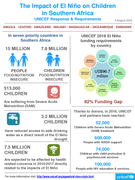
Esta guía está dirigida a los encargados de tomar decisiones sobre la formulación, operación o evaluación de programas o estrategias orientadas a mejorar la nutrición o alimentación. Su principal objetivo es brindar a los lectores herramientas para determinar la conveniencia de instrumentar d
...
Las directrices terapéuticas descritas en este documento pueden aplicarse no sólo en los hospitales, sino también en centros de alimentación terapéutica en situaciones de emergencia y en centros de nutrición para rehabilitación tras el tratamiento inicial en un hospital. [OMS]
DHS Working Papers No. 84

Updated Packaging and Reconstitution Guidance for Therapeutic Milk. French Version

Harmonising proven strategies beyond the emergency phase. Zero Hunger Phase 2
Confernece Report 15-16 April 2013 - Dublin, Ireland

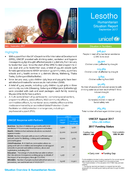
Situation Overview & Humanitarian Needs | July – September 2017
Accessed: 06.04.2020
Directives opérationnelles à l’intention du personnel et des
administrateurs de programmes
Pour le personnel de santé et les travailleurs de la nutrition dans les situations d’urgence
The content of these guidelines acknowledges that wasting and undernutrition in HIV-infected children reflect a series of failures within the health system, the home and community and not just a biological process related to virus and host interactions.
The guidelines do not cover the feeding of i
...
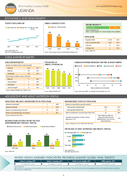
Global Nutrition Report
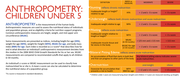
This pocket reference presents clear information on the anthropometry (body measurements) used to assess the nutritional status of children under 5 years of age. Common definitions, cutoffs, and classifications are detailed in an easy-to-use format.
Also available in french and spanish:
http://
...
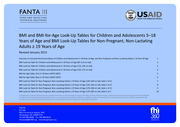
These tables are a quick reference to help health care providers determine the nutritional status of children over 5 years of age; adolescents; and non‑pregnant, non‑lactating adults. Practice exercises are available to assist health care providers in using the tables.
El propósito general de la reunión fue analizar la interrelación entre la salud, la nutrición y el desarrollo infantil, dentro del marco de la “Estrategia Global para la Alimentación y Nutrición del Infante y Niño Pequeño” (OMS/UNICEF).

Accessed on 11.03.2020
Burkina Faso will not achieve the Millennium Development Goals (MDGs) on reducing maternal mortality of children under five, which is still too high.
Accessed: 06.04.2020
The KNAP 2018 - 2022 is the second National Nutrition Action Plan that operationalizes the National Food and Nutrition Security Policy 2012 and its implementation framework (NFNSP-IF) 2017–2022.
It is our hope and prayer that the guidance and multiple tools provided herein to manage
the entire lifecycle of a food security program are useful to our food security staff, our
local partners, and our fellow international Cooperating Sponsors throughout the world.

Nutrition Surveys
Treat diarrhoea, confirmed malaria, and fast breathing
Climate change is having the largest impact on the world’s poorest and most vulnerable people. Within this group, 20% are people with disabilities, who are nearly always doubly disadvantaged.
Nutrition Guidelines
recommended
Infant Feeding in Emergencies Module 2
recommended
for health and nutrition workers in emergency situations for training, practice and reference
Model Chapter for textbooks for medical students and allied health professionals
This book is aimed at policymakers in ministries of agriculture and national agricultural research institutes, as well as multilateral development banks and the private sector and provides guidance on various technology strategies and which to pursue as competition grows for land, water, and energy
...
Preliminary version for country introduction
In the area of nutrition and HIV, children deserve special attention because of their additional needs to ensure growth and development and their dependency on adults for adequate care. It was therefore proposed to first develop guidelines for children and thereafter consider a similar approach for
...
The IMCI chart booklet is for use by doctors, nurses and other health professionals who see young infants and children less than five years old. It facilitates the use of the IMCI case management process in practice and describes a series of all the case management steps in a form of IMCI charts.
...
Reference book specifying the principles of intervention for all food security activities, from initial assessment to programme implementation.