
Filter
625
Text search:
low-income
workforce
Featured
50
141
Language
Document type
301
189
51
38
30
7
3
3
2
1
Countries
58
19
15
13
13
12
12
11
11
10
10
9
9
8
8
8
8
6
6
6
6
6
5
5
5
5
5
5
4
4
4
4
3
3
3
3
3
3
3
2
2
2
2
2
2
2
2
2
2
2
1
1
1
1
1
1
1
1
1
1
1
1
1
1
1
1
1
Authors & Publishers
Publication Years
Category
183
79
38
37
20
4
4
1
Toolboxes
72
70
37
35
32
31
25
24
21
20
16
9
7
6
6
5
5
3
2
Technical Series on Safer Primary Care
BMC Health Services Research (2017) 17:623 DOI 10.1186/s12913-017-2567-7
JOURNAL OF THE ASSOCIATION OF NURSES IN AIDS CARE, Vol. 28, No. 2, March/April 2017, 186-198
http://dx.doi.org/10.1016/j.jana.2015.09.003

11-17 April 2012
Climate change (CC) impacts on health outcomes, both direct and indirect, are sufficient to jeopardize achieving the World Bank Group’s visions and agendas in poverty reduction, population resilience, and health, nutrition and population (HNP). In the last 5 years, the number of voices calling for
...
n 2015, Member States of the United Nations adopted the 2030 Agenda for Sustainable Development and its accompanying Sustainable Development Goals (SDGs), with the third goal of the agenda focusing on health – good health and well-being. This has the attainment of universal health coverage (UHC) a
...

This document sets out Rwanda's Maternal, Neonatal Child Health (MNCH) national strategy (July 2013- June 2018). The MNCH strategy provides a framework for addressing maternal, neonatal and child health challenges currently facing Rwanda. It is an overarching strategy for scale up of the national re
...
Nepal is on target to meet the Millennium Development Goals for maternal and child health despite high levels of poverty, poor infrastructure, difficult terrain and recent conflict. Each year, nearly 35000 Nepali children die before their fifth birthday, with almost two-thirds of these deaths occurr
...

The current SEARVAP (South-East Asia regional vaccine action plan) describes a set of regional goals and objectives for immunization and control of vaccine-preventable diseases for 2016 – 2020 and highlights priority actions, targets and indicators that address the specific needs and challenges of
...

The report reflects on the trends, achievements and challenges in global health over the past decade during which Dr Margaret Chan has been Director-General of WHO. It discusses the role of WHO in dealing with such issues as the rise of noncommunicable diseases, leaps in life expectancy, and emergin
...

The five hepatitis viruses have different epidemiological profiles, and their impact, duration, and transmission route also vary. The most common transmission routes contributing to the spread of hepatitis are exposure to infected blood via blood transfusion or unsafe injection practices, consumptio
...

Africa CDC Non Communicable Diseases, Injuries Prevention and Control and Mental Health Promotion Strategy
recommended
Non-communicable diseases (NCDs) & injuries and mental health conditions constitute a serious impediment to achieving the vision of Agenda 2063 to build an integrated, prosperous, and peaceful Africa driven by its own citizens. Each year, these conditions cause millions of premature deaths and disab
...
Over the period 2015 to 2019, scaling up a package of selected nutrition-specific and nutrition sensitive interventions to cover 90 per cent of Sudan would:
- Reduce the under-five mortality rate to 49/1,000 live births
- Reduce the prevalence of stunting to 25 per cent
- Reduce the ...
- Reduce the under-five mortality rate to 49/1,000 live births
- Reduce the prevalence of stunting to 25 per cent
- Reduce the ...
The second edition of the WHPCA Global Atlas of Palliative Care was launched during World Hospice & Palliative Care Day 10 October. The Atlas is an update of the original WHPCA/WHO Global Atlas of Palliative care at the end of life published in 2014. It is full of useful facts and figures to support
...

Rehabilitation in health systems provides recommendations for Member States and other relevant stakeholders to strengthen and expand the availability of quality rehabilitation services. Currently, there is a significant unmet need for rehabilitation services and it is frequently undervalued in the h
...
Republic of The Gambia; Accessed on 31.01.2019

A Guidebook for Medical and Professional Schools, Second Edition.
This book represents a significant step to engage health professions schools in addressing global health challenges
In this report, we describe early childhood trauma and its effects, offer promising strategies for ECE programs and systems to help young children who have experienced trauma, and present recommendations for state policymakers and other stakeholders looking to support trauma-informed ECE for this vu
...
Second edition

20 February 2013
Update on 2004 Background Paper (Written by Saloni Tanna)
Priority Medicines for Europe and the World "A Public Health Approach to Innovation"
The report “Dementia: a public health priority” has been jointly developed by WHO and Alzheimer's Disease International. The purpose of this report is to raise awareness of dementia as a public health priority, to articulate a public health approach and to advocate for action at international a
...
WHO Western Pacific Regional Strategy to Reduce Alcohol-Related Harm
This publication seeks to describe the best treatments and practices based on the scientific evidence available at the time of writing as evaluated by the authors and may change as a result of new research. Readers need to apply this knowledge to patients in accordance with the guidelines and laws o
...
From raising awareness to building capacity
Meeting Report
World Health Organization, Geneva, Switzerland 16 -18 September 2013
This document presents an integrated strategy for mental health system development that will lead to enhanced service delivery, improved outcomes, and improved human rights for people with mental disorders.
By using the practical guidance provided in this document, countries can ensure that thei
...
Lancet Psychiatry 2016;3: 415–24
World Psychiatry. 2010 Jun;9(2):67-77.
The main recommendations are presented in relation to: the need for coordinated policies, plans and programmes, the requirement to scale up services for whole populations, the importance of promoting community awareness about mental illness to increase levels
...
In Climate Change 2014: Impacts, Adaptation, and Vulnerability. Part A: Global and Sectoral Aspects. Contribution of Working Group II to the Fifth Assessment Report of the Intergovernmental Panel on Climate Change
Phiri et al. Human Resources for Health (2017) 15:40
DOI 10.1186/s12960-017-0214-3
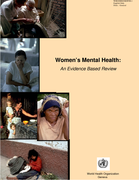
This document adopts a health determinants framework for examining the evidence related to women’s poor mental health. From this perspective, public policy including economic policy, socio-cultural and environmental factors, community and social support, stressors and life events, personal behavio
...
Universal health coverage and the Sustainable Development Goals in the WHO African Region
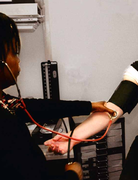
Primary care - Putting people first: This chapter describes how primary care brings promotion and prevention, cure and care together in a safe, effective and socially productive way at the interface between the population and the health system.
Accessed: 29.09.2019
MSF provides treatment for HIV and tuberculosis (TB) in more than 20 countries around the world. The report Burden sharing or burden shifting? How the HIV/TB response is being derailed examines the situation in nine countries where MSF runs programmes: Central African Republic, Democratic Republic
...
The HEARTS technical package provides a strategic approach to improving cardiovascular health in countries. It comprises six modules and an implementation guide. This package supports Ministries of Health to strengthen CVD management in primary health care settings. The practical, step-by step modul
...
The report and an accompanying series of studies show the global uptake of the World Health Organization (WHO) Surgical Safety Checklist in its first ten years since its launch and recommend ways the Checklist can be more effectively used to improve surgical safety for millions at risk.
The report
...
Antimicrobial resistance (AMR) is a global threat that requires urgent collaborative action within and among countries. AMR makes standard treatments ineffective and facilitates the spread of antimicrobial resistant infections rendering communities vulnerable. The Ministry of Health (MOH) and Minist
...
Women advancing the end of AIDS
African Journal of Primary Health Care & Family Medicine
ISSN: (Online) 2071-2936, (Print) 2071-2928
2018
9th Edition
Offering information on HIV/AIDS treatment, prevention, and research
This paper was developed to support AMR coordination committees and others tasked with addressing AMR at country level to do just that. Drawing on the published literature and the operational experience and expertise of different LMICs, the paper points to six key strategies for success and offers a
...
A regional guide for governments in Asia and the Pacific to review, update and develop policies to address antimicrobial resistance and antimicrobial use in animal production

Antibiotics and other antimicrobial agents are invaluable life savers, particularly in resource-limited countries where infectious diseases are abundant. Both uncomplicated and severe infections are potentially curable as long as the aetiological agents are susceptible to the
...

This second edition of the “living paper” contributes to the global knowledge on how countries are responding to the pandemic by documenting real-time actions in a key area of response – that is, social protection measures planned or implemented by governments.
For the purpose of this revie
...
Productive and Inclusive Cities for an Emerging Democratic Republic of Congo
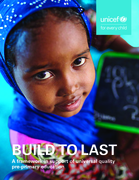
Today, the world is facing a learning crisis: While millions of children have entered education systems for the first time, many of them cannot read, write or do basic mathematics, even after several years of primary school.1 This global learning crisis has its roots in children’s earliest years,
...

The ECA, says over 300,000 Africans could lose their lives due to COVID-19. This, as the pandemic continues to impact on the Continent’s struggling economies whose growth is expected to slow down from 3.2 percent to 1.8 percent in a best-case scenario, pushing close to 27 million people into extr
...
In response to the first cases of coronavirus disease 2019 (COVID-19) reported on the continent, many African Union Member States implemented large-scale public health and social measures (PHSM) rapidly. These measures were aimed at reducing transmission and the number of new cases being reported, p
...
COVID-19 disproportionately affects the poor and vulnerable. Community health workers are poised to play a pivotal role in fighting the pandemic, especially in countries with less resilient health systems. Drawing from practitioner expertise across four WHO regions, this article outlines the targete
...

This policy paper underscores that, although children do not represent a high-risk group for direct COVID-19 fatality, the pandemic posts far-reaching secondary impacts that heighten risks to African children’s rights and wellbeing.
May 2020 International Journal of Infectious Diseases 96 DOI: 10.1016/j.ijid.2020.05.003
The two-year impact report for the Access to COVID-19 Tools (ACT) Accelerator details impact, case studies and timelines of key milestones for the Diagnostics, Therapeutics and Vaccines pillars, as well as the Health Systems and Response Connector.
The results of a WHO survey conducted to assess the impact of the COVID-19 pandemic on up to 25 essential health services in countries show disruptions of essential health services in nearly all countries, and more so in lower-income than higher-income countries. The great majority of service disrup
...
Community-Based Management of Acute Malnutrition (CMAM) is a decentralised community-based approach to treating acute malnutrition. Treatment is matched to the nutritional and clinical needs of the child, with the majority children receiving treatment at home using ready-to-use foods. In-patient car
...
Six months in, the indirect impacts of COVID-19 take a toll on health, social and economic outcomes.
WHO Guidance for Climate Resilient and Environmentally Sustainable Health Care Facilities
recommended
The aim of this guidance is to enhance the capacity of health care facilities to protect and improve the health of their target communities in an unstable and changing climate; and to empower health care facilities to be environmentally sustainable, by optimizing the use of resources and minimizing
...
The report – the first of its kind – shows how the pandemic has driven up food insecurity and increased vulnerability among migrants, families reliant on remittances and communities forced from their homes by conflict, violence and disasters.
The two UN agencies warn the social and economic
...
This document, endorsed by the WHO Strategic Advisory Group of Experts on Immunization, provides guiding principles to support countries in their decision-making regarding provision or resumption of immunization services during severe disruptive events such as COVID-19, natural disasters or humanita
...

Developing countries face disastrous healthcare setbacks, hunger and huge international debt as covid-19’s ‘final wave’
his document, a first of its kind, clearly sets out the standards for rehabilitation and provides guidance on building or strengthening the capacity of EMTs in this area.The importance of early rehabilitation for functional outcomes is well documented. Rehabilitation needs can pe
...
Workplaces outside of healthcare facilities can be also settings for transmission of COVID-19. Outbreaks of COVID-19 has been reported in various types of workplaces and job categories.
All workers should be protected from acquiring COVID-19 because of their work. The prevention of COVID-19 in
...
The report presents the latest data on more than 50 health-related Sustainable Development Goal and "triple billion" target indicators. The 2021 edition includes preliminary estimates for global excess deaths attributable to COVID-19 for 2020 and the state of global and regional health trends from 2
...
The WHO Guidance on community mental health services: Promoting person-centred and rights-based approaches document is part of the WHO Guidance and technical packages on community mental health services set of publications. It provides a detailed description of person-centred and human rights-based
...
The WHO Guidance on community mental health services: Promoting person-centred and rights-based approaches document is part of the WHO Guidance and technical packages on community mental health services set of publications. It provides a detailed description of person-centred and human rights-based
...
The WHO Guidance on community mental health services: Promoting person-centred and rights-based approaches document is part of the WHO Guidance and technical packages on community mental health services set of publications. It provides a detailed description of person-centred and human rights-based
...
Published OnlineJuly 14, 2021https://doi.org/10.1016/S2214-109X(21)00164-9. New Lancet research offers the first comprehensive analysis of the growing footprint of noncommunicable and injury-related neurological disorders to India’s overall disease burden.
Takeaways from 1990 to 2019 In terms
...
This report makes the case for a major new initiative—to rapidly recruit, train and deploy 2 million community health workers in Africa. Drawing on a vast body of evidence and substantial regional experience, the report shows how community health workers save lives and improve quality of life and
...
Access to medical personal protective equipment (PPE) is essential for routine healthcare delivery, and a critical tool for containing outbreaks, as well as preventing and responding to pandemics. It is one of our most effective tools against COVID-19, and an undervalued tool more generally in infec
...
Over the past two decades, Afghanistan has depended on international donor support to fund essential services like health care. But this donor support has been falling for years and will likely to continue do so—perhaps precipitously—following the announcement by United States President Joe Bide
...
The 10 recommendations in the COP26 Special Report on Climate Change and Health propose a set of priority actions from the global health community to governments and policy makers, calling on them to act with urgency on the current climate and health crises.
The recommendations were developed in
...
High prices, hard-to-access human insulin, few insulin producers, and weak health systems are just some of the barriers that people with diabetes face a century after insulin was discovered, WHO notes in a new report

The report identifies major global gaps in WASH services: one third of health care facilities do not have what is needed to clean hands where care is provided; one in four facilities have no water services, and 10% have no sanitation services. This means that 1.8 billion people use facilities that l
...
Using Epidemiology to Support Primary Health Care. Updated version of the WHO handbook published in the early 1990's entitled: Manual of Epidemiology for District Health Management or those with an interest in applied epidemiology in primary health care and district health systems

Available in English, French, Spanish and Russian from the website https://apps.who.int/iris/handle/10665/344562
Countries reported disruptions in all health-care settings. In more than half of countries surveyed, many people are still unable to access care at the primary care and community care levels. Significant disruptions have also been reported in emergency care, particularly concerning given the impact
...
