
Filter
8226
Text search:
hospital
Featured
768
2032
Language
7031
686
313
194
181
118
69
56
47
20
18
16
16
14
11
10
10
9
8
8
8
7
7
6
6
6
6
6
5
5
5
4
4
4
4
3
3
3
3
3
3
3
3
3
3
3
3
3
3
2
2
2
2
2
2
2
2
1
1
1
1
1
1
1
1
1
1
1
1
1
1
1
Document type
4573
1226
1225
436
214
172
158
98
36
34
26
14
13
1
Countries
448
227
220
188
187
181
153
152
148
148
145
141
114
114
111
111
109
107
103
102
101
101
99
87
84
72
67
64
63
62
58
56
55
55
43
43
43
42
40
39
39
38
35
34
34
34
33
32
31
31
30
30
29
27
27
27
24
23
23
22
21
18
17
17
17
17
16
15
15
14
14
14
13
13
13
13
11
11
10
10
10
9
9
9
8
7
7
6
6
6
6
6
6
6
6
6
6
5
5
5
5
5
5
4
4
4
4
4
4
4
4
3
3
3
3
3
3
3
3
2
2
2
2
2
2
2
2
2
2
2
2
2
2
2
2
2
2
1
1
1
1
1
1
1
1
1
1
1
1
1
1
1
1
1
Authors & Publishers
1004
411
387
230
170
168
142
118
98
72
66
59
54
51
47
45
45
42
42
41
39
36
33
33
33
32
30
30
30
29
29
27
27
27
27
27
26
26
25
25
24
24
24
24
23
23
23
23
22
22
22
21
21
21
20
20
20
20
19
19
18
17
17
17
17
16
16
16
16
16
16
15
15
15
15
15
14
14
14
14
14
13
13
13
12
12
12
12
12
12
11
11
11
11
11
11
11
11
11
10
10
10
10
10
10
10
10
10
10
10
9
9
9
9
9
9
9
9
9
9
9
9
9
9
9
8
8
8
8
8
8
8
8
8
8
8
8
8
8
8
8
8
8
8
8
7
7
7
7
7
7
7
7
7
7
7
7
7
7
7
7
7
7
7
7
6
6
6
6
6
6
6
6
6
6
6
6
6
6
6
6
6
6
6
6
6
6
6
6
6
6
6
6
6
6
6
6
6
6
6
6
6
6
6
6
6
6
6
6
6
5
5
5
5
5
5
5
5
5
5
5
5
5
5
5
5
5
5
5
5
5
5
5
5
5
5
5
5
5
5
5
5
5
5
5
5
5
5
5
5
5
5
5
5
5
5
5
4
4
4
4
4
4
4
4
4
4
4
4
4
4
4
4
4
4
4
4
4
4
4
4
4
4
4
4
4
4
4
4
4
4
4
4
4
4
4
4
4
4
4
4
4
4
4
4
4
4
4
4
4
4
4
4
4
4
4
4
4
4
4
4
4
4
4
4
4
4
4
4
4
4
4
4
4
4
4
4
4
4
4
4
4
4
4
4
4
4
4
4
4
4
4
3
3
3
3
3
3
3
3
3
3
3
3
3
3
3
3
3
3
3
3
3
3
3
3
3
3
3
3
3
3
3
3
3
3
3
3
3
3
3
3
3
3
3
3
3
3
3
3
3
3
3
3
3
3
3
3
3
3
3
3
3
3
3
3
3
3
3
3
3
3
3
3
3
3
3
3
3
3
3
3
3
3
3
3
3
3
3
3
3
3
3
3
3
3
3
3
3
3
3
3
3
3
3
3
3
3
3
3
3
3
3
3
3
3
3
3
3
3
3
3
3
3
3
3
3
3
3
3
3
3
3
3
3
3
3
3
3
3
3
3
3
3
3
3
3
3
3
3
3
3
3
3
3
3
3
3
3
3
3
3
3
3
3
3
3
3
3
3
3
3
3
3
3
3
3
3
3
3
3
3
3
3
3
3
3
3
3
3
3
3
3
3
3
3
3
3
3
2
2
2
2
2
2
2
2
2
2
2
2
2
2
2
2
2
2
2
2
2
2
2
2
2
2
2
2
2
2
2
2
2
2
2
2
2
2
2
2
2
2
2
2
2
2
2
2
2
2
2
2
2
2
2
2
2
2
2
2
2
2
2
2
2
2
2
2
2
2
2
2
2
2
2
2
2
2
2
2
2
2
2
2
2
2
2
2
2
2
2
2
2
2
2
2
2
2
2
2
2
2
2
2
2
2
2
2
2
2
2
2
2
2
2
2
2
2
2
2
2
2
2
2
2
2
2
2
2
2
2
2
2
2
2
2
2
2
2
2
2
2
2
2
2
2
2
2
2
2
2
2
2
2
2
2
2
2
2
2
2
2
2
2
2
2
2
2
2
2
2
2
2
2
2
2
2
2
2
2
2
2
2
2
2
2
2
2
2
2
2
2
2
2
2
2
2
2
2
2
2
2
2
2
2
2
2
2
2
2
2
2
2
2
2
2
2
2
2
2
2
2
2
2
2
2
2
2
2
2
2
2
2
2
2
2
2
2
2
2
2
2
2
2
2
2
2
2
2
2
2
2
2
2
2
2
2
2
2
2
2
2
2
2
2
2
2
2
2
2
2
2
2
2
2
2
2
2
2
2
2
2
2
2
2
2
2
2
2
2
2
2
2
2
2
2
2
2
2
2
2
2
2
2
2
2
2
2
2
2
2
2
2
2
2
2
2
2
2
2
2
2
2
2
2
2
2
2
2
2
2
2
2
2
2
2
2
2
2
2
2
2
2
2
2
2
2
2
2
2
2
2
2
2
2
2
2
2
2
2
2
2
2
2
2
2
2
2
2
2
2
2
2
2
2
2
2
2
2
2
2
2
2
2
2
2
2
2
2
2
2
2
2
2
2
2
2
2
2
2
2
2
2
2
2
2
2
2
2
2
2
2
2
2
2
2
2
2
2
2
2
2
2
2
2
2
2
2
2
2
2
2
2
2
2
2
2
2
2
2
2
2
2
2
2
2
2
2
2
2
2
2
2
2
2
2
2
2
2
2
2
2
2
2
2
2
2
2
2
2
2
2
2
2
2
1
1
1
1
1
1
1
1
1
1
1
1
1
1
1
1
1
1
1
1
1
1
1
1
1
1
1
1
1
1
1
1
1
1
1
1
1
1
1
1
1
1
1
1
1
1
1
1
1
1
1
1
1
1
1
1
1
1
1
1
1
1
1
1
1
1
1
1
1
1
1
1
1
1
1
1
1
1
1
1
1
1
1
1
1
1
1
1
1
1
1
1
1
1
1
1
1
1
1
1
1
1
1
1
1
1
1
1
1
1
1
1
1
1
1
1
1
1
1
1
1
1
1
1
1
1
1
1
1
1
1
1
1
1
1
1
1
1
1
1
1
1
1
1
1
1
1
1
1
1
1
1
1
1
1
1
1
1
1
1
1
1
1
1
1
1
1
1
1
1
1
1
1
1
1
1
1
1
1
1
1
1
1
1
1
1
1
1
1
1
1
1
1
1
1
1
1
1
1
1
1
1
1
1
1
1
1
1
1
1
1
1
1
1
1
1
1
1
1
1
1
1
1
1
1
1
1
1
1
1
1
1
1
1
1
1
1
1
1
1
1
1
1
1
1
1
1
1
1
1
1
1
1
1
1
1
1
1
1
1
1
1
1
1
1
1
1
1
1
1
1
1
1
1
1
1
1
1
1
1
1
1
1
1
1
1
1
1
1
1
1
1
1
1
1
1
1
1
1
1
1
1
1
1
1
1
1
1
1
1
1
1
1
1
1
1
1
1
1
1
1
1
1
1
1
1
1
1
1
1
1
1
1
1
1
1
1
1
1
1
1
1
1
1
1
1
1
1
1
1
1
1
1
1
1
1
1
1
1
1
1
1
1
1
1
1
1
1
1
1
1
1
1
1
1
1
1
1
1
1
1
1
1
1
1
1
1
1
1
1
1
1
1
1
1
1
1
1
1
1
1
1
1
1
1
1
1
1
1
1
1
1
1
1
1
1
1
1
1
1
1
1
1
1
1
1
1
1
1
1
1
1
1
1
1
1
1
1
1
1
1
1
1
1
1
1
1
1
1
1
1
1
1
1
1
1
1
1
1
1
1
1
1
1
1
1
1
1
1
1
1
1
1
1
1
1
1
1
1
1
1
1
1
1
1
1
1
1
1
1
1
1
1
1
1
1
1
1
1
1
1
1
1
1
1
1
1
1
1
1
1
1
1
1
1
1
1
1
1
1
1
1
1
1
1
1
1
1
1
1
1
1
1
1
1
1
1
1
1
1
1
1
1
1
1
1
1
1
1
1
1
1
1
1
1
1
1
1
1
1
1
1
1
1
1
1
1
1
1
1
1
1
1
1
1
1
1
1
1
1
1
1
1
1
1
1
1
1
1
1
1
1
1
1
1
1
1
1
1
1
1
1
1
1
1
1
1
1
1
1
1
1
1
1
1
1
1
1
1
1
1
1
1
1
1
1
1
1
1
1
1
1
1
1
1
1
1
1
1
1
1
1
1
1
1
1
1
1
1
1
1
1
1
1
1
1
1
1
1
1
1
1
1
1
1
1
1
1
1
1
1
1
1
1
1
1
1
1
1
1
1
1
1
1
1
1
1
1
1
1
1
1
1
1
1
1
1
1
1
1
1
1
1
1
1
1
1
1
1
1
1
1
1
1
1
1
1
1
1
1
1
1
1
1
1
1
1
1
1
1
1
1
1
1
1
1
1
1
1
1
1
1
1
1
1
1
1
1
1
1
1
1
1
1
1
1
1
1
1
1
1
1
1
1
1
1
1
1
1
1
1
1
1
1
1
1
1
1
1
1
1
1
1
1
1
1
1
1
1
1
1
1
1
1
1
1
1
1
1
1
1
1
1
1
1
1
1
1
1
1
1
1
1
1
1
1
1
1
1
1
1
1
1
1
1
1
1
1
1
1
1
1
1
1
1
1
1
1
1
1
1
1
1
1
1
1
1
1
1
1
1
1
1
1
1
1
1
1
1
1
1
1
1
1
1
1
1
1
1
1
1
1
1
1
1
1
1
1
1
1
1
1
1
1
1
1
1
1
1
1
1
1
1
1
1
1
1
1
1
1
1
1
1
1
1
1
1
1
1
1
1
1
1
1
1
1
1
1
1
1
1
1
1
1
1
1
1
1
1
1
1
1
1
1
1
1
1
1
1
1
1
1
1
1
1
1
1
1
1
1
1
1
1
1
1
1
1
1
1
1
1
1
1
1
1
1
1
1
1
1
1
1
1
1
1
1
1
1
1
1
1
1
1
1
1
1
1
1
1
1
1
1
1
1
1
1
1
1
1
1
1
1
1
1
1
1
1
1
1
1
1
1
1
1
1
1
1
1
1
1
1
1
1
1
1
1
1
1
1
1
1
1
1
1
1
1
1
1
1
1
1
1
1
1
1
1
1
1
1
1
1
1
1
1
1
1
1
1
1
1
1
1
1
1
1
1
1
1
1
1
1
1
1
1
1
1
1
1
1
1
1
1
1
1
1
1
1
1
1
1
1
1
1
1
1
1
1
1
1
1
1
1
1
1
1
1
1
1
1
1
1
1
1
1
1
1
1
1
1
1
1
1
1
1
1
1
1
1
1
1
1
1
1
1
1
1
1
1
1
1
1
1
1
1
1
1
1
1
1
1
1
1
1
1
1
1
1
1
1
1
1
1
1
1
1
1
1
1
1
1
1
1
1
1
1
1
1
1
1
1
1
1
1
1
1
1
1
1
1
1
1
1
1
1
1
1
1
1
1
1
1
1
1
1
1
1
1
1
1
1
1
1
1
1
1
1
1
1
1
1
1
1
1
1
1
1
1
1
1
1
1
1
1
1
1
1
1
1
1
1
1
1
1
1
1
1
1
1
1
1
1
1
1
1
1
1
1
1
1
1
1
1
1
1
1
1
1
1
1
1
1
1
1
1
1
1
1
1
1
1
1
1
1
1
1
1
1
1
1
1
1
1
1
1
1
1
1
1
1
1
1
1
1
1
1
1
1
1
1
1
1
1
1
1
1
1
1
1
1
1
1
1
1
1
1
1
1
1
1
1
1
1
1
1
1
1
1
1
1
1
1
1
1
1
1
1
1
1
1
1
1
1
1
1
1
1
1
1
1
1
1
1
1
1
1
1
1
1
1
1
1
1
1
1
1
1
1
1
1
1
1
1
1
1
1
1
1
1
1
1
1
1
1
1
1
1
1
1
1
1
1
1
1
1
1
1
1
1
1
1
1
1
1
1
1
1
1
1
1
1
1
1
1
1
1
1
1
1
1
1
1
1
1
1
1
1
1
1
1
1
1
1
1
1
1
1
1
1
1
1
1
1
1
1
1
1
1
1
1
1
1
1
1
1
1
1
1
1
1
1
1
1
1
1
1
1
1
1
1
1
1
1
1
1
1
1
1
1
1
1
1
1
1
1
1
1
1
1
1
1
1
1
1
1
1
1
1
1
1
1
1
1
1
1
1
1
1
1
1
1
1
1
1
1
1
1
1
1
1
1
1
1
1
1
1
1
1
1
1
1
1
1
1
1
1
1
1
1
1
1
1
1
1
1
1
1
1
1
1
1
1
1
1
1
1
1
1
1
1
1
1
1
1
1
1
1
1
1
1
1
1
1
1
1
1
1
1
1
1
1
1
1
1
1
1
1
1
1
1
1
1
1
1
1
1
1
1
1
1
1
1
1
1
1
1
1
1
1
1
1
1
1
1
1
1
1
1
1
1
1
1
1
1
1
1
1
1
1
1
1
1
1
1
1
1
1
1
1
1
1
1
1
1
1
1
1
1
1
1
1
1
1
1
1
1
1
1
1
1
1
1
1
1
1
1
1
1
1
1
1
1
1
1
1
1
1
1
1
1
1
1
1
1
1
1
1
1
1
1
1
1
1
1
1
1
1
1
1
1
1
1
1
1
1
1
1
1
1
1
1
1
1
1
1
1
1
1
1
1
1
1
1
1
1
1
1
1
1
1
1
1
1
1
1
1
1
1
1
1
1
1
1
1
1
1
1
1
1
1
1
1
1
1
1
1
1
1
1
1
1
1
1
1
1
1
1
1
1
1
1
1
1
1
1
1
1
1
1
1
1
1
1
1
1
1
1
1
1
1
1
1
1
1
1
1
1
1
1
1
1
1
1
1
1
1
1
1
1
1
1
1
1
1
1
1
1
1
1
1
1
1
1
1
1
1
1
1
1
1
1
1
1
1
1
1
1
1
1
1
1
1
1
1
1
1
1
1
1
1
1
1
1
1
1
1
1
1
1
1
1
1
1
1
1
1
1
1
1
1
1
1
1
1
1
1
1
1
1
1
1
1
1
1
1
1
1
1
1
1
1
1
1
1
1
1
1
1
1
1
1
1
1
1
1
1
1
1
1
1
1
1
1
1
1
1
1
1
1
1
1
1
1
1
1
1
1
1
1
1
1
1
1
1
1
1
1
1
1
1
1
1
1
1
1
1
1
1
1
1
1
1
1
1
1
1
1
1
1
1
1
1
1
1
1
1
1
1
1
1
1
1
1
1
1
1
1
1
1
1
1
1
1
1
1
1
1
1
1
1
1
1
1
1
1
1
1
1
1
1
1
1
1
1
1
1
1
1
1
1
1
1
1
1
1
1
1
1
1
1
1
1
1
1
1
1
1
1
1
1
1
1
1
1
1
1
1
1
1
1
1
1
1
1
1
1
1
1
1
1
1
1
1
1
1
1
1
1
1
1
1
1
1
1
1
1
1
1
1
1
1
1
1
1
1
1
1
1
1
1
1
1
1
1
1
1
1
1
1
1
1
1
1
1
1
1
1
1
1
1
1
1
1
1
1
1
1
1
1
1
1
1
1
1
1
1
1
1
1
1
1
1
1
1
1
1
1
1
1
1
1
1
1
1
1
1
1
1
1
1
1
1
1
1
1
1
1
1
1
1
1
1
1
1
1
1
1
1
1
1
1
1
1
1
1
1
1
1
1
1
1
1
1
1
1
1
1
1
1
1
1
1
1
1
1
1
1
1
1
1
1
1
1
1
1
1
1
1
1
1
1
1
1
1
1
1
1
1
1
1
1
1
1
1
1
1
1
1
1
1
1
1
1
1
1
1
1
1
1
1
1
1
1
1
1
1
1
1
1
1
1
1
1
1
1
1
1
1
1
1
1
1
1
1
1
1
1
1
1
1
1
1
1
1
1
1
1
1
1
1
1
1
1
1
1
1
1
1
1
1
1
1
1
1
1
1
1
1
1
1
1
1
1
1
1
1
1
1
1
1
1
1
1
1
1
1
1
1
1
1
1
1
1
1
1
1
1
1
1
1
1
1
1
1
1
1
1
1
1
1
1
1
1
1
1
1
1
1
1
1
1
1
1
1
1
1
1
1
1
1
1
1
1
1
1
1
1
1
1
1
1
1
1
1
1
1
1
1
1
1
1
1
1
1
1
1
1
1
1
1
1
1
1
1
1
1
1
1
1
1
1
1
1
1
1
1
1
1
1
1
1
1
1
1
1
1
1
1
1
1
1
1
1
1
1
1
1
1
1
1
1
1
1
1
1
1
1
1
1
1
1
1
1
1
1
1
1
1
1
1
1
1
1
1
1
1
1
1
1
1
1
1
1
1
1
1
1
1
1
1
1
1
1
1
1
1
1
1
1
1
1
1
1
1
1
1
1
1
1
1
1
1
1
1
1
1
1
1
1
1
1
1
1
1
1
1
1
1
1
1
1
1
1
1
1
1
1
1
1
1
1
1
1
1
1
1
1
1
1
1
1
1
1
1
1
1
1
1
1
1
1
1
1
1
1
1
1
1
1
1
1
1
1
1
1
1
1
1
1
1
1
1
1
1
1
1
1
1
1
1
1
1
1
1
1
1
1
1
1
1
1
1
1
1
1
1
1
1
1
1
1
1
1
1
1
1
1
1
1
1
1
1
1
1
1
1
1
1
1
1
1
1
1
1
1
1
1
1
1
1
1
1
1
1
1
1
1
1
1
1
1
1
1
1
1
1
1
1
1
1
1
1
1
1
1
1
1
1
1
1
1
1
1
1
1
1
1
1
1
1
1
1
1
1
1
1
1
1
1
1
1
1
1
1
1
1
1
1
1
1
1
1
1
1
1
1
1
1
1
1
1
1
1
1
1
1
1
1
1
1
1
1
1
1
1
1
1
1
1
1
1
1
1
1
1
1
1
1
1
1
1
1
1
1
1
1
1
1
1
1
1
1
1
1
1
1
1
1
1
1
1
1
1
1
1
1
1
1
1
1
1
1
1
1
1
1
1
1
1
1
1
1
1
1
1
1
1
1
1
1
1
1
1
1
1
1
1
1
1
1
1
1
1
1
1
1
1
1
1
1
1
1
1
1
1
1
1
1
1
1
1
1
1
1
1
1
1
1
1
1
1
1
1
1
1
1
1
1
1
1
1
1
1
1
1
1
1
1
1
1
1
1
1
1
1
1
1
1
1
1
1
1
1
1
1
1
1
1
1
1
1
1
1
1
1
1
1
1
1
1
1
1
1
1
1
1
1
1
1
1
1
1
1
1
1
1
1
1
1
1
1
1
1
1
1
1
1
1
1
1
1
1
1
1
1
1
1
1
1
1
1
1
1
1
1
1
1
1
1
1
1
1
1
1
1
1
1
1
1
1
1
1
1
1
1
1
1
1
1
1
1
1
1
1
1
1
1
1
1
1
1
1
1
1
1
1
1
1
1
1
1
1
1
1
1
1
1
1
1
1
1
1
1
1
1
1
1
1
1
1
1
1
1
1
1
1
1
1
1
1
1
1
1
1
1
1
1
1
1
1
1
1
1
1
1
1
1
1
1
1
1
1
1
1
1
1
1
1
1
1
1
1
1
1
1
1
1
1
1
1
1
1
1
1
1
1
1
1
1
1
1
1
1
1
1
1
1
1
1
1
1
1
1
1
1
1
1
1
1
1
1
1
1
1
1
1
1
1
1
1
1
1
1
1
1
1
1
1
1
1
1
1
1
1
1
1
1
1
1
1
1
1
1
1
1
1
1
1
1
1
1
1
1
1
1
1
1
1
1
1
1
1
1
1
1
1
1
1
1
1
1
1
1
1
1
1
1
1
1
1
1
1
1
1
1
1
1
1
1
1
1
1
1
1
1
1
1
1
1
1
1
1
1
1
1
1
1
1
1
1
1
1
1
1
1
1
1
1
1
1
1
1
1
1
1
1
1
1
1
1
1
1
1
1
1
1
1
1
1
1
1
1
1
1
1
1
1
1
1
1
1
1
1
1
1
1
1
1
1
1
1
1
1
1
1
1
1
1
1
1
1
1
1
1
1
1
1
1
1
1
1
1
1
1
1
1
1
1
1
1
1
1
1
1
1
1
1
1
1
1
1
1
1
1
1
1
1
1
1
1
1
1
1
1
1
1
1
1
1
1
1
1
1
1
1
1
1
1
1
1
1
1
1
1
1
1
1
1
1
1
1
1
1
1
1
1
1
1
1
1
1
1
1
1
1
1
1
1
1
1
1
1
1
1
1
1
1
1
1
1
1
1
1
1
1
1
1
1
1
1
1
1
1
1
1
1
1
1
1
1
1
1
1
1
1
1
1
1
1
1
1
1
1
1
1
1
1
1
1
1
1
1
1
1
1
1
1
1
1
1
1
1
1
1
1
1
1
1
1
1
1
1
1
1
1
1
1
1
1
1
1
1
1
1
1
1
1
1
1
1
1
1
1
1
1
1
1
1
1
1
1
1
1
1
1
1
1
1
1
1
1
1
1
1
1
1
1
1
1
1
1
1
1
1
1
1
1
1
1
1
1
1
1
1
1
1
1
1
1
1
1
1
1
1
1
1
1
1
1
1
1
1
1
1
1
1
1
1
1
1
1
1
1
1
1
1
1
1
1
1
1
1
1
1
1
1
1
1
1
1
1
1
1
1
1
1
1
1
1
1
1
1
1
1
1
1
1
1
1
1
1
1
1
1
1
1
1
1
1
1
1
1
1
1
1
1
1
1
1
1
1
1
1
1
1
1
1
1
1
1
1
1
1
1
1
1
1
1
1
1
1
1
1
1
1
1
1
1
1
1
1
1
1
1
1
1
1
1
1
1
1
1
1
1
1
1
1
1
1
1
1
1
1
1
1
1
1
1
1
1
1
1
1
1
1
1
1
1
1
1
1
1
1
1
1
1
1
1
1
1
1
1
1
1
1
1
1
1
1
1
1
1
1
1
1
1
1
1
1
1
1
1
1
1
1
1
1
1
1
1
1
1
1
1
1
1
1
1
1
1
1
1
1
1
1
1
1
1
1
1
1
1
1
1
1
1
1
1
1
1
1
1
1
1
1
1
1
1
1
1
1
1
1
1
1
1
1
1
1
1
1
1
1
1
1
1
1
1
1
1
1
1
1
1
1
1
1
1
1
1
1
1
1
1
1
1
1
1
1
1
1
1
1
1
1
1
1
1
1
1
1
1
1
1
1
1
1
1
1
1
1
1
1
1
1
1
1
1
1
1
1
1
1
1
1
1
1
1
1
1
1
1
1
1
1
1
1
1
1
1
1
1
1
1
1
1
1
1
1
1
1
1
1
1
1
1
1
1
1
1
1
1
1
1
1
1
1
1
1
1
1
1
1
1
1
1
1
1
1
1
1
1
1
1
1
1
1
1
1
1
1
1
1
1
1
1
1
1
1
1
1
1
1
1
1
1
1
1
1
1
1
1
1
1
1
1
1
1
1
1
1
1
1
1
1
1
1
1
1
1
1
1
1
1
1
1
1
1
1
1
1
1
1
1
1
1
1
1
1
1
1
1
1
1
1
1
1
1
1
1
1
1
1
1
1
1
1
1
1
1
1
1
1
1
1
1
1
1
1
1
1
1
1
1
1
1
1
1
1
1
1
1
1
1
1
1
1
1
1
1
1
1
1
1
1
1
1
1
1
1
1
1
1
1
1
1
1
1
1
1
1
1
1
1
1
1
1
1
1
1
1
1
1
1
1
1
1
1
1
1
1
1
1
1
1
1
1
1
1
1
1
1
1
1
1
1
1
1
1
1
1
1
1
1
1
1
1
1
1
1
1
1
1
1
1
1
1
1
1
1
1
1
1
1
1
1
1
1
1
1
1
1
1
1
1
1
1
1
1
1
1
1
1
1
1
1
1
1
1
1
1
1
1
1
1
1
1
1
1
1
1
1
1
1
1
1
1
1
1
1
1
1
1
1
1
1
1
1
1
1
1
1
1
1
1
1
1
1
1
1
1
1
1
1
1
1
1
1
1
1
1
1
1
1
1
1
1
1
1
1
1
1
1
1
1
1
1
1
1
1
1
1
1
1
1
1
1
1
1
1
1
1
1
1
1
1
1
1
1
1
1
1
1
1
1
1
1
1
1
1
1
1
1
1
1
1
1
1
1
1
1
1
1
1
1
1
1
1
1
1
1
1
1
1
1
1
1
1
1
1
1
1
1
1
1
1
1
1
1
1
1
1
1
1
1
1
1
1
1
1
1
1
1
1
1
1
1
1
1
1
1
1
1
1
1
1
1
1
1
1
1
1
1
1
1
1
1
1
1
1
1
1
1
1
1
1
1
1
1
1
1
1
1
1
1
1
1
1
1
1
1
1
1
1
1
1
1
1
1
1
1
1
1
1
1
1
1
1
1
1
1
1
1
1
1
1
1
1
1
1
1
1
1
1
1
1
1
1
1
1
1
1
1
1
1
1
1
1
1
1
1
1
1
1
1
1
1
1
1
1
1
1
1
1
1
1
1
1
1
1
1
1
1
1
1
1
1
1
1
1
1
1
1
1
1
1
1
1
1
1
1
1
1
1
1
1
1
1
1
1
1
1
1
1
1
1
1
1
1
1
1
1
1
1
1
1
1
1
1
1
1
1
1
1
1
1
1
1
1
1
1
1
1
1
1
1
1
1
1
1
1
1
1
1
1
1
1
1
1
1
1
1
1
1
1
1
1
1
1
1
1
1
1
1
1
1
1
1
1
1
1
1
1
1
1
1
1
1
1
1
1
1
1
1
1
1
1
1
1
1
1
1
1
1
1
1
1
1
1
1
1
1
1
1
1
1
1
1
1
1
1
1
1
1
1
1
1
1
1
1
1
1
1
1
1
1
1
1
1
1
1
1
1
1
1
1
1
1
1
1
1
1
1
1
1
1
1
1
1
1
1
1
1
1
1
1
1
1
1
1
1
1
1
1
1
1
1
1
1
1
1
1
1
1
1
1
1
1
1
1
1
1
1
1
1
1
1
1
1
1
1
1
1
1
1
1
1
1
1
1
1
1
1
1
1
1
1
1
1
1
1
1
1
1
1
1
1
1
1
1
1
1
1
1
1
1
1
1
1
1
1
1
1
1
1
1
1
1
1
1
1
1
1
1
1
1
1
1
1
1
1
1
1
1
1
1
1
1
1
1
1
1
1
1
1
1
1
1
1
1
1
1
1
1
1
1
1
1
1
1
1
1
1
1
1
1
1
1
1
1
1
1
1
1
1
1
1
1
1
1
1
1
1
1
1
1
1
1
1
1
1
1
1
1
1
1
1
1
1
1
1
1
1
1
1
1
1
1
1
1
1
1
1
1
1
1
1
1
1
1
1
1
1
1
1
1
1
1
1
1
1
1
1
1
1
1
1
1
1
1
1
1
1
1
1
1
1
1
1
1
1
1
1
1
1
1
1
1
1
1
1
1
1
1
1
1
1
1
1
1
1
1
1
1
1
1
1
1
1
1
1
1
1
1
1
1
1
1
1
1
1
1
1
1
1
1
1
1
1
1
1
1
1
1
1
1
1
1
1
1
1
1
1
1
1
1
1
1
1
1
1
1
1
1
1
1
1
1
1
1
1
1
1
1
1
1
1
1
1
1
1
1
1
1
1
1
1
1
1
1
1
1
1
1
1
1
1
1
1
1
1
1
1
1
1
1
1
1
1
1
1
1
1
1
1
1
1
1
1
1
1
1
1
1
1
1
1
1
1
1
1
1
1
1
1
1
1
1
1
1
1
1
1
1
1
1
1
1
1
1
1
1
1
1
1
1
1
1
1
1
1
1
1
1
1
1
1
1
1
1
1
1
1
1
1
1
1
1
1
1
1
1
1
1
1
1
1
1
1
1
1
1
1
1
1
1
1
1
1
1
1
1
1
1
1
1
1
1
1
1
1
1
1
1
1
1
1
1
1
1
1
1
1
1
1
1
1
1
1
1
1
1
1
1
1
1
1
1
1
1
1
1
1
1
1
1
1
1
1
1
1
1
1
1
1
1
1
1
1
1
1
1
1
1
1
1
1
1
1
1
1
1
1
1
1
1
1
1
1
1
1
1
1
1
1
1
1
1
1
1
1
1
1
1
1
1
1
1
1
1
1
1
1
1
1
1
1
1
1
1
1
1
1
1
1
1
1
1
1
1
1
1
1
1
1
1
1
1
1
1
1
1
1
1
1
1
1
1
1
1
1
1
1
1
1
1
1
1
1
1
1
1
1
1
1
1
1
1
1
1
1
1
1
1
1
1
1
1
1
1
1
1
1
1
1
1
1
1
1
1
1
1
1
1
1
1
1
1
1
1
1
1
1
1
1
1
1
1
1
1
1
1
1
1
1
1
1
1
1
1
1
1
1
1
1
1
1
1
1
1
1
1
1
1
1
1
1
1
1
1
1
1
1
1
1
1
1
1
1
1
1
1
1
1
1
1
1
1
1
1
1
1
1
1
1
1
1
1
1
1
1
1
1
1
1
1
1
1
1
1
1
1
1
1
1
1
1
1
1
1
1
1
1
1
1
1
1
1
1
1
1
1
1
1
1
1
1
1
1
1
1
1
1
1
1
1
1
1
1
1
1
1
1
1
1
1
1
1
1
1
1
1
1
1
1
1
1
1
1
1
1
1
1
1
1
1
1
1
1
1
1
1
1
1
1
1
1
1
1
1
1
1
1
1
1
1
1
1
1
1
1
1
1
1
1
1
1
1
1
1
1
1
1
1
1
1
1
1
1
1
1
1
1
1
1
1
1
1
1
1
1
1
1
1
1
1
1
1
1
1
1
1
1
1
1
1
1
1
1
1
1
1
1
1
1
1
1
1
1
1
1
1
1
1
1
1
1
1
1
1
1
1
1
1
1
1
1
1
1
1
1
1
1
1
1
1
1
1
1
1
1
1
1
1
1
1
1
1
1
1
1
1
1
1
1
1
1
1
1
1
1
1
1
1
1
1
1
1
1
1
1
1
1
1
1
1
1
1
1
1
1
1
1
1
1
1
1
1
1
1
1
1
1
1
1
1
1
1
1
1
1
1
1
1
Publication Years
2262
5054
842
63
5
Category
3421
709
415
399
243
203
77
4
3
2
Toolboxes
965
674
488
407
333
317
304
263
258
194
184
177
169
146
145
92
67
63
45
40
36
33
22
3
1
primary prevention of diabetes (WHO Collaborating Centre for Research, Education & Training in Diabetes
Tharker, S.; Nandhini, Mrs.; Satyavani, K.; et al.
M. V. Hospital for Diabetes & Diabetes Research Centre (WHO Collaborating Centre for Research, Education & Training in Diabetes)
(2023)
CC
It is now well known that there is a pandemic of Type 2 Diabetes in the world particularly in developing countries. This fact has several implications for the health care system in the developing countries because this condition is associated with metabolic and vascular complications which in turn i
...
ncreases the mortality and health care costs and compromises the quality and life expectancy of the society.
more

Health Information Translations provides education resources in multiple languages for health care professionals and others to use in their communities. Resources are easy to read and culturally appropriate.
To help health- and social-system leaders as they respond to unprecedented challenges related to the COVID-19 pandemic, teams from the McMaster Health Forum and Ottawa Hospital Research Institute – as part of their contribution to RISE – and the
...
Africa Centre for Evidence have compiled a list of evidence sources.
more

San Salvador, 11 de abril de 2020
En una situación de crisis como la que estamos viviendo es muy probable que los profesionales de salud que atiendan a pacientes con COVID-19 avanzado, enfrenten situaciones nuevas y complejas en que se noten con limitaciones en el actuar e incapaces para toma de
...
decisiones difíciles.
Además, los sistemas de salud pueden verse desbordados en capacidad de atención: los servicios de emergencia, las instalaciones de hospitalización y los servicios de medicina intensiva e intermedia. La limitación de instrumental de trabajo, medicamentos, equipos de protección puede llevar a tomar medidas no compasivas ni equitativas.
more
Closing the immunisation gap in Ethiopia: a formative evaluation of ‘The Fifth Child Project’
Shiferaw Dechasa Demissie, et al.
International Rescue Committee, London School of Hygiene & Tropical Medicine, Assosa Referral Hospital
(2019)
C1
Health Care Organisational Management. Volume 1: Improving Quality & Safety of Health Services.
National Health Quality Standards. Standards and Guidelines for Hospital Standards. Volume 1
Diagnostic, Care and Treatment Support Services. Volume 2: Improving Quality & Safety of Health Services.
National Health Quality Standards. Standards and Guidelines for Hospital Standards. Volume 2
Ancillary and Occupational Services. Volume 3: Improving Quality & Safety of Health Services. National Health Quality Standards. Standards and Guidelines for Hospital Standards. Volume 3
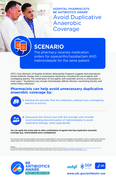
CDC’s Core Elements of Hospital Antibiotic Stewardship Programs suggests that pharmacists review antibiotic therapy that is unnecessarily duplicative, including the use of agents with overlapping spectra. The combination of two agents with anaerob
...
ic activity is unnecessary in most cases. Exceptions may include Clostridioides difficile infection, necrotizing fasciitis, and certain biliary infections.
more
District hospital level Severe | Malaria is a Medical Emergency

A practical guide for hospital administrators, health disaster coordinators, health facility designers, engineers and maintenance staff to achieve Smart Health Facilities by conserving resources, cutting costs, increasing efficiency in operations an
...
d reducing carbon emissions
more
Techniques for the district Hospital
Manual book of field hospital management in case of natural disaster in Indonesia

The spread of antimicrobial-resistant microorganisms poses anincreasing threat to affordable modern health care. In the Netherlands, efforts to control the dispersal of known and novel antimicrobial-resistant organisms have been mostly implemented at the h
...
ospital level. However, recent studies have recommended shifting the focus of control strategies fromsingle hospitals toward larger healthcare networks. These networks consist of clusters of hospitals that are connected viashared patients. Several studies have shown that patients transferred from one hospital to another can spread antimicrobial-resistant pathogens across the healthcare network
infection control & hospital epidemiology july 2016, vol. 37, no. 7
more

Death investigation form tuberculosis: Hospital Unit, Urgency and Emergency Unit

Ebola Alerts
Healthmap
(2014)
This Healthmap from Boston Children’s Hospital tracks publicly reported confirmed and suspected cases of Ebola throughout the world. The map is automatically updated to show current data on the outbreak: Click on: http://healthmap.org/ebola/
A guide for Regional Workshop and Hospital Technicians
In March 2017 MSF and St Josef Hospital in Schweinfurt (Germany) began a pilot project for low threshold psychosocial support for refugees and asylum seekers. The project has been independently continued by St Josef
...
Hospital from August 2017. Refugees and asylum seekers are approached with an information and counseling service from psychosocial peer counselors with relevant backgrounds (regarding language, culture and refugee experience). The psychosocial peer counselors undergo training with a specifically tailored curriculum and are supervised in their work by qualified staff.
more
Checklist for hospitals preparing for the reception and care of coronavirus 2019 (COVID-19) patients
recommended
This checklist has been developed to support hospital preparedness for the management of COVID-19 patients.
Elements to be assessed have been divided into the following areas:
Establishment of a core team and key internal and external conta
...
ct points
Human, material and facility capacity
Communication and data protection
Hand hygiene, personal protective equipment (PPE), and waste management
Triage, first contact and prioritisation
Patient placement, moving of the patients in the facility, and visitor access
Environmental cleaning
For each area mentioned above, the elements or processes were identified and the items to be checked are listed below.
A procedure for the self-auditing of compliance with this checklist should be considered.
more
La capacidad de respuesta de un hospital puede ser superada por la llegada masiva de pacientes que soliciten atención médica como consecuencia de una situación de emergencia. Ante este escenario, se debe considerar si el establecimiento de salud
...
está organizado para garantizar la gestión integral de la respuesta hospitalaria, el funcionamiento de los mecanismos de coordinación, el manejo integral de la información, las capacidades logísticas para facilitar la respuesta, y los recursos necesarios para su ejecución, así como para una respuesta integral a los pacientes, precautelando la salud y bienestar de los trabajadores de salud. (7)
more

In a retrospective review of hospital records of 40 human monkeypox cases from Nigeria, the majority developed fever and self-limiting vesiculopustular skin eruptions. Five deaths
were reported. Compared to human immunodeficiency virus (HIV)–nega
...
tive cases, HIV type 1–coinfected cases had more prolonged illness, larger lesions, and higher rates of both secondary bacterial skin infections and genital ulcers.
more
Written by international experts in the fields of infection control and hospital epidemiology, the ISID’s Guide to Infection Control in the Healthcare Setting brings together the most up-to-date principles and interventions that can reduce the rat
...
e of infection and the impact of associated consequences for patients, their families, and healthcare systems including: lengthier hospital stays; long-term disability; increased anti-microbial resistance; higher financial costs; and unnecessary deaths.
As the field of infection prevention grows in importance and the science supporting it continues to evolve, the Guide’s objectives are to facilitate the implementation of effective prevention and control measures across different resource levels to improve quality of care; minimize risk; save lives; reduce costs; and limit the use of antibiotics to fight these often preventable infections around the world.
The chapters herein are intended to facilitate the implementation of effective infection prevention and control measures across different resource levels, improve quality of care, minimize risk, save lives, and reduce costs.
To explore the Guide click on the sections below to view the chapters. Chapters have been divided into four parts
more
Antibiotic stewardship refers to coordinated efforts and activities that seek to measure and improve use of antibiotics. Implementation of ASPs has demonstrated positive public health and clinical impacts including reducing costs, lengths of hospital
...
stays, and the burden of antibiotic resistance while maintaining or improving patient outcomes. The U.S. Centers for Disease Control and Prevention (CDC) released the Core Elements of Hospital Antibiotic Stewardship Programs in 2014, which outlines essential components for ASPs in hospitals and provides practical guidance for implementing a robust ASPin an acute care facility. Variations to the Core Elements have been developed to deal with the particular challenges in small, rural or critical access hospitals in the United States and in outpatient facilities and nursing homes.
more

These guidelines have been extracted from the WHO manual Surgical Care at the District
Hospital (SCDH), which is a part of the WHO Integrated Management Package on Emergency
and Essential Surgical Care (IMPEESC).
Refer for details on anaesthesia,
...
head, gunshot and landmine injuries in chapters
more
Access : 29.4.2017
Curriculum of Capacity Building for Technical Officers in Field Operational Hospital Skills in Indonesia
During theC OVID-19 crisis, the hospital observed a reduction of about 50% in inpatient visits for palliative care. Some patients postponed appointments given the risk of potential infection. Instead of in-person visits, weekly phone calls and remot
...
e follow-up were given priority.Palliative care is also needed for COVID-19 patients. It is of utmost importance for humanizing care so that it is effective and aligned with the expectations of patients.
more
Providing financial protection to the population for larger health care expenses arising out of hospital-based care, has come forth as a crucial element in the attainment of Universal Health Coverage (UHC) through the recent health financing reforms
...
of low-and middle-income countries (LMIC). Over the last decade, the state of Assam in India, in an effort to ensure equitable health care access, has formulated multiple health protection schemes at different points of time. This has resulted in several such schemas which have had their own objectives, designs, institutional setups, and governance mechanisms. Moreover, they have reportedly been operating in relative silos.
more
Background: The impacts of air pollutants on health range from short-term health impairments to hospital admissions
and deaths. Climate change is leading to an increase in air pollution.
First Global Patient Safety Challenge Clean Care is Safer Care
The WHO Guidelines on Hand Hygiene in Health Care provide health-care workers (HCWs), hospital administrators and health authorities with a thorough review of evidence on hand hygiene i
...
n health care and specific recommendations to improve practices and reduce transmission of pathogenic microorganisms to patients and HCWs. The present Guidelines are intended to be implemented in any situation in which health care is delivered either to a patient or to a specific group in a population. Therefore, this concept applies to all settings where health care is permanently or occasionally performed, such as home care by birth attendants.
more
This diagnostic and treatment manual is designed for use by medical professionals involved in curative care at the dispensary and hospital levels. We have tried to respond in the simplest and most practical way possible to the questions and problems
...
faced by field medical staff, using the accumulated field experience of Médecins Sans Frontières, the recommendations of reference organizations such as the World Health Organization (WHO) and specialized works in each field.
Available in English, French, Spanish and Arabic
more
Cet ouvrage est l’adaptation en langue française d’un des livres les plus demandés de l’OMS: Surgical Care at the District Hospital. Il y a longtemps qu’il était attendu notamment par l’Afrique francophone. En effet l’ambition de ce l
...
ivre est de contribuer à corriger l’insuffisance des soins d’urgence et de chirurgie de base fréquemment constatée dans les pays les plus démunis
more
This diagnostic and treatment manual is designed for use by medical professionals involved in cura-
tive care at the dispensary and hospital levels. We have tried to respond in the simplest and most
practical way possible to the
...
questions and problems faced by field medical staff, using the accumu-
lated field experience of Médecins Sans Frontières, the recommendations of reference organizations
such as the World Health Organization (WHO) and specialized works in each field.
Download as App: https://twitter.com/hashtag/MedicalGuidelines?src=hash
more

Decree of the Minister of Health of the Republic of Indonesia Number 781 / MENKES / SK / VII / 2004 on the establishment of referral hospital for people with HIV / AIDS

Spectrum is a mobile app that can be customized to deliver local antimicrobial stewardship resources in any hospital.
Spectrum delivers all of your clinical pathways directly to the point of care. Each guideline is presented in an algorithmic forma
...
t for ease of use and can incorporate individualized patient factors to provide tailored recommendations
more
This study consists of a descriptive analysis of M. tuberculosis isolates from Beira Central Hospital, Mozambique, during 2014–2015, being the first report of a genotypic testing used to provide information about second line drug resistance in Moz
...
ambique.
BMC Infectious Diseases (2016) 16:423 DOI 10.1186/s12879-016-1766-x
more
The chain-free initiative evolved in response to an urgent need to: provide technical and financial support for hospital reform, improve domestic conditions for people with mental illness, develop community care programmes, raise mental health liter
...
acy in the community and among health workers, and ensure that basic rights are monitored and guaranteed
Accessed April 9,2019
more
Chronic HIV Care with ARV Therapy and Prevention
World Health Organization
(2007)
C_WHO
Integrated Management of Adolescent and Adult Illness
Integrated Management of Childhood Illness
Interim Guidelines for health workers at health centre or district hospital outpatient clinic
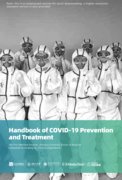
Handbook of COVID-19 Prevention and Treatment
recommended
Handbook of COVID-19 Prevention and Treatment, expecting to share their invaluable practical advice and references with medical staff around the world. This handbook compared and analyzed the experience of other experts in China, and provides good reference to key departments such as
...
hospital infection management, nursing, and outpatient clinics. This handbook provides comprehensive guidelines and best practices by China's top experts for coping with COVID-19.
This handbook, provided by the First Affiliated Hospital of Zhejiang University, describes how organizations can minimize the cost while maximizing the effect of measures to manage and control the coronavirus outbreak. The handbook also discusses why hospitals and other healthcare institutions should have command centers when encountering a large-scale emergency in the context of COVID-19. This handbook also includes the following:
- Technical strategies for addressing issues during emergencies.
- Treatment methods to treat the critically ill.
- Efficient clinical decision-making support.
- Best practices for key departments like inflection management and outpatient clinics.
more
Recommendations from the American Nurses Association/Centers for Disease Control and Prevention Workgroup on the Role of Registered Nurses in Hospital Antibiotic Stewardship Practices
This small scale project aimed to optimize antibiotic prescriptions for Urinary Tract Infections (UTI) at Okhaldhunga Community Hospital in Nepal. A review of 18 months data from urine cultures taken in the
...
hospital was completed in 2017. Presentations about antibiotic resistance, the local bacterial culture results and possible ways of changing prescription pattern were given for doctors, lab staff and community medical assistants (CMA). 16 months later the prescription rate of antibiotics frequently used for UTIs was followed up, with a 57% reduction of ciprofloxacin consumption!
more
Regulación emocional basada en Mindfulness (REM) en la crisis sanitaria COVID19
Para equipos de profesionales que intervienen
Marzo 2020
Hospital Universitario la Paz. Servicio de. Psiquiatría, Psicología clínica y Salud Mental
Lo siguiente
...
es un guía sencilla para aproximarse a los equipos profesionales que intervienen en la crisis introduciendo el sentido de la intervención.
more
The Rehabilitation self-management leaflet provides basic exercises and advice for adults who have been severely unwell and admitted to the hospital with COVID-19. The leaflet assist in self-rehabilitation and recovery management, addressing specifi
...
cally the common residual COVID-19 symptoms, specifically breathlessness, starting exercise, getting back to functional activities, mental health and post intubation symptoms such as voice weakness, eating, drinking and attention and memory deficits.
Available in different languages
more

The Rehabilitation self-management leaflet provides basic exercises and advice for adults who have been severely unwell and admitted to the hospital with COVID-19. The leaflet assist in self-rehabilitation and recovery management, addressing specifi
...
cally the common residual COVID-19 symptoms, specifically breathlessness, starting exercise, getting back to functional activities, mental health and post intubation symptoms such as voice weakness, eating, drinking and attention and memory deficits.
Available in different languages
more
The Rehabilitation self-management leaflet provides basic exercises and advice for adults who have been severely unwell and admitted to the hospital with COVID-19. The leaflet assist in self-rehabilitation and recovery management, addressing specifi
...
cally the common residual COVID-19 symptoms, specifically breathlessness, starting exercise, getting back to functional activities, mental health and post intubation symptoms such as voice weakness, eating, drinking and attention and memory deficits.
Available in different languages
more
The formulas are provided for information purposes only and may not be routinely used at Nationwide Children's Hospital. A compounded product should not be used if the product is available commercially. You can download all formulas here.
If Omicron is less severe, why are people ending up in the hospital and dying from it? Is it true that everyone will eventually get Omicron? Why is it important to reduce transmission? WHO's Dr Maria Van Kerkhove explains in Science in 5.
The WHO Trauma Bag 2021 is intended to provide the resources needed to care for care of acutely ill and injured patients in hospital emergency units, field hospitals or clinics providing acute care. The Trauma Bag may also be applicable in prehospi
...
tal settings if care is provided by advanced practitioners. The bag allows users to access essential equipment in one location and is organized into removable color-coded pouches according to the clinical indication. The composition of the bag was determined by broad consensus among diverse emergency care stakeholders.
The new trauma bag is designed for trained medical doctors & first responders. The majority of the included supply can be used by trained first responders. A dedicated intubation module should only be handled by trained providers acting within their scope of practice. The WHO Trauma Bag aims to provide materials to meet the needs of 2 adults and 2 children requiring trauma care
more
Theodor Bilharz, a German professor of anatomy and chief of surgery at the Kasr El Ani Hospital of Cairo from 1850, first identified an infective organism, Distomum hematobium in 1851, which was renamed Schistosoma haematobium in 1858. It arose from
...
a cestode worm, Hymenoleptis nana, lying in the small colon of an Egyptian patient. He also discovered a trematode worm at the same time from an autopsy, thought to be the cause of urinary Schistosomiasis. Bilharz died from typhoid fever in 1862 at the age of 37. The Theodor Bilharz Research Institute in Giza, Egypt, stands as a tribute to him today. F. Milton published the first recorded peer-reviewed article report on Schistosomiasis in 1914.
more
Delivery of comprehensive arrhythmia care requires the simultaneous presence of many resources. These include complex hospital infrastructure, expensive implantable equipment, and expert personnel. In many low- and middle-income countries (LMICs), a
...
t least 1 of these components is often missing, resulting in a gap between the demand for arrhythmia care and the capacity to supply care. In addition to this treatment gap, there exists a training gap, as many clinicians in LMICs have limited access to formal training in cardiac electrophysiology. Given the progressive increase in the burden of cardiovascular diseases in LMICs, these patient care and clinical training gaps will widen unless further actions are taken to build capacity. Several strategies for building arrhythmia care capacity in LMICs have been described. Medical missions can provide donations of both equipment and clinical expertise but are only intermittently present and therefore are not optimized to provide the longitudinal support needed to create self-sustaining infrastructure. Use of donated or reprocessed equipment (eg, cardiac implantable electronic devices) can reduce procedural costs but does not address the need for infrastructure, including diagnostics and expert personnel. Collaborative efforts involving multiple stakeholders (eg, professional organizations, government agencies, hospitals, and educational institutions) have the potential to provide longitudinal support of both patient care and clinician education in LMICs.
more
Médecins Sans Frontières (MSF) has set up a 20-bed cholera treatment unit (CTU) at the Renk Civil Hospital in South Sudan, in response to a cholera outbreak declared by the Ministry of Health (MoH) on 28 October. We call on all organisations in Up
...
per Nile state to help prevent the spread of the disease within Upper Nile State and beyond.
more

In this guideline, natural ventilation is considered
among one the effective measures to control infections in health care. This guideline provides
a design and operation guide for hospital planners, engineers, architects and infection control
...
personnel. The recommendations in this guideline followed a systematic
review of the literature on the association of ventilation and disease transmission, as well
as effective natural ventilation solutions for infection control.
more

Several of our newborn care videos have been narrated in Khmer by University Research Company (URC), which works with the Ministry of Health to improve the quality of health services available in Cambodia. Joan Woods—Hospital Improvement Program L
...
eader—said, “The videos are excellent teaching tools, clear and simple and easy to understand.
more
This video animation was created for use in West Africa to help dispel myths about how Ebola is spread, and to prevent infection and further spreading of the disease. The story is based around a teenage boy on a hospital cot in Liberia, who speaks t
...
o his parents, brother and sister warning them about the disease and telling them how it can be prevented. The story highlights the need for isolation and shows the heartache of the family as they are unable to comfort, touch, or care for the boy who is very ill. His words are words of comfort to those who are separated from their loved ones as they are encouraged to take care of themselves and keep away from those who are ill.
The video was created by Chocolate Moose Media, an organisation specialising in the use of film and animation for behaviour change, and mobile-health-education innovator iHeed, in collaboration with United Methodist Communications, who provided partial funding.
The video, which uses only young voices, is being made available in eight versions: Nigerian English and Pidgin, South African English, French (for Ivory Coast and Guinea), Sierra Leone English, and Liberian English and Krio. It can be downloaded in high definition, low definition, and for use on mobile platforms.
more
Las directrices terapéuticas descritas en este documento pueden aplicarse no sólo en los hospitales, sino también en centros de alimentación terapéutica en situaciones de emergencia y en centros de nutrición para rehabilitación tras el tratamiento inicial en un
...
hospital. [OMS]
more
Nosocomial or health-facility-acquired infections are a serious issue, representing one of the most significant causes of morbidity and mortality in healthcare systems and consuming many scarce resources, especially in developing countries. Although much has been done, particularly in the
...
hospital setting, to reduce the risk of these infections, the problem persists and demands innovative and cost-efficient solutions.
Although the care provided in most primary health care facilities is predominantly ambulatory with few or no inpatient beds, infection prevention is still important to minimize or eliminate the risks of facility-acquired infections and assure quality patient care.
Health facilities and hospitals should have written infection control procedures and guidelines in place and should also be monitoring that these procedures are adhered to in both inpatient and ambulatory care settings.
more
This is the first edition of Empiric Antibiotic Guidelines, as a guidance to all medical practitioners at North Okklapa General & Teaching Hospital.
Antibiotics are critical in the management of infection and can have a significant impact in redu
...
cing morbidity and mortality. Emerging antimicrobial resistance has been identified as global challenge by the World Health Organization. Careful use of antibiotics targeted to likely pathogens is an important strategy in combating development of antimicrobial resistance.
more
Training Manual for Doctors.
Cardiac deaths are highest cause of death in Bangladesh. Trauma, burn, poisoning and snake bite are commonly encountered in the emergency room of a hospital. Road traffic injuries, fire, collapse of a building etc. are
...
sometimes bad to rush of a large number of patients to the emergency department of the hospitals. All service provides them should be prepared to provide life saving services without any delay.
more

This manual provides practical guidelines for the management of children with severe malnutrition. It seeks to promote the best available therapy so as to reduce the risk of death, shorten the length of time spent in hospital, and facilitate rehabil
...
itation and full recovery. Emphasis is given to the management of severely malnourished children in hospital and health centres; the management of severely malnourished children in disaster situations and refugee camps and of severely malnourished adolescents and adults is also considered briefly.
more

The Institut Pasteur has created a MOOC entirely focused on Malaria, providing a glimpse of the wide range of disciplines involved and questions addressed in malaria research. It goes from basic cell and molecular biology of malaria parasites to field and
...
hospital based clinical research on malaria pathology. It covers the application of the latest genomic-based to investigate parasite biology to translational research on development of new control tools, including drugs and vaccines. It also deals with malaria epidemiology and clinical research, to better under-stand malaria as a public health
problem.
more
The Agency for Toxic Substances and Disease Registry (ATSDR) has produced a three-volume series entitled Managing Hazardous Material Incidents. The series is designed to help emergency response and health care professionals plan for and respond to hazardous material emergencies.
- Volume I Emergenc
...
y Medical Services: A Planning Guide for the Management of Contaminated Patients
- Volume II Hospital Emergency Departments: A Planning Guide for the Management of Contaminated Patients
- Volume III Medical Management Guidelines for Acute Chemical Exposures
Volumes I and II are planning guides to assist first responders and hospital emergency department personnel in planning for incidents that involve hazardous materials.
Volume III is a guide for health care professionals who treat persons who have been exposed to hazardous materials.
more
The survey, conducted between March 1–10, 2018, assessed the performance of 104 public and 33 private hospitals in Venezuela. According to the figures, most laboratory services and hospital nutrition services are only available intermittently or a
...
re completely inoperative. Shortages of items such as basic medicines, catheters, surgical supplies, and infant formula are highlighted in the survey; 14% of intensive care units have been shut down because they are unable to operate and 79% of the facilities analysed have no water at all.
more
The clinical guidelines and protocols for the practice of emergency medicine presented in this document are designed to be a useful resource not only for those wishing to become emergency medicine specialists, but also for general practitioners and other healthcare providers tasked with caring for p
...
atients in hospital emergency departments. Healthcare providers using this Emergency Medicine Clinical Guideline (EMCG) are provided with fundamental concepts and principles essential to emergency medicine and the management of patients with undifferentiated emergency conditions.
more
Aims of the CNS programme:
- To provide accessibility to quality nursing care and related services including clinical assessment and personalized care for persons enrolled/entitled to CNS services.
- To enhance the independence and health outcomes of entitled persons by avoiding early admi ... ssion to hospital and/or residential care by providing access to CNS.
- To provide nursing, midwifery and advanced/specialized care through CNS delivered by a skills mix of registered and enrolled nurses.
- To facilitate provision of preventive, promotive and rehabilitative services to the community. more
- To provide accessibility to quality nursing care and related services including clinical assessment and personalized care for persons enrolled/entitled to CNS services.
- To enhance the independence and health outcomes of entitled persons by avoiding early admi ... ssion to hospital and/or residential care by providing access to CNS.
- To provide nursing, midwifery and advanced/specialized care through CNS delivered by a skills mix of registered and enrolled nurses.
- To facilitate provision of preventive, promotive and rehabilitative services to the community. more

This document was prepared in response to a need to review and potentially update the current recommendations for the antibiotic treatment of both inpatient and outpatient management of severe acute malnutrition (SAM). The current recommendations (Table 1) are based on guidelines published in 2013 i
...
n the WHO Pocketbook for Hospital Care for Children, and the 2013 update on SAM (outpatient management). The global threat of increasing antimicrobial resistance and new data on efficacy and safety profiles requires a re-review of the current evidence to ensure recommendations are the most appropriate. The evidence base for the use of antibiotics in children presenting with uncomplicated SAM has been recently enlarged.
more
These Guidelines are intended to provide knowledge to the treating ophthalmologists, pediatricians, ocular oncologists, pediatric oncologists, and general physicians to arrive at an early diagnosis of retinoblastoma in the settings of district hospital
...
, in private clinics and hospitals. The guidelines will enable the contact health personnel to refer at the right
time to the tertiary care hospital for management of retinoblastoma.
more
This NCEPOD report highlights the quality of mental health and physical health care for patients aged 18 years or older with a significant mental disorder who are admitted to a general hospital. The report takes a critical look at areas where the ca
...
re of patients might have been improved. Remediable factors have also been identified in the clinical and the organisational care of these patients.
more

Learn the ETAT+ guidelines on how to resuscitate a newborn baby who is born not breathing in this exciting 3D simulation training app. Navigate around a virtual reality hospital, find the equipment you need and quiz yourself with interactive quizzes
...
, multiple-choice questions (MCQs) and perform simulated procedures.
In this simulated scenario, you are faced with a baby who is born not breathing and have to use your clinical skills to follow the ETAT + guidelines and save the baby's life. You are working against the clock and must select the correct medical equipment and carry out the key life-saving steps needed.
ETAT + guidelines for the management of paediatric emergencies are currently used for training healthcare professionals in Kenya, Uganda, Rwanda, Zimbabwe, Zambia, Malawi, Tanzania, Sierra Leone and Myanmar and are supported by the UK's Royal College of Paediatrics and Child Health.
LIFE (Life-saving Instruction for Emergencies) is a new smartphone and virtual reality (VR) medical simulation training platform for teaching healthcare workers in Africa and low-resource settings how to save lives using a fun and challenging 3D game. LIFE allows nurses, doctors, medical students, trainees and healthcare workers who want to learn key resus skills on their own smartphones, to enter a realistic 3D hospital environment using the latest game-engine technology to try out their skills on simulated patients.
more
AVADAR is a mobile sms-based software application designed to improve the quality and sensitivity of Acute Flaccid Paralysis (AFP) surveillance by health workers and key informants within hospital facilities and local communities.
The idea is simpl
...
e: Health workers visit remote villages to check if local inhabitants have any symptoms of a range of life-threatening infectious diseases, including polio and measles. Then, with the mobile app, they quickly and easily alert WHO.
The AFP video component was developed by World Health Organization (WHO) and eHA, and the software design component was handled by Novel-T. To date, eHA has translated the app into 17 languages.
Informant Selection & Capacity Building
The selection of informants (including health workers) was led by the WHO and each country’s Ministry of Health team. Once selected, screening and training was jointly conducted by WHO, the Ministries of Health, and eHealth Africa team.
In several countries, “special informants” with limited literacy participate in the project via a simplified version of the app that only requires a “yes” or “no” response to having seen a child with AFP symptoms
more
This quality standard covers prevention of falls and assessment after a fall in older people (aged 65 and over) who are living in the community or staying in hospital. It describes high-quality care in priority areas for improvement.

Les Urgences Obstétricales à L’HÔpital Universitaire de Parakou au Bénin : Aspects Cliniques, Thérapeutiques et Évolutifs
Blaise Adelin Tchaou, Nouessewa Fanny Maryline Hounkponou Kabibou Salifou, Eugène Zoumenou, Martin Chobli
European Scientific Journal
(2015)
C2
European Scientific Journal March 2015 edition vol.11, No.9 ISSN: 1857 – 7881 (Print) e - ISSN 1857- 7431
Objective: To describe the clinical, therapeutic and outcome aspects of emergency obstetric care at the University Hospital of Parakou in
...
Benin
more
During this work, a survey on essential medicines availability was conducted. This article was first written on this subject for sharing the poor financial availability of the essential medicines in the hospital and secondly, a call for an action to
...
be taken in improving hospital pharmacies development in each hospital in Burkina Faso.
more
The microbiology laboratory database software.
WHONET is a desktop Windows application for the management and analysis of microbiology laboratory data with a particular focus on antimicrobial resistance surveillance. WHONET, available in 28 languages, supports local, national, regional, and global
...
surveillance efforts in over 2,300 hospital, public health, animal health, and food laboratories in over 130 countries worldwide.
more
COVID-19: Training slides based on guidelines for case-finding, diagnosis, management and public health response in South Africa
Centre for Respiratory Diseases and Meningitis and Outbreak Response
National Department of Health, South Africa
(2020)
C2
Outline
• Welcome and objectives
• Microbiology, epidemiology and clinical presentation
• Surveillance for imported cases including case definitions
• Laboratory diagnosis • Infection prevention and hospital readiness
• Patient
...
flow and actions required at each step
• Co-ordinating a public health response
more
COVID-19, a disease caused by a novel corona virus (SARS CoV-2), is currently a pandemic, which produces high morbidity in the elderly and in patients with associated comorbidities. Chronic kidney disease stage-5 (CKD-5) patients on dialysis [maintenance hemodialysis (MHD)or continuous ambulatory pe
...
ritoneal dialysis (CAPD)] are also vulnerable group because of their existing comorbidities, repeated unavoidable exposure to hospital environment and immunosuppressed state due to CKD-5. These patients are therefore not only more prone to acquire infection but also develop severe diseases as compared to general population.
more
Primary care can play a significant role in the COVID-19 response by differentiating patients with respiratory symptoms from those with COVID-19, making an early diagnosis, helping vulnerable people cope with their anxiety about the virus, and reducing the demand for
...
hospital services. This document provides national and subnational health managers, as well as staff at primary care facilities, with interim guidance on timely, effective and safe supportive management of patients with suspected and confirmed COVID-19 at the primary care level; and delivery of essential health services at the primary care level during the COVID-19 outbreak
more
The spread of COVID-19 poses a challenge for emerging markets such as those in Africa and Latin America. While governments around the world are suffering from a shortage of ventilators, hospital beds, and personal protective equipment, availability
...
of these items is already extremely limited in some countries. In Africa, countries including Mali, Liberia, and Burkina Faso have only a few ventilators available to aid their populations, and there is also a lack of reliable oxygen supplies, ICUs, and healthcare workers to treat the sick. Additionally, many countries in Africa are already suffering from food insecurity and weak economies, which will worsen the long-term effects of coronavirus.
Keeping these factors in mind, GeoPoll conducted a remote study in 12 countries in sub-Saharan Africa on the effects coronavirus is already having on people throughout the region.
more
The spread of COVID-19 poses a challenge for emerging markets such as those in Africa and Latin America. While governments around the world are suffering from a shortage of ventilators, hospital beds, and personal protective equipment, availability
...
of these items is already extremely limited in some countries.
You can also view the results in the interactive dashboard below, which will be updated with new data over time.
more
This module takes you through the NICE coronavirus disease (COVID-19) rapid guideline: critical care in adults, providing resources to support their recommendations and patient scenarios to demonstrate key learning points.
Learning outcomes
After completing this module you should understand:
...
Actions to take when admitting patients to hospital with possible coronavirus disease 2019
Which groups of patients to consider for admission to critical care
When to start, review, and stop critical care treatment
Key principles for clinical decision making around critical care treatment
Key aspects of service organisation which may help manage the critical care workload within your hospital, including provision of telephone advice, coordination of resources within and between hospitals, and the role of extracorporeal membrane oxygenation (ECMO) services.
more
The videos introduce AMR, what it is, and how it is spread (hospital-acquired, community-acquired, foods of animal origin, environmentally acquired). The take-home messages are what can be done to reduce the risk of AMR. They were produced through a
...
partnership with the Food and Agriculture Organization.
The first video highlights what AMR is and the repercussions of not using anti-microbials properly. It also defines AMR and highlights that we are all a part of the solution
more
Covid-19 Online Courses for CHAI Hospitals
recommended
CHAI Academy is an initiative of CHAI in collaboration with Tech Care for All (TC4A). In the context of the COVID 19 crisis, CHAI Academy is rolling out 4 online courses:
1. Hospital Directors, Administrators and management team (7 Hrs)
2. Nurses and allied healthcare providers (6 Hrs)
3. Doct
...
ors (8 Hrs)
4. Community health providers (6 Hrs)
These are self-paced courses that could be done at your convenience and are divided into chapters and various units. We request to you use this opportunity to acquire the knowledge and skills needed to manage covid-19 crisis. For joining the course, please visit the link.
Certificate will be provided to the participant on the successful completion of the course.
If you have a difficulty in registration, please contact:
Ms. Sarita: 9885595954 email: sarita-jesse@chai-india.org
Ms. Mayuri:9326389241 email: mayuri.keskar@tc4a.com
Please share this information and enroll as many people as possible.
more
The semi-structured guided interviewing on ICU nurses in a medical center of southern Taiwan wasapproved by the IRB at the research department of the hospital and data collection was carried out from January toJune 2012. The investigator repeatedly
...
read the transcribed text, and found statements relevant to the themes in thetranscriptions to form significant statements as the basis of data analysis. To ensure the rigor of this study, theinvestigator adopted the approach of trustworthiness of qualitative research proposed by Lincoln and Gu.
more
In the strategies for effective infection prevention and control (IPC), what does triage entail at hospitals?
Triage includes screening at the entrance, identification of cases and isolation if necessary. There should be a triage (screening) area where visitors to the
...
hospital are interviewed using standard questionnaires to identify symptoms, along with temperature checks and documentation of contacts. Individuals who meet the case definition for COVID-19 should be isolated immediately while arrangement is being made for swab (sample) collection from the patient. (See the WHO guidance on triage).
more
Sepsis remains a leading cause of mortality and morbidity, especially during the first five days of life and in low and middle-income countries (LMIC) [1]. Hospital infection also remains a major cause of mortality in children despite progress encou
...
ntered in the last decades.
more
Interim Guidance, 12 July 2021; This tool was developed to assess present and surge capacities for the treatment of COVID-19 in health facilities. It allows health facilities to assess the availability and status of stockout of critical COVID-19 medicines, equipment and supplies on site and to ident
...
ify areas that need further attention to enable the facility to respond effectively to the pandemic. The tool encompasses key components that are essential to managing COVID-19 in a hospital setting, including:
health workforce (numbers, absences, COVID-19 infections, staff vaccinated for COVID-19 health workforce management, training and support);
medicines and medical supplies for management of COVID-19;
IPC capacities (protocols, safety measures, guidelines) and the availability of personal protective equipment (PPE) for staff;
diagnostic testing, imaging and patient monitoring devices and supplies
medical equipment for management of COVID-19, including O2 administration;
COVID-19 vaccine readiness ;
beds and space capacity.
more
RAPID CORE CRF Completion Guidance
recommended
DESIGN OF THIS CASE REPORT FORM (CRF)This CRF has 3 modules:Module 1to be completed on the first day of admission to the health centre.Module 2 to be completed daily during hospital stay for as many days as resources allow. Continue to follow-up pat
...
ients who transfer between wards. Module 3 to be completed at discharge or death
more
Estimated number of pregnant women, number with access to at least four antenatal care visits, and those delivering in hospital settings in the Americas, 2019...
This Cardiac Rehabilitation Change Package was completed by the Centers for Disease Control and Prevention (CDC) in collaboration with the American Association of Cardiovascular and Pulmonary Rehabilitation (AACVPR) with the purpose of helping cardiac rehabilitation programs,
...
hospital quality improvement teams, and public health professionals who partner with these groups to implement systems and strategies that improve care for patients who are eligible for cardiac rehabilitation. AACVPR is a multidisciplinary professional association comprised of health professionals who serve in the field of cardiac and pulmonary rehabilitation.
more

The Alliance of Nurses for Healthy Environments (ANHE) is a network of nurses from around the country (and world) who are acting on the notion that our environment and health are inextricably connected. ANHE is a group of nurses from all walks of our profession –
...
hospital-based, public health, school-based, academics, and advanced practice, to name a few. ANHE is helping to integrate environmental health into nursing education, greening our many workplaces, incorporating environmental exposure questions into our patient histories, providing anticipatory guidance to pregnant women and parents about environmental risks to children, implementing research that addresses environmental health questions, and advocating for environmental health in our workplaces and governmental institutions.
On this internet platform you can explore ANHE resouces.
accessed 29.07.2021
more
The purpose of this document is to provide relevant information and guidelines on
coronavirus outbreaks – and in particular the novel coronavirus SARS-CoV-2 and the
diseases it produces, COVID-19 – for pharmacists and the pharmacy workforce, both in a
primary care context (i.e. community phar
...
macies and primary healthcare facilities) and in
hospital settings, as well as for pharmacists working as clinical biologists in medical
analysis laboratories, for example, as clinical biologists, and offer a set of references that
may be consulted for more informationstor
more
Antimicrobial resistance (AMR) is a global threat that requires urgent
collaborative action within and among countries. As a result of the worldwide reports of the increasing rates of AMR to hospital and community-acquired infections and in the agr
...
icultural sector, the Global Action Plan on AMR was adopted in 2015. T
more

Health care facilities are smart when they link their structural and operational safety with green interventions, at a reasonable cost-to-benefit ratio. This Toolkit is comprised of previously developed instruments such as the Hospital Safety Index,
...
which many countries are using to help ensure that new or existing health facilities are disaster-resilient. The Green Checklist and other accompanying tools support the Safe Hospitals Initiative and will guide health officials and hospital administrators in achieving smart health care facilities.
more
21 July 2022. The Rapid Core CRF is designed to collect data obtained through examination, interview and review of
hospital or clinic notes of patients with suspected, probable, or confirmed monkeypox infection. Data
may be collected prospectively
...
or retrospectively. The data collection period is defined as the period
from hospital admission or first clinic visit to discharge from care, transfer, death, or continued
hospitalization without possibility of continued data collection.
more
Website last accessed on 08.09.2022
Explore forecasts of COVID-19 cases, deaths, and hospital resource use.
Patient safety assessment manual
recommended
3rd edition. Patient safety standards are critical for the establishment and assessment of patient safety programmes within hospitals. This third edition of the Patient safety assessment manual provides an updated set of standards and assessment criteria that reflect current best practice and WHO gu
...
idance. The manual will support the implementation of patient safety assessments and improvement programmes within hospitals as part of the Patient Safety Friendly Hospital Framework to ensure that patient safety is prioritized and facilities and staff implement best practices. The manual is a key tool for use by professional associations regulatory accrediting or oversight bodies and ministries of health to improve patient safety.
more
WHO has updated its guidelines for COVID-19 therapeutics, with revised recommendations for patients with non-severe COVID-19. This is the 13th update to these guidelines.
Updated risk rates for hospital admission in patients with non-severe COVID
...
-19
The guidance includes updated risk rates for hospital admission in patients with non-severe COVID-19.
The current COVID-19 virus variants tend to cause less severe disease while immunity levels are higher due to vaccination, leading to lower risks of severe illness and death for most patients.
This update includes new baseline risk estimates for hospital admission in patients with non-severe COVID-19. The new ‘moderate risk’ category now includes people previously considered to be high risk including older people and/or those with chronic conditions, disabilities, and comorbidities of chronic disease. The updated risk estimates will assist healthcare professionals to identify individuals at high, moderate or low risk of hospital admission, and to tailor treatment according to WHO guidelines:
**High: **People who are immunosuppressed remain at higher risk if they contract COVID-19, with an estimated hospitalization rate of 6%.
**Moderate: **People over 65 years old, those with conditions like obesity, diabetes and/or chronic conditions including chronic obstructive pulmonary disease, kidney or liver disease, cancer, people with disabilities and those with comorbidities of chronic disease are at moderate risk, with an estimated hospitalization rate of 3%.
Low: Those who are not in the high or moderate risk categories are at low risk of hospitalization (0.5%). Most people are low risk.
Review of COVID-19 treatments for people with non-severe COVID-19
WHO continues to strongly recommend nirmatrelvir-ritonavir (also known by its brand name ‘Paxlovid’) for people at high-risk and moderate risk of hospitalization. The recommendations state that nirmatrelvir-ritonavir is considered the best choice for most eligible patients, given its therapeutic benefits, ease of administration and fewer concerns about potential harms. Nirmatrelvir-ritonavir was first recommended by WHO in April 2022.
If nirmatrelvir-ritonavir is not available to patients at high-risk of hospitalization, WHO suggests the use of molnupiravir or remdesivir instead.
WHO suggests against the use of molnupiravir and remdesivir for patients at moderate risk, judging the potential harms to outweigh the limited benefits in patients at moderate risk of hospital admission.
For people at low risk of hospitalization, WHO does not recommend any antiviral therapy. Symptoms like fever and pain can continue to be managed with analgesics like paracetamol.
WHO also recommends against use of a new antiviral (VV116) for patients, except in clinical trials.
The update also includes a strong recommendation against the use of ivermectin for patients with non-severe COVID-19. WHO continues to advise that in patients with severe or critical COVID-19, ivermectin should only be used in clinical trials.
more
The war in Gaza has resulted in many hundreds of spinal cord injuries (SCI), which will have a devastating impact on those injured and their families for the rest of their lives.
The optimal management of SCI requires effective pre-hospital care,
...
early specialized imaging (using CT or MRI) and in many cases early surgical interventions by a highly specialised neurosurgical team. Surgery requires many hours of use of a sterile operating room environment and supportive critical care capacity, as well as intensive post-operative care – none of which is currently possible due to the ongoing war, destruction, and disruption of health services in Gaza.
An alternative to surgery is conservative management – this requires intensive nursing care under full spinal precautions for many weeks in order to allow for bone and soft tissue healing and prevent further injury to the spinal cord. The patient is unable to move independently in bed during this period. Those caring for the patient need to be able to safely reposition them every 2 hours, and manage all their bowel and bladder care needs. The patient needs good nutrition and hydration at all times, as well as access to medication to support bowel care, manage pain (including neuropathic pain). A caregiver must remain with the patient to be trained to provide ongoing care and assist with daily care.
more
Uganda confirmed the first cases of mpox on 24 July 2024 following the confirmation of two case-patients from Kasese District, Bwera Hospital by the Uganda Virus Research Institute (UVRI) through a routine sentinel surveillance system. Cumulatively,
...
80 confirmed cases of mpox have been registered.
more
This Birth Defect Surveillance facilitator (train-the-trainer) guide 2nd edition covers foundational skills needed to begin the development, implementation and ongoing improvement of a congenital anomaly surveillance programme, whether population-based or
...
hospital-based, in particular for countries with limited resources.
more
ecancer, Cardiff University and the African Palliative Care Association have developed an online course in palliative care contextualised for African healthcare professionals. The course has been created through the IAEA Programme of Action for Cancer Therapy, Virtual University of Cancer Control a
...
nd is available for free through ecancer as well as the VUCCnet online.
Filming and development of the modules took place in the UK and South Africa and involved input from 37 of Africa’s leading palliative care experts as well as Cardiff University’s team. Dr Fiona Rawlinson, who is a consultant in palliative medicine at the Princess of Wales Hospital, UK and the leader of Cardiff University’s team, worked closely with the African Palliative Care Association to ensure the content of the course was appropriate for the sub-Saharan cancer profile and resource setting
more
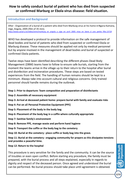
How to safely conduct burial of patient who has died from suspected or confirmed Marburg or Ebola viurs disease: field situation
World Health Organization
(2014)
This protocol provides information on the safe management of dead bodies and burial of patients who died from suspected or confirmed Ebola virus disease.
These measures should be applied not only by medical personnel but by anyone involved in the management of dead bodies and burial of suspected o
...
r confirmed Ebola patients.
Twelve steps have been identified describing the different phases Burial Teams have to follow to ensure safe burials, starting from the moment the teams arrive in the village up to their return to the hospital or team headquarters after burial and disinfection procedures
more
