Filter
2808
Text search:
family
disability
Featured
248
687
Language
Document type
1824
377
244
153
104
43
26
19
7
6
4
1
Countries
165
121
80
63
60
60
55
54
54
51
49
42
42
41
38
37
34
34
32
31
30
26
25
25
23
22
21
20
20
19
18
18
16
16
15
13
12
11
10
10
9
9
8
8
8
8
8
8
7
7
7
7
7
6
6
6
6
5
5
5
5
5
5
5
5
5
4
4
4
3
3
3
3
3
3
3
3
3
3
3
3
3
2
2
2
2
2
2
2
2
2
2
2
2
2
1
1
1
1
1
1
1
1
1
1
1
1
1
1
1
1
1
1
1
1
1
1
1
1
1
1
1
1
1
1
1
Authors & Publishers
Publication Years
Category
1046
201
186
185
69
48
2
2
1
Toolboxes
461
440
161
107
96
83
69
61
61
58
47
44
30
26
21
15
11
10
10
10
6
3
1
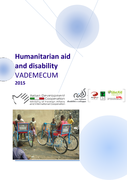
VADEMECUM | This Vademecum is intended to provide a benchmark for aid workers—whether working in the field or at a strategic level—in particular concerning the formulation and implementation of programmes of prevention or response to humanitarian crises. It is not solely a theoretical document b
...

Chapter 2 in "Latest Findings in Intellectual and Developmental Disabilities Research" Edited by Üner Tan, ISBN 978-953-307-865-6, 404 pages, Publisher: InTech, Chapters published February 15, 2012 under CC BY 3.0 license | Intellectual and Developmental Disabilities presents reports on a wide rang
...

People with disabilities are among the most marginalized groups in the world. People with disabilities have poorer health outcomes, lower education achievements, less economic participation and higher rates of poverty than people without disabilities.
This first in a series of Washington Group Implementation Documents covers the tools developed by the Washington Group to collect
internationally comparable disability data on censuses and surveys. WG Implementation guideline Tool 1
This report situates disability and inclusion within the broader context of sustainable development, with a particular focus on the Sustainable Development Goals (SDGs). The paper provides background on the historical role of the UN in promoting inc
...
Int Health. 2012 December 1; 4(4): 253–259. doi:10.1016/j.inhe.2012.07.001
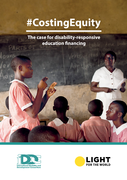
The report surveyed 9 leading bilateral and multilateral education donors in respect of their approach to disability-inclusive education.
NUDOR’s first strategic plan (2010-2016) focused on establishing NUDOR as a viable, well-run organisation. Significant progress has been made towards these aims and therefore the strategy and has been reviewed by NUDOR board, secretariat and member organisations. The updated strategic plan now cov
...
WHO/ESCAP Training Manual on Disability Statistics | This training manual intends to enhance the understanding of the ICF-based approach to disability measurement. It provides an overview of the IC
...
The QualityRights training and orientation modules have been developed to enhance the knowledge, skills and understanding of key stakeholders on how to promote the rights of people with psychosocial, intellectual or cognitive disabilities, improve the quality of services and support provided in the
...
The content of these guidelines goes beyond the technicalities of medical needs with additional insights into community empowerment, possible access to welfare and economic opportunities and similar issues. If these are adequately explored, the health and quality of life of people affected and their
...
Developed as part of the UN Women–WHO Global Joint Programme on Violence Against Women Data, this briefing note focuses on the measurement of violence against women with disability and is one in a series of methodological briefing notes for streng
...
2nd. edition
The new edition has been developed to make widely available to programme managers, health care workers in endemic settings, academic researchers, and other key partners, a concise source of information on strategies for MMDP for LF. It is a product of efforts to elaborate and concepts
...

The aim of this pamphlet is to inform parents and guardians of supports and services available for children and young people with a physical disability and their families.
This study has been produced jointly by Gesellschaft für Internationale Zusammenarbeit (GIZ) GmbH, a federally owned enterprise, implementing development programmes on behalf of the German Government, and CBM, a non-governmental organisation. Accordingly, its aim is to offer guidance to those in bo
...
Census Report Volume 4-K
The results of the 2014 Census collected only relates to four of the six types of disability domains recommended by the Washington Group on Disability Statistics, name ...
The results of the 2014 Census collected only relates to four of the six types of disability domains recommended by the Washington Group on Disability Statistics, name ...
This toolkit is intended to support GBV staff to build disability inclusion into their work, and to strengthen the capacity of GBV practitioners to use a survivor-centered approach when providing services to survivors with disabilities.
The tools a
...
Exposure draft for comment October 2013
The ICF Practical Manual provides information on how to use ICF. Anyone interested in learning more about use of the International Classification of Functioning, Disability and Health (ICF, WHO 2001) may benefit from reading this Practical Manual. T
...
Lymphatic filariasis (LF) infection if untreated results in fluid accumulation in the limbs or breasts (lymphedema) or genitalia (hydrocele) that is painful and causes great discomfort. Morbidity management and disability prevention (MMDP) strategie
...
Dissertation submitted in part fulfilment of the requirements for a Masters degree at the Centre for International Health and Development (CIHD) at University College London (UCL) Institute of Child Health (ICH)
The user has given permission for the uploaded document to be reproduced and made publi
...

Chapter 13 in Stone, E. (ed.) 1999: Disability and Development: Learning from action and research on disability in the majority world, Leeds: The Disabili
...


This study aims to explore the impact on the lives of caregivers of
children with cerebral palsy.
Accessed Febr. 6, 2020

Conference Report Sao Paulo, Brazil 22-24 October 2015
In July 2016, the government of Myanmar shared the following update on progress toward achieving its Family Planning 2020 commitment during the 2015-2016 time period (commitment included below for reference). The government added new information to
...

Conclusion: To ensure that people with disabilities can successfully access the necessary health services, the barriers on the demand side (the individuals requiring healthcare) as well as the barriers that are part of the healthcare system, should be attended to.

This research aims to identify a core set of clinical skills for working in
a Community Based Rehabilitation (CBR) setting, and to discuss whether they are appropriate for task shifting to a new or an alternative cadre of rehabilitation workers.

This article aims to assess the impact of cerebral palsy on health-related quality of life (HRQoL) of Nigerian children.

This article describes experiences in implementing a community mental health and development project in a rural district in southern India, including the position of persons with mental illness when the project was initiated, the challenges faced and the strategies that were developed to overcome th
...

With the recent advances in medicine, the survival rate of clients with
severe burns has improved. This has resulted in greater demand for rehabilitation services. One of the major goals for rehabilitation programmes is to restore these clients to their pre-trauma activity levels. However, there is
...
A Resource Book of Inclusive Practices


Rashtriya Bal Swasthya Karykram (RBSK). Operational Guidelines
Getting to know cerebral palsy
recommended
Working with parent groups – a training resource for facilitators, parents, caregivers, and persons with cerebral palsy.
TThis manual aims to increase knowledge and skills in caring for a child with cerebral palsy. Research highlighted the significant needs of the caregivers, and how they can gai
...
Working Paper Series: No. 26
Reflections from disability research using the ICF in Afghanistan and Cambodia | Working Paper Series: No. 11

Disability, CBR & Inclusive Development, [S.l.], v. 24, n. 3, p. 112-122, nov. 2013. ISSN 2211-5242
Children with disabilities encounter more violence in their lives than their peers without disability
...
Funded by CBM: www.cbm.org
Knowledge based upon a descriptive literature review of applied research
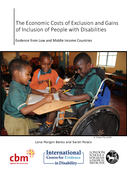
Evidence from Low and Middle Income Countries
Kenya has great potential for enhancing education for individuals with intellectual disabilities. The fact that it has recognized the need to care for learners with special needs is commendable. In comparison to many African countries, Kenya and Nigeria are ahead in developing programs for special e
...
The Standard consists of nine key inclusion standards, and seven sets of sector-specific inclusion standards for protection – water, sanitation and hygiene, food security and livelihoods, nutrition, shelter, settlement and household items, health and education. Each standard comes with key actions
...

This report identifies and analyses policies and laws which currently include of Persons with disabilities in social protection specifically the Vision 2020 Umurenge Programme and considers some of the gaps in the VUP norms which prevent the successful inclusion of Persons with Disabilities.

This paper aims to understand the agency that caregivers who participated in a CBR empowerment component programme exercised, in order to promote the rights of their children with disabilities to a basic education.

This paper aimed to demonstrate how participatory action research (PAR) within a Community-based Rehabilitation (CBR) project facilitated community participation to advocate for the rights of people with visual impairment. An advocacy campaign, led by the local people with and without disabilities,
...


Conclusion: CBR has improved the quality of life, access to medical services, functional independence, autonomy, community inclusion, and empowerment of people with disabilities in LMICs in the Asia-Pacific region. However, challenges in the implementation of CBR remain. These include lack of awaren
...

This paper aims to explore the conditions needed for sustainable community based rehabilitation (CBR) programmes for persons with disabilities in Vietnam, and to identify the conditions and opportunities missing at present for the implementation of such programmes.

In low- and middle-income middle-income countries, reliable and disaggregated disability data on prevalence, participation and barriers are often unavailable. This study aimed to estimate disability
...
Lessons learnt from the ADCAP programme | This guide shares good practices and challenges that have emerged through the experience of the Age and Disability Capacity Programme (ADCAP) implementing partners, in embedding inclusion of older people an
...
The Ministry of Health and Family Welfare is committed to ensuring the effective implementation of this strategy, which will contribute to the overall wellbeing and health of all adolescent boys and girls of Bangladesh
In this era, grand challenges lies in biodiversity loss, climate change, and global noncommunicable diseases signify that planet and humanity are in crisis. Scholarly evidence from human and animal kingdom suggest that there is an optimism in planetary health which can provide a unique and novel con
...
For the Assesor's Guide Vol 1 and 2 see: nrhm.gov.in/images/pdf/programmes/maternal-health/guidelines/Operational_Guidelines_for_Quality_Assurance_in_Public_Health_Facilities_and_checklists-3_books.zip
A Report of A survey study conducted to determine the demand, availability, quality of production, usage, and affordability of wheelchairs in Uganda.
Accessed Febr. 12,2015


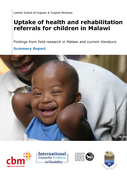
Findings from field research in Malawi and current literature.