
Filter
2932
Text search:
development
difficulties
Featured
234
739
Language
Document type
1985
410
226
128
77
55
24
9
7
4
4
1
Countries
98
97
81
59
59
57
56
54
54
52
51
51
43
43
43
41
40
38
34
29
29
27
26
25
23
22
22
21
19
18
17
17
16
16
15
15
15
14
14
12
12
12
12
10
10
10
10
9
9
8
8
8
8
7
7
7
6
6
6
6
6
6
6
6
6
6
5
5
5
5
4
4
4
4
4
3
3
3
3
3
3
3
3
3
3
3
3
2
2
2
2
2
2
2
2
2
2
2
2
2
2
1
1
1
1
1
1
1
1
1
1
1
1
1
1
1
1
1
1
1
1
1
1
Authors & Publishers
Publication Years
Category
936
176
174
144
108
97
17
3
1
1
Toolboxes
433
330
177
173
144
128
85
78
68
61
55
49
48
33
26
26
25
24
23
17
15
14
11
1
1
This predominantly qualitative research on disability and development in Myanmar was conducted between August 2011 and February 2012, in three commercial centres of Yangon, Mandalay and Taunggyi. Stakeholders of service providers, persons with disab
...
Migration continues to be an essential ingredient of socioeconomic development everywhere.
Whether it is a case of people moving from the countryside to cities to find work, or people crossing seas and borders to meet host country demands for new l
...

The Creditor Reporting System was analysed for official development assistance funding disbursements towards TB control in 11 conflict-affectedstates, 17 non-conflict-affected fragile states and 38 comparable non-fragile states. The amounts of fundi
...
The Access to Controlled Medications Programme identified the development of treatment guidelines that cover the treatment of all types of pain as one of the core areas of focus for improving access to opioid analgesics. Such guidelines are interes
...
This report addresses the impact of emergency shelter programs in the development of post-relief economies and in building incomes of affected populations. It provides a review and analysis of the available literature relevant to understanding the e
...

Resilience has rapidly become one of the most prominent objectives for the development sector, so ascertaining how best to measure it is an essential task for practioners working in monitoring and evaluation. In this discussion paper, the main insig
...
The NGO Safety and Security Training Report provides a narrative of the research findings, an updated curriculum, and guidance tools for training. It is based on extensive research and interviews with members of the NGO community. The report draws upon existing training materials, community consulta
...
Background paper for the Oslo Summit on Education for Development
Webinar.
The purpose of this booklet is to help readers understand why data on children with disabilities are currently inadequate, the difficulties that surround the gathering of high-quality data on disabled children, and why there is a real need
...
This handbook aims to give practical guidance to support development organisations to mainstream disability into their work. It is primarily intended for VSO programmes, but could be useful to other
...
Background paper for the Oslo Summit on Education for Development.
This paper covers the four topics of the Oslo Summit: investment in education, quality of learning, education in emergencies and girls’ education. Disability continues to be one
...
This document presents an integrated strategy for mental health system development that will lead to enhanced service delivery, improved outcomes, and improved human rights for people with mental disorders.
By using the practical guidance provid
...
The mission of the Women’s Health Council is to inform and influence the development of health policy to ensure the maximum health and social gain for women in Ireland.
Its membership is representative of a wide range of expertise and interest i
...
How to address the global crisis in antibiotic research and development.
The report includes a comprehensive summary and critical evaluation of recent initiatives to overcome the barriers to achieve sustainable access to antibiotics. As antibiotic
...
WHO operational handbook on tuberculosis Module 5: Management of tuberculosis in children and adolescents
recommended
The practical guidance in the operational handbook aims to inform the development or revision of national policies and related implementation guidance on the management of TB in children and adolescents under programmatic circumstances and at differ
...
The recommendations in this guideline are intended to inform development of national and subnational health policies, clinical protocols and programmatic guides. The target audience includes national and subnational public health policy-makers, impl
...
This document highlights landmarks and key milestones in the development and implementation of the global agenda for noncommunicable diseases (NCDs) over the last two decades. It summarizes where the world was in 2000, where it is in 2022, and where
...
Promoting and protecting health is essential to human welfare and sustained economic and social development. This was recognized more than 30 years ago by the Alma-Ata Declaration signatories, who noted that Health for All would contribute
both to
...
WSTP-I is the second part of the WHO wheelchair service training package series and focusses more on addressing the needs of people who have severe difficulties in walking and moving around and also having poor postural control .
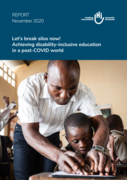
Humanity & Inclusion has published a report on November 20, on the difficulties children with disabilities face in accessing education in the world’s poorest countries.
Latent Tuberculosis Infection : Updated and consolidated guidelines for programmatic management
recommended
The consolidated guidelines are expected to provide the basis and rationale for the development of national guidelines for LTBI management, adapted to the national and local epidemiology of TB, the availability of resources, the health infrastructur
...

USAID/KENYA Evaluation Services and Program Support (ESPS)
The United States Agency for International Development (USAID) has a solid track record of supporting health and development initiativ ...
The United States Agency for International Development (USAID) has a solid track record of supporting health and development initiativ ...
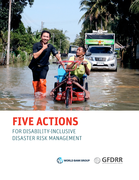
A recent survey of the literature and experience identified five broad actions that development institutions and governments, as well as their partners and stakeholders, can take to improve disability-inclusive disaster risk management. Those five a
...
“Preferred product characteristics” (PPCs) are key tools to incentivize and guide the development of urgently needed health products. Some of the vector control interventions deployed in complex emergencies and in response to natural disasters â
...
Myanmar’s transition to a market‐based economy is accompanied by rapid development of the private manufacturing sector, which has large potential for improving economic growth. The overall success of the sector, however, should not be taken for
...
Primary care visits may be a time that refugee families express concerns about their child’s functioning at home or school and/or providers may identify concerns about emotional or behavioral health. Most refugee children have experienced trauma which may affect their emotional, behavioral, and ph
...
War Trauma Foundation strengthens mental health care and psychosocial support through capacity building and development and dissemination of expertise through the implementation of programmes in (post) conflict areas. We develop and evaluate new met
...
This manual was designed to support the GRN-UNICEF Youth Health and Development Programme with the aim of sustaining My Future is My Choice graduates and other young people’s peer education activities. It was written and reviewed in a three-day wo
...
The International Organization for Migration (IOM) and partners from 27 humanitarian and development organisations and governments are appealing for USD 84 million to provide life-saving assistance to hundreds of thousands of African migrants and ho
...
Ghana's attempt to regulate health care waste management started in 2002 with the development of guidelines on health care waste manage-ment by the Environmental Protection Agency (EPA). In 2006, the Ghana Health Service (GHS) also developed the Hea
...
Marco Schäferhoff and colleagues critique funding estimates for the maternal and child health Millennium Development Goals, and make recommendations for improving the tracking of financing flows and estimating the costs of scaling up interventions
...
The goal of this course is to provide participants with the foundational skills needed to begin the development, implementation and ongoing improvement of a congenital anomalies surveillance programme, in particular for countries with limited resou
...
This brief presents and addresses some of the challenges that prevent internally displaced persons with disabilities and other vulnerable population groups (elderly, injured persons, pregnant women, etc.) in camp settings from accessing humanitarian services in Iraq and impede on the
...
For biological agents, the publication covers 11 bacteria,
fungi and viruses listed by states parties to the Biological
Weapons Convention in declarations of past offensive
research and development programmes, or considered of
special concern fo
...

Chapter 13 in Stone, E. (ed.) 1999: Disability and Development: Learning from action and research on disability in the majority world, Leeds: The Disability Press pp. 210-227

Draft May 2011
The first ever nursing and midwifery services policy document in the history of MoPH was developed with the following aims:
1. Create a positive environment for Nursing and Midwifery Policy and Practice
2. Promote education, training and career ...
The first ever nursing and midwifery services policy document in the history of MoPH was developed with the following aims:
1. Create a positive environment for Nursing and Midwifery Policy and Practice
2. Promote education, training and career ...
The key question addressed in this article is social inclusion, as an opposite concept of social exclusion. The author provides a historical of social inclusion/exclusion terminology. Further, some of the principles of social inclusion are presented. In the end, the article focuses on the role of ed
...
Refugee children and adolescents exhibit resilience despite a history of trauma. However, trauma can affect a refugee
child’s emotional and behavioral development. Mental health providers should consider how the refugee experience (e.g.,
exposur
...
The International Association for Child and Adolescent Psychiatry and
Allied Professions (IACAPAP) aims to promote the mental health and
development of children and adolescents worldwide. It seeks to achieve
this by contributing to the training a
...
This guide focuses on the evaluation of psychosocial programs that are aligned with two main goals: - To promote psychosocial wellbeing by promoting an environment that provides appropriate care, opportunities for development and protects children f
...
In the last quarter century, several projects emerged to reform mental health services in Latin American and Caribbean countries. Some did not survive the difficulties that inevitably arise in processes of change, and ended up disappearing before th
...

In the course of implementing a recently funded network of hubs for building capacities in mental health service development, training, and research (RedeAmericas), the peer support workers are being introduced into the mental health workforce in th
...
Nature Reviews Microbiology Vol. 17 (2019)pp.51-62
Antimicrobial susceptibility testing (AST) technologies help to accelerate the
initiation of targeted antimicrobial therapy for patients with infections and could potentially
extend the lifespan of current narrow- spectrum antimicrobials. Althoug
...
HIV infection, due to the immunosuppressant that leads, nowadays constitutes an aggravating factor of endemic tuberculosis. Tuberculosis remains a huge burden to human health, even in the early 21st century. The situation is deteriorating in many countries, particularly because of the synergy with t
...
This brief considers the rationale for shielding individuals at high risk of severe disease or death from COVID-19 in low- and middleincome countries. It provides an overview of proposed approaches to shielding, discusses the categories of individuals who may be identified for shielding, and outline
...
Early Childhood Matters is a journal about early childhood.
It looks at specific issues regarding the development
of young children, in particular from a psychosocial
perspective.
It is published twice per year by the Bernard
van Leer Foundatio
...
The International Organization for Migration (IOM) is appealing for USD 158.9 million to respond to the urgent humanitarian needs of millions of Afghans and to support recovery and resilience within the country and the region.
IOM’s Comprehensive Action Plan for Afghanistan and Neighbouring Cou
...
Person-centred recovery planning for mental health and well-being: self-help tool: WHO QualityRights
Ensuring mental health and well-being has become a worldwide imperative and an important target of the Sustainable Development Goals. But in all countries around the world, our response has been woefully insufficient, and we have made
little progre
...
Human African trypanosomiasis (HAT), or sleeping sickness, is an endemic disease in 36 sub-Saharan African countries, typically occurring in underdeveloped areas, where
health systems face significant difficulties of diverse natures.

The High-Level Panel on International Financial Accountability, Transparency and Integrity for Achieving the 2030 Agenda (FACTI Panel) was convened by the 74th President of United Nations General Assembly and the 75th President of the Economic and Social Council on 2 March 2020. The objective of the
...

The High-Level Panel on International Financial Accountability, Transparency and Integrity for Achieving the 2030 Agenda (FACTI Panel) was convened by the 74th President of United Nations General Assembly and the 75th President of the Economic and Social Council on 2 March 2020. The objective of the
...
WHO Model Formulary for Children
recommended
WHO Model Formulary for children based on the Second Model List of Essential Medicines for Children 2009.
In 2007, the World Health Assembly passed a Resolution titled ‘Better Medicines for Children’. This resolution recognized the need for research and
...
In an effort to improve the capabilities and accountability of humanitarian and economic practitioners, the SEEP (Small Enterprise Education and Promotion) Network's Minimum Economic Recovery Standards focus on minimum industry standards for facilitating economic recovery in crisis situations.
Th
...
In the area of nutrition and HIV, children deserve special attention because of their additional needs to ensure growth and development and their dependency on adults for adequate care. It was therefore proposed to first develop guidelines for chil
...
In view of the ongoing political, peace and reconciliation, administrative and economic reforms as well as plans to establish the United Nations Development Assistance Framework (UNDAF) in 2018, WFP extended the current Protracted Relief and Reco
...
. To echo this extension and provide a more appropriate response to the country's rapid and multi-pronged transition, WFP adopted a transition strategy with gradually reduced emphasis on humanitarian assistance and greater focus on early recovery and development interventions. WFP's strategic engagement in-country was driven by the overarching goal to assist Myanmar to achieve the national Zero Hunger Challenge by 2025, and was guided by three priorities: emergency preparedness and response; nutrition; and provision of social safety nets.
The Core Set of Indicators and respective Indicator Data Sheets aim to pave the way towards a common understanding, greater consistency and comparability across countries and alignment of results chains of German Development Cooperation in the field
...
The Global status report on violence prevention 2014, which reflects data from 133 countries, is the first report of its kind to assess national efforts to address interpersonal violence, namely child maltreatment, youth violence, intimate partner and sexual violence, and elder abuse. Jointly publis
...
This implementation guide has been developed to help birth attendants and health-care leaders successfully launch and sustain use of the WHO Safe Childbirth Checklist. Development, use and implementation of the Checklist are described in this guide.
...
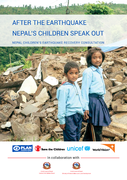
NEPAL CHILDREN’S EARTHQUAKE RECOVERY CONSULTATION - To better understand the consequences of the Nepal Earthquake for children, four child-centred agencies, in coordination with the Ministry of Federal Affairs and Local Development (MoFALD) and th
...
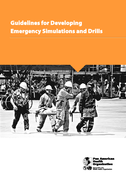
Conducting simulations and drills is the most effective way to evaluate and test disaster preparedness plans; these exercises are used widely by organizations and institutions working in development and in disaster response. Drills and simulations a
...
Stories of how people in Georgia, Laos, Sri Lanka, Tajikistan and Vietnam made inclusive development happen in their societies. It contains significant experiences andlessons learnt about the practice of inclusive
...
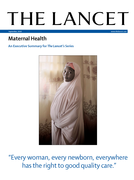
Each year, about 210 million women become pregnant and about 140 million newborn babies are delivered. The sheer scale of maternal health issues makes maternal well being and survival vital concerns. A decade after The Lancet published a Series on maternal survival, a new Series of six papers brings
...
Gender and security is a complex issue, and this research found that there are different levels of comprehension of what it means in humanitarian and development assistance practice. The aims of the paper are twofold: to raise general awareness abou
...
Application of a One Health approach .
The present guidance was developed with the support of the WHO Advisory Group on Integrated Surveillance of Antimicrobial Resistance (AGISAR) to assist countries and other stakeholders in the establishment and develo
...
This Situation Update describes events occurring in Bilin Township, Thaton District during the period between July and October 2017, including healthcare, education, development projects and drug issues.
This monograph presents 12 reports of successful programs serving children with special needs in various nations. The program locations and the program report titles and authors are as follows: (1) Austria: "Integration Models for Elementary and Secondary Schools in Austria" (Volker Rutte)
...
This consultative version of the guideline is the product of literature reviews, discussions and contributions from diverse stakeholders, as well as UNISDR-nominated experts appointed specifically for the development of the Words into Action guideli
...
The purpose of the WHO Manual for the Public Health Management of Chemical Incidents is to provide a comprehensive overview of the principles and roles of public health in the management of chemical incidents and emergencies. While this information is provided for each phase of the emergency cycle,
...
This guide is strongly practice -oriented and intended as an open resource when replicating similar methods of psychosocial care in other projects. It describes the steps in the development of our pilot project
"Low threshold psychos
...

Regional Network for Equity in Health in east and southern Africa (EQUINET): Disussion Paper 109
This report describes the evolution of mainland Tanzania’s EHB; the motivations for developing the EHBs, the methods used to develop, define and cost them; how it is being disseminated, communicat ...
This report describes the evolution of mainland Tanzania’s EHB; the motivations for developing the EHBs, the methods used to develop, define and cost them; how it is being disseminated, communicat ...

The articles in this compendium elaborate on some of the ideas shared at the symposium. Together, they provide a broad view of the dynamic interactions among physical, sexual and brain development that take place during adolescence. They highlight s
...

WHO’s Ambition and Action in Nutrition 2016-2025 is anchored in the six global targets for improving maternal, infant and young child nutrition and the global diet-related NCD targets.
In support of the 2030 Agenda for Sustainable Development ...
In support of the 2030 Agenda for Sustainable Development ...
This document addresses the issue of the medical and rehabilitative care of persons with physical disabilities. It is understood that this policy is to be integrated with the policy documents of other advisory working groups. It should also be emphasised that the physical disability work of CBM occu
...
The publication aims to establish the rationale for inclusion and provides technical advice and tools for putting theory into practice. It is intended to be used as a reference during organizational and program/project development with a focus on ge
...

The National Strategic Plan is based on the following guiding principles:
1) Life-course approach: adolescence is a key decade in the course of life that influences the health outcomes later in life.
2) Comprehensive approach: It recognizes the cross cutting health and ...
1) Life-course approach: adolescence is a key decade in the course of life that influences the health outcomes later in life.
2) Comprehensive approach: It recognizes the cross cutting health and ...
March - June 2018
Myanmar introduced Child Death Surveillance and Response (CDSR) in 2015 as an initiative to reduce child (under-5) mortality, an initiative that will contribute to the country’s efforts to meet the Sustainable Development Go ...
Myanmar introduced Child Death Surveillance and Response (CDSR) in 2015 as an initiative to reduce child (under-5) mortality, an initiative that will contribute to the country’s efforts to meet the Sustainable Development Go ...

A National Service Programme for All Children with Special Needs and their Families
In Myanmar, we estimate that at least 40% of children require ECI services for short to longer periods of time. At present, 35.1% of Myanmar children are moderately to severely stunted; all of these children are l ...
In Myanmar, we estimate that at least 40% of children require ECI services for short to longer periods of time. At present, 35.1% of Myanmar children are moderately to severely stunted; all of these children are l ...
This report presents an overview of the transition process in Azerbaijan, some sustainability aspects and challenges stemming from donor withdrawal from TB-related activities, along with recommendations on how to overcome transition-related difficulties
...
Post-traumatic stress disorder: NICE guideline
recommended
NICE guideline | This guideline covers recognising, assessing and treating post-traumatic stress disorder (PTSD) in children, young people and adults. It aims to improve quality of life by reducing symptoms of PTSD such as anxiety, sleep problems and diffi
...
War Child put forward a specific request for comparative study, addressing the following questions: •What are the key types of intervention for psychosocial assistance that are being applied to children in war-affected areas? •What are the results of (scientific) research into the effects of th
...
Background. Children and adolescents can develop post-traumatic stress disorder (PTSD) after exposure to a range of traumatic events, including domestic, political or community violence, violent crime, physical and sexual abuse, hijacking, witnessing a violent crime and motor vehicle accidents. This
...
Mental, Neurological, and Substance Use Disorders: Disease Control Priorities, Third Edition (Volume 4).
Patel V, Chisholm D, Dua T, et al., editors.
Washington (DC): The International Bank for Reconstruction and Development / The World Bank; 20
...
The present booklet is about gender-responsive substance abuse treatment services for women. It is part of the United Nations Office on Drugs and Crime (UNODC) project to develop tools to support the development and improvement of substance abuse tr
...
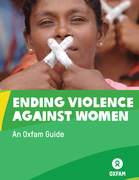
What is Violence Against Women? Why does it happen? What does it have to do with development? What does Oxfam do to end violence against women? What does it mean to do that work with a transformative approach?
Available in: English, Arabic, French,
...
This operational guidance on MHPSS provides a practical orientation and tools for UNHCR country operations. It covers specific points of good practice to consider when developing MHPSS programming and offers advice on priority issues and practical difficul
...
Results
Recommendations• NGOs should provide MHPSS services with a focus on empowerment and self-reliance
• Introduce interventions focusing on pain mechanisms, coping strategies and physical resilience
• Implement livelihood programmes
• Increase service accessibility and outreach activ
...
This document focuses on making recommendations for the diagnosis and treatment of Chagas disease, an infection caused by Trypanosoma cruzi, the protozoan agent of a systemic parasitic disease. Methodology: These clinical practice guidelines were prepared following the WHO handbook for guideline
...
Stronger collaboration, better health: global action plan for healthy lives and well-being for all
recommended
The overall objective of the Global Action Plan is to enhance collaboration among 12 global organizations engaged in health, development and humanitarian responses to accelerate country progress on the health-related SDG targets. The Plan presents a
...
Pandemic Influenza Risk Management
recommended
A WHO guide to inform & harmonize national & international pandemic preparedness and response
The main updates from the 2013 interim guidance are:
Alignment with other relevant United Nations policies for crisis and emergency management, and
Inclusion of the significant
...
The purpose of this guidance is to assist WHO Member States, and other stakeholders, in the establishment and development of programmes of integrated surveillance of antimicrobial resistance in foodborne bacteria (i.e., bacteria commonly transmitted
...
During this work, a survey on essential medicines availability was conducted. This article was first written on this subject for sharing the poor financial availability of the essential medicines in the hospital and secondly, a call for an action to be taken in improving hospital pharmacies
...
This handbook follows a comprehensive approach to health system strengthening at borders in order to support IHR national focal points and other national agencies in developing and implementing evidence-based action plans for IHR capacity development
...
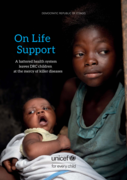
ON LIFE SUPPORT3The Democratic Republic of Congo’s Ebola outbreak has been contained, but confl ict and under-development leave over three million children at risk from measles and other killer diseases. The country’s medical services – ill-eq
...
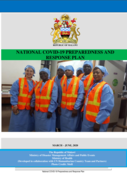
The Government of Malawi, in fulfilling its primary role of protecting the lives of its vulnerable citizens during disasters and reducing their exposure to risk through preparedness, led the development of a National Coronavirus Disease (COVID-19) P
...
Education is UNESCO’s top priority because
it is a basic human right and the foundation
on which to build peace and drive sustainable
development. UNESCO is the United Nations’
specialized agency for education and the
Education Sector provi
...

Every year, an estimated 15 million babies are born preterm – before 37 weeks of pregnancy. That is more than 1 in 10 live births. Approximately 1 million children die each year worldwide due to complications from their early birth. Those that survive often face a lifetime of ill-health including
...

Childhood obesity is a major public health problem globally, which could undermine progress towards achieving the Sustainable Development Goals. Prevention is recognized as the most efficient means of curbing the epidemic; however, given the scale o
...
The Minimum Standards and Indicators for Community Engagement were developed through an inter‑agency consultation process that engaged a large number of experts from around the world. UNICEF wishes to acknowledge the contribution of all those that participated, and who share a passion for placing
...
This training module is meant to strengthen the capacity of CHVs to prevent the Non Communicable Diseases at the community level . The Government of Kenya is committed to supporting community health initiatives and accelerating the achievement of the KHSS&IP goals, Millennium
...
In line with the National Mental Health Strategy for Lebanon (2015-2020), this guide answers the objective of the Mental Health and Psychosocial Support task force: “Development and provision of staff care interventions for persons working in the
...
