Filter
3433
Text search:
development
cooperation
Featured
231
960
Language
Document type
2104
649
256
164
145
33
30
27
13
6
4
Countries
177
98
93
89
87
80
76
65
60
59
57
56
55
53
52
52
49
47
45
42
41
41
39
35
34
30
29
27
26
25
25
24
22
21
20
20
20
20
20
16
16
15
15
15
15
14
13
13
12
11
11
11
11
11
11
11
11
10
10
9
9
9
9
8
8
7
7
7
7
7
6
6
5
5
5
5
5
5
4
4
4
4
4
4
3
3
3
3
3
3
3
3
3
3
3
3
3
3
3
3
3
2
2
2
2
2
2
2
2
2
2
2
2
2
2
2
2
2
1
1
1
1
1
1
1
1
1
1
1
1
1
1
1
1
1
1
1
1
1
Authors & Publishers
Publication Years
Category
1278
203
175
157
130
73
18
6
3
Toolboxes
236
231
192
183
175
149
109
99
96
95
94
89
74
63
61
59
46
45
31
24
14
14
12
3
2
This report situates disability and inclusion within the broader context of sustainable development, with a particular focus on the Sustainable Development Goals (SDGs). The paper provides backgroun
...

The Look Back Study (LBS) focuses on the water and sanitation and hygiene (WASH) component of the project but some additional information was collected along side the WASH data. This data has been compared to the baseline survey data that was reported at start of the project (see tables in annex D t
...

Vision Statement
From birth to 8 years of age, all children of the Republic of the Union of Myanmar will receive holistic, high-quality and developmentally-appropriate care from their parents, caregivers and service providers to ensure they will be happy, healthy, well nourished, socially adept ...
From birth to 8 years of age, all children of the Republic of the Union of Myanmar will receive holistic, high-quality and developmentally-appropriate care from their parents, caregivers and service providers to ensure they will be happy, healthy, well nourished, socially adept ...
This paper focuses on the Sustainable Development Goals related to poverty, economic growth, inequality, health, food production and the environment. It presents concrete examples of the underlying and complex aspects of antibiotic resistance and it
...
Research in Brief.
The international community’s predominant response to the Venezuelan migration crisis remains focused on humanitarian relief. This is important, for two populations: a) the over 50,000 ‘pendular’ migrants who go back and forth across the border every day in order to access
...
The Asia-Pacific Community Mental Health Development (APCMHD) project has been established in 2005 to explore diverse leading models or approaches to community mental health service delivery in the Asia-Pacific region. The objective is to illustrate
...
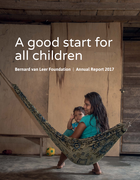
Early childhood matters.
This document looks at specific issues regarding the development of young children, in particular from a psychosocial perspective. It is published twice per year by the Bernard van Leer Foundation. The views expressed in E
...
Antimicrobial resistance (AMR) is a serious public health concern with economic, social and political implications that are global in scope, and cross all environmental and ethnic boundaries. As a global threat, AMR risks the achievements of modern medicine, and has the po
...
A regional guide for governments in Asia and the Pacific to review, update and develop policies to address antimicrobial resistance and antimicrobial use in animal production
Geographical Paper No. 177
Accessed on: 18.06.2020
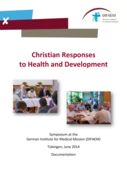
In 1964 medical mission was challenged and called to define its distinctiveness and its special role in the context of that particular time. The consultation "Tuebingen I" clearly stated: "The Christian church has a specific task in the field of health and healing"1, and developed a conce
...
The Bolivarian Republic of Venezuela has been facing a sociopolitical and economic situation that has negatively impacted social and health indicators. There have been intensified population movements both within the country and to other countries, particularly to Argentina, Brazil, Chile, Colombia,
...
Drawing light from the pandemic: A new strategy for health and sustainable development (2021)
Available in English, French, German and Russian
This companion document to Ending the neglect to attain the Sustainable Development Goals: a road map for neglected tropical diseases 2021-2030 ("the road map") aims to support a range of stakeholders - including countries in which neglected tropica
...

Occupational health and safety programmes aim to prevent diseases and injuries arising out of, linked with or occurring in the course of work, while improving the quality and safety of care, safeguarding the health workforce and promoting environmental sustainability in the health sector.
This gu
...

Advances have been made through expanded interventions delivered through five public health approaches: innovative and intensified disease management; preventive chemotherapy; vector ecology and management; veterinary public health services; and the provision of safe water, sanitation and hygiene. I
...
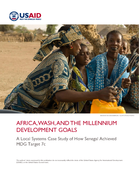
Nationally, Senegal met the MDG target for water supply access. It did this by engaging the public and private sectors to effectively invest and report on investments. It focused on larger population centers, less on remote regions of the country. Its achievements set the stage for more equitable an
...
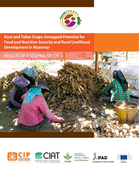
This scoping study done in Myanmar offers the chance for FoodSTART+ to explore prospects for future partnerships in another important country of the region. The study was done from October 2016 to February 2017 and included visits to selected major potato and cassava production areas to meet with re
...
The most significant finding of the case study for integrating antimicrobial resistance (AMR)into existing programs and mobilising resources for funding in Nigeria, is that most of the AMR activities within the Nigerian National Action Plan (NAP)canalready be incorporated within exi
...
In the region, it is estimated that there are over 650 million persons with disabilities. However, without accurate, timely and disaggregated data, countries are unable to develop effective policies and programmes, monitor the wellbeing of persons with disabilities and evaluate the equity and impact
...
This Strategy and Plan of Action on Health Promotion within the Context of the Sustainable Development
Goals 2019-2030 seeks to renew health promotion (HP) through social, political, and technical actions,
addressing the social determinants of hea
...

This fourth WHO report on neglected tropical diseases (NTDs) reviews the progress made towards achieving the Roadmap targets for 2020, noting the remaining challenges, then looks beyond 2020 to evaluate the changing global health and development lan
...

The Commission on Macroeconomics and Health (CMH) was established by World Health Organization Director-General Gro Harlem Brundtland in January 2000 to assess the place of health in global economic development. Although health is widely understood
...
This paper introduces a new dataset of official financing—including foreign aid and other forms of concessional and non-concessional state financing—from China to 138 countries between 2000 and 2014. We use these data to investigate whether and to what extent Chinese aid affects economic growth
...
Discussion Paper "Mental health, poverty and development", July 2009
Confernece Report 15-16 April 2013 - Dublin, Ireland
Accessed November 2014
The Myanmar National Framework seeks to achieve people-centered, inclusive, and sustainable socioeconomic development in the face of disasters triggered by natural hazards and climate change. The framework articulates a common understanding, propose
...
Nepal has only recently started its journey on the path to an integrated response to the challenge of antimicrobial resistance (AMR). Despite this, it is notable that the Nepal Health Sector Strategy Plan (HSSP)-2 mentions growing antibiotic resistanceas a public health challenge.

Mental disorders impose an enormous burden on society, accounting for almost one in three years lived with disability globally. •In addition to their health impact, mental disorders cause a significant economic burden due to lost economic output and the link between mental disorders and costly, po
...
he pandemic has produced an unprecedented economic and social crisis, and it could generate a food, humanitarian, and political crisis if urgent measures are not taken. The policy options for addressing the pandemic entail consolidating national plans and achieving intersectoral consensus. The respo
...

Healthy maternal nutrition, exclusive breastfeeding, and optimal infant and young child nutrition are critical for appropriate growth and development, as well as reducing the risk of developing noncommunicable diseases (NCDs), for both mothers and c
...
An adequate amount of prepaid resources for health is important to ensure access to health services and for the pursuit of universal health coverage. Previous studies on global health financing have described the relationship between economic development
...
Background: Several countries allocate official development assistance (ODA) for research on global health and development issues that is initiated in the donor country. The integration of such rese
...

Адаптивные технологии развития интеллектуальных способностей человека учитывают естественные интересы людей разных возрастных групп, позволяют оптимизировать
...
The report will describe how the Ebola Response MPTF, which has attracted contributions from 38 Member States, one business and many individuals, has offered a transparent and strategic tool to support the Ebola response. As of 31 January 2015, the Fund had total pledges amounting to US$142 million,
...

Guidance Note A DFID practice paper
As the COVID-19 pandemic continues to threaten health and food systems around the world, the 2020 Global Nutrition Report calls on governments, businesses and civil society to step up efforts to address malnutrition in all its forms.

Résumé des résultats de l’Etude
(1) Situation du secteur de la santé en Guinée
(2) Politiques et plans de santé en Guinée
(3) Formation de personnels de santé
(4) Infrastructures et équipements sanitaires
(5) Aide des partenaires au développement
(6) Problèmes pour le renfor
...
The Disaster Recovery Framework (DRF) Guide for the Health Sector provides guidance on how to implement a comprehensive, integrated, and structured approach to disaster recovery. Its overarching goal is to minimize the impact of the disaster on communities and help countries to recover quickly and e
...
This paper showed a large positive correlation coefficient between psychosocial health problems and dysfunctional abilities among rural community members



(African Development Bank policy research document 1)
The report examines financing in the battle against malaria, focusing on the role of foreign aid. It analyzes whether or not a disease such as malaria can be controlled or eliminated in Afri ...
The report examines financing in the battle against malaria, focusing on the role of foreign aid. It analyzes whether or not a disease such as malaria can be controlled or eliminated in Afri ...
The principle of “the best interest of the child” should guide decisions by politicians whenever
children are affected. This is one of the basic ideas in the UN Convention on the Rights
of the Child. Decision makers should assess the consequences for children before taking
action. Today, this
...
This study looks at commitments made at the World Humanitarian Summit (WHS) under the Grand Bargain and provides an overview of good practices on localisation approaches, provides a number of case studies from the regional response and makes recommendations on how to further strengthen leadership an
...
This report presents the findings from the Community Based Volunteers Skill Audit Survey that was carried out in 11 districts in Zambia as part of the Millennium Development Goal Acceleration Initiative.
The project will support preventive actions, traditional medicine and the coordination and
implementation capacities of the national framework for HIV/AIDS control.
The African Development Bank has launched a consultation process with health ministers and other partners as it develops a strategy to drive enhanced access to health services across Africa through 2030.
Input from ministers in the Bank’s 54 re
...
As climate change increasingly contributes to migration and displacement in many parts of the world, there is a pressing need for measures that build resilience and prevent displacement as well as those that help climate-affected people move to safety and support receiving communities. Multilateral
...
The accounting framework for health care financing is a key component of A System of Health Accounts 2011, published by OECD, Eurostat and WHO in October 2011.1 The framework makes health accounts more adaptable to rapidly evolving health financing systems, further enhances crosscountry comparabilit
...

The toolkit comprises ready-to-use material designed expressly for World Bank task managers working in the water and sanitation sector. It presents a range of tools for gender analysis and practical “how-to” strategies collected from program and project experience around the world. It is one of
...
This report started with a simple question—“How can we tell how much funding is devoted to global health programs?”—and ended (more than two years later) with an answer that is far from simple. As those who have tried know well, tracking health-related funding is challenging in any setting,
...
In response to a call by the United Nations Secretary-General and the Governments of Guinea, Liberia and Sierra Leone, an international team conducted an Ebola Recovery Assessment.The aim was to contribute towards laying the foundation for short-, medium- and long-term recovery while the medical eme
...
This survey is part of a series of eight country surveys conducted in the context of the People that Deliver Initiative (peoplethatdeliver.org). This global initiative, which brings together the world’s largest organizations, aims to improve health services performance through the professionalizat
...
Drugs and medical supplies are dispensed at the cutting edge level of the interface between the public health system and the people. Availability or lack of it brings either credit or discredit to the public health system. The primary reason for holding stocks of medicines and medical supplies in a
...
The building damage assessment, conducted between March 2010 and February 2011 by the Government of Haiti and the United Nations system, showed that more than 400,000 buildings were damaged or destroyed, of which approximately 218,000 could be occupied without repairs (green category), 105,000 were
...

Findings on maternal and child health in Nepal, Mozambique and
Rwanda, and neglected tropical diseases in Cambodia and Sierra Leone | This report synthesises findings from five country case studies from the health dimension of this project, which focus on maternal and child health (MCH) (Mozambique
...
Technical Assistance Report
With human dignity at its centre, a holistic approach to development founded on the principles of CST is what Pope Paul VI called ‘authentic development’. Explore the Catholic Social Teaching pr
...
This study emphasizes the contribution that women can play in the prevention of violent extremism within the family and society and analyzes the drivers and roles of women taking part in violent extremism and supporting violent and extremist groups.
UNDP Iraq is pleased to make this study and its r
...
Women have less access to the development services and support – such as adequate healthcare, education and
modern technology – that make people more resilient to climate change and other shocks and stressors.2
Women’s unequal access to reso
...
This working paper is a case study on South Sudan as an important refugee country of origin. The case study looks at issues of forced displacement in South Sudan and underscores the linkages between internally displaced persons and South Sudanese refugees. The case study highlights the importance of
...
SHOPS and HIA finalized a scope of work with USAID Senegal in April 2015, and a team of five private sector experts conducted the onsite assessments between May and June 2015. The Private Sector Assessment (PSA) team worked closely with Senegalese key stakeholders throughout the process. The PSA tea
...
USAID Senegal and Health in Africa (HIA) initiative of the World Bank Group engaged the Strengthening Health Outcomes through the Private Sector (SHOPS) project to conduct an assessment of the private health sector in Senegal. The assessment’s primary focus is family planning, and its secondary fo
...
Submitted to the United Nation's Committee on the Convention on the Elimination
of All Forms of Discrimination Against Women
February 2016
Published by the Albanian Center for Population and Development (ACPD) Adresa : Bul “ Gjergj Fishtaâ€
...
Review over the work and challenges of the Nigerian National Agency for Food and Drug Administration and Control (NAFDAC) in combatting counterfeiting of medicines in Nigeria.
Global UNIDO Project: Strengthening the local production of essential generic drugs in the least developed and developing countries
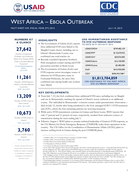
The Government of Liberia (GoL) reports three additional EVD cases linked to the Margibi County cluster, including one in Liberia’s Montserrado County; new confirmed case total reaches six
Recently extended Operation Northern Push strengthens contact tracing and EVD prevention activities
...
Since independence (1961) the Government through the Department of Social welfare has been providing services to people with disabilities without a comprehensive policy. The adoption of the National Policy on Disability (NPD) is the outcome of many years of consultations among disability stakeholder
...

In 2017, the World Bank and partners created the Global Investment Framework for Nutrition as a roadmap towards achieving the World Health Assembly (WHA) nutrition targets by 2025. The framework estimates that the world needs to mobilize an annual additional investment of $7 billion per year to scal
...

The report explores strategies for sustaining the country’s responses to the three diseases and eventually transitioning away from external funding and programmatic support. It takes stock of Kenya’s health financing landscape and identifies opportunities and challenges for sustaining effective
...
In this report a nutrition governance framework was applied to research and analyse the provincial experience with nutrition policy in Pakistan, looking both at chronic and acute malnutrition. Twenty-one in-depth interviews with key stakeholders were also conducted along with a review of published a
...

The GCF aims to support developing countries in achieving a paradigm shift to low-emission and climate-resilient pathways. This is achieved by funding innovative and transformative lowemission (mitigation) and climate-resilient (adaptation) projects and programmes developed by the public and private
...
22.9% of surveyed Syrian refugees aged 2 years and above had disabilities (1,374 persons out of 6,003 persons): 13.8% in Azraq camp, 23.5% in Irbid and 30.5% in Zaatari camp. Understanding disability as the level of difficulties a person is facing when performing basic activities that could put him/
...