
Filter
9899
Text search:
community
health
services
Featured
822
2655
Language
9252
431
212
168
99
72
46
32
18
15
13
13
11
10
9
9
8
8
8
7
7
7
7
6
6
5
5
5
5
5
5
5
5
5
5
5
4
4
4
4
4
4
4
3
3
3
3
3
3
3
3
3
3
2
2
2
2
2
2
2
1
1
1
1
1
1
1
1
1
1
1
1
Document type
5808
1610
1072
505
363
174
167
112
26
25
22
7
2
1
Countries
418
370
315
222
208
206
203
201
194
186
179
169
162
151
148
143
134
134
127
122
111
108
104
90
83
82
75
70
67
67
65
65
64
63
61
58
57
57
56
55
49
45
42
40
39
38
35
34
34
34
34
34
32
28
27
27
26
26
26
25
23
23
20
19
18
17
17
15
15
14
14
14
13
13
12
12
11
9
9
8
8
8
8
8
7
7
7
7
7
7
6
6
6
6
6
6
6
5
5
5
5
5
5
4
4
4
4
4
4
4
4
4
4
4
3
3
3
3
3
3
3
3
3
2
2
2
2
2
2
2
2
2
2
2
2
1
1
1
1
1
1
1
1
1
1
1
1
1
1
1
1
1
1
1
1
Authors & Publishers
1108
480
441
306
248
238
186
177
159
106
74
58
57
55
54
49
49
49
48
41
40
40
38
38
37
37
37
36
36
35
35
35
32
31
30
30
30
29
29
28
28
28
26
26
26
26
25
24
24
24
24
24
24
24
22
22
22
22
21
21
21
21
20
20
20
20
20
20
19
19
19
17
17
17
17
17
16
16
16
16
16
16
16
16
16
16
15
15
15
15
15
14
14
14
14
14
14
14
13
13
12
12
12
12
12
12
12
12
12
12
12
11
11
11
11
11
11
11
11
11
11
11
11
10
10
10
10
10
10
10
10
10
9
9
9
9
9
9
9
9
9
9
9
9
9
9
9
9
9
9
9
8
8
8
8
8
8
8
8
8
8
8
8
8
8
8
8
8
8
8
8
8
8
8
8
8
7
7
7
7
7
7
7
7
7
7
7
7
7
7
7
7
7
7
7
7
7
7
7
7
7
7
7
7
7
7
7
7
7
7
7
7
7
7
7
6
6
6
6
6
6
6
6
6
6
6
6
6
6
6
6
6
6
6
6
6
6
6
6
6
6
6
6
6
6
6
6
6
6
6
6
6
6
6
6
6
6
6
6
6
6
6
6
6
6
6
6
5
5
5
5
5
5
5
5
5
5
5
5
5
5
5
5
5
5
5
5
5
5
5
5
5
5
5
5
5
5
5
5
5
5
5
5
5
5
5
5
5
5
5
5
5
5
5
5
5
5
5
5
5
5
5
5
5
5
5
5
5
5
5
5
5
5
5
5
5
5
5
5
5
5
5
5
5
5
5
5
4
4
4
4
4
4
4
4
4
4
4
4
4
4
4
4
4
4
4
4
4
4
4
4
4
4
4
4
4
4
4
4
4
4
4
4
4
4
4
4
4
4
4
4
4
4
4
4
4
4
4
4
4
4
4
4
4
4
4
4
4
4
4
4
4
4
4
4
4
4
4
4
4
4
4
4
4
4
4
4
4
4
4
4
4
4
4
4
4
4
4
4
4
4
4
4
4
4
3
3
3
3
3
3
3
3
3
3
3
3
3
3
3
3
3
3
3
3
3
3
3
3
3
3
3
3
3
3
3
3
3
3
3
3
3
3
3
3
3
3
3
3
3
3
3
3
3
3
3
3
3
3
3
3
3
3
3
3
3
3
3
3
3
3
3
3
3
3
3
3
3
3
3
3
3
3
3
3
3
3
3
3
3
3
3
3
3
3
3
3
3
3
3
3
3
3
3
3
3
3
3
3
3
3
3
3
3
3
3
3
3
3
3
3
3
3
3
3
3
3
3
3
3
3
3
3
3
3
3
3
3
3
3
3
3
3
3
3
3
3
3
3
3
3
3
3
3
3
3
3
3
3
3
3
3
3
3
3
3
3
3
3
3
3
3
3
3
3
3
3
3
3
3
3
3
3
3
3
3
3
3
3
3
3
3
3
3
3
3
3
3
3
3
3
2
2
2
2
2
2
2
2
2
2
2
2
2
2
2
2
2
2
2
2
2
2
2
2
2
2
2
2
2
2
2
2
2
2
2
2
2
2
2
2
2
2
2
2
2
2
2
2
2
2
2
2
2
2
2
2
2
2
2
2
2
2
2
2
2
2
2
2
2
2
2
2
2
2
2
2
2
2
2
2
2
2
2
2
2
2
2
2
2
2
2
2
2
2
2
2
2
2
2
2
2
2
2
2
2
2
2
2
2
2
2
2
2
2
2
2
2
2
2
2
2
2
2
2
2
2
2
2
2
2
2
2
2
2
2
2
2
2
2
2
2
2
2
2
2
2
2
2
2
2
2
2
2
2
2
2
2
2
2
2
2
2
2
2
2
2
2
2
2
2
2
2
2
2
2
2
2
2
2
2
2
2
2
2
2
2
2
2
2
2
2
2
2
2
2
2
2
2
2
2
2
2
2
2
2
2
2
2
2
2
2
2
2
2
2
2
2
2
2
2
2
2
2
2
2
2
2
2
2
2
2
2
2
2
2
2
2
2
2
2
2
2
2
2
2
2
2
2
2
2
2
2
2
2
2
2
2
2
2
2
2
2
2
2
2
2
2
2
2
2
2
2
2
2
2
2
2
2
2
2
2
2
2
2
2
2
2
2
2
2
2
2
2
2
2
2
2
2
2
2
2
2
2
2
2
2
2
2
2
2
2
2
2
2
2
2
2
2
2
2
2
2
2
2
2
2
2
2
2
2
2
2
2
2
2
2
2
2
2
2
2
2
2
2
2
2
2
2
2
2
2
2
2
2
2
2
2
2
2
2
2
2
2
2
2
2
2
2
2
2
2
2
2
2
2
2
2
2
2
2
2
2
2
2
2
2
2
2
2
2
2
2
2
2
2
2
2
2
2
2
2
2
2
2
2
2
2
2
2
2
2
2
2
2
2
2
2
2
2
2
2
2
2
2
2
2
2
2
2
2
2
2
2
2
2
2
2
2
2
2
2
2
2
2
2
2
2
2
2
2
2
2
2
2
2
2
2
2
2
2
2
2
2
2
2
2
2
2
2
2
2
2
2
2
2
2
2
2
2
2
2
2
2
2
2
2
2
2
2
2
2
2
2
2
2
2
2
2
2
2
2
2
2
2
2
2
2
2
2
2
2
2
2
2
2
2
2
2
2
2
2
2
2
2
2
2
2
2
2
2
2
2
2
2
2
2
2
2
2
2
2
2
2
2
2
2
2
2
1
1
1
1
1
1
1
1
1
1
1
1
1
1
1
1
1
1
1
1
1
1
1
1
1
1
1
1
1
1
1
1
1
1
1
1
1
1
1
1
1
1
1
1
1
1
1
1
1
1
1
1
1
1
1
1
1
1
1
1
1
1
1
1
1
1
1
1
1
1
1
1
1
1
1
1
1
1
1
1
1
1
1
1
1
1
1
1
1
1
1
1
1
1
1
1
1
1
1
1
1
1
1
1
1
1
1
1
1
1
1
1
1
1
1
1
1
1
1
1
1
1
1
1
1
1
1
1
1
1
1
1
1
1
1
1
1
1
1
1
1
1
1
1
1
1
1
1
1
1
1
1
1
1
1
1
1
1
1
1
1
1
1
1
1
1
1
1
1
1
1
1
1
1
1
1
1
1
1
1
1
1
1
1
1
1
1
1
1
1
1
1
1
1
1
1
1
1
1
1
1
1
1
1
1
1
1
1
1
1
1
1
1
1
1
1
1
1
1
1
1
1
1
1
1
1
1
1
1
1
1
1
1
1
1
1
1
1
1
1
1
1
1
1
1
1
1
1
1
1
1
1
1
1
1
1
1
1
1
1
1
1
1
1
1
1
1
1
1
1
1
1
1
1
1
1
1
1
1
1
1
1
1
1
1
1
1
1
1
1
1
1
1
1
1
1
1
1
1
1
1
1
1
1
1
1
1
1
1
1
1
1
1
1
1
1
1
1
1
1
1
1
1
1
1
1
1
1
1
1
1
1
1
1
1
1
1
1
1
1
1
1
1
1
1
1
1
1
1
1
1
1
1
1
1
1
1
1
1
1
1
1
1
1
1
1
1
1
1
1
1
1
1
1
1
1
1
1
1
1
1
1
1
1
1
1
1
1
1
1
1
1
1
1
1
1
1
1
1
1
1
1
1
1
1
1
1
1
1
1
1
1
1
1
1
1
1
1
1
1
1
1
1
1
1
1
1
1
1
1
1
1
1
1
1
1
1
1
1
1
1
1
1
1
1
1
1
1
1
1
1
1
1
1
1
1
1
1
1
1
1
1
1
1
1
1
1
1
1
1
1
1
1
1
1
1
1
1
1
1
1
1
1
1
1
1
1
1
1
1
1
1
1
1
1
1
1
1
1
1
1
1
1
1
1
1
1
1
1
1
1
1
1
1
1
1
1
1
1
1
1
1
1
1
1
1
1
1
1
1
1
1
1
1
1
1
1
1
1
1
1
1
1
1
1
1
1
1
1
1
1
1
1
1
1
1
1
1
1
1
1
1
1
1
1
1
1
1
1
1
1
1
1
1
1
1
1
1
1
1
1
1
1
1
1
1
1
1
1
1
1
1
1
1
1
1
1
1
1
1
1
1
1
1
1
1
1
1
1
1
1
1
1
1
1
1
1
1
1
1
1
1
1
1
1
1
1
1
1
1
1
1
1
1
1
1
1
1
1
1
1
1
1
1
1
1
1
1
1
1
1
1
1
1
1
1
1
1
1
1
1
1
1
1
1
1
1
1
1
1
1
1
1
1
1
1
1
1
1
1
1
1
1
1
1
1
1
1
1
1
1
1
1
1
1
1
1
1
1
1
1
1
1
1
1
1
1
1
1
1
1
1
1
1
1
1
1
1
1
1
1
1
1
1
1
1
1
1
1
1
1
1
1
1
1
1
1
1
1
1
1
1
1
1
1
1
1
1
1
1
1
1
1
1
1
1
1
1
1
1
1
1
1
1
1
1
1
1
1
1
1
1
1
1
1
1
1
1
1
1
1
1
1
1
1
1
1
1
1
1
1
1
1
1
1
1
1
1
1
1
1
1
1
1
1
1
1
1
1
1
1
1
1
1
1
1
1
1
1
1
1
1
1
1
1
1
1
1
1
1
1
1
1
1
1
1
1
1
1
1
1
1
1
1
1
1
1
1
1
1
1
1
1
1
1
1
1
1
1
1
1
1
1
1
1
1
1
1
1
1
1
1
1
1
1
1
1
1
1
1
1
1
1
1
1
1
1
1
1
1
1
1
1
1
1
1
1
1
1
1
1
1
1
1
1
1
1
1
1
1
1
1
1
1
1
1
1
1
1
1
1
1
1
1
1
1
1
1
1
1
1
1
1
1
1
1
1
1
1
1
1
1
1
1
1
1
1
1
1
1
1
1
1
1
1
1
1
1
1
1
1
1
1
1
1
1
1
1
1
1
1
1
1
1
1
1
1
1
1
1
1
1
1
1
1
1
1
1
1
1
1
1
1
1
1
1
1
1
1
1
1
1
1
1
1
1
1
1
1
1
1
1
1
1
1
1
1
1
1
1
1
1
1
1
1
1
1
1
1
1
1
1
1
1
1
1
1
1
1
1
1
1
1
1
1
1
1
1
1
1
1
1
1
1
1
1
1
1
1
1
1
1
1
1
1
1
1
1
1
1
1
1
1
1
1
1
1
1
1
1
1
1
1
1
1
1
1
1
1
1
1
1
1
1
1
1
1
1
1
1
1
1
1
1
1
1
1
1
1
1
1
1
1
1
1
1
1
1
1
1
1
1
1
1
1
1
1
1
1
1
1
1
1
1
1
1
1
1
1
1
1
1
1
1
1
1
1
1
1
1
1
1
1
1
1
1
1
1
1
1
1
1
1
1
1
1
1
1
1
1
1
1
1
1
1
1
1
1
1
1
1
1
1
1
1
1
1
1
1
1
1
1
1
1
1
1
1
1
1
1
1
1
1
1
1
1
1
1
1
1
1
1
1
1
1
1
1
1
1
1
1
1
1
1
1
1
1
1
1
1
1
1
1
1
1
1
1
1
1
1
1
1
1
1
1
1
1
1
1
1
1
1
1
1
1
1
1
1
1
1
1
1
1
1
1
1
1
1
1
1
1
1
1
1
1
1
1
1
1
1
1
1
1
1
1
1
1
1
1
1
1
1
1
1
1
1
1
1
1
1
1
1
1
1
1
1
1
1
1
1
1
1
1
1
1
1
1
1
1
1
1
1
1
1
1
1
1
1
1
1
1
1
1
1
1
1
1
1
1
1
1
1
1
1
1
1
1
1
1
1
1
1
1
1
1
1
1
1
1
1
1
1
1
1
1
1
1
1
1
1
1
1
1
1
1
1
1
1
1
1
1
1
1
1
1
1
1
1
1
1
1
1
1
1
1
1
1
1
1
1
1
1
1
1
1
1
1
1
1
1
1
1
1
1
1
1
1
1
1
1
1
1
1
1
1
1
1
1
1
1
1
1
1
1
1
1
1
1
1
1
1
1
1
1
1
1
1
1
1
1
1
1
1
1
1
1
1
1
1
1
1
1
1
1
1
1
1
1
1
1
1
1
1
1
1
1
1
1
1
1
1
1
1
1
1
1
1
1
1
1
1
1
1
1
1
1
1
1
1
1
1
1
1
1
1
1
1
1
1
1
1
1
1
1
1
1
1
1
1
1
1
1
1
1
1
1
1
1
1
1
1
1
1
1
1
1
1
1
1
1
1
1
1
1
1
1
1
1
1
1
1
1
1
1
1
1
1
1
1
1
1
1
1
1
1
1
1
1
1
1
1
1
1
1
1
1
1
1
1
1
1
1
1
1
1
1
1
1
1
1
1
1
1
1
1
1
1
1
1
1
1
1
1
1
1
1
1
1
1
1
1
1
1
1
1
1
1
1
1
1
1
1
1
1
1
1
1
1
1
1
1
1
1
1
1
1
1
1
1
1
1
1
1
1
1
1
1
1
1
1
1
1
1
1
1
1
1
1
1
1
1
1
1
1
1
1
1
1
1
1
1
1
1
1
1
1
1
1
1
1
1
1
1
1
1
1
1
1
1
1
1
1
1
1
1
1
1
1
1
1
1
1
1
1
1
1
1
1
1
1
1
1
1
1
1
1
1
1
1
1
1
1
1
1
1
1
1
1
1
1
1
1
1
1
1
1
1
1
1
1
1
1
1
1
1
1
1
1
1
1
1
1
1
1
1
1
1
1
1
1
1
1
1
1
1
1
1
1
1
1
1
1
1
1
1
1
1
1
1
1
1
1
1
1
1
1
1
1
1
1
1
1
1
1
1
1
1
1
1
1
1
1
1
1
1
1
1
1
1
1
1
1
1
1
1
1
1
1
1
1
1
1
1
1
1
1
1
1
1
1
1
1
1
1
1
1
1
1
1
1
1
1
1
1
1
1
1
1
1
1
1
1
1
1
1
1
1
1
1
1
1
1
1
1
1
1
1
1
1
1
1
1
1
1
1
1
1
1
1
1
1
1
1
1
1
1
1
1
1
1
1
1
1
1
1
1
1
1
1
1
1
1
1
1
1
1
1
1
1
1
1
1
1
1
1
1
1
1
1
1
1
1
1
1
1
1
1
1
1
1
1
1
1
1
1
1
1
1
1
1
1
1
1
1
1
1
1
1
1
1
1
1
1
1
1
1
1
1
1
1
1
1
1
1
1
1
1
1
1
1
1
1
1
1
1
1
1
1
1
1
1
1
1
1
1
1
1
1
1
1
1
1
1
1
1
1
1
1
1
1
1
1
1
1
1
1
1
1
1
1
1
1
1
1
1
1
1
1
1
1
1
1
1
1
1
1
1
1
1
1
1
1
1
1
1
1
1
1
1
1
1
1
1
1
1
1
1
1
1
1
1
1
1
1
1
1
1
1
1
1
1
1
1
1
1
1
1
1
1
1
1
1
1
1
1
1
1
1
1
1
1
1
1
1
1
1
1
1
1
1
1
1
1
1
1
1
1
1
1
1
1
1
1
1
1
1
1
1
1
1
1
1
1
1
1
1
1
1
1
1
1
1
1
1
1
1
1
1
1
1
1
1
1
1
1
1
1
1
1
1
1
1
1
1
1
1
1
1
1
1
1
1
1
1
1
1
1
1
1
1
1
1
1
1
1
1
1
1
1
1
1
1
1
1
1
1
1
1
1
1
1
1
1
1
1
1
1
1
1
1
1
1
1
1
1
1
1
1
1
1
1
1
1
1
1
1
1
1
1
1
1
1
1
1
1
1
1
1
1
1
1
1
1
1
1
1
1
1
1
1
1
1
1
1
1
1
1
1
1
1
1
1
1
1
1
1
1
1
1
1
1
1
1
1
1
1
1
1
1
1
1
1
1
1
1
1
1
1
1
1
1
1
1
1
1
1
1
1
1
1
1
1
1
1
1
1
1
1
1
1
1
1
1
1
1
1
1
1
1
1
1
1
1
1
1
1
1
1
1
1
1
1
1
1
1
1
1
1
1
1
1
1
1
1
1
1
1
1
1
1
1
1
1
1
1
1
1
1
1
1
1
1
1
1
1
1
1
1
1
1
1
1
1
1
1
1
1
1
1
1
1
1
1
1
1
1
1
1
1
1
1
1
1
1
1
1
1
1
1
1
1
1
1
1
1
1
1
1
1
1
1
1
1
1
1
1
1
1
1
1
1
1
1
1
1
1
1
1
1
1
1
1
1
1
1
1
1
1
1
1
1
1
1
1
1
1
1
1
1
1
1
1
1
1
1
1
1
1
1
1
1
1
1
1
1
1
1
1
1
1
1
1
1
1
1
1
1
1
1
1
1
1
1
1
1
1
1
1
1
1
1
1
1
1
1
1
1
1
1
1
1
1
1
1
1
1
1
1
1
1
1
1
1
1
1
1
1
1
1
1
1
1
1
1
1
1
1
1
1
1
1
1
1
1
1
1
1
1
1
1
1
1
1
1
1
1
1
1
1
1
1
1
1
1
1
1
1
1
1
1
1
1
1
1
1
1
1
1
1
1
1
1
1
1
1
1
1
1
1
1
1
1
1
1
1
1
1
1
1
1
1
1
1
1
1
1
1
1
1
1
1
1
1
1
1
1
1
1
1
1
1
1
1
1
1
1
1
1
1
1
1
1
1
1
1
1
1
1
1
1
1
1
1
1
1
1
1
1
1
1
1
1
1
1
1
1
1
1
1
1
1
1
1
1
1
1
1
1
1
1
1
1
1
1
1
1
1
1
1
1
1
1
1
1
1
1
1
1
1
1
1
1
1
1
1
1
1
1
1
1
1
1
1
1
1
1
1
1
1
1
1
1
1
1
1
1
1
1
1
1
1
1
1
1
1
1
1
1
1
1
1
1
1
1
1
1
1
1
1
1
1
1
1
1
1
1
1
1
1
1
1
1
1
1
1
1
1
1
1
1
1
1
1
1
1
1
1
1
1
1
1
1
1
1
1
1
1
1
1
1
1
1
1
1
1
1
1
1
1
1
1
1
1
1
1
1
1
1
1
1
1
1
1
1
1
1
1
1
1
1
1
1
1
1
1
1
1
1
1
1
1
1
1
1
1
1
1
1
1
1
1
1
1
1
1
1
1
1
1
1
1
1
1
1
1
1
1
1
1
1
1
1
1
1
1
1
1
1
1
1
1
1
1
1
1
1
1
1
1
1
1
1
1
1
1
1
1
1
1
1
1
1
1
1
1
1
1
1
1
1
1
1
1
1
1
1
1
1
1
1
1
1
1
1
1
1
1
1
1
1
1
1
1
1
1
1
1
1
1
1
1
1
1
1
1
1
1
1
1
1
1
1
1
1
1
1
1
1
1
1
1
1
1
1
1
1
1
1
1
1
1
1
1
1
1
1
1
1
1
1
1
1
1
1
1
1
1
1
1
1
1
1
1
1
1
1
1
1
1
1
1
1
1
1
1
1
1
1
1
1
1
1
1
1
1
1
1
1
1
1
1
1
1
1
1
1
1
1
1
1
1
1
1
1
1
1
1
1
1
1
1
1
1
1
1
1
1
1
1
1
1
1
1
1
1
1
1
1
1
1
1
1
1
1
1
1
1
1
1
1
1
1
1
1
1
1
1
1
1
1
1
1
1
1
1
1
1
1
1
1
1
1
1
1
1
1
1
1
1
1
1
1
1
1
1
1
1
1
1
1
1
1
1
1
1
1
1
1
1
1
1
1
1
1
1
1
1
1
1
1
1
1
1
1
1
1
1
1
1
1
1
1
1
1
1
1
1
1
1
1
1
1
1
1
1
1
1
1
1
1
1
1
1
1
1
1
1
1
1
1
1
1
1
1
1
1
1
1
1
1
1
1
1
1
1
1
1
1
1
1
1
1
1
1
1
1
1
1
1
1
1
1
1
1
1
1
1
1
1
1
1
1
1
1
1
1
1
1
1
1
1
1
1
1
1
1
1
1
1
1
1
1
1
1
1
1
1
1
1
1
1
1
1
1
1
1
1
1
1
1
1
1
1
1
1
1
1
1
1
1
1
1
1
1
1
1
1
1
1
1
1
1
1
1
1
1
1
1
1
1
1
1
1
1
1
1
1
1
1
1
1
1
1
1
1
1
1
1
1
1
1
1
1
1
1
1
1
1
1
1
1
1
1
1
1
1
1
1
1
1
1
1
1
1
1
1
1
1
1
1
1
1
1
1
1
1
1
1
1
1
1
1
1
1
1
1
1
1
1
1
1
1
1
1
1
1
1
1
1
1
1
1
1
1
1
1
1
1
1
1
1
1
1
1
1
1
1
1
1
1
1
1
1
1
1
1
1
1
1
1
1
1
1
1
1
1
1
1
1
1
1
1
1
1
1
1
1
1
1
1
1
1
1
1
1
1
1
1
1
1
1
1
1
1
1
1
1
1
1
1
1
1
1
1
1
1
1
1
1
1
1
1
1
1
1
1
1
1
1
1
1
1
1
1
1
1
1
1
1
1
1
1
1
1
1
1
1
1
1
1
1
1
1
1
1
1
1
1
1
1
1
1
1
1
1
1
1
1
1
1
1
1
1
1
1
1
1
1
1
1
1
1
1
1
1
1
1
1
1
1
1
1
1
1
1
1
1
1
1
1
1
1
1
1
1
1
1
1
1
1
1
1
1
1
1
1
1
1
1
1
1
1
1
1
1
1
1
1
1
1
1
1
1
1
1
1
1
1
1
1
1
1
1
1
1
1
1
1
1
1
1
1
1
1
1
1
1
1
1
1
1
1
1
1
1
1
1
1
1
1
1
1
1
1
1
1
1
1
1
1
1
1
1
1
1
1
1
1
1
1
1
1
1
1
1
1
1
1
1
1
1
1
1
1
1
1
1
1
1
1
1
1
1
1
1
1
1
1
1
1
1
1
1
1
1
1
1
1
1
1
1
1
1
1
1
1
1
1
1
1
1
1
1
1
1
1
1
1
1
1
1
1
1
1
1
1
1
1
1
1
1
1
1
1
1
1
1
1
1
1
1
1
1
1
1
1
1
1
1
1
1
1
1
1
1
1
1
1
1
1
1
1
1
1
1
1
1
1
1
1
1
1
1
1
1
1
1
1
1
1
1
1
1
1
1
1
1
1
1
1
1
1
1
1
1
1
1
1
1
1
1
1
1
1
1
1
1
1
1
1
1
1
1
1
1
1
1
1
1
1
1
1
1
1
1
1
1
1
1
1
1
1
1
1
1
1
1
1
1
1
1
1
1
1
1
1
1
1
1
1
1
1
1
1
1
1
1
1
1
1
1
1
1
1
1
1
1
1
1
1
1
1
1
1
1
1
1
1
1
1
1
1
1
1
1
1
1
1
1
1
1
1
1
1
1
1
1
1
1
1
1
1
1
1
1
1
1
1
1
1
1
1
1
1
1
1
1
1
1
1
1
1
1
1
1
1
1
1
1
1
1
1
1
1
1
1
1
1
1
1
1
1
1
1
1
1
1
1
1
1
1
1
1
1
1
1
1
1
1
1
1
1
1
1
1
1
1
1
1
1
1
1
1
1
1
1
1
1
1
1
1
1
1
1
1
1
1
1
1
1
1
1
1
1
1
1
1
1
1
1
1
1
1
1
1
1
1
1
1
1
1
1
1
1
1
1
1
1
1
1
1
1
1
1
1
1
1
1
1
1
1
1
1
1
1
1
1
1
1
1
1
1
1
1
1
1
1
1
1
1
1
1
1
1
1
1
1
1
1
1
1
1
1
1
1
1
1
1
1
1
1
1
1
1
1
1
1
1
1
1
1
1
1
1
1
1
1
1
1
1
1
1
1
1
1
1
1
1
1
1
1
1
1
1
1
1
1
1
1
1
1
1
1
1
1
1
1
1
1
1
1
1
1
1
1
1
1
1
1
1
1
1
1
1
1
1
1
1
1
1
1
1
1
1
1
1
1
1
1
1
1
1
1
1
1
1
1
1
1
1
1
1
1
1
1
1
1
1
1
1
1
1
1
1
1
1
1
1
1
1
1
1
1
1
1
1
1
1
1
1
1
1
1
1
1
1
1
1
1
1
1
1
1
1
1
1
1
1
1
1
1
1
1
1
1
1
1
1
1
1
1
1
1
1
1
1
1
1
1
1
1
1
1
1
1
1
1
1
1
1
1
1
1
1
1
1
1
1
1
1
1
1
1
1
1
1
1
1
1
1
1
1
1
1
1
1
1
1
1
1
1
1
1
1
1
1
1
1
1
1
1
1
1
1
1
1
1
1
1
1
1
1
1
1
1
1
1
1
1
1
1
1
1
1
1
1
1
1
1
1
1
1
1
1
1
1
1
1
1
1
1
1
1
1
1
1
1
1
1
1
1
1
1
1
1
1
1
1
1
1
1
1
1
1
1
1
1
1
1
1
1
1
1
1
1
1
1
1
1
1
1
1
1
1
1
1
1
1
1
1
1
1
1
1
1
1
1
1
1
1
1
1
1
1
1
1
1
1
1
1
1
1
1
1
1
1
1
1
1
1
1
1
1
1
1
1
1
1
1
1
1
1
1
1
1
1
1
1
1
1
1
1
1
1
1
1
1
1
1
1
1
1
1
1
1
1
1
1
1
1
1
1
1
1
1
1
1
1
1
1
1
1
1
1
1
1
1
1
1
1
1
1
1
1
1
1
1
1
1
1
1
1
1
1
1
1
1
1
1
1
1
1
1
1
1
1
1
1
1
1
1
1
1
1
1
1
1
1
1
1
1
1
1
1
1
1
1
1
1
1
1
1
1
1
1
1
1
1
1
1
1
1
1
1
1
1
1
1
1
1
1
1
1
1
1
1
1
1
1
1
1
1
1
1
1
1
1
1
1
1
1
1
1
1
1
1
1
1
1
1
1
1
1
1
1
1
1
1
1
1
1
1
1
1
1
1
1
1
1
1
1
1
1
1
1
1
1
1
1
1
1
1
1
1
1
1
1
1
1
1
1
1
1
1
1
1
1
1
1
1
1
1
1
1
1
1
1
1
1
1
1
1
1
1
1
1
1
1
1
1
1
1
1
1
1
1
1
1
1
1
1
1
1
1
1
1
1
1
1
1
1
1
1
1
1
1
1
1
1
1
1
1
1
1
1
1
1
1
1
1
1
1
1
1
1
1
1
1
1
1
1
1
1
1
1
1
1
1
1
1
1
1
1
1
1
1
1
1
1
1
1
1
1
1
1
1
1
1
1
1
1
1
1
1
1
1
1
1
1
1
1
1
1
1
1
1
1
1
1
1
1
1
1
1
1
1
1
1
1
1
1
1
1
1
1
1
1
1
1
1
1
1
1
1
1
1
1
1
1
1
1
1
1
1
1
1
1
1
1
1
1
1
1
1
1
1
1
1
1
1
1
1
1
1
1
1
1
1
1
1
1
1
1
1
1
1
1
1
1
1
1
1
1
1
1
1
1
1
1
1
1
1
1
1
1
1
1
1
1
1
1
1
1
1
1
1
1
1
1
1
1
1
1
1
1
1
1
1
1
1
1
1
1
1
1
1
1
1
1
1
1
1
1
1
1
1
1
1
1
1
1
1
1
1
1
1
1
1
1
1
1
1
1
1
1
1
1
1
1
1
1
1
1
1
1
1
1
1
1
1
1
1
1
1
1
1
1
1
1
1
1
1
1
1
1
1
1
1
1
1
1
1
1
1
1
1
1
1
1
1
1
1
1
1
1
1
1
1
1
1
1
1
1
1
1
1
1
1
1
1
1
1
1
1
1
1
1
1
1
1
1
1
1
1
1
1
1
1
1
1
1
1
1
1
1
1
1
1
1
1
1
1
1
1
1
1
1
1
1
1
1
1
1
1
1
1
1
1
1
1
1
1
1
1
1
1
1
1
1
1
1
1
1
1
1
1
1
1
1
1
1
1
1
1
1
1
1
1
1
1
1
1
1
1
1
1
1
1
1
1
1
1
1
1
1
1
1
1
1
1
1
1
1
1
1
1
1
1
1
1
1
1
1
1
1
1
1
1
1
1
1
1
1
1
1
1
1
1
1
1
1
1
1
1
1
1
1
1
1
1
1
1
1
1
1
1
1
1
1
1
1
1
1
1
1
1
1
1
1
1
1
1
1
1
1
1
1
1
1
1
1
1
1
1
1
1
1
1
1
1
1
1
1
1
1
1
1
1
1
1
1
1
1
1
1
1
1
1
1
1
1
1
1
1
1
1
1
1
1
1
1
1
1
1
1
1
1
1
1
1
1
1
1
1
1
1
1
1
1
1
1
1
1
1
1
1
1
1
1
1
1
1
1
1
1
1
1
1
1
1
1
1
1
1
1
1
1
1
1
1
1
1
1
1
1
1
1
1
1
1
1
1
1
1
1
1
1
1
1
1
1
1
1
1
1
1
1
1
1
1
1
1
1
1
1
1
1
1
1
1
1
1
1
1
1
1
1
1
1
1
1
1
1
1
1
1
1
1
1
1
1
1
1
1
1
1
1
1
1
1
1
1
1
1
1
1
1
1
1
1
1
1
1
1
1
1
1
1
1
1
1
1
1
1
1
1
1
1
1
1
1
1
1
1
1
1
1
1
1
1
1
1
1
1
1
1
1
1
1
1
1
1
1
1
1
1
1
1
1
1
1
1
1
1
1
1
1
1
1
1
1
1
1
1
1
1
1
1
1
1
1
1
1
1
1
1
1
1
1
1
1
1
1
1
1
1
1
1
1
1
1
1
1
1
1
1
1
1
1
1
1
1
1
1
1
1
1
1
1
1
1
1
1
1
1
1
1
1
1
1
1
1
1
1
1
1
1
1
1
1
1
1
1
1
1
1
1
1
1
1
1
1
1
1
1
1
1
1
1
1
1
1
1
1
1
1
1
1
1
1
1
1
1
1
1
1
1
1
1
1
1
1
1
1
1
1
1
1
1
1
1
1
1
1
1
1
1
1
1
1
1
1
1
1
1
1
1
1
1
1
1
1
1
1
1
1
1
1
1
1
1
1
1
1
1
1
1
1
1
1
1
1
1
1
1
1
1
1
1
1
1
1
1
1
1
1
1
1
1
1
1
1
1
1
1
1
1
1
1
1
1
1
1
1
1
1
1
1
1
1
1
1
1
1
1
1
1
1
1
1
1
1
1
1
1
1
1
1
1
1
1
1
1
1
1
1
1
1
1
1
1
1
1
1
1
1
1
1
1
1
1
1
1
1
1
1
1
1
1
1
1
1
1
1
1
1
1
1
1
1
1
1
1
1
1
1
1
1
1
1
1
1
1
1
1
1
1
1
1
1
1
1
1
1
1
1
1
1
1
1
1
1
1
1
1
1
1
1
1
1
1
1
1
1
1
1
1
1
1
1
1
1
1
1
1
1
1
1
1
1
1
1
1
1
1
1
1
1
1
1
1
1
1
1
1
1
1
1
1
1
1
1
1
1
1
1
1
1
1
1
1
1
1
1
1
1
1
1
1
1
1
1
1
1
1
1
1
1
1
1
1
1
1
1
1
1
1
1
1
1
1
1
1
1
1
1
1
1
1
1
1
1
1
1
1
1
1
1
1
1
1
1
1
1
1
1
1
1
1
1
1
1
1
1
1
1
1
1
1
1
1
1
1
1
1
1
1
1
1
1
1
1
1
1
1
1
1
1
1
1
1
1
1
1
1
1
1
1
1
1
1
1
1
1
1
1
1
1
1
1
1
1
1
1
1
1
1
1
1
1
1
1
1
1
1
1
1
1
1
1
1
1
1
1
1
1
1
1
1
1
1
1
1
1
1
1
1
1
1
1
1
1
1
1
1
1
1
1
1
1
1
1
1
1
1
1
1
1
1
1
1
1
1
1
1
1
1
1
1
1
1
1
1
1
1
1
1
1
1
1
1
1
1
1
1
1
1
1
1
1
1
1
1
1
1
1
1
1
1
1
1
1
1
1
1
1
1
1
1
1
1
1
1
1
1
1
1
1
1
1
1
1
1
1
1
1
1
1
1
1
1
1
1
1
1
1
1
1
1
1
1
1
1
1
1
1
1
1
1
1
1
1
1
1
1
1
1
1
1
1
1
1
1
1
1
1
1
1
1
1
1
1
1
1
1
1
1
1
1
1
1
1
1
1
1
1
1
1
1
1
1
1
1
1
1
1
1
1
1
1
1
1
1
1
1
1
1
1
1
1
1
1
1
1
1
1
1
1
1
1
1
1
1
1
1
1
1
1
1
1
1
1
1
1
1
1
1
1
1
1
1
1
1
1
1
1
1
1
1
1
1
1
1
1
1
1
1
1
1
1
1
1
1
1
1
1
1
1
1
1
1
1
1
1
1
1
1
1
1
1
1
1
1
1
1
1
1
1
1
1
1
1
1
1
1
1
1
1
1
1
1
1
1
1
1
1
1
1
1
1
1
1
1
1
1
1
1
1
1
1
1
1
1
1
1
1
1
1
1
1
1
1
1
1
1
1
1
1
1
1
1
1
1
1
1
1
1
1
1
1
1
1
1
1
1
1
1
1
1
1
1
1
1
1
1
1
1
1
1
1
1
1
1
1
1
1
1
1
1
1
1
1
1
1
1
1
1
1
1
1
1
1
1
1
1
1
1
1
1
1
1
1
1
1
1
1
1
1
1
1
1
1
1
1
1
1
1
1
1
1
1
1
1
1
1
1
1
1
1
1
1
1
1
1
1
1
1
1
1
1
1
1
1
1
1
1
1
1
1
1
1
1
1
1
1
1
1
1
1
1
1
1
1
1
1
1
1
1
1
1
1
1
1
1
1
1
1
1
1
1
1
1
1
1
1
1
1
1
1
1
1
1
1
1
1
1
1
1
1
1
1
1
1
1
1
1
1
1
1
1
1
1
1
1
1
1
1
1
1
1
1
1
1
1
1
1
1
1
1
1
1
1
1
1
1
1
1
1
1
1
1
1
1
1
1
1
1
1
1
1
1
1
1
1
1
1
1
1
1
1
1
1
1
1
1
1
1
1
1
1
1
1
1
1
1
1
1
1
1
1
1
1
1
1
1
1
1
1
1
1
1
1
1
1
1
1
1
1
1
1
1
1
1
1
1
1
1
1
1
1
1
1
1
1
1
1
1
1
1
1
1
1
1
1
1
1
1
1
1
1
1
1
1
1
1
1
1
1
1
1
1
1
1
1
1
1
1
1
1
1
1
Publication Years
2623
6312
913
45
4
1
1
Category
3875
573
535
530
385
232
56
11
4
3
Toolboxes
869
851
793
487
437
335
326
296
283
237
216
215
172
162
146
136
120
80
63
49
45
44
42
6
2
2
Civil Society Organisations’ contribution towards community engagement to access and demand health services and encourage communities to practice
...
appropriate health-seeking behaviour in Mon and Chin States
The following report is a study of 14 villages under the Collective Voices project (November 2015-December 2017) in the states of Mon and Chin. The objectives of the study were:
(1) to explore Village Health Committee (VHC) members, Basic Health Staff (BHS), and community members’ perceptions on community engagement in seeking and demanding health care and
(2) to describe health-seeking behaviours relating to Maternal, Newborn, and Child Health and hygiene practices among target beneficiaries. more
The following report is a study of 14 villages under the Collective Voices project (November 2015-December 2017) in the states of Mon and Chin. The objectives of the study were:
(1) to explore Village Health Committee (VHC) members, Basic Health Staff (BHS), and community members’ perceptions on community engagement in seeking and demanding health care and
(2) to describe health-seeking behaviours relating to Maternal, Newborn, and Child Health and hygiene practices among target beneficiaries. more
Civil Society Organisations’ contribution towards community engagement to access and demand health services and encourage communities to practice
...
appropriate health-seeking behaviour in Mon and Chin States. The study recognizes that civil society can promote people-centered health by creating an enabling environment for broad and active citizen participation. The VHCs/Volunteer Working Groups play a key role in facilitating engagement between the village community and the Basic Health Staff (BHS).
more
Desta et al. Int J Ment Health Syst (2018) 12:38 https://doi.org/10.1186/s13033-018-0217-z
A focus on Cambodia and Ethiopia
o date, little evidence is available on how such integration occurs at country level. To address this knowledge gap, WHO has conducted several in-depth situational analysis in countries that are undertaking actions to improve WASH in
...
Health Care Facilities as part of their quality of care improvement efforts. The purpose of the situation analyses was to capture mechanisms that “jointly support” WASH in HCF and quality of care improvements and also identify barriers and challenges to implementing and sustaining these improvements.
more

WHO/Europe has launched a new guide, providing support to countries on how to apply behavioural and cultural insights (BCI) for health. It presents a simple step-wise approach, complemented by a rich collection of detailed considerations, tools and
...
exercises. The guide is the first of its kind, specifically developed for use by public health professionals developing policies, services and communications informed by BCI across health topics.
Some of the most persistent public health challenges involve human behaviour. Using a BCI lens means that health policies, services and communications can be tailored to the needs and circumstances of people and communities, and thereby help combat these challenges. The new Tailoring Health Programmes (THP) guide describes how this can be done.
Building on several topic-specific guides that focused on applying BCI to routine and influenza vaccination and tackling antimicrobial resistance, as well as external evaluations and a rigorous peer-review process, this guide is the result of over a decade of work by WHO/Europe. The THP approach has already been adopted in over 20 countries and has received positive feedback from public health agencies.
“This guide is the culmination of a decade of work involving many colleagues at country, regional and global levels. The guide is our “BCI bible”, guiding our work with and in countries to help tackle persistent health challenges,” said Katrine Bach Habersaat, Regional Advisor for BCI at WHO/Europe.
Karina Godoy, Senior Analyst and National Focal Point for Behavioural Insights at the Public Health Agency of Sweden, who is employing the approach described in the guide across several health projects, comments: “The THP guide is easy to use and at the same time provides detailed guidance and inspiration where needed. We have decided to translate the document into Swedish and use the approach widely”.
more
Over one third of all deaths in Kenya in 2019 were attributed to NCDs (Vos et al., 2020). The four major NCDs – CVDs, cancer,
diabetes and chronic respiratory diseases – accounted for 57% of these deaths. Furthermore, the direct and indirect economic
impact of NCDs is significant- Kenya is sai
...
d to have lost Ksh 230 billion or 3.4% of its gross domestic product in 2016 from rising
NCD-related medical costs and indirect productivity losses. At the household level, an estimated decrease of 28.6% in income
due to NCDs was reported in 2007 (Mwai & Muriithi, 2016; Mensah et al., 2020). Therefore, preventing and managing NCDs are
significant public health and economic priorities.
more
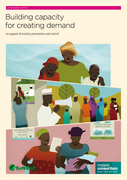
In the context of the Support to National Malaria Control Programme (SuNMaP), demand creation is the strategic combination of advocacy, communication and mobilisation approaches that seek to achieve increased community awareness of, and demand for,
...
effective malaria prevention and treatment services. For malaria treatment, demand creation focuses on promoting improved testing, prompt and proper use of artemisinin combination therapy (ACT) treatment for individual cases of malaria, and effective home management of fever, together with referrals of severe cases to a higher-level health facility.
more
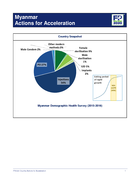
Commitment objective
The Government of Myanmar views family planning as critical to saving lives, protecting mothers and children from death, ill health, disability, and under development. It views access to family planning information, commodi ... ties, and services as a fundamental right for every woman and community if they are to develop to their full potential.
• Increase CPR from 41 percent to 50 percent by 2015 and above 60 percent by 2020
• Reduce unmet need to less than 10 percent by 2020 (from 12 percent in 2013)
• Increase demand satisfaction from 67 percent in 2013 to 80 percent by 2020 more
The Government of Myanmar views family planning as critical to saving lives, protecting mothers and children from death, ill health, disability, and under development. It views access to family planning information, commodi ... ties, and services as a fundamental right for every woman and community if they are to develop to their full potential.
• Increase CPR from 41 percent to 50 percent by 2015 and above 60 percent by 2020
• Reduce unmet need to less than 10 percent by 2020 (from 12 percent in 2013)
• Increase demand satisfaction from 67 percent in 2013 to 80 percent by 2020 more
With hundreds of illustrations and clear instructions, A Community Guide to Environmental Health helps health promoters, development workers, envir
...
onmental activists, and community leaders take charge of their environmental health in villages and cities alike. Also available in Arabic, Spanish, Chinese, Portuguese, Turkish, Dari, Malayan, Mongolian and Russian.
more
A module from the suite of health service capacity assessments in the context of the COVID-19 pandemicINTERIM GUIDANCE5 February2021
The Community needs, perceptions and demand:
...
community assessment toolcan be used by countries to conduct a rapid pulse survey of community health needs and perceptions around effective use of essential health services during the COVID-19 outbreak. The assessment helps to establish an early warning system on the need to implement coping strategies to continue to respond to communities’ health needs throughout the course of the pandemic. This assessment tool is informed by WHO and partner tools and guidance on community health needs, continuity of essential health services and readiness planning for COVID-19
more

Rashtriya Bal Swasthya Karykram (RBSK). Operational Guidelines
Sangath
(2019)
CC
Sangath is a non-governmental, not-for-profit organisation committed to improving health across the life span by empowering existing community resources to provide appropriate physical, psychologica
...
l and social therapies. Its primary focus areas include child development, adolescent and youth health, and adult health and chronic disease.
Started in 1996 by seven professionals in Goa, Sangath developed a vision to provide professional healthcare services for developmental disabilities and mental health problems. Today, it is one of the largest NGOs in the state, with more than 100 service providers, two centres in Goa, projects across India, collaborations with leading institutions in the world, and international recognition for its path-breaking research and intervention programmes in the community.
more
The coronavirus outbreak that began in 2019 (COVID-19) threatens to reverse years of hard-won gains in preventing and treating HIV. Fragile health systems are further stressed as health workers navi
...
gate an increased client load and demands at work while also being concerned for their own health and that of their families. Health facilities have been redesigned to care for patients with COVID-19, posing challenges to other services. Governments and civil society organizations have redirected scarce resources and shifted programming priorities to respond to the pandemic. Several countries have reported intermittent declines in HIV testing and diagnosis, antenatal care visits, collection of antiretroviral medicines (ARVs) by people living with HIV, and attendance at clinic appointments. Community-based education and support programmes have had to rapidly adapt to restrictions on movement and public gatherings. Children, adolescents, and women have experienced multiple deprivations due to the adverse impact of the pandemic.
more
Global Health Science and Practice February 2022, https://doi.org/10.9745/GHSP-D-21-00237
Key Findings: Exposure to vaccination information from faith leaders and health facilities was associa
...
ted with increased likelihood of vaccination uptake. The significant association between exposure to a greater number of immunization information sources and increased likelihood of vaccination uptake reinforces the need for multiple sources to provide consistent and accurate immunization information to facilitate positive vaccination behavior.
Key Implications: Social and behavior change communication interventions may optimize the promotion of immunization services through multiple information sources such as health facilities and community-based assets including faith leaders and lay community health workers. Religion and faith play an important role in how people understand health and make health decisions. In Sierra Leone and other similar settings, interventions to improve uptake of immunization services may be enhanced by proactively engaging faith leaders.
more
The Practical Approach to Care Kit (PACK) is a health systems improvement programme designed to support the work of primary care health workers in underserved communities (like doctors, nurses, midw
...
ives, health officers, community health practitioners), strengthen the health services in which they work and thereby achieve the best possible patient outcomes
You can register for free and get the PACK Global Adult Guide for free
more
People living with disabilities (PLWDs) have poor access to health services compared to people without disabilities. As a result, PLWDs do not benefit from some of the
...
services provided at health facilities; therefore, new methods need to be developed to deliver these services where PLWDs reside. This case study reports a household-based screening programme targeting PLWDs in a rural district in Malawi. Between March and November 2016, a household-based and integrated screening programme was conducted by community health workers, HIV testing counsellors and a clinic clerk. The programme provided integrated home-based screening for HIV, tuberculosis, hypertension and malnutrition for PLWDs. The programme was designed and implemented for a population of 37 000 people. A total of 449 PLWDs, with a median age of 26 years and about half of them women, were screened. Among the 404 PLWDs eligible for HIV testing, 399 (99%) agreed for HIV testing. Sixty-nine per cent of PLWDs tested for HIV had never previously been tested for HIV. Additionally, 14 patients self-reported to be HIV-positive and all but one were verified to be active in HIV care. A total of 192 of all eligible PLWDs above 18 years old were screened for hypertension, with 9% (n = 17) referred for further follow-up at the nearest facility. In addition, 274 and 371 PLWDs were screened for malnutrition and tuberculosis, respectively, with 6% (n = 18) of PLWDs referred for malnutrition, and 2% (n = 10) of PLWDs referred for tuberculosis testing. We successfully implemented an integrated home-based screening programme in rural Malawi.
more
Accessed 15 July 2021
Your source for information about community health workers around the globe.
Search Resources Learn More
CHW Central believes that
...
community health workers are key to achieving universal health coverage and reducing global health inequities. As the preeminent global resource on CHWs and CHW programs, CHW Central increases access to online information to improve the quality of CHW programs and services. We advocate for CHWs to be appropriately integrated into the global health workforce and represented and connected through strong networks and associations.
more
This Course for Service Providers on how to give Vitamin A Supplementation and Deworming (VAS+D) uses both a Learner’sGuide and a Facilitator’s Guide. The Learner’s Guide is designed for participants in the course who are healthcare workers or trainers learning to deliver vitamin A and Albenda
...
zole(for deworming) as part of regular activities associated with community or facility-based health care services, while the Facilitator’s Guide is designed for course facilitators who are planning and conducting courses .
more
Nurses have four fundamental responsibilities: to promote health, to prevent illness, to restore health and to alleviate suffering. The need for nursing is universal. Inherent in nursing is a respec
...
t for human rights, including cultural rights, the right to life and choice, to dignity and to be treated with respect. Nursing care is respectful of and unrestricted by considerations of age, colour, creed, culture,disability or illness, gender, sexual orientation, nationality,politics, race or social status.Nurses render health services to the individual, the family and the community and coordinate their services with those of related groups.
The ICN Code of Ethics for Nurses has four principal elements that outline the standards of ethical conduct.
more
Healthy Settings, a key component of Malawi’s Health Sector Strategic Plan (HSSP) 2011–2016, is the World Health Organization’s (WHO) holistic commu
...
nity-led approach to achieving health improvement by addressing social determinants of health, an approach which is central to the current WHO framework on integrated people-centred health services. Healthy Settings projects by their construct have many different components which vary from one group and community to another depending on their priorities: from housing, hospital improvements and waste management to “softer” interventions like leadership skills training and health promotion. It can be challenging to find relevant indicators to monitor and assess the impact of such a complex holistic project, this paper explores if social capital data can provide useful impact assessment indicators at the start of such a project.
more
Social distancing is an action taken to minimise contact with other individuals; social distancing measures comprise one category of non-pharmaceutical countermeasures (NPCs)1 aimed at reducing disease transmission and thereby also reducing pressure on hea
...
lth services.
This document builds upon existing ECDC documents, including guidelines for the use of non-pharmaceutical measures to delay and mitigate the impact of 2019-nCoV, a rapid risk assessment: outbreak of novel coronavirus disease – 5th update, a technical report on the use of evidence in decision-making during public health emergencies, and a guidance document on community engagement for public health events caused by communicable disease threats in the EU/EEA.
more
1.0 PURPOSE
To define the procedure for the conduct of in-person meetings in both healthcare and community settings in response to COVID-19 and with respect to Public Health and Social Measures (PH
...
SMs) to reduce the risk of disease transmission. A general risk assessment must be conducted to inform context specific recommendations.
2.0 SCOPE
The procedure in this document is applicable to all meetings that require convening people
together physically.
3.0 SAFETY AND HYGIENE PROCEDURE
Before entry into the meeting room/venue:
• Presentation of evidence for complete doses of COVID-19 vaccination (depending on COVID-19 vaccine taken) or negative COVID-19 PCR test done within the last 72 hours, or where applicable proof of daily negative RDT result. The Africa Union Trusted Travel platform, with technical support from the PanaBIOS Consortium has implemented an online system that allows Airlines and Port Health services to authenticate and verify traveler’s COVID-19 results certificates in line with international standards, across Africa and beyond.
• Hand hygiene stations should be available at the points of entry.
• All participants must wear a well fitted mask that covers the nose and mouth. Medical masks should be provided all meeting participants.
more
EngenderHealth's tool kit of related job aids is designed to help users support individuals in making informed and voluntary family planning decisions. The first volume in the series "Realizing Rights in Sexual and Reproductive Health
...
Services," Choices in Family Planning: Informed and Voluntary Decision Making is intended for use by a wide range of audiences in different family planning settings, including service providers, trainers, managers of service programs, managers and members of community-based organizations, policymakers, and donors.
more
When explosive weapons are used in populated areas, they have direct and indirect impacts
on the provision of services, community cohesion, humanitarian access, regular support for
basic needs, ph
...
ysical safety, mental health and psychological well-being, as well as other
social and economic impacts. The challenges and human impacts in hard-to-reach areas –
such as in Kharkiv, Mykolaiv and Kherson Oblasts – exemplify the specific and systematic
pattern of harm caused by explosive weapons during and after armed conflicts.
more
7 Febr. 2021
As COVID-19 continues to wreak havoc in countries – decimating people’s livelihoods, and leaving health systems struggling to provide healthcare and vaccines for the entire population - governments and donors should look to the Chu
...
rch as a partner. The essential Church networks, trusted and rooted in local communities, can reach the most vulnerable people and remote places where governments often struggle to reach. DR Congo is among several countries where the Catholic Church is the main provider of community health services, particularly in more remote areas.
more
Section One
summarizes UNHCR’s mandate of international protecdtion and the aim and principles of emergency
response;
Section Two
deals with emergency management;
Section Three
covers the vital sectors and problem areas in refugee emergencies, including
...
health, food, sanitation
and water, as well as key field activities underpinning the operations such as logistics, community
services and registration. The chapters in this section start with a summary so that readers, who
might not need the full level of detail in each of these chapters, can understand the basic principles of
the subject quickly;
Section Four
gives guidance on the support to field operations, primarily administration and staffing;
The Appendices
include a “Toolbox” which gathers, in one location, the standards, indicators and useful references
used throughout the handbook;
more
The Information Management Unit of the Assistance Coordination Unit issued a Panoramic Report on Busra Esh-Sham City located in Dar’a Governorate. The report reflects the living conditions in the city during November and December 2017. The report covers in analysis several sections: Active Civilia
...
n actors, Demography, Health, Food Security, Education, and the Infrastructure, which incorporates Water sector, Sewage System, Solid Waste, Electricity, and Public Roads Network. This report aims at drawing the attention of the decision-makers to the civil actors in the city of Busra Esh-Sham and to enable them to manage the community and provide necessary infrastructure needs and services to the community people.
more
This page presents all our content related to COVID-19. It aims to: 1. Help people who want to understand or work on COVID-19 right now. 2. Help people who are considering biosecurity careers longer term.
This page will focus on leveraged opportunities in research, policy, technology and startups.
...
Many people will find their best opportunities to help in their local community – supporting health workers, driving delivery vans, helping friends and family, looking after neighbours, and so on. If you already play a role in providing essential services it’s likely that working hard at your day job, while making efforts to avoid spreading the virus, is one of the most valuable things you can do.
more
Disability and Related Factors among Road Traffic Accident Victims in Benin: Study from Five Public and Faith-Based Hospitals in Urban and Suburban Areas
Yolaine Glèlè-Ahanhanzo, Alphonse Kpozèhouen, Noël Moussiliou Paraïso, Patrick Makoutodé, Chabi O. Alphonse Biaou, Eric Remacle, Edgard-Marius Ouendo, Alain Levêque
Scientific Research Publishing
(2018)
C2
Open Journal of Epidemiology, 2018, 8, 226-241
Abstract
Introduction: Road traffic accidents (RTAs) are a major public health issue
in developing countries, where roads tend to be built haphazardly and accidents
take a heavy toll on victims—
...
including leaving them disabled. This
study seeks to identify those factors that cause RTA victims to become disabled
as a result of their injuries. Methods: This retrospective community-
based study looked at RTA victims treated in five public and faith-based
hospitals in Benin. Disability was evaluated using the Washington Group on
Disabilities Statistics questionnaire. The independent variables were related to
the victim’s socio-demographic traits, the circumstances of the accident, and
post-crash response mechanisms. The proportions were compared using the
chi-squared test, with a threshold of 5%. Results: The prevalence of disability
among road traffic accident victims is 9.59% (CI 95%: 6.86% - 13.20%). The
occurrence of disability is associated with age (p = 0.002), occupational group
(p = 0.0077), the mode of transport used to transfer the victim (p < 0.001)
and the location of the injuries (p = 0.0035). The study also found that people
fail to make sufficient use of post-crash response mechanisms. Conclusion:
Public policy-makers should therefore focus on stepping up interventions to
get more people using both protective equipment and post-crash response services.
more

Health Population and Nutrition Sector Development Programme (HPNSDP)
ts goals are to ensure that:
Children and parents experience fewer conflicts;
Parents make better decisions about the care of their children and are better able to solve problems; and
Children feel more supported by their families to further their education and make good decisions a
...
nd healthy life choices.
This discussion guide is intended to facilitate discussion and peer learning, during which participants can learn from each other’s experiences and support each other. It is designed for group session discussions, as well as for one-on-one guidance in the home. It should be used with the "Better Parenting Nigeria" Facilitator’s Manual
more
In 2023, the World Health Organization was responding to 72 health emergencies, including 19 grade-3 emergencies which required the highest level of activation, reaching millions of people. The annu
...
al report on WHO’s response to health emergencies in 2023 outlines the increasingly critical role of WHO at global, regional and country levels, and across the key elements of effective emergency response, including emergency coordination and planning, operational and logistic support, and community engagement and protection. The huge scale and complexities of health emergencies in the 21st century require a strategic shift towards not only meeting the immediate needs of vulnerable communities, but also building community and health system resilience to all hazards – a challenge that both WHO and its partners must continue to meet.
more
People with disabilities experience significant health inequalities. In Malawi, where most individuals live in low-income rural settings, many of these inequalities are exacerbated by restricted access to
...
health care services. This qualitative study explores the barriers to health care access experienced by individuals with a mobility or sensory impairment, or both, living in rural villages in Dowa district, central Malawi. In addition, the impact of a chronic lung condition, alongside a mobility or sensory impairment, on health care accessibility is explored.
more
Men are underrepresented in HIV testing services throughout sub-Saharan Africa. HIV testing is critical to achieve the UNAIDS 95-95-95 goals, as it is the first entry point to HIV care. In Malawi, an estimated 14% of HIV positive men are undiagnosed
...
, while only 6% of HIV positive women remain undiagnosed. Improved HIV testing among men is key to reaching UNAIDS goals, and to curbing HIV epidemics in the region.
more
Services, Identified needs and recommendations following the April and May 2015 Earthquakes in Nepal
Globally, there is increased advocacy for community-based health insurance (CBHI) schemes. Like other low and middle-income countries (LMICs), Tanzania officially established the
...
Community Health Fund (CHF) in 2001 for rural areas; and Tiba Kwa Kadi (TIKA) for urban population since 2009. This study investigated the implementation of TIKA scheme in urban districts of Tanzania.
more
Despite the increasing uptake of information and communication technologies (ICT) within healthcare services across developing countries, community healthcare workers (CHWs) have limited knowledge t
...
o fully utilise computerised clinical systems and mobile apps. The ‘Introduction to Information and Communication Technology and eHealth’ course was developed with the aim to provide CHWs in Malawi, Africa, with basic knowledge and computer skills to use digital solutions in healthcare delivery. The course was delivered using a traditional and a blended learning approach.
more
The Mexican Constitution sets out the basis for access to health care services and the right to social protection in health for all citizens. The G
...
eneral Health Law establishes that the MoH, together with state governments, is responsibl for the control and eradication of transmissible diseases and must establish the necessary measures to prevent and combat all threats to health.
Consequently, the National Health Plan 2019–2024 proposes universal, effective and free access to health care services, including health and epidemiological surveillance for emergencies, for all Mexicans
more

The full-scale invasion of Ukraine has caused a deterioration in the level of access to health-care services and medicines in the country, particularly for people living in regions close to the fron
...
t line and areas that are not partially or fully controlled by the Government of Ukraine, and for people who have been internally displaced. Cost and time constraints involved in getting to and from health facilities, as well as limited transportation options were the main barriers to accessing essential health-care services. At the same time, the findings show that the country’s health system remains resilient and that overall access to health services is fairly high.This report is based on data collected through a quantitative cross-sectional survey of self-reported health needs of the general population in Ukraine. It presents results of the first round survey conducted in September 2022 and could help to address the specific health-care needs of the population groups concerned.
more
Available in: English, French, Chinese, Spanish, Russian, Arabic, Thai, Korean, Tajik, Vietnamese, Uzbek
http://www.who.int/disabilities/cbr/guidelines/en/
Empowering Health Workers to Improve Service Delivery. This training program is designed to build the capacity of program managers and health providers in quality management, and improve the provisi
...
on of high-quality health services.
Please download the chapters directly from the website: https://www.usaidassist.org/resources/kenya-quality-model-health-training-course-health-sector
more
WHO South-East Asia Journal of Public Health, April 2017, 6(1) 8 pp. 211 kB
Social auditing in Nepal’s health sector
Community health workers, recipients’ experiences and constraints to care in South Africa – a pathway to trust
Nonhlanhla Nxumalo, Jane Goudge & Lenore Manderson
AIDS Care Psychological and Socio-medical Aspects of AIDSHIV
(2016)
CC
CONCLUSIONS: The roles performed by CHWs are broad, varied and essential for diabetes and hypertension management. However, basic knowledge about diabetes and hypertension remains poor while training is unstandardised and haphazard. These need to be improved if
...
community-based NCD management is to be successful. The potential of peer education as a complementary mechanism to formal training needs as well as support and supervision in the workplace requires further assessment
more
Community based psychosocial services in humanitarian assistance. A facilitator's guide
Agni, Kathy; et al.
LutherahjalpenChurch of Sweden; Norwegian Church Aid and Presbyterian Disasters Assistance
(2005)
C2
This expansive facilitator's guide deals with psychosocial interventions concerning multiple causes of trauma such as HIV and AIDS and post-conflict situations. The guide offers technical advice to the implementor which is usefully augmented by diagrams, ideas for games and other useful intervention
...
s
more
Health Facility Committees : The Governance Issue

INTEGRATING MICROFINANCE AND COMMUNITY HEALTH INTERVENTIONS: A NARRATIVE REVIEW OF EVIDENCES FROM INDIA
Sheila Leatherman, Somen Saha, Marcia Metcalfe, et al.
International Journal of Development Research
(2014)
C1
The role of community health workers in the re-engineering of primary health care in rural Eastern Cape
Karl le Roux, Ingrid M le Roux, Nokwanele Mbewu & Emily Davis
South African Family Practice
(2015)
CC
Phiri et al. Human Resources for Health (2017) 15:40
DOI 10.1186/s12960-017-0214-3
This study has two broad objectives. Thefirst objective was to assess the financialsustainability of CBHI schemes, focusing on schemes that have been operational for more than twoyears. The first componentprovidesquantitative descriptions of enrollment, utilization, and financial solvency of CBHI sc
...
hemes over time.The second objective ofthe assessment was to provide in-depth descriptions of institutional structures, human resource capacity, engagement and commitment of key stakeholders, and community and member engagement byCBHI schemesthat drive or constrain sustainability of CBHI schemes.
more
As the global community aims to fulfill its commitments to the UN Sustainable Development Goals, and the achievement of universal health coverage, dozens of countries have committed to the expansion
...
of community health workers (CHWs) as the front line of their healthcare systems [1, 2]. Robust research demonstrates CHWs improve access to care, reduce maternal, newborn, and child mortality, improve clinical outcomes for chronic diseases, and prevent disease outbreaks [3].
To support the operationalization of quality CHW program design and implementation, USAID, UNICEF, the Community Health Impact Coalition, and Initiatives Inc. have updated and adapted the Community Health Worker Assessment and Improvement Matrix (CHW AIM) Program Functionality Matrix [12]. This tool can be used to identify design and implementation gaps in both small- and national-scale CHW programs, and close gaps in policy and practice.
more
The object of this bill is to provide for a legal framework to promote the existence of Community Health Workers (CHWs) and to provide for clarity in the role and responsibilities assigned to CHWs i
...
n the Health sector and to promote and strengthen service delivery at the Community level. The law will regulate training, certification and registration and set minimum qualifications and standards and working conditions for the CHWs.
more
Community health nurses have the potential to make significant contributions to meet the health care needs of various population groups in a variet
...
y of community settings. In order to assess the extent to which CHNs are achieving this potential, WHO conducted a study between 2010 and 2014 that examined the status of community health nursing in 22 countries, 13 of which were experiencing a critical shortage of health care workers. The study revealed that the countries surveyed had the basic and operational framework for optimizing CHN in their health systems as evidenced by the availability of PHC structures to guide interventions. However, challenges were identified related to the education, practice and management of CHNs in these countries. The major challenges identified were: Limited availability of career opportunities; poor worker retention; low recognition for CHNs; inadequate and unsupportive working conditions and environments; absence of educational standards; varying educational entry-level requirements for CHN programmes; and a lack of consensus on the scope of practice for CHNs.
more
This paper explores access to water, sanitation, and health in pastoral communities in northern Tanzania. It argues that the concept of gender, used on its own, is not enough to understand the complexities of sanitation, hygiene, water, and
...
health. It explores pastoralists’ views and perspectives on what is ‘clean’, ‘safe’, and ‘healthy’, and their need to access water and create sanitary arrangements that work for them, given the absence of state provision of modern water, sanitation, and hygiene (WASH) infrastructure. Although Tanzania is committed to enhancing its citizens’ access to WASH services, pastoral sanitation and hygiene tend to be overlooked and little attention is paid to complex ways in which access to ‘clean’ water and ‘adequate sanitation’ is structured in these communities. This paper offers an intersectional analysis of water and sanitation needs, showing how structural discrimination in the form of a lack of appropriate infrastructure, a range of sociocultural norms and values, and individual stratifiers interact to influence the sanitation and health needs of pastoralist men, women, boys, and girls.
more

Mental health problems are common and cause great suffering to individuals and communities around the world. They have a significant impact not only on the physical and mental health of those affect
...
ed but also on their families and the communities they live in. At the same time, all communities have their own traditional mechanisms for support and contain a range wide of resources that can be helpful in preventing mental health conditions from developing, promoting positive mental health and supporting the recovery of people that are struggling with a mental health condition.
In the wider context, people living with a mental health condition are often excluded from their communities and experience various violations to their basic human rights (discrimination, violence, exclusion from employment opportunities). The World Health Organization (WHO) estimates that the mean prevalence of global mental health disorders is 10.8% while the prevalence in emergency settings is 22.1% in any conflict-affected population.
During emergencies and crisis, the stigma, exclusion and discrimination towards people living with mental health conditions is often higher, which can cause isolation and protection issues. Communities can play a crucial role in promoting mental health as well as enhancing primary care and access. Their role is to help reduce mental health inequalities by providing community resources that connect people to community-based resources and by providing mental health education. This also helps to reduce the massive mental health treatment gap.
more
Despite recent global declines, under-five mortality remains high in many of the poorest countries. Barriers to timely
quality care, including user fees, distance to facilities and the availability of trained health workers and medical supplies,
...
hinder progress in further reducing morbidity and mortality
more
Glob Health Sci Pract February 1, 2014 vol. 2 no. 1 p. 103-116
Community health workers in Lesotho: Experiences of health promotion activities
T. Seutloali; L. Napoles; N. Bam
African Journal of Primary Health Care & Family Medicine; AOSIS
(2018)
C2
African Journal of Primary Health Care & Family Medicine
ISSN: (Online) 2071-2936, (Print) 2071-2928
This Community Conversation Kit (CCK) is designed to help people who have a leadership role speak with people in their community about how to protect themselves and those they care about from becomi
...
ng ill with an infectious disease. This kit will help lead conversations that get people talking with each other and thinking differently about their health so they can take action. Using some simple tips and suggestions, the information in this kit will allow communities to exchange practical information that will help them know how to confidently protect their health.
more
A Framework for Integrating Childhood Tuberculosis into Community-based Child Health Care
Detjen A, Gnanashanmugam D, Talens A
International Union Against Tuberculosis and Lung Disease (The Union), CORE Group
(2013)
C_WHO
An Overview of Current Evidence with Recommendations for Strengthening Community Health Worker Programs to Accelerate Progress in Achieving the Health
...
-related Millennium Development Goals
more
Health Bulletin No.3
