
Filter
2118
Text search:
births
Featured
105
833
Language
Document type
1543
267
114
48
47
46
16
13
10
6
3
2
2
Countries
114
110
94
86
83
77
76
70
68
67
66
65
57
53
45
41
37
37
35
34
31
29
25
25
24
22
22
21
20
19
17
15
15
14
14
14
13
12
10
10
9
8
8
8
8
7
7
6
6
6
6
6
6
5
5
5
4
4
4
4
4
4
4
3
3
3
3
3
3
3
2
2
2
2
2
2
2
2
2
1
1
1
1
1
1
1
1
1
1
1
1
1
1
1
1
1
1
1
1
1
1
1
1
Authors & Publishers
Publication Years
Category
1418
205
99
72
42
39
6
Toolboxes
107
51
50
42
41
41
41
28
27
27
20
19
15
14
12
7
7
7
6
2
2
2
1
Operational Guidelines for Programme Managers & Service Providers
BMC Health Services Research (2017) 17:623 DOI 10.1186/s12913-017-2567-7
A supplement to The State of the World’s Children Report 2009
Accessed November, 2017
Accessed November, 2017
Accessed November, 2017
Updated: 27 December 2013
Basic Indicators | Nutrition | Health | HIV/AIDS | Education | Demographic Indicators | Economic Indicators | Women | Child Protection | The Rate Of Progress | Adolescents | Disparities By Residence | Disparities By Household Wealth | Early Childhood Development

Transforming Health: Accelerating attainment of Health Goals | THE SECOND MEDIUM TERM PLAN FOR HEALTH
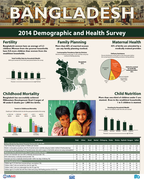
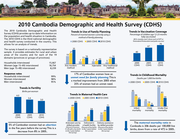
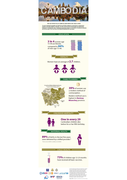
FAST FACTS FROM THE 2014 CAMBODIA DEMOGRAPHIC AND HEALTH SURVEY

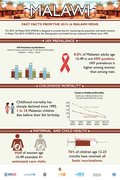
FAST FACTS FROM THE 2015-16 MALAWI MDHS
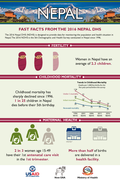
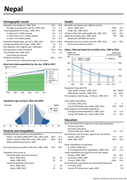
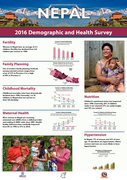
FAST FACTS FROM THE 2016 NEPAL DHS
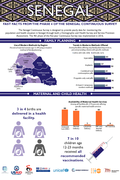
FAST FACTS FROM THE PHASE 4 OF THE SENEGAL CONTINUOUS SURVEY MATERNAL AND CHILD HEALTH

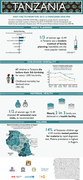
FAST FACTS FROM THE 2015-16 TANZANIA DHS-MIS
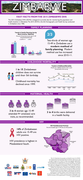
FAST FACTS FROM THE 2015 ZIMBABWE DHS
Preventing Impairment & Disability
Part of the CBM Prevention Toolkit on “How to Improve the Health and Development of your Child”

Open Access Maced J Med Sci. 2017 Mar 15; 5(1):37-41.
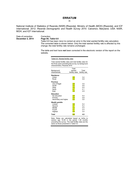
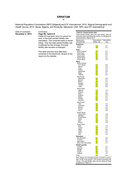
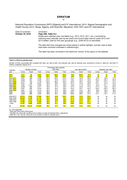
Erratum on the Rwanda Demographic and Health Survay 2010 final report | Date of correction: December 2, 2014 | Correction: Page 84, Table 6.6 - Table 6.6 has been rerun to correct an error in the total wanted fertility rate calculation. The corrected table is shown below. Only the total wanted ferti
...
This statement presents the 2018 definition of skilled health personnel providing care during childbirth (also widely known as a “skilled birth attendants” or SBAs). It results from the recent review and revision of the 2004 joint statement by WHO, FIGO and ICM – Making pregnancy safe: the cri
...
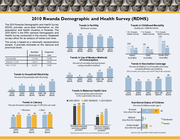
General fact sheet in booklet form about the 2014-2015 Demographic and Health Survey conducted in Rwanda. The 2010 Rwanda Demographic and Health Survey (RDHS) provides up-to-date information on the population and health situation in Rwanda. The 2010 RDHS is the fifth national Demographic and Health
...
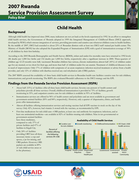
Policy brief based on the 2007 Rwanda Service Provision Assessment (RSPA) survey. The 2007 RSPA survey describes how the formal health sector in Rwanda provides services for family planning, maternal health, child health, malaria, HIV/AIDS, and other communicable diseases.
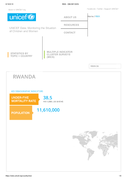
Accessed June 2018 | UNICEF Data: Monitoring the Situation of Children and Women
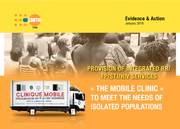
Provision of integrated RH/FP/STI/HIV services
In Togo, the limited access of populations, especially women, young girls and children to Reproductive Health (RH), Family Planning, treatment of sexually transmissible infections (STI) and struggle against HIV quality services is responsible for t ...
In Togo, the limited access of populations, especially women, young girls and children to Reproductive Health (RH), Family Planning, treatment of sexually transmissible infections (STI) and struggle against HIV quality services is responsible for t ...
This document sets out Rwanda's Maternal, Neonatal Child Health (MNCH) national strategy (July 2013- June 2018). The MNCH strategy provides a framework for addressing maternal, neonatal and child health challenges currently facing Rwanda. It is an overarching strategy for scale up of the national re
...
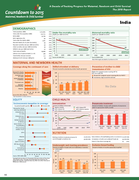
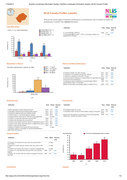
The Countdown country profile presents in one place the best and latest evidence to enable an assessment of a country’s progress in improving reproductive, maternal, newborn, and child health (RMNCH)
Indicators for monitoring the 2016 United Nations Political Declaration on Ending AIDS
UNAIDS supports countries to collect information on their national HIV responses through the Global AIDS Monitoring (GAM) framework—an annual collection of 72 indicators on the response to HIV in a country. ...
UNAIDS supports countries to collect information on their national HIV responses through the Global AIDS Monitoring (GAM) framework—an annual collection of 72 indicators on the response to HIV in a country. ...
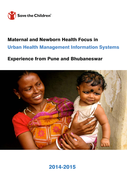
Slum population in India is growing fast (25.1% decadal growth – Census 2011). Its health and nutrition indicators are worse than that of the non slum urban areas and comparable to that of rural India.
The National Urban Health Mission (HUHM), launched in 2013, focuses on improving the health of
...
Nepal has performed exceptionally in improving reproductive, maternal and child health outcomes over the past two decades. In this article, we discuss these achievements and outline a vision for the future of maternal, newborn and child survival in Nepal after the era of the Millennium Development G
...
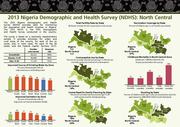
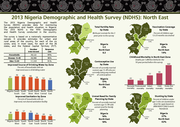
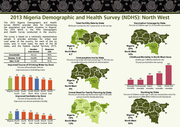
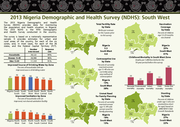
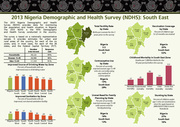
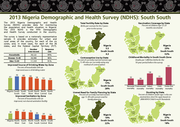
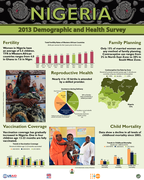
Nigeria is Africa’s most populous nation and accounts for nearly one quarter of the continent’s maternal, newborn and child deaths. In the spirit of the global Countdown to 2015 for Maternal, Newborn and Child Health and the Nigerian Saving One Million Lives Initiative, these state data profiles
...

At the threshold of Sustainable Development Goals (SDG) era, this document captures the remarkable achievements by Member States towards achieving MDGs 4 and 5. It acknowledges new opportunities in the post-2015 phase shaped by the SDGs and the Global Strategy for women’s, children’s and adoles
...
Part of the CBM Prevention Toolkit on “Recognising Impairments at Birth”
CBM Primary Health Care Toolkit - Part 1 - Flipcharts (English)
Int J Health Geogr. 2002; 1: 5.
Published online 2002 Dec 20. doi: 10.1186/1476-072X-1-5
PMCID: PMC149400
PMID: 12537588
Accessed: 24.09.2019
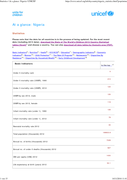
UNAIDS 2018, Guidance
Indicators for monitoring the
2016 Political Declaration on Ending AIDS
Review
www.co-hivandaids.com
Volume 12 Number 4 July 2017
Guidance
Indicators for monitoring the 2016 Political Declaration on Ending AIDS
UNAIDS Joint United Nations Programme on HIV/AIDS
Accessed on 31.01.2020
The Senegal Continuous Survey is designed to provide yearly data for monitoring the population and health situation in Senegal through both a Demographic and Health Survey and Service Provision Assessment. The 4th phase of the five-year Continuous Survey was implemented in
...
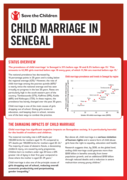
Accessed on 02.02.2020
Child marriage is a serious Violation of human Rights and a severe form of child abuse, and disproportionately affects girls.
Accessed on 01.03.2020
Since its inception in 1995, the Multiple Indicator Cluster Surveys, known as MICS, has become the largest source of statistically sound and internationally comparable data on women and children worldwide. In countries as diverse as Costa Rica, Mali and Qatar, trained field
...
Accessed on 01.03.2020
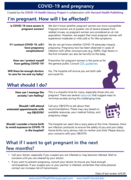
This fact sheet explains how COVID-19 affects you if you are pregnant, or planning to become pregnant - in 35 languages
This guideline document lays out the indicators for monitoring the 2016 Political Declaration on ending AIDS. The Global AIDS Monitoring (GAM) process has been often referenced as a benchmark for successful international accountability mechanisms.
Health Situation
Health policies and systems
Cooperation for Health
WHO Country Cooperation Strategic Agenda (2008-2013)
This package of materials is designed to provide the tools necessary to begin the implementation of respectful maternity care (RMC) in your area of work or influence. Using the tools in this toolkit, one can help to change and develop attitudes in oneself and among colleagues and other stakeholders
...
This first edition of our national neonatal care clinical guidelines is an initiative that aims to ensure that all the neonates in the Kingdom of Eswatini are offered standard, best quality of care and the best possible start in life. The guidelines have been formulated from various global sources a
...
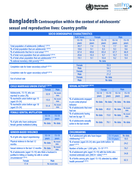
Country profile: Bangladesh
Country profile: Burundi
Country profile: Cambodia
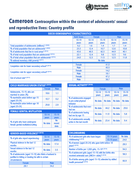
Country profile: Cameroon
Country profile: Cote d'Ivoire
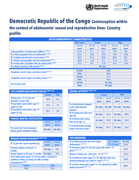
Country profile: Democratic Republic of Congo
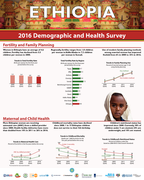
Country profile: Ethiopia
