
Filter
3592
Text search:
agreement
Featured
284
1053
Language
Document type
2170
657
347
154
105
55
40
31
9
7
6
3
3
2
1
Countries
125
113
82
79
79
77
77
64
62
62
62
60
58
57
54
47
46
46
45
44
39
38
38
36
33
31
30
29
27
26
24
24
24
23
21
21
20
20
19
18
17
14
14
14
14
13
13
13
11
11
11
10
10
10
9
9
9
9
9
8
8
8
7
7
7
7
7
6
6
6
6
5
5
5
5
4
4
4
4
4
3
3
3
3
3
3
3
3
3
3
2
2
2
2
2
2
2
2
2
2
2
2
2
2
2
2
2
2
2
1
1
1
1
1
1
1
1
1
1
1
1
1
1
1
1
1
1
1
1
1
1
1
Authors & Publishers
Publication Years
Category
1217
242
204
178
168
87
45
7
2
Toolboxes
244
243
207
199
187
153
131
122
114
101
96
94
88
61
56
55
44
43
33
22
16
15
15
3
2
1
The messages should be used to inform, educate and engage different audience groups depending on their level of risk, vulnerability, presence in contact areas, care of patients with Ebola, or engagement or attendance of burials.
Ebola Guidance Package. This Ebola guidance gives hands on advice on how to act around a person suspected to have Ebola

The preparedness strengthening team deployed to Ghana focused on specific objectives in order to assist the country in becoming as operationally prepared as possible to detect, investigate and report potential EVD cases effectively and safely and to mount an effective response to prevent a larger o
...
WHO Guideline. Since 2010, countries in the meningitis belt have started to introduce a new serogroup A meningococcal conjugate vaccine conferring individual protection and herd immunity. Following the successful roll-out of this vaccine, epidemics due to Neisseria meningitidis serogroup A (NmA) are
...
Accessed 25th March 2015
The present report is submitted pursuant to Security Council resolution 2164 (2014), by which the Council extended the mandate of the United Nations Multidimensional Integrated Stabilization Mission in Mali (MINUSMA) and requested me to report to it every three months on the implementation of the re
...
In light of the decline in new Ebola cases, strategies are now needed to scale down the activities and bed capacities in Ebola care facilities. These facilities include Ebola treatment units, community care centres, Ebola treatment centres and isolation centres. The Governments of Guinea, Liberia an
...
2nd edition. Known as “Community Case Management of Sick Children” (CCM), this approach sends community-based health workers out to find, diagnose, and successfully treat sick children, in partnership with their families. Inspired by the classic “Immunization Essentials”, this guide methodic
...
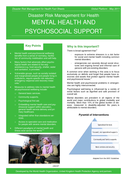
This paper has been commissioned by RedR to identify gaps in skills, technology, and knowledge in urban humanitarian response in order to inform RedR’s project Ready to Respond which is looking to address these gaps in two specific areas:
Water supply, sanitation, and hygiene; Shelter res
...
Accessed 7 July 2015
Accessed 7 July 2015
These tables are a quick reference to help health care providers determine the nutritional status of children over 5 years of age; adolescents; and non‑pregnant, non‑lactating adults. Practice exercises are available to assist health care providers in using the tables.
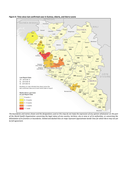
PLOS Currents Outbreaks. 2015 Aug 4 . Edition 1. doi:
10.1371/currents.outbreaks.0b0ba06009dd091bc39ddb3c6d7b0826
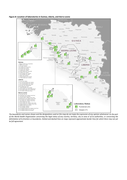
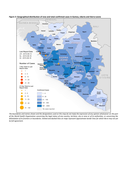
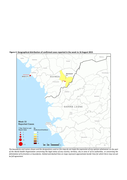
Fact Book on WHO Level I and Level II monitoring indicators - To monitor the progress of efforts to improve the global medicines situation, WHO has developed a system of indicators that measure important aspects of a country’s pharmaceutical situation. Level 1 indicators measure the existence and
...
Guide for coordinators and data collectors - The WHO Operational Package for Assessing, Monitoring and Evaluating Country Pharmaceutical Situations is intended as a useful tool for researchers, policy-makers, planners and others who need to use standardized measurement tools to gather data and other
...
Revised National Tuberculosis Control Programme
Supplement to the Healthcare Waste Management Toolkit for Global Fund
Practitioners and Policy Makers
The new Global Strategy aims to achieve the highest attainable standard of health for all women, children and adolescents, transform the future and ensure that every newborn, mother and child not only survives, but thrives.
Facilitator's Guide. This guide is designed to assist facilitators in training community health workers (CHWs) and community volunteers (CVs) in integrating community-based TB services into their work. The training will help community workers who already provide numerous services to understand TB an
...
WHO commissioned a survey, carried out in September/October 2015, among some 10 000 members of the public in 12 countries (2 per WHO Region: Barbados, China, Egypt, India, Indonesia, Mexico, Nigeria, the Russian Federation, Serbia, South Africa, Sudan and Viet Nam) on their use of antibiotics, knowl
...
The goals of Ebola virus disease (EVD) surveillance during Phase 3 of the Ebola response are to promptly detect new, suspected EVD cases and deaths so as to trigger appropriate response, including rapid diagnosis, case isolation and management, contact tracing, safe burials, and the identification o
...
The document covers: introduction on contact tracing in the Ebola response; general considerations for contact tracing; case definition; planning and preparation; personnel; implementation, and tools for contact tracing.
The document introduces a simple classification, minimums standards and a registration form for Foreign Medical Teams (FMTs) that may provide surgical and trauma care arriving within the aftermath of a sudden onset disaster. These can serve as tools to improve the coordination of the foreign medical
...

This guidance aims to support national clusters to implement their commitments on AAP and core people-related issues both before the beginning of a response (preparedness) and thereafter, throughout the Humanitarian Programme Cycle (HPC)
Interim Guidance.
A number of medical problems have been reported in survivors, including mental health issues. Ebola virus may persist in some body fluids, including semen. Ebola survivors need comprehensive support for the medical and psychosocial challenges they face and also to minimize the ...
A number of medical problems have been reported in survivors, including mental health issues. Ebola virus may persist in some body fluids, including semen. Ebola survivors need comprehensive support for the medical and psychosocial challenges they face and also to minimize the ...
The use of safe and efficacious insecticides against the adult and larval populations of mosquito vectors is one of the most effective ways to rapidly interrupt transmission of Zika virus, as well as other viruses transmitted by Aedes mosquitoes such as chikungunya and dengue.
This document provides recommendations on essential measures to protect the health and safety of operators and other persons involved in emergency vector control of Aedes spp. mosquitoes, including space spraying of insecticides, larvicide application and, in some cases, indoor residual spraying. It
...
Interim guidance for entomologists.
This document describes selected sampling methods that can be used to conduct surveillance of Aedes mosquitoes, pupae and oviposition. It is intended for qualified entomologists at national and sub-national level who are responsible for the surveillance of local
...
This guideline provides global, evidence-informed recommendations on daily iron supplementation in infants and children, as a public-health intervention for the prevention of anaemia and iron deficiency. It includes recommendations for iron supplementation in countries where malaria is prevalent.
The training focuses on building the capacity of health care workers at the primary and secondary level to address and manage TB in children.
Special issue: WHO South-East Asia Journal of Public Health -Vol. 5, Issue 1, April 2016.This special This issue contains a rich collection of articles, demonstrating the encouraging scientific momentum to address the growing burden of diabetes in the region
This Training module on malaria elimination has been developed by WHO to support health professionals in planning, managing, monitoring and evaluating malaria elimination programmes
This Training module on malaria elimination has been developed by WHO to support health professionals in planning, managing, monitoring and evaluating malaria elimination programmes.
Supporting exercises: These files are necessary for participants to complete a number of exercises listed in the man
...
FIELD GUIDE for staff at the central, intermediate and peripheral level
Early Essential Newborn Care (EENC) Module 2.
The new five-year agenda of WHO in Africa, The Africa Health Transformation Programme, 2015–2020: a vision for universal health coverage, is the strategic framework that will guide WHO’s contribution to the emerging sustainable development platform in Africa. It articulates a vision for health a
...
A key purpose of the Recovery Toolkit is to support countries in the reactivation of health services which may have suffered as a result of the emergency. These services include ongoing programmes such as immunization and vaccinations, maternal and child health services, and noncommunicable diseases
...
Recovery partnership preparation package: Building capacity to reactivate safe essential health services and sustain health service resilience.
In the aftermath of an emergency, the recovery partnership preparation package supports the establishment and implementation of institutional health partne
...
Currently there is no publicly available source of consolidated information on attacks on health care in emergencies. This report is a first attempt to consolidate and analyse the data that is available from open sources. While the data are not comprehensive, the findings shed light on the severity
...
This manual focuses on the availability and clinical use of oxygen therapy in children in health facilities by providing the practical aspects for health workers, biomedical engineers, and administrators. It addresses the need for appropriate detection of hypoxaemia, use of pulse oximetry, clinical
...
Zika virus is primarily transmitted by the Aedes species of mosquito which is also responsible for the spread of dengue, Chikungunya and yellow fever viruses. In most areas, the primary vector of these viruses is Aedes aegypti, with Aedes albopictus a proven or potential vector in some settings. Wel
...
This Indicator-Based Pharmacovigilance Assessment Tool (IPAT) was developed as a comprehensive performance metric for pharmacovigilance and medicine safety systems.
For several decades, civil society organisations (CSOs) in Nigeria have been advocating for increased resources for family planning (FP) and reproductive health (RH) services and commodities. To help CSOs in Nigeria understand and actively participate in the budget process at the state level, a team
...
The Extending Service Delivery (ESD) project has developed Healthy Timing and Spacing of
Pregnancy: A Trainer’s Reference Guide as a resource for trainers in developing in-service training
for facility-based healthcare providers and community health workers (chws) who already have
some basic ex
...
Accessed Nov. 28,2016
Improving Infection Prevention and Control Practices at Health Facilities in Resource-Limited Settings
recommended
SIAPS Technical Report. This report summarizes key accomplishments and lessons learned in implementing SIAPS’ approach to improving IPC practices in four countries: South Africa, Namibia, Jordan, and Ethiopia. All activities address SIAPS’s overall objective to build or enhance national and faci
...
Curriculum reform efforts to enhance training on rational medicine use (RMU) and AMR should pay particular attention to ensuring that the right topics are integrated and the right teaching-learning methodologies are adopted.

The Global Early Warning – Early Action (EWEA) report on food security and agriculture is developed by the Food and Agriculture Organization of the United Nations (FAO). The report is part of FAO’s EWEA system, which aims to translate forecasts and early warnings into anticipatory action.
20-22 July 2015, Monrovia, Liberia
The SPPCHS project worked with the Ministry of Home Affairs to design a peer education program for prisons to provide knowledge, skills, and tools to prevent and respond to tuberculosis (TB) and HIV in prisons. AIDSFree held two training of trainers (TOT) in Dodoma to train 55 prison officers from 2
...
A Policy analysis
Managing possible serious bacterial infection in young infants when referral is not feasible
recommended
It provides guidance on care for use in resource-limited settings or in settings where families with sick young infants do not accept or cannot access referral care, but can be managed in outpatient settings by an appropriately trained health worker. The guideline seeks to provide programmatic guida
...
