Filter
1980
Text search:
TB
screening
Featured
204
609
Language
Document type
1357
238
207
61
57
27
14
8
7
2
1
1
Countries
123
78
76
64
47
44
42
40
39
37
37
37
36
35
31
31
31
27
26
26
25
24
23
21
21
20
18
18
17
16
14
13
13
12
12
11
9
9
7
7
7
7
6
6
6
5
5
5
5
4
4
4
4
4
4
4
3
3
3
3
3
3
3
3
3
2
2
2
2
2
2
2
2
2
2
2
2
2
2
2
2
2
2
2
2
2
2
1
1
1
1
1
1
1
1
1
1
1
1
1
1
1
1
1
1
1
1
1
1
1
1
1
Authors & Publishers
Publication Years
Category
905
162
75
59
33
30
27
Toolboxes
460
295
88
37
37
36
33
29
26
26
22
20
19
14
13
10
7
5
4
3
2
1
1

This guide includes information relevant for tuberculosis (TB) program and laboratory managers, as well as Ministry of Health officials across disease programs interested in establishing integrated solutions for specimen referral. Though
...
National Tuberculosis Control Program; Mycobacterial Disease Control National AIDS/STD Program

Specific measures are being taken within the National Tuberculosis Control Programme (NTP) to address the MDR TB problem through appropriate management of patients and strategies to prevent the propagation and dissemination of MDR
...
6th edition

- A Skills Building Program for Clinicians and Non-Clinicians. Adherence guidelines- slide deck- training course for health providers
NATIONAL TUBERCULOSIS AND LEPROSY PROGRAMME

The End TB Strategie
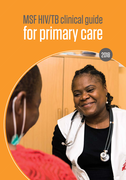
The third edition, released in 2018, has grown to include a total of 18 chapters, contributed by 20 experts and authors from many countries. The goal remains the same: to educate primary care providers on the best practices in TB diagnosis, treatmen
...
The National Tuberculosis Programme (NTP) of Rwanda (known as TB & ORD Division/IHDPC/RBC) is preparing to write their next National Strategic Plan and for this reason Rwanda was selected as a country to received technical assistance (TA) to conduct
...
This revised trainer's guide contains a prototype training schedule for four days. Teaching and learning strategies are highly interactive, using participatory and experiential approach. Training outcomes include developing skills in assessment of clients for risk factors; conduct basic
...
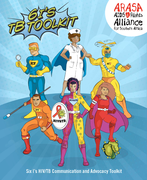
Please download the complete toolkit directly from the website (large size: 24 MB)
PLOS ONE | https://doi.org/10.1371/journal.pone.0203986 October 3, 2018
Integrated Management of Adolescent and Adult Illness (IMAI)
July 2008
The WHO End TB Strategy aims to end the global TB epidemic by 2030, in alignment with Goal 3 of the United Nations (UN) Sustainable Development Goals (SDGs). Member States of the World Health Organi
...

Las personas infectadas por el virus de la inmunodeficiencia humana (VIH) tienen
29 veces más probabilidades de enfermar de tuberculosis (TB) que las personas
sin VIH que viven en el mismo país. La T
...
MMWR. Recommendations and Reports:
December 16, 2005 / 54(RR15);49-55
In 2016 CRS leveraged the robust infrastructure of its large, multi-sectoral orphans and vulnerable children (OVC) program in Nigeria by expanding the program's core mandate to include community childhood TB casefinding, with a focus on highly vulne
...
This document contains a series of desk reviews for the eight ENGAGE-TB priority countries supported by the Global Fund (DRC, Kenya, Indonesia, Mozambique, Myanmar, Nigeria, Pakistan and Tanzania). The document provides a situation assessment and ga
...
Accessed: 10.03.2020
The social protection landscape for people affected by TB in the WHO South-East Asia Region

The WHO South-East Asia (SEA) Region bears a high burden of tuberculosis (TB) and MDR-TB. In 2015, the Region accounted for nearly 200 000 or 35% of the global estimated new RR/MDR-TB c
...
Following review of the latest evidence, WHO recommends that TB-LAMP can be used as a replacement for microscopy for the diagnosis of pulmonary TB in adults with signs and symptoms of
...
Joining efforts to control two trelated global epidemics.
MSF provides treatment for HIV and tuberculosis (TB) in more than 20 countries around the world. The report Burden sharing or burden shifting? How the HIV/TB response is being derailed examines the
...

Accessed: 24.11.2019
Integrated Management of Adolescent and Adult Illness (IMAI)
July 2008
The target audience for this training course is non-clinicians such as Home Based Carers, Community Caregivers, Youth Care Workers, Peer educators, Community Health Workers etc. primarily those who will be providing adherence counselling to clients with HIV,
...
STANDARD OPERATING PROCEDURES
PARTICIPANT GUIDE
This Participant Guide has been designed to assist health facilities and community based non-clinicians to develop skills to provide linkage to care, adherence and retention in care services for chronic conditions
20 April 2022. The response to the COVID-19 pandemic continues to adversely affect essential TB services in many countries. A first report of case studies was published in 2021 comprising 23 examples of innovative interventions implemented by countr
...
Drugs, Diagnostics, Vaccines, Preventive Technologies, Research toward a cure, and immune-based and gene therapies in development
Supplement to the Healthcare Waste Management Toolkit for Global Fund
Practitioners and Policy Makers
SADC Communicable Disease Project
Component 5: Scaling-up Child and Adolescent HIV, TB and Malaria Continuum of Care and Support
DRAFT POST REGIONAL CONSENSUS AND VALIDATION MEETING Oct 2012
The Compendium of data and evidence-related tools for use in TB planning and programming was developed as a companion document to the People-centred framework for tuberculosis programme planning and prioritization – user guide, pu
...

STAATSKOERANT, 5 MEI 2015 No. 38763
No. 38763 GOVERNMENT GAZETTE, 5 MAY 2015
General Notice
Notice 295 of 2015
Department of basic education
National education policy act, 1996 (Act No 27 of 1996)
Call for written submissions from stakeholder bodies and members of the public on Departmen
...
In 2020, the COVID-19 pandemic impacted the world beyond imagination. To date, it has infected more than 135 million people, killed over 2.9 million people, and is projected to plunge up to 115 million people into extreme poverty.1 As countries have gone into lockdown, gender-based violence has incr
...
The WHO Global strategy on human resources for health: workforce 2030 encourages development partners and global health initiatives to leverage their support to health systems in countries to sustainably strengthen the health workforce. To assess the impact of these investments, a methodology was de
...
Das interaktive Befragungs-Instrument in 32 Sprachen ist unter www.tb-screen.ch frei verfügbar. Die Fragen werden von der Fachperson am Bildschirm zusammen mit der befragten Person durchgegangen, wobei im Hintergrund ein Punktescore berechnet wird.
...
Key populations brief.
Key population brief.
Key populations brief
Accessed November 2017
Key Populations Brief
Accessed November 2017
Key populations brief
Accessed 2017
Key popupations brief.
Key populations brief.
Key populations brief.
Key populations brief.
Key populations brief.
Краткое руководство
TB policies in 29 Countries
A survey of prevention, testing and treatment policies and practices
TB policies in 24 Countries
A survey of prevention, testing and treatment policies and practices
Лечение туберкулеза в 24 странах
Исследование диагностической и клинической пра
...
END TB
Second Meeting of th WHO Global Coordination Mechanism (GCM/NCD) Working Group on the inclusion of NCDs in other programmatic areas.
Accessded December 2017
NTP Training Manual
recommended
A compendium of TB REACH case studies, lessons learned and a monitoring and evaluation framework.
Accessed November 2017.
Guidelines for social mobilization
TB and poverty; TB and children; TB and women; TB, migrant
...
Working Document, September 2017
Advocacy, communication and social mobilization for TB control
A Handbook for country programmes
Rapport sur les populations clés.
Key population brief.
Краткое руководство.
Informe sobre poblicationes clave.
Advocacy report March 2011
303100 03/2011 E 1,000
Towards a world free of tuberculosis
Networking for Policy Change: TB/HIV Participant’s Guide
WHO/HTM/TB/2007.384b
“TB is too often a death sentence for people with AIDS. It do
...
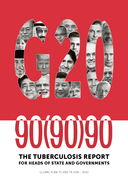
Global Plan to end TB 2016-2020

Annex 1: Measuring progress towards targets
Annex 2: Modelling the impact of the 90-(90)-90 strategy
Annex 3: Investment packages by country setting
Annex 4: Country strategies
Annex 5: Strategic frameworks for research and development for new tools
Annex 6 : Estimating the cost of the 90-(90)-
...
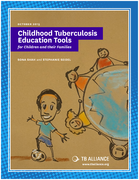
For Children and their Families
October 2015
Overcoming Barriers to TB Control
Training Curriculum
August 2011
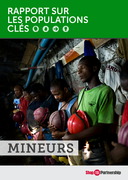
Rapport sur les populations clés.
В этом разделе рассматривается недостаток доступа к медицинской помощи и непрерывности ее оказания внутри и вокруг мест добычи, а также политики, которые препятст
...
Informe sobre poplaciones clave.
Informe sobre poblaciones clave.
Evidence from two pilot projects in India.
Очень часто дети это уязвимая под-группа внутри уже уязвимых групп населения. Поэтому необходимо, чтобы политики, гражданское общество и медицинские работники без
...