
Filter
1764
Text search:
Prevention
of
mother-to-child
transmission
Featured
112
610
Language
Document type
1398
140
128
24
19
19
14
11
7
2
1
1
Countries
87
67
64
64
58
56
54
52
48
46
44
43
42
38
36
34
28
26
24
24
24
23
20
18
17
15
13
13
12
12
10
10
10
9
8
7
7
7
6
6
6
6
6
5
5
5
4
4
4
3
3
3
3
3
3
3
3
2
2
2
2
2
2
2
2
2
1
1
1
1
1
1
1
1
1
1
1
1
1
1
1
1
1
1
1
1
1
Authors & Publishers
Publication Years
Category
965
110
106
49
45
28
3
Toolboxes
451
66
20
16
16
15
14
13
13
12
11
11
10
8
7
5
4
3
3
1
Human African trypanosomiasis (HAT) has been an alarming global public health issue. The disease affects mainly poor and marginalized people in low-resource settings and is caused by two subspecies of haemoflagellate parasite, Trypanosoma brucei and
...
Reference Guide Version 2. Revised. The Nutrition Program Design Assistant is a tool to help organizations design the nutrition component of their community-based maternal and child health, food security, or other development program. The tool focus
...
The checklist and reference list has two parts: high-level cross-cutting content (Part A) and specific programme content (Part B). Part A applies to all countries and contains situation and response analysis, the NSP development process, the goal, targets and priority-setting
...
La enfermedad de Chagas, también llamada tripanosomiasis americana, sigue siendo endémica en 21 países de América Latina. Sin embargo, como consecuencia de las migraciones, la urbanización, la intensificación del turismo, la modificación de las estrategias agrícolas y el cambio climático, l
...
This study examines the ability of political, legal, health, and communities to respond to gender-based violence in Kigali, Rwanda.
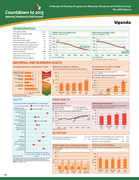
A Decade of Tracking Progress for Maternal, Newborn and Child Survival The 2015 Report

Supplement Article
Antiretrovirals to Prevent HIV Infection • CID 2015:60 (Suppl 3) • S159 - S160
The guidelines acknowledge that overcrowding, unhygienic conditions and high inmate turn over contribute to the spread of infectious diseases within correctional facilities. The document states that voluntary HIV counselling and testing must be offe
...
Biennial Report. SUBMITTED TO THE UNITED NATIONS GENERAL ASSEMBLY SPECIAL SESSION ON HIV AND AIDS
Reporting period: January 2012 – December 2013


Extract from report of GACVS meeting of 3-4 December 2009, published in the WHO Weekly Epidemiological Record on 29 January 2010

Joint United Nations Programme on HIV/AIDS
Mission report April 2016
Significant progress has been made in the eradication of three priority diseases in the African Region, as a result of extensive collaboration between the Regional Office, WHO country offices and co
...

District Level M & E Training and Reference Material for Primary Health Care Programmes
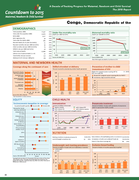
The Countdown country profile presents in one place the best and latest evidence to enable an assessment of a country’s progress in improving reproductive, maternal, newborn, and child health (RMNCH)


These guidelines aim to guide all health care providers in Myanmar, accommodating the situation of different settings in the context of progressive decentralization
...
· Relevant interventions
· HIV country profiles
· Adolescents country profiles
Meeting report, 25-26 September 2017 Copenhagen, Denmark
Accessed June 17,2019
With this World Health Day, WHO is drawing attention to a group of diseases that are spread by insects and other vectors, the heavy health and economic burdens they impose, and what needs to be done to reduce these burdens. Many
...
5th edition.
Kenya: Guidelines on use of antiretroviral drugs for treating and preventing HIV infection
recommended
2018 Edition
Essential Drug list on page 36!!
J Hepatol (2017), http://dx.doi.org/10.1016/j.jhep.2017.03.021
The Lay Counselor Cadre in Botswana
AUDIT REPORT NO. 9-000-11-001-P | February 24, 2011
This concept note describes the methods used to assess the prevalence of any HIVDR and HIVDR by PMTCT exposure among children less than 18 months of age using remnant dried blood spot specimens from
...

Reporting Period 2010-2011
January – December 2014
Republic of Moldova South‐East European Region National Coordination Council
Declaration of Commitment of the Uni
...
Accessed: 24.09.2019
UNAIDS Cosponsor 2015
This project aimed to reduce the risk of vector-borne infection with Chagas disease by
controlling triatomine bugs, the vectors transmitting the parasite of Chagas disease, and
establishing an e
...

8–18 December 2015
Programmatic update
April 2012
Executive Summary
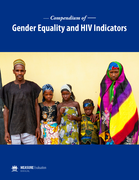
The intended purpose of this compendium is to provide program managers, organizations, and policy makers with a menu of indicators to better “know their HIV epidemic/know their response” from a
...
This new edition and fully updated publication replaces the 2012 UCG and is being circulated free of charge to all public and private sector prescribers, pharmacists, and regulatory authorities in the country
District Level M & E Training and Reference Material for Primary Health Care Programmes
This report presents the findings of the Estimating the Size of Populations through a Household Survey (ESPHS) study that took place in 2011. The study utilized a single household survey to estimate
...
This guide presents new knowledge and guidelines on the provision of care to persons living with HIV/AIDS, in accordance with the last guidelines of the World Health Organization (WHO) published in
...
The Road Map outlines various strategies which will guide policy makers, development partners, training institutions and service providers in supporting Government efforts towards the attainment of MDGs related to maternal and neonatal health.
The Capacity Project used the Learning for Performance (LFP) approach to develop the family planning (FP), HIV/AIDS and gender components included in the competency-based A1 nursing and midwifery pre-service curricula. LFP was also used to adapt the Rwanda national FP curriculum to an on-the-job tra
...

USAID/KENYA Evaluation Services and Program Support (ESPS)
The United States Agency for International Development (USAID) has a solid track record of supporting health and development initiatives in Kenya. AIDS, Population, and Health Integrate ...
The United States Agency for International Development (USAID) has a solid track record of supporting health and development initiatives in Kenya. AIDS, Population, and Health Integrate ...
Programme Brief
Accessed: 21.08.2019
16-17 November 2017,
Hotel Djeugua, Yaoundé, Cameroon
Meeting Report December 2017
Training for Health Care Providers
Facilitators’ Manual
Version 3.0
Accessed: 24.11.2019
Choko AT et al. Journal of the International AIDS Society 2017, 20:21610 http://www.jiasociety.org/index.php/jias/article/view/21610 | http://dx.doi.org/10.7448/IAS.20.1.21610
This situation analysis has gathered information about the current state of AMR, contributing factors and antimicrobial use in Zimbabwe from the human, animal, agricultural and environmental sectors. Data has been gathered from different sectors suc
...
