Filter
1935
Text search:
PCR
Featured
257
470
Language
Document type
884
475
241
83
82
76
36
21
15
12
5
3
2
Countries
82
80
58
52
48
45
44
40
38
33
33
31
31
30
29
27
26
26
25
25
24
24
24
23
23
21
20
20
20
19
19
18
17
17
15
14
14
13
13
12
12
12
12
11
11
11
10
10
10
9
9
9
8
8
8
7
7
6
6
6
6
6
6
5
5
5
4
4
4
3
3
3
3
3
3
3
3
3
3
3
3
3
2
2
2
2
2
2
2
2
2
2
2
2
2
1
1
1
1
1
1
1
1
1
1
1
1
1
1
1
1
1
1
1
1
1
1
1
1
1
1
1
Authors & Publishers
Publication Years
Category
906
216
55
50
26
22
21
1
Toolboxes
537
162
124
115
112
102
81
34
22
22
20
19
16
14
6
6
6
4
2
2
1
1
Interim Recommendation published 19 September 2014. These recommendations reflect current understanding of Ebola virus disease (EVD) and are intended for national laboratory staff performing diagnostic testing to detect Ebola virus.
Objectif du module : identifier les caractéristiques du virus, ses caractères virologiques, diagnostique au laboratoire
Objectif du module : Identifier la structure du virus Ebola, la pathogénèse, reconnaitre un cas suspect, faire les prélèvements et le diagnostic de certitude,acheminement des échantillons

Presentation is current through November 21, 2014 and will be updated every Friday by 5pm. For the most up-to-date information, please visit www.cdc.gov/ebola.
*Presentation contains materials from CDC, MSF, and WHO
The New England Journal of Medicine has a perspective on Ebola Virus Disease in West Africa — Clinical Manifestations and Management, written by authors who have cared for more than 700 patients with EVD between August 23 and October 4, 2014, in the largest Ebola treatment unit in Monrovia, Liberi
...
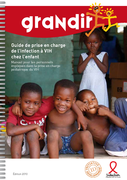
Manuel pour les personnels impliqués dans la prise en charge pédiatrique du VIH
Semi-annual Update
WHO Guideline. Since 2010, countries in the meningitis belt have started to introduce a new serogroup A meningococcal conjugate vaccine conferring individual protection and herd immunity. Following the successful roll-out of this vaccine, epidemics due to Neisseria meningitidis serogroup A (NmA) are
...
Module pour la formation de formateur
Euro Surveill. 2015 Mar 26;20(12). pii: 21073.
Morbidity and Mortality Weekly Report (MMWR) Early Release Vol. 64 ; 1 May 2015
Accessed 7 July 2015
Accessed 7 July 2015
Accessed 14 July 2015




Interim Guidance. This document provides guidance for: screening and triage of pregnant women in the context of an Ebola outbreak; infection prevention and control (IPC) precautions for pregnant women at risk of EVD transmission during childbirth and complication management; management of pregnant
...

J Infect Dis. (2012) 206 (suppl. 1): S61-S67
Influenza data gaps in sub-Saharan Africa include incidence, case fatality, seasonal patterns, and associations with prevalent disorders. The authors found that the burden of influenza was small during 2007–2010 in this paediatric hospital in Kenya. In
...
The BBV/STI Glossary is a resource for interpreters, translators and others who work in a health setting. It offers an extensive list of English terms related to sexual health and blood-borne viruses (such as hepatitis), with easy to understand definitions.
Accessed 13th of November 2015.
The document covers: introduction on contact tracing in the Ebola response; general considerations for contact tracing; case definition; planning and preparation; personnel; implementation, and tools for contact tracing.
Directives relatives aux situations d’urgence
Recommandations provisoires.
Néanmoins, les femmes enceintes atteintes d’une maladie à virus Ebola évolutive et celles ayant survécu à une telle maladie sans perdre l’enfant à naître sont susceptibles de transmettre le virus pendant l’accouchement et/ou la prise en charge des éventuel
...
Annex to Selection and use of Ebola in vitro diagnostic assays
Interim Guidance.
A number of medical problems have been reported in survivors, including mental health issues. Ebola virus may persist in some body fluids, including semen. Ebola survivors need comprehensive support for the medical and psychosocial challenges they face and also to minimize the ...
A number of medical problems have been reported in survivors, including mental health issues. Ebola virus may persist in some body fluids, including semen. Ebola survivors need comprehensive support for the medical and psychosocial challenges they face and also to minimize the ...

WHO Zika Virus Fact Sheet (Portuguese)
Updated: January 2016
Interim guidelines developed by CDC for healthcare providers in the United States caring for infants born to mothers who while pregnant traveled to or resided in an area with Zika virus transmission. These guidelines include recommendations for the evaluation, testing, and management of infants with
...
A printable copy of the article published in Morbidity and Mortality Weekly Report (MMWR) can be found on the CDC Homepage. Follow the Download Link for redirection to CDC.
Article from the CDC Health Alert Network

WHO Fact sheet on Zika virus (Spanish)
Updated: January 2016
El propósito de este documento es brindar a los profesionales de salud que asisten a mujeres gestantes, información actualizada en base a las mejores evidencias disponibles para prevenir la infección, diagnosticarla oportunamente, sugerir tratamiento, dar seguimiento a las embarazadas, así c
...
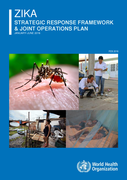
The strategy focuses on mobilizing and coordinating partners, experts and resources to help countries enhance surveillance of the Zika virus and disorders that could be linked to it, improve vector control, effectively communicate risks, guidance and protection measures, provide medical care to thos
...
Bulletin of the World Health Organization 2016. doi: http://dx.doi.org/10.2471/BLT.16.171082
Objective: To describe the temporal and geographical distribution of Zika virus infection, and associated neurological disorders, from 1947 to February 2016.
Breastfeeding in the context of Zika virus
recommended
The purpose of this document is to provide interim recommendations to guide breastfeeding practices in the context of Zika virus. A systematic review of evidence will be conducted in March 2016 to revise and update these recommendations. Also available in arabic and chinese. Please download directly
...
Updated 6 September 2016. This guidance has been developed to provide advice on the prevention of potential sexual transmission of Zika virus. The primary transmission route of Zika virus is via the Aedes mosquito. However, sexual transmission of Zika virus may also be possible, with limited evidenc
...
aktualisiert am 14.03.2016
Actualização das orientações provisórias 7 de Junho de 2016
Actualización de las orientaciones provisionales 7 de junio de 2016
Lignes directrices provisoires actualisées 7 juin 2016
The aim of this handbook is to provide network members and other laboratories involved in the diagnosis of tuberculosis, with an agreed list of key diagnostic methods and their protocols in various areas of TB diagnosis, ranging from microbiological diagnosis of active TB to the diagnosis of latent
...
Zika and dengue viruses remain significant public health threats. These viruses share the same Aedes (Stegomyia) mosquito vectors and geographic distributions but infections cannot be readily distinguished clinically and need to be differentiated from each other, and from other circulating arboviral
...
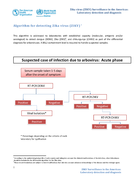
This algorithm is addressed to laboratories
with established capacity(molecular, antigenic and/orserological) to detect dengue (DENV), Zika (ZIKV), and chikungunya(CHIKV) as part of the differential diagnosis for arborviruses. A BSL2 containment level is required to handle suspected samples.
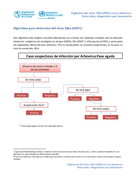
Este algoritmo está dirigido a aquellos laboratorios que cuentan con capacidad instalada para la detección (molecular, antigénica y/o serológica) de dengue (DENV), Zika (ZIKV) y chikungunya(CHIKV),y como parte del diagnóstico diferencial para Arbovirus. Para la manipulación de muestras sosp
...

WHO Factsheet (Portuguese version). January 2016
The intention of this document is to clarify and outline the steps to effective cholera surveillance. It discusses when,
where and why surveillance for cholera is needed and how to establish a useful and cost-effective surveillance
system for cholera. To make comments, corrections and additions,
...
This document aims to present an algorithm for deciding whom to test and provide guidance on the laboratory tests for Zika virus infection diagnosis in order to support clinical diagnostic and case reporting through surveillance among EU Member States. The algorithm is not intended for clinical man
...
El reciente aumento de los casos de microcefalia y de otros trastornos neurológicos posiblemente asociados a la infección por el virus de Zika ha provocado un aumento de la demanda de pruebas de laboratorio para detectar dicha infección. Los grupos prioritarios para la realización de pruebas di
...
O recente aumento dos casos de microcefalia e outras patologias neurológicas potencialmente associadas à infecção pelo vírus Zika provocou um aumento da procura de testes laboratoriais para detectar a infecção. Os grupos prioritários para os testes de diagnóstico devem ser
indivíduos sin
...
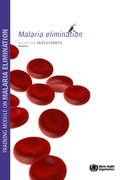
This Training module on malaria elimination has been developed by WHO to support health professionals in planning, managing, monitoring and evaluating malaria elimination programmes
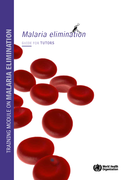
This Training module on malaria elimination has been developed by WHO to support health professionals in planning, managing, monitoring and evaluating malaria elimination programmes.
Supporting exercises: These files are necessary for participants to complete a number of exercises listed in the man
...
Methodological field approaches for scientists with a basic background in entomology to prepare and implement a yellow fever entomological assessment during outbreaks
Working document from an informal consultation of experts. A Protocol for risk assessment at the field level. The purpose of document is to provide guidance on the methodology to be used for assessing, at field level, the yellow fever virus circulation in areas at risk, and is primarily intended fo
...
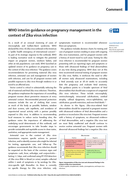
The Lancet Global Health: DOI: http://dx.doi.org/10.1016/S2214-109X(16)30098-5
Open Access
Bulletin of the World Health Organization; http://dx.doi.org/10.2471/BLT.16.176677