
Filter
272
Text search:
ODA
Featured
7
62
Language
Document type
132
117
8
7
2
2
2
1
1
Countries
57
9
8
6
6
5
5
5
5
4
4
4
4
3
3
3
3
3
3
3
3
3
3
3
2
2
2
2
2
2
2
2
2
2
1
1
1
1
1
1
1
1
1
1
1
1
1
1
1
1
1
1
Authors & Publishers
Publication Years
Category
81
13
6
4
2
Toolboxes
102
16
14
11
9
8
7
6
5
5
3
2
2
2
1
1
1
1
1
What near-term climate impacts should worry us most?
Supporting the most exposed and vulnerable societies to reduce
regional and global climate risks
English Analysis on World about Agriculture, Climate Change and Environment, Drought, Flood and more; published on 27 Oct 2021 by GCA
Tuberculosis (TB) is an infectious disease that usually affects the lungs, though it can affect any organ in the body. It can develop when bacteria spread through droplets in the air. TB can be fatal, but in many cases, TB is preventable and treatable. This report examines the human rights impact of
...
National-scale databases and reliability issue
Background report
Inferences through Machine Learning.Background Report.
What are the major origins and drivers of different types of conflict? Sorting out the main
causes of conflict and war is difficult and often shaped by ideological believes. Even today,
historians and political scientists have discussions on
...
The American Journal of Tropical Medicine and Hygiene Volume 106: Issue 1 p.12-14.he piece highlights a body of research that suggests tiny plastic particles could disrupt immune and endocrine systems, damage organs, and cause other health problems. “Without a fundamental reimagining of global
...
Briefing Note no. 80 November 2015
Transformation and outlook
WHO Technical Series 971
Projects from around the world
Pollution and health: a progress update
recommended
The Lancet Planetary Health Published:May 17, 2022DOI:https://doi.org/10.1016/S2542-5196(22)00090-0
Every year pollution causes 9 million deaths—1 in every 6 deaths worldwide, according to a Lancet Commission on pollution and health.
While the number of deaths caused by household air pollution a
...
Atlas of African Health Statistics 2022: Health situation analysis of the WHO African Region
Since 2019, we have been implementing Phase 2 of the regional Transformation Agenda, which informs and aligns with the global WHO Transformation, to ensure WHO is accountable, driven by re- sults and provid
...
This Guidance Note is meant to help protection cluster coordinators apply nexus approaches in a practical way by, providing concrete steps and means to address prevalent or longstanding protection issues, risk patterns, trends and chronic vulnerabilities. The guidance calls for a practical, problem-
...
This project aimed to reduce the risk of vector-borne infection with Chagas disease by
controlling triatomine bugs, the vectors transmitting the parasite of Chagas disease, and
establishing an epidemiological surveillance system with community participation.
Africa is off track to reach the Sustainable Development Goals by 2030 and lags behind in building resilient health systems
and health security, against a backdrop of limited resources. The world envisaged a significant role for governments
in funding the Sustainable Development Agenda, but inadeq
...
This paper has been prepared to inform discussion at the conference “Beating the DRUM - Domestic Resource Use and Mobilization for accelerating progress towards SDG3,”. Many countries face critical shortfalls in domestic resource use and mobilization (DRUM) for health, threatening to push health
...
Financing Global Health 2016: Development Assistance, Public and Private Health Spending for the Pursuit of Universal Health Coverage presents a complete analysis of the resources available for health in 184 countries, with a particular focus on development assistance for health (DAH). DAH was estim
...
The 2021 Financing for Sustainable Development Report responds to the request made by Member States to review the impact of the COVID-19 pandemic on nancing for sustainable development, and to propose recommendations to rebuild better. The report underlines the need for policy actions to ensure e e
...
The UK government hosted the Global Vaccine Summit on June 4, 2020 under the patronage of the Rt. Hon. Boris Johnson, Prime Minister of the United Kingdom of Great Britain and Northern Ireland. The meeting was held by videoconference in light of the ongoing COVID-19 pandemic. 2. The Summit brought
...
AidData has developed a set of open source data collection methods to track project-level data on suppliers of official finance who do not participate in global reporting systems. This codebook outlines the version 1.1 set of TUFF procedures that have been developed, tested, refined, and implemented
...
This codebook outlines the set of TUFF procedures that have been developed, tested, refined, and implemented by AidData staff and affiliated faculty at the College of William & Mary. We initially employed these methods to achieve a specific objective: documenting the known universe of officially fin
...
Little is known about foreign aid provided by private donors. This paper contributes to closing this research gap by comparing the allocation of private humanitarian aid to that of official humanitarian aid awarded to 140 recipient countries over the 2000-2016 period. We construct a new database tha
...
Unfortunately, current data available on SDG financing are not sufficient to quantify the distribution of financing for the SDGs.
AidData’s methodology for measuring financing to the SDGs attempts to fill this gap by analyzing development project documentation to estimate project-level contributi
...
Background: Mental health has recently gained increasing attention on global health and development agendas, including calls for an increase in international funding. Few studies have previously characterized official development assistance for mental health (DAMH) in a nuanced and differentiated ma
...
Strengthening resource tracking and monitorig health expanditure
Climate-induced water insecurity poses one of the biggest threats to humanity and will lead to more hunger, disease and displacement
Oxfam water engineers are having to drill deeper, more expensive and harder-to-maintain water boreholes used by some of the poorest communities around the world, mo
...
Im Hinblick auf die Finanzierung von Gesundheit im Allgemeinen und von Kindergesundheit im Speziellen ist zunächst zu berücksichtigen, ob die Gelder aus öffentlichen oder privaten Quellen stammen. Denn daraus ergeben sich grundsätzliche Unterschiede. Da private Krankenversicherungen gewinnorient
...

The Commission on Macroeconomics and Health (CMH) was established by World Health Organization Director-General Gro Harlem Brundtland in January 2000 to assess the place of health in global economic development. Although health is widely understood to be both a central goal and an important outcome
...
In In recent years, China has increased its international engagement in health. Nonetheless, the lack
of data on contributions has limited efforts to examine contributions from China. Existing estimates that track
development assistance for health (DAH) from China have relied primarily on one data
...
World Humanitarian Data and Trends presents global- and country-level data-and-trend analysis about humanitarian
crises and assistance. Its purpose is to consolidate this information and present it in an accessible way, providing policymakers, researchers and humanitarian practitioners with an evid
...
What countries need: Investments needed for 2010 targets
Fünfte zivilgesellschaftliche Bestandsaufnahme des politischen und
finanziellen Engagements der Bundesregierung für die UN-Ziele
zur weltweiten Gesundheitsversorgung und HIV-Bewältigung
This article analyzes the impact of the COVID-19 pandemic on foreign aid. Using examples from Canadian foreign aid, it argues that, despite the terrible toll it is exacting, the crisis has accelerated some significant positive pre-existing trends, both by destabilizing the perception of aid as flowi
...
A global Pandemic, Preparedness and Response (RRR) architecture
A year ago, the second Special Session of the World Health Assembly (WHASS) unanimously agreed to start a diplomatic process for a new binding instrument aimed at ensuring the international community is better prepared for the next health emergencies. The establishment of an Intergovernmental Negoti
...
This report provides an analysis of donor government funding to address the HIV response in low- and
middle-income countries in 2022, the latest year available, as well as trends over time. It includes both
bilateral funding from donors and their contributions to the Global Fund to Fight AIDS, Tub
...
The annual Development Co-operation Report brings new evidence, analysis and ideas on
sustainable development to members of the OECD Development Assistance Committee (DAC) and the international community more broadly. The objectives are to promote best practices and innovation in development co-ope
...
State of the Climate in Asia 2023
recommended
Asia remained the world’s most disaster-hit region from weather, climate and water-related hazards in 2023. Floods and storms caused the highest number of reported casualties and economic losses, whilst the impact of heatwaves became more severe, according to a new report from the World Meteorolog
...
This document highlights landmarks and key milestones in the development and implementation of the global agenda for noncommunicable diseases (NCDs) over the last two decades. It summarizes where the world was in 2000, where it is in 2022, and where the world wants to be in terms of NCD prevention a
...
This brief highlights the urgency of addressing gender inequalities across the Rio Conventions, provides examples of where progress has been made, and identifies clear entry points for addressing gender equality considerations across the Conventions. It makes recommendations for actions to accelerat
...
TOWARDS 30 YEARS OF THE BEIJING DECLARATION AND PLATFORM FOR ACTION: UNITE TO END VIOLENCE AGAINST WOMEN
Concept Note
As of December 2018, CEPI has secured more than USD $747million towards its USD $1billion funding target, with financial support provided by the Bill & Melinda Gates Foundation, the Wellcome Trust, the European Commission, and the governments of Australia, Belgium, Canada, Germany, Japan, Norway, an
...
Background: Disbursements of development assistance for health (DAH) have risen substantially during the past several decades. More recently, the international community's attention has turned to other international challenges, introducing uncertainty about the future of disbursements for DAH.
Meth
...
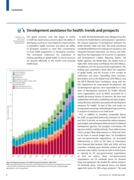
The global economic crisis that began to unfold in 2008 has raised serious concerns about the ability of developing countries to meet targets for improvements in population health outcomes, and about the ability of developed countries to meet their commitments to fund health programmes in developing
...
Background: Investing in the health workforce is key to achieving the health-related Sustainable Development Goals. However, achieving these Goals requires addressing a projected global shortage of 18 million health workers (mostly in low- and middle-income countries). Within that context, in 2016,
...
Background: Sustainable Development Goal (SDG) 3 aims to “ensure healthy lives and promote well-being for all at all ages”. While a substantial effort has been made to quantify progress towards SDG3, less research has focused on tracking spending towards this goal. We used spending estimates to
...
Following publication of the original article, the authors reported a conversion error that concerned the estimated amounts of development assistance for health (DAH) for 2012–2015; when the authors converted the current prices of 2012–2015 to the constant prices of 2016 using the gross domestic
...
Background: Donor countries in the Middle East and North Africa (MENA) including Saudi Arabia, Kuwait and United Arab Emirates (UAE) have been among the largest donors in the world. However, little is known about their contributions for health. In this study, we addressed this gap by estimating the
...
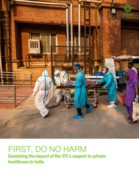
This report examines the support to private healthcare provision in India by the World Bank’s private sector arm, the International Finance Corporation (IFC). Despite supporting private healthcare in the country since 1997, no healthcare results for lending and investments have been disclosed sinc
...
The International Conference on Population and Development in 1994 set targets for donor funding to support family planning programmes, and recent initiatives such as FP2020 have renewed focus on the need for adequate funding to rights-based family planning. Disbursements supporting family planning
...
Background: The need for sufficient and reliable funding to support health policy and systems research (HPSR) in low- and middle-income countries (LMICs) has been widely recognised. Currently, most resources to support such activities come from traditional development assistance for health (DAH) don
...
Prior research has considered donor funding for developing world health by recipient and donor country but not by disease. Examining funding by disease is critical since diseases may be in competition with one another for priority and donors may be making allocation decisions in ways that do not cor
...
Financing Global Health 2014 is the sixth edition of this annually produced report on global health financing. As in previous years, this report captures trends in development assistance for health (DAH) and government health expenditure (GHE). Health financing is one of IHME’s core research areas
...

A general consensus exists that as a country develops economically, health spending per capita rises and the share of that spending that is prepaid through government or private mechanisms also rises. However, the speed and magnitude of these changes vary substantially across countries, even at simi
...
Introduction
In 2017, development assistance for health (DAH) comprised 5.3% of total health spending in lowincome countries. Despite the key role DAH plays in global health-spending, little is known about the characteristics of assistance that may be associated with committed assistance that is a
...
Background: The amount of resources, particularly prepaid resources, available for health can affect access to health care and health outcomes. Although health spending tends to increase with economic development, tremendous variation exists among health financing systems. Estimates of future spendi
...
The accounting framework for health care financing is a key component of A System of Health Accounts 2011, published by OECD, Eurostat and WHO in October 2011.1 The framework makes health accounts more adaptable to rapidly evolving health financing systems, further enhances crosscountry comparabilit
...
Background: Foreign aid continues to play an essential role in health sector development in low-resource countries, particularly in terms of providing a vital portion of their health expenditures. However, the relationship between foreign aid allocation and malaria policy formulation and/or implemen
...

The development of this draft Proposed programme budget 2022–2023 comes at a unique moment for WHO. The world is in the grip of the coronavirus disease (COVID-19) pandemic and faces health, social and economic consequences on an unprecedented scale. Although it is not known when the COVID-19 pande
...
The biennium 2020–2021 has revealed more clearly than ever the need for a strong, credible and independent WHO on the world stage. The coronavirus disease (COVID-19) crisis has demonstrated the fundamental importance of the global detection, response and coordination roles that only WHO can play a
...
The Seventy-fifth World Health Assembly through a decision on sustainable financing, adopted the recommendations of the Member States Working Group on Sustainable Financing, contained in Appendix 2 of the Working Group’s report to the Seventy-fifth World Health Assembly. As part of the recommendat
...
The thirty-seventh meeting of the Programme, Budget and Administration Committee was held in Geneva from 25 to 27 January 2023 and chaired by Ms Aishath Rishmee (Maldives). The Committee adopted its agenda and agreed its programme of work. In his opening remarks, the Director-General emphasized the
...
Background: Foreign aid has been shown to be favourably biased towards small countries. This study investigated whether country size bias also occurs in national malaria policy and development assistance from international agencies. Methods: Data from publicly available sources were collected with c
...

The COVID-19 pandemic has had unprecedented public health, economic, and social impacts on the international community, and prompted an unprecedented range and size of policy actions globally. Collective efforts, at national, regional, and global levels, were called for to contain and mitigate such
...
The Financing for Sustainable Development Report is produced in collaboration with over 60 agencies of the United Nations system and other international organizations. It brings together a wide range of expertise and perspectives to provide recommendations for countries and the international communi
...
A variety of international organizations are involved in mobilizing resources from both public and private
sources and using them to extend development assistance to low-and middle-income countries around the world. They provide country-focused financial and technical assistance to developing count
...
The EU Facility has a total budget of €6 billion for humanitarian and development actions: €3 billion for 2016-2017 and €3 billion for 2018-20191. Both tranches combined, all operational funds have been committed, €4.7 billion contracted and more than €3.4 billion disbursed. The operationa
...
We created a dataset to generate estimates of donor-reported ‘official development assistance’ and private grants (ODA+) to reproductive, maternal, newborn and child health (RMNCH) by donor, recipient country and activity type over the period 2003–2013. We collected disbursement information fr
...
