
Filter
1092
Text search:
Mediterranean
Featured
127
222
Language
Document type
399
327
145
64
54
32
23
19
16
9
1
1
1
1
Countries
101
42
34
28
25
12
12
12
11
10
9
9
9
8
8
7
7
7
7
7
7
7
7
7
6
6
6
5
5
5
5
5
5
5
4
4
4
4
4
4
4
4
3
3
3
3
3
3
3
3
3
3
2
2
2
2
2
2
2
2
2
2
1
1
1
1
1
1
1
1
1
1
1
1
1
1
1
1
1
1
1
1
1
1
1
1
Authors & Publishers
Publication Years
Category
161
139
119
81
41
25
20
Toolboxes
133
105
85
69
57
54
48
47
47
45
43
42
31
31
22
19
16
13
13
11
7
5
2
1
1
Networking for Policy Change: TB/HIV Participant’s Guide
WHO/HTM/TB/2007.384b
“TB is too often a death sentence for people with AIDS. It does not have to be this
way.”
-Nelson Mandela, International conference on HIV and AIDS, Bangkok, Thailand, July 2004.
WHO/HTM/TB/2007.384a
“TB is too often a death sentence for people with AIDS.
It does not have to be this way.”
-Nelson Mandela, International conference on HIV /AIDS, Bangkok, Thailand, July 2004
Reprinted from Australian Family Physician Vol. 39, No. 10, october 2010
Eur Respir J 2016; 48: 808–817 | DOI: 10.1183/13993003.00840-2016
Global cardiovascular disease (CVD) burden is high and rising, especially in low-income and middle-income countries (LMICs). Focussing on 45 LMICs, we aimed to determine (1) the adult population’s median 10-year predicted CVD risk, including its variation within countries by socio-demographic char
...

Disease outbreak news
Mental Health Atlas 2020
recommended
The Mental Health Atlas, released every three years, is a compilation of data provided by countries around the world on mental health policies, legislation, financing, human resources, availability and utilization of services and data collection systems. It serves as a guide for countries for the de
...

The aim of these Guidelines is to provide a framework for the conservation and sustainable use of plants in medicine. To do this, the Guidelines describe the various tasks that should be carried out to ensure that where medicinal plants are taken from the wild, they are taken on a basis that is sust
...

The Global Vaccine Action Plan (GVAP) 2011-2020, endorsed by Member States during the May 2012 World Health Assembly, has set ambitious targets to improve access to immunization and tackle vaccine-preventable diseases. This responsibility has been translated into firm commitments in February 2016, t
...
A new formulation of a drug to prevent excessive bleeding following childbirth could save thousands of women’s lives in low- and lower-middle-income countries, according to a study led by the World Health Organization (WHO) in collaboration with MSD for Mothers and Ferring Pharmaceuticals.
Curren
...

Technical report
This manual aims to provide information about the methods for investigating outbreaks of hepatitis E, and measures for their prevention and control. In addition, the manual gives information about the causative agent – known as the hepatitis E virus (HEV) – its epidemiology ...
This manual aims to provide information about the methods for investigating outbreaks of hepatitis E, and measures for their prevention and control. In addition, the manual gives information about the causative agent – known as the hepatitis E virus (HEV) – its epidemiology ...

The Strategic Framework for Emergency Preparedness is a unifying framework which identifies the principles and elements of effective country health emergency preparedness. It adopts the major lessons of previous initiatives and lays out the planning and implementation process by which countries can
...
The Government of the Democratic Republic of the Congo announced today that preliminary laboratory results indicate a cluster of cases of Ebola virus in North Kivu province. The announcement was issued little more than a week after the Ministry of Health declared the end of an outbreak in Equateur P
...

The primary audience for this guidance is persons
working directly in vector-borne disease prevention
and control, including programme managers,
researchers and field workers. A brief technical
background is provided for the benefit of persons
without expertise in vector-borne diseases; readers
...

The main objective of the malaria prevention and control programme in Somalia is to prevent mortality and reduce morbidity due to malaria. The groups most vulnerable to the disease, children aged under 5 years and pregnant women, are especially targeted. Effective case management - early diagnosis a
...
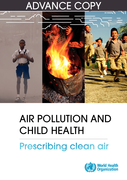
This report summarizes the latest scientific knowledge on the links between exposure to air pollution and adverse health effects in children. It is intended to inform and motivate individual and collective action by health care professionals to prevent damage to children’s health from exposure to
...
Disease outbreak news 30 October 2018
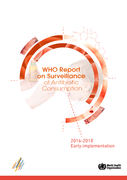
2016-2018 Early implementation,
This report presents 2015 data on the consumption of systemic antibiotics from 65 countries and areas, contributing to our understanding of how antibiotics are used in these countries. In addition, the report documents early efforts of the World Health Organization (
...
COP24 special report: health and climate change
recommended
Exposure to air pollution causes 7 million deaths worldwide every year and costs an estimated US$ 5.11 trillion in welfare losses globally. In the 15 countries that emit the most greenhouse gas emissions, the health impacts of air pollution are estimated to cost more than 4% of their GDP. Actions to
...
Data on the essential building blocks of mental health systems, including mental health
governance, financing, service delivery, human resources and information, are reported. For
mental health planning, it is important to know not only the level of resources in these six areas,
but also how thos
...
Распространенность депрессивных расстройств и их роль в формировании различных вариантов патологии человека обусловливают актуальность поиска новых подходов к
...
Out of the shadows
Petersen et al. Int J Ment Health Syst (2016) 10:30 DOI 10.1186/s13033-016-0060-z
1. Provide treatment for mental disorders in primary care
2. Ensure wider accessibility to essential psychotropic drugs
3. Provide care in the community
4. Educate the public
5. Involve communities, families and consumers
6. Establish national policies, programmes and legislation on mental heal
...
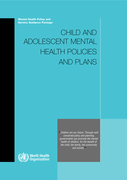
Mental Health Policy and Service Guidance Package
Languages: Arabic, English, French, Chinese, Russian
All health-care workers require clear and comprehensive training and education on the importance of hand hygiene, the "My 5 Moments for Hand Hygiene" approach and the correct procedures for handrubbing and handwashing. The following tools and resources are meant to support bridging the knowledge gap
...
For those passionate about advancing public health education in their medical schools
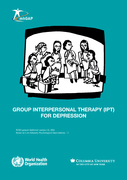
WHO recommends interpersonal therapy (IPT) as a possible first line treatment for depression. With this new manual, the World Health Organization (WHO) gives guidance on the use of interpersonal therapy (IPT) using a 8 session group protocol. The manual - which is part of WHO’s mhGAP programme - d
...
The global burden of disease (GBD) study provides information about fatal and non-fatal health outcomes around the world.
The objective of this work is to describe the burden of mental disorders among children aged 5–14 years in each of the six regions of the World Health Organisation. Data come
...
The ASSIST package is developed to help the primary health professionals to detect and manage substance use and related problems in primary and general medical care settings.
Download the ASSIST screening test version 3.0 and feedback card
The ASSIST screening test version 3.0 is availa
...
This ten year global plan for measles and rubella outlines the strategy that needs to be fully implemented to achieve the measles and rubella goals endorsed by the World Health Assembly. The plan sets out the: vision, goals and targets for the 2011-2020 period, recommended strategies, guiding princi
...
The document describes the use of strategic information at various stages of the response in the context of strengthening broader health information systems. Strategic information can be defined as data collected at all service delivery and administrative levels to inform policy and programme decisi
...
Meeting Report
Bangkok, Thailand 8-11 August 2016
The objective of this briefis to set outlinkages between food safety and the Sustainable Development Goals(SDGs), to identify priority issues,and to suggest how investments in food safety can help attain SDGs.

The ICOPE guidance for person-centred assessment and pathways in primary care (ICOPE Handbook) helps community health and care workers put the recommendations outlined in the ICOPE Guidelines into practice. The Handbook assists with setting person-centred goals, screening for loss in a range of doma
...
The ICOPE Implementation Framework provides a score card to help assess the overall capacity of health and social care services and systems to deliver integrated care in community settings and support the development of ICOPE implementation action plans. There are 19 actions needed to implement ICOP
...
What at first glance appears to be simple causality – climate change leading to more and more migration – has triggered intense academic debate over the past ten years because the circumstances are complex. There is need for a thorough analysis in the ground between denying the problem and asser
...
Original Research
Rev Panam Salud Publica 43, 2019 | www.paho.org/journal | https://doi.org/10.26633/RPSP.2019.31
PLOS Medicine | DOI:10.1371/journal.pmed.1002088 August 23, 2016

Technical Report
AIDS Medicines and diagnostics service
July 2015
WHO recommends replacing western blotting and line immunoassays with simpler tests in HIV testing services. These simpler tests include rapid diagnostic tests (RDTs) that can be used at the point-of-care, and enzyme immunoassays (EIAs).
These tests get results to the client faster, produce accura
...
Progress in reducing tobacco use is a key indicator for measuring countries’ efforts to implement the WHO Framework Convention on Tobacco Control – target 3.a under the Sustainable Development Goals agenda. Countries have adopted this indicator to report progress also towards the tobacco reducti
...
As the number of transboundary pest and animal and foodborne disease outbreaks rises, so does the number of people who are chronically hungry due to these and other factors. The correlation can be explained by the link between our health and that of the planet. We rely on land and sea for the produc
...
The current document is anupdate of the guidelines developed by the EUCAST subcommittee on detection of resistance mechanisms. The EUCAST Steering Committee has carried out the current update. The document has been developed mainly for routine use in clinical laboratories and doesnot cover technical
...

WHO would like to express its gratitude and appreciation to all Member States that provided information to the WHO survey on policies and activities at the national level in the area of antimicrobial resistance. The contribution of staff in WHO Regional and Country Offices has been invaluable: in ga
...

The global emergence of antimicrobial resistance (AMR) is posing a threat to human health. Putting resources into the containment of AMR – including surveillance – is one of the highest-yield investments a country can make to mitigate its impact. In 2015, WHO launched the Global Antimicrobial Re
...
Event-based surveillance (EBS) is defined as the organized collection, monitoring, assessment and interpretation of mainly unstructured ad hoc information regarding health events or risks, which may represent an acute risk to health. Both indicator-based and event-based surveillance components serve
...
Antimicrobial resistance (AMR) has become a global public health concern and Lebanon is of no exception to this issue. The spread of antimicrobial-resistant bacteria is considered an alarming public health threat, with a potential extent similar to global warming and other social and environmental t
...
The goals and objectives of the Sudan National Action Plan on AMR can only be achieved through implementing strategic interventions and activities with all concerned ministries and departments joining hands with other stakeholders to collaboratively tackle these challenges.
Accessed: 02.04.2020
Only 8,730 asylum applications were registered in the EU+ in April, the lowest since at least 2008, and a massive 87% decrease from pre-COVID-19 levels in January and February.
The European Asylum Support Office (EASO) has released a special report which shows that the COVID-19 related travel restr
...
The humanitarian crisis in Yemen is the worst in the world, with over 80 per cent of the population estimated to be in need of humanitarian assistance. The protracted crisis has displaced millions of Yemenis, placing pressure on host communities with limited capacity to support displaced populations
...
The Lancet DOI: 10.1016/S2468-2667(20)30101-8
WHO declared COVID-19 to be a pandemic on March 11, 2020. The pandemic eventually reached Yemen, with the first laboratory confirmed case announced on April 10. emen has structural vulnerabilities that have developed over a protracted period of conflic
...
Practical actions in cities to strengthen preparedness for the COVID-19 pandemic and beyond
recommended
This document accompanies the interim guidance on “Strengthening Preparedness for COVID-19 in cities and urban settings”. It provides local authorities, leaders and policy-makers in cities with a checklist tool to ensure that key areas have been covered. An excel version that local authorities m
...

Das vorliegende Policy Paper zeigt die Erfahrungen der spezialisierten Fachberatungsstellen für Betroffene von Menschenhandel - die im Bundesweiten Koordinierungskreis gegen Menschenhandel vernetzt sind - im Kontext von Flucht auf und schildert die aktuelle Situation in Deutschland aus Sicht der Fa
...
The COVID-19 pandemic poses an additional and critical challenge in a fragile humanitarian context, where the population is already highly vulnerable and lives in often overcrowded settlements where distancing is impossible, and with limited access to basic health services and hygiene. Further sprea
...
These guidelines provide evidence-based guidance on the use of peripartum antiviral prophylaxis in HBsAg-positive pregnant women for the prevention of mother-to-child transmission of HBV.
The package provides practical, concise yet crucial information about the impact of COVID-19 on daily teaching practices as well as tips and suggestions to improve safety, well-being and learning, with students in face-to-face or remote settings.
The package speaks directly to the teachers. It ca
...
Results of rapid assessment
The COVID-19 pandemic has disrupted or halted critical mental health services in 93% of countries worldwide while the demand for mental health is increasing, according to a new WHO survey. The survey of 130 countries provides the first global data showing the devastating
...
Children in refugee situations face many potential dangers, such as violence, abuse, exploitation, discrimination, separation from their families, trafficking and military recruitment. The impact of these experiences can be devastating and long-lasting. Children have different needs from adults and
...
Interim guidance. 12 May 2021. The Continuity of essential health services: Facility Assessment Tool can be used by countries to rapidly assess the capacity of health facilities to maintain the provision of essential health services during the COVID-19 pandemic. It can help to alert the authorities
...
Interim Guidance, 12 July 2021; This tool was developed to assess present and surge capacities for the treatment of COVID-19 in health facilities. It allows health facilities to assess the availability and status of stockout of critical COVID-19 medicines, equipment and supplies on site and to ident
...
Every year, an estimated 15 million babies are born preterm – before 37 weeks of pregnancy. That is more than 1 in 10 live births. Approximately 1 million children die each year worldwide due to complications from their early birth. Those that survive often face a lifetime of ill-health including
...
Priority medical devices list for the COVID-19 response and associated technical specifications
recommended
23 February 2021
This document describes the medical devices required for the clinical management of COVID-19, selected and prioritized according to the latest available evidence and interim guidelines. This includes: oxygen therapy, pulse oximeters, patient monitors, thermometers, infusion and suc
...
Antimalarial drug resistance has emerged as a threat to global malaria control efforts, particularly in the Greater Mekong subregion. Drawing on data collected through more than 1000 therapeutic efficacy studies as well as molecular marker studies of Plasmodium falciparum drug resistance, the Report
...
The WHO Quality Health Services: a planning guide focuses on actions required at the national, district and facility levels to enhance quality of health services, providing guidance on implementing key activities at each of these three levels. It highlights the need for a health systems approach to
...
14 January 2021
This practical guide can be used to help countries monitor and analyse the impact of COVID-19 on essential health services to inform planning and decision-making. It provides practical recommendations on how to use key performance indicators to analyse changes in access to and deliv
...
In fragile, conflict-affected and vulnerable settings, delivery of quality health services faces significant challenges, including disruption of a routine health service organization and delivery systems, increased health needs, complex and unpredictable resourcing issues, and vulnerability to multi
...
COVID-19 has heavily emphasized how contact tracing is crucial for managing outbreaks, and as part of the strategy for adjusting, and eventually lifting, lockdowns and other stringent public health and social measures. As the pandemic develops further, it will be a core measure to manage further wav
...
Technical Meeting Report, 14-15 July 2020, Geneva
The Quality Criteria for Health National Adaptation Plans (HNAPs) presents examples of good practice in HNAP development to assist countries in developing a comprehensive, feasible and implementable plan. The criteria are also intended to guide countries in setting the foundation for a long-term ite
...
In its report from 2014, the Working Group outlines the various factors influencing vaccine acceptance or refusal, and what can be done to create social norms around vaccine acceptance and to encourage the general public regarding the necessity of vaccination.
In the past ten years, the number of forcibly displaced people has nearly doubled. In 2019, the number of people forced to flee (inside and beyond the borders) grew to 79.5 million – the highest ever recorded. Refugee situations continue to increase in scope, scale and complexity, whereas durable
...
MMC Briefing Paper, February 2021
On 9 February 2021, a first webinar entitled “Expanding our understanding of Post COVID-19 condition” was held under the auspices of WHO and in consultation with the International Severe Acute Respiratory and Emerging Infection Consortium(ISARIC), Global Research Collaboration for Infectious Dis
...
9 June 2021
Since its launch, GLASS has expanded in scope and coverage and as of May 2021, 109 countries and territories worldwide have enrolled in GLASS. A key new component in GLASS is the inclusion of antimicrobial consumption (AMC) surveillance at the national level highlighted in this fourth G
...
In order to meet changing global population needs and consumer expectations, healthcare systems worldwide are under transformation and face restructuring. As systems adapt and shift their emphasis in response to the disparate requests for healthcare services, oppor-tunities emerge for nurses, especi
...
The recommendations cover the level of blood pressure to start medication, what type of medicine or combination of medicines to use, the target blood pressure level, and how often to have follow-up checks on blood pressure. In addition, the guideline provides the basis for how physicians and other h
...
People on the move – migrants, refugees, asylum seekers and other displaced populations – face extraordinary risks to their lives, safety, dignity, human rights and well-being.
In part this is connected to the core reasons that lead to migration and displacement, ranging from violence, persec
...
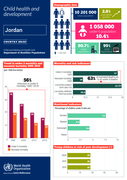
country brief, Jordan
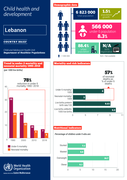
country brief, Jordan
country brief, Pakistan
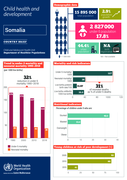
country brief, Somalia
country brief, Sudan
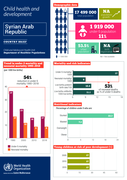
country brief, Syrian Arab Republic
