
Filter
3571
Text search:
Medicine
list
Featured
334
953
Language
Document type
2026
588
503
214
99
71
23
19
11
7
5
1
1
Countries
192
126
101
98
96
79
76
71
66
62
60
58
58
54
53
52
52
46
45
43
36
34
33
26
21
20
19
19
18
18
17
16
16
15
14
14
14
13
13
13
13
12
12
11
11
11
10
10
9
9
8
8
8
7
7
7
7
7
7
6
6
5
5
5
5
5
5
5
4
4
4
4
4
3
3
3
3
3
3
3
3
3
3
3
3
3
3
3
3
2
2
2
2
2
2
2
2
2
2
2
2
2
2
1
1
1
1
1
1
1
1
1
1
1
1
1
1
1
1
1
1
1
1
1
1
1
1
1
1
1
1
1
1
1
1
Authors & Publishers
Publication Years
Category
1346
344
217
177
101
99
56
2
1
1
Toolboxes
311
246
207
203
182
148
123
106
94
94
88
86
74
69
55
50
25
25
24
15
10
9
8
Antimicrobial resistance (AMR) both in human and veterinary medicine has reached alarming levels in
most parts of the world and has now been recognized as a significant emerging threat to global public
health and food security. In June 2015, the F
...
This guidance should be followed if an unlicensed medicine is prepared in
a registered pharmacy. The preparation of an unlicensed medicine (for
example unlicensed methadone, or menthol in aqueou
...
WHO recently conducted a survey to assess the availability and cost of a national tracer list of essential medicines in the outpatient sector in Ukraine using a new collection tool – the WHO Essential Medicines and Health Products Price and Availa
...
Building on our decades of commitment to human rights in medicine and healthcare, we have published a new report on emerging threats in health-related human rights both globally and in the UK.
'Health and human rights in the new world (dis)order'
...
DOI 10.15252/emmm.201404792 |Published online 30.12.2014
EMBO Molecular Medicine(2014)emmm.201404792
This Indicator-Based Pharmacovigilance Assessment Tool (IPAT) was developed as a comprehensive performance metric for pharmacovigilance and medicine safety systems.
Formularies are lists of antibiotics that are suggested for certain healthcare settings. In developing a recommended formulary, countries should consider the needs of patients and facilities where they receive care. For example, clinicians in rural or primary health centers may need wide access to f
...

The Transatlantic Task Force on Antimicrobial Resistance (TATFAR) fosters cooperation between the European Union (EU) andthe United States (US) on the issue of antimicrobial resistance. The first TATFAR recommendation refers to appropriate use of antimicrobials in human
...
The recommendations cover the level of blood pressure to start medication, what type of medicine or combination of medicines to use, the target blood pressure level, and how often to have follow-up checks on blood pressure. In addition, the guidelin
...
It is estimated that around 2 billion people worldwide do not have access to essential medicines. Access to medicines in the Eastern Mediterranean Region varies among countries, depending on their income level and allocation of domestic resources to medici
...

Indicators for monitoring the 2016 United Nations Political Declaration on Ending AIDS
UNAIDS supports countries to collect information on their national HIV responses through the Global AIDS Monitoring (GAM) framework—an annual collection of 72 indicators on the response to HIV in a country. ...
UNAIDS supports countries to collect information on their national HIV responses through the Global AIDS Monitoring (GAM) framework—an annual collection of 72 indicators on the response to HIV in a country. ...
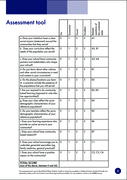
A quick assessment sheet, which would allow to know the Social Accountability score of your medical school or medical students’ association. This assessment tool is part of the IFMSA/THEnet Students’ Toolkit on Social Accountability in Medical Schools. Find the full toolkit, the explanatory tabl
...
Agodokpessi et al. Journal of Pharmaceutical Policy and Practice (2015) 8:12DOI 10.1186/s40545-015-0033-7
Benin established a revolving drug fund (RDF) for essential asthma medicines in 2008. We evaluated
the operation of the RDF and assessed whether there was interruption of supply of asthma
...
Malar J (2017) 16:174 DOI 10.1186/s12936-017-1808-x
Background: Since 2004, artemisinin-based combination therapy (ACT) has been the first-line treatment for uncomplicated malaria in Benin. In 2016, a medicine outlet survey was implemented to inves
...
Improving the quality of hospital antibiotic use is a major goal of WHO’s global action plan to combat antimicrobial resistance. The WHO Essential Medicines List Access, Watch, and Reserve (AWaRe) classification could facilitate simple stewardship
...
The World Heart Federation (WHF) Roadmap series covers a large range of cardiovascular conditions. These Roadmaps identify potential roadblocks and their solutions to improve the prevention, detection and management of cardiovascular diseases and provide a generic global framework available for loca
...

This document provides additional guidance for the responsible and prudent use of antimicrobials in food-producing animals, and should be read in conjunction with the Recommended International Code of Practice for Control of the Use of Veterinary Drugs CAC/RCP 38-1993. Its obj
...
WHO Pharmacovigilance indicators: a practical manual for the assessment of pharmacovigilance systems
This manual provides a practical method for determining the pharmacovigilance indices. It is designed to be simple and can be understood by any worker in pharmacovigilance without formal training in monitoring and evaluation. Pharmacovigilance as a medical discipline is crucial in preventing
...
The BBV/STI Glossary is a resource for interpreters, translators and others who work in a health setting. It offers an extensive list of English terms related to sexual health and blood-borne viruses (such as hepatitis), with easy to understand defi
...
The purpose of this manual is to define a limited number of indicators that will objectively describe the management and use of antimicrobials in hospitals and to provide tools and step-by-step instructions for designing and carrying out an assessment of antibiotic use and management in hospitals. T
...
These guidelines have been developed to provide guidance to the Ministry of Health in managing applications for registration of human pharmaceutical products in Rwanda. It was compiled by the Technical Working Group (TWG) on Medicines Evaluation and Registration (MER) of the East African Community
...
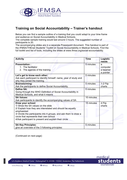
Below you can find a sampleoutline of a training that you couldadapt to your time frameand audience on Social Accountability in Medical Schools.The completesample trainingwould last around3hours. The suggested number of participants is 20.The accompanying slides are in a separate Powerpoint document
...
Report
Almaty, 2016
Authors: Ganina L.Yu., head of epidemiology department, Republican AIDS Center (RAC), Yelizaryeva A. V., epidemiologist, RAC, Kaspirova А. А., head of epidemiology department, Aktobe Oblast AIDS center, IvakinV.Yu., deputy regional director for strategic information, ICA
...
PLOS ONE | https://doi.org/10.1371/journal.pone.0185526 September 28, 2017
Global Health and Tropical Medicine, GHTM, Instituto de Higiene e Medicina Tropical, IHMT, Universidade Nova de Lisboa, UNL, Lisboa, Portugal
Downloaded from https://aidsinfo.nih.gov/guidelines on 10/19/2019
Recommendations from the National Institutes of Health, Centers for Disease Control and Prevention, the HIV Medicine Association of the Infectious Diseases Society of America and t
...
Antimicrobial resistance (AMR) is an important public health concern shared by developed and developing countries. In developing countries the burden of infectious diseases is greater and exacerbated by limited access to, and availability and affordability of, antimicrobials required to treat infect
...
In May 2015, the Sixty-eighth World Health Assembly recognized the importance of the public health problem posed by antimicrobial resistance by adopting the global action plan on antimicrobial resistance (“global action plan”). The global action plan proposes interve
...
Pakistan Global Antibiotic Resistance Partnership (GARP) was formed in the wake of international and national efforts for AMR curtailment. A group of experts from microbiology, infectious diseases and veterinary medicine
...
WHO published guidance for clinicians and health care decision-makers on the use of corticosteroids in patients with COVID-19.
We recommend systemic corticosteroids for the treatment of patients with severe and critical COVID-19. We suggest not to use corticosteroids in the treatment of patients
...
This technical report contains the results from the FEEDcities Project – Eastern Europe and Central Asia, a cross-sectional survey of the local urban food environment conducted in Chișinău, Republic of Moldova between June and August 2016. It characterizes the vending sites, the food offered and
...
The Multi-professional Patient Safety Curriculum Guide (2011) was developed to assist in the teaching of patient safety in universities and schools in the fields of dentistry, medicine, midwifery, nursing and pharmacy. It also supports the on-going
...

Modern healthcare has given rise to extremely complex and multifaceted ethical dilemmas. All too often physicians are unprepared to manage these competently. This publication is specifically structured to reinforce and strengthen the ethical mindset and prac
...
2nd edition. These guidelines include several notable changes from the first edition. For cutaneous leishmaniasis, ketoconazole has been removed from the list of treatment options; the number of Leishmania species for which there is strong evidence
...
Childhood Respiratory Diseases & the Environment learning objectives
•To understand how the respiratory tract is affected by the environment
•To describe respiratory diseases linked to the environment
•To list one population-level int
...
Antimicrobial resistance (AMR) is occurring everywhere in the world, compromising the ability to treat infectious diseases, as well as undermining many other advances in health and medicine. Underlying factors that drive AMR include; weak or absent
...

The main objective of this mission was to assess the level of preparedness of Guinea-Bissau in respect of the WHO consolidated checklist. The checklist helps countries to assess and test their level of readiness it is being used to identify concrete action to be taken and where countries will requir
...
This guide is a resource for future health professionals who want to learn about and engage in abortion issues. Abortion is a critical but often neglected area of women’s rights, women’s health and health science education. The guide ences students was developed for health sciences students -inc
...
2nd edition. There have been many requests over the past few years for advice about what information should be included in a patient record for leprosy. The patient record should contain the essential information for the clinical management of the patients, for monitoring adherence to MDT, and for r
...
The SAARC Member States have more than an estimated 2.0 million TB cases accounting for close to one-third of the total cases of TB in the world. India alone had almost one-fifth of the global disease burden due to TB. India, Pakistan and Bangladesh followed by Afghanistan are the major contributors
...

Replacement of Annex 2 of WHO Technical Report Series, No. 964
...
The aims of these guidelines are to provide guidance to health-care providers (i.e. the end-users of these guidelines: physicians, nurses, pharmacists and caregivers) on the adequate relief of pain associated with cancer. They also assist policy-makers, programme managers and public health personnel
...
Scientists have known for more than half a century that patients could develop resistance to the drugs used to treat them. Alexander Fleming, who is credited with creating the first antibiotic, penicillin, in 1928, cautioned of the impending crisis while accepting his Nobel prize in 1945: “There
...
AMR is one of the Key priority of the global health security agenda action package, as well as it is one of the commitments of Ministry of Public Health Afghanistan to combat AMR. In Afghanistan because of war and some other political issues the borders of the country are not well secured and well c
...
Interim Version 24, February 2020
This checklist has been prepared with the aim of supporting hospital managers and emergency planners in achieving the above by defining and initiating actions needed to ensure a rapid response to the COVID-19 outbreak. The checklist is structured on eleven key co
...
This document provides a decision-making framework for implementation of mass treatment interventions, active case-finding campaigns and population-based surveys for neglected tropical diseases in the context of the COVID-19 pandemic. A two-step approach is proposed: a risk–benefit assessment, to
...
This technical report presents the results of a cross-sectional survey conducted in Sarajevo, the Federation of Bosnia and Herzegovina, Bosnia and Herzegovina, between June and August 2017, as part of the FEEDcities Project (Food Environment Description in cities – eastern Europe and central Asia)
...
This technical report presents results from the FEEDcities Project – Eastern Europe and Central Asia, a cross-sectional survey conducted in Almaty, Aktau and Kyzylorda, Kazakhstan, between July and August 2017, to evaluate the local street food environment. It characterized the vending sites, the
...
The Federal Ministry of Health (FMOH) has been coordinating sector wide reforms that aim to improve equity and quality of maternal and child health services. As part of these efforts, the ministry is also exerting concerted efforts to improve availability and use of quality
...
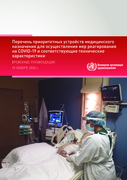
23 February 2021
This document describes the medical devices required for the clinical management of COVID-19, selected and prioritized according to the latest available evidence and interim guidelines. This includes: oxygen therapy, pulse oximeters, patient monitors, thermometers, infusion and suc
...
The document is structured into five sections. The first presents the key experiences and challenges that justify a renewal of the EPHFs. The second section updates the groundwork for the exercise of public health and provides a framework to inform the exercise of the new essential functions. The th
...
The document is structured into five sections. The first presents the key experiences and challenges that justify a renewal of the EPHFs. The second section updates the groundwork for the exercise of public health and provides a framework to inform the exercise of the new essential functions. The th
...
To guide One Health capacity building efforts in the Republic of Guinea in the wake of the 2014–2016 Ebola virus disease (EVD) outbreak, we sought to identify and assess the existing systems and structures for zoonotic disease detection and control. We partnered with the government ministries resp
...
Community pharmacists are the health professionals most accessible to the public and are a cornerstone of primary health care. The role of community pharmacists is expanding globally. This report provides an overview of existing components and provisions of the legal and regulatory framework for com
...
This document focuses on the management of patients affected by gambiense HAT and
constitutes an update to the WHO therapeutic guidance issued in 2013. The main changes in recommendations concern the criteria and methods for deciding the treatment among the new set of therapeutic options and the pa
...
J Glob Health Sci. 2020 Jun;2(1):e3. A group of enzootic and zoonotic protozoan infections, the leishmaniases constitute among the most severely neglected tropical diseases (NTDs) and are found in all continents except Oceania. Representing the most common infectious diseases, NTDs comprise an open-
...

Access to NCD medicines: emergent issues during the COVID-19 pandemic and key structural factors
recommended
The coronavirus disease (COVID-19) pandemic exacerbated pre-existing inequalities in the treatment and care of noncommunicable diseases (NCDs). This report examines the effect of the COVID-19 pandemic on access to NCD medicines, and the policies and strategies implemented by countries and health sys
...
Prompt, effective antimalarial treatment, and supportive care can substantially reduce the rate of mortality from severe malaria. However, many children in malaria-endemic countries do not have access to health facilities or a qualified health care provider and do not receive the necessary care in a
...
For thousands of years, humans have been using wildlife for commercial and subsistence purposes. Wildlife trade takes place at local, national and international levels, with different forms of wildlife, such as live animals, partly processed products and finished products. Wildlife is a vital source
...
The coronavirus disease (COVID-19) pandemic exacerbated pre-existing inequalities in the treatment and care of noncommunicable diseases (NCDs). This report examines the effect of the COVID-19 pandemic on access to NCD medicines, and the policies and strategies implemented by countries and health sys
...

The development of this Operational Roadmap has been driven by a growing consensus in Ukraine on the need to prioritize activities that are urgently required to address the mental health and psychosocial needs of the country’s population and also the importance of basing the response on existing s
...
The chapter Fostering Health Systems’ Monitoring to Better Serve Older Populations is part of the publication series entitled Decade of Healthy Aging: Situation and Challenges. The publications are designed to favor the prioritization of effective actions at the local level as well as the monitori
...
The Priority medicines for mothers and children 2011 list was updated following the 18th Expert Committee Meeting
on Selection and Use of Medicines, the release of new treatment guidelines and feedback from partners following
the 2011 version.
...
The Ethiopian Food and Drug Administration (EFDA) is mandated, in the proclamation 661/2009, to ensure the safety, quality and efficacy of medicines. To achieve this, the authority has been working on different regulatory activities. The medicine ma
...
Trustworthy, evidence-based health guidelines form the basis of national policies affecting both patients and health-care workers. Emphasizing the link between robust evidence and people’s trust in their health systems, Dr Hans Henri P. Kluge, WHO Regional Director for Europe said at the launch ev
...
On 13 August 2024, Africa Centres for Disease Control and Prevention (Africa CDC) declared the ongoing Mpox outbreak a Public Health Emergency of Continental Security (PHECS). This was followed the next day by the World Health Organization (WHO), which extended the alert internationally as a public
...
Action Plan for Implementation of Recommendations from the Evaluation of PAHO's Response to COVID-19
An external team evaluated PAHO’s response to COVID-19 to provide an independent assessment of the Pan American Sanitary Bureau’s (PASB) performance regarding preparedness for and response to the COVID-19 pandemic. The evaluations’ final report culminates with eight recommendations for actions
...
Myth: It’s better to ‘tough it out’ without taking asthma medication. The lungs do not get stronger or become better able to deal with asthma if a person tries to work through an attack without medication. In fact, the lung inflammation that goes along with an attack (see what is asthma)
...

Accessed at March 2014

PMPB/INS-GUIDE/04
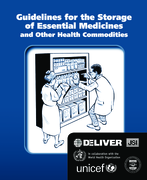
Maintaining proper storage conditions for health commodities is vital to ensuring their quality. Product expiration dates are based on ideal storage conditions and protecting product quality until their expiration date is important for serving customers and conserving resources. Guidelines for the S
...
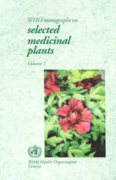
• provide scientific information on the safety, efficacy, and quality control/ quality assurance of widely used medicinal plants, in order to facilitate their appropriate use in Member States;
• provide models to assist Member States in developing their own mono- graphs or formularies for these
...
Maintaining proper storage conditions for health commodities is vital to ensuring their quality. Product expiration dates are based on ideal storage conditions and protecting product quality until their expiration date is important for serving customers and conserving resources. Guidelines for the S
...
Access to controlled medicines. 3rd edition
• provide scientific information on the safety, efficacy, and quality control/ quality assurance of widely used medicinal plants, in order to facilitate their appropriate use in Member States;
• provide models to assist Member States in developing their own mono- graphs or formularies for these
...
• provide scientific information on the safety, efficacy, and quality control/ quality assurance of widely used medicinal plants, in order to facilitate their appropriate use in Member States;
• provide models to assist Member States in developing their own mono- graphs or formularies for these
...
A practical manual - The book provides step by step guidance
to the process of rational prescribing, together with many illustrative examples. It teaches skills that are necessary throughout a clinical career.

BMC Medicine201614:112 DOI: 10.1186/s12916-016-0660-0

Trop. Med. Infect. Dis. 2018, 3, 72;
The study identified some key determinants of untimely and incomplete childhood vaccinations in the context of Bangladesh. The findings will contribute to the improvement of age-specific vaccination and support policy makers in taking the necessary control ...
The study identified some key determinants of untimely and incomplete childhood vaccinations in the context of Bangladesh. The findings will contribute to the improvement of age-specific vaccination and support policy makers in taking the necessary control ...
CHWs demonstrated social commitment and purpose in the short term observed. The evaluation of the training of CHWs revealed that most demonstrated the necessary skills for referrals to prevent complications, caring for newborns and their mothers at home immediately after discharge from health care c
...

World Journal of Pharmaceutical and Medical Research vol. 5 (2019) 3, 129-132

Rabies is a fatal viral zoonosis and serious public health problem.1 All mammals are believed to be susceptible to the disease, and for the purposes of this document, use of the term animal refers to mammals. The disease is an acute, progressive encephalitis caused by viruses in the genus Lyssavirus
...
Emergency medical teams (EMT) are first response health care providers – doctors, nurses, paramedics, and others – during outbreaks and emergencies or disasters, working with governments, charities such as nongovernmental organizations (NGOs), armies, and international organizations such as the
...

This report reviews and analyses the Affordable Medicines Programme, which was introduced in Ukraine in April 2017 to provide patients with improved access to 23 outpatient medicines for the treatment of chronic noncommunicable diseases. The evaluation combines both quantitative and qualitative anal
...
Hypertension is referred to as a “silent killer”. Most people with hypertension are unaware of their condition as in most cases, they experience no warning signs or symptoms hence they are not identified or treated. Hypertention is associated with a number of conditions, disability, and causes o
...
