
Filter
7448
Text search:
Health
Safety
Featured
762
1885
Language
6885
270
240
182
134
119
66
63
44
26
25
21
18
18
14
14
13
12
11
10
9
9
9
8
8
7
7
7
7
7
6
6
6
6
5
5
5
5
5
5
5
4
4
4
4
4
4
3
3
3
3
3
3
3
3
3
3
3
2
2
2
2
1
1
1
1
1
1
1
Document type
3824
1156
1128
446
285
236
134
91
37
34
29
24
18
2
Countries
275
266
190
168
147
147
136
134
133
129
124
119
110
107
103
96
87
80
79
79
77
76
74
64
63
63
57
56
52
51
50
46
44
42
40
37
37
36
36
35
34
34
32
31
30
28
26
25
24
23
22
22
21
20
18
18
17
17
16
16
15
15
13
12
12
11
11
11
11
11
10
10
10
9
9
9
8
8
8
8
8
7
7
7
6
6
6
6
6
6
6
5
5
5
5
5
5
4
4
4
4
4
4
4
4
4
4
4
3
3
3
3
3
3
3
3
3
3
3
2
2
2
2
2
2
2
2
2
2
2
2
2
2
2
1
1
1
1
1
1
1
1
1
1
1
1
1
1
1
1
1
1
Authors & Publishers
1101
419
256
220
192
142
137
91
79
66
64
47
47
46
43
42
41
40
40
34
32
30
30
29
28
28
27
27
25
25
25
25
25
24
23
22
22
22
21
21
20
20
20
19
19
18
18
17
17
17
17
17
17
16
16
16
16
15
15
15
14
14
14
14
14
14
14
13
13
13
13
13
13
13
13
13
13
12
12
12
12
12
11
11
11
11
11
11
11
11
10
10
10
10
10
10
10
10
10
10
10
10
9
9
9
9
9
9
9
9
9
9
9
8
8
8
8
8
8
8
8
8
8
8
8
8
8
7
7
7
7
7
7
7
7
7
7
7
7
7
7
7
7
7
7
7
7
7
7
7
7
7
6
6
6
6
6
6
6
6
6
6
6
6
6
6
6
6
6
6
6
6
6
6
6
6
6
6
6
6
6
6
6
6
6
6
6
5
5
5
5
5
5
5
5
5
5
5
5
5
5
5
5
5
5
5
5
5
5
5
5
5
5
5
5
5
5
5
5
5
5
5
5
5
5
4
4
4
4
4
4
4
4
4
4
4
4
4
4
4
4
4
4
4
4
4
4
4
4
4
4
4
4
4
4
4
4
4
4
4
4
4
4
4
4
4
4
4
4
4
4
4
4
4
4
4
4
4
4
4
4
4
4
4
4
4
4
4
4
4
4
4
4
4
4
4
4
4
4
4
4
4
4
4
3
3
3
3
3
3
3
3
3
3
3
3
3
3
3
3
3
3
3
3
3
3
3
3
3
3
3
3
3
3
3
3
3
3
3
3
3
3
3
3
3
3
3
3
3
3
3
3
3
3
3
3
3
3
3
3
3
3
3
3
3
3
3
3
3
3
3
3
3
3
3
3
3
3
3
3
3
3
3
3
3
3
3
3
3
3
3
3
3
3
3
3
3
3
3
3
3
3
3
3
3
3
3
3
3
3
3
3
3
3
3
3
3
3
3
3
3
3
3
3
3
3
3
3
3
3
3
3
3
3
3
3
3
3
3
3
3
3
3
3
3
2
2
2
2
2
2
2
2
2
2
2
2
2
2
2
2
2
2
2
2
2
2
2
2
2
2
2
2
2
2
2
2
2
2
2
2
2
2
2
2
2
2
2
2
2
2
2
2
2
2
2
2
2
2
2
2
2
2
2
2
2
2
2
2
2
2
2
2
2
2
2
2
2
2
2
2
2
2
2
2
2
2
2
2
2
2
2
2
2
2
2
2
2
2
2
2
2
2
2
2
2
2
2
2
2
2
2
2
2
2
2
2
2
2
2
2
2
2
2
2
2
2
2
2
2
2
2
2
2
2
2
2
2
2
2
2
2
2
2
2
2
2
2
2
2
2
2
2
2
2
2
2
2
2
2
2
2
2
2
2
2
2
2
2
2
2
2
2
2
2
2
2
2
2
2
2
2
2
2
2
2
2
2
2
2
2
2
2
2
2
2
2
2
2
2
2
2
2
2
2
2
2
2
2
2
2
2
2
2
2
2
2
2
2
2
2
2
2
2
2
2
2
2
2
2
2
2
2
2
2
2
2
2
2
2
2
2
2
2
2
2
2
2
2
2
2
2
2
2
2
2
2
2
2
2
2
2
2
2
2
2
2
2
2
2
2
2
2
2
2
2
2
2
2
2
2
2
2
2
2
2
2
2
2
2
2
2
2
2
2
2
2
2
2
2
2
2
2
2
2
2
2
2
2
2
2
2
2
2
2
2
2
2
2
2
2
2
2
2
2
2
2
2
2
2
2
2
2
2
2
2
2
2
2
2
2
2
2
2
2
2
2
2
2
2
2
2
2
2
2
2
2
2
2
2
2
2
2
2
2
2
2
2
2
2
2
2
2
2
2
2
2
2
2
2
2
2
2
2
2
2
2
2
2
2
2
2
2
2
2
2
2
2
2
2
2
2
2
1
1
1
1
1
1
1
1
1
1
1
1
1
1
1
1
1
1
1
1
1
1
1
1
1
1
1
1
1
1
1
1
1
1
1
1
1
1
1
1
1
1
1
1
1
1
1
1
1
1
1
1
1
1
1
1
1
1
1
1
1
1
1
1
1
1
1
1
1
1
1
1
1
1
1
1
1
1
1
1
1
1
1
1
1
1
1
1
1
1
1
1
1
1
1
1
1
1
1
1
1
1
1
1
1
1
1
1
1
1
1
1
1
1
1
1
1
1
1
1
1
1
1
1
1
1
1
1
1
1
1
1
1
1
1
1
1
1
1
1
1
1
1
1
1
1
1
1
1
1
1
1
1
1
1
1
1
1
1
1
1
1
1
1
1
1
1
1
1
1
1
1
1
1
1
1
1
1
1
1
1
1
1
1
1
1
1
1
1
1
1
1
1
1
1
1
1
1
1
1
1
1
1
1
1
1
1
1
1
1
1
1
1
1
1
1
1
1
1
1
1
1
1
1
1
1
1
1
1
1
1
1
1
1
1
1
1
1
1
1
1
1
1
1
1
1
1
1
1
1
1
1
1
1
1
1
1
1
1
1
1
1
1
1
1
1
1
1
1
1
1
1
1
1
1
1
1
1
1
1
1
1
1
1
1
1
1
1
1
1
1
1
1
1
1
1
1
1
1
1
1
1
1
1
1
1
1
1
1
1
1
1
1
1
1
1
1
1
1
1
1
1
1
1
1
1
1
1
1
1
1
1
1
1
1
1
1
1
1
1
1
1
1
1
1
1
1
1
1
1
1
1
1
1
1
1
1
1
1
1
1
1
1
1
1
1
1
1
1
1
1
1
1
1
1
1
1
1
1
1
1
1
1
1
1
1
1
1
1
1
1
1
1
1
1
1
1
1
1
1
1
1
1
1
1
1
1
1
1
1
1
1
1
1
1
1
1
1
1
1
1
1
1
1
1
1
1
1
1
1
1
1
1
1
1
1
1
1
1
1
1
1
1
1
1
1
1
1
1
1
1
1
1
1
1
1
1
1
1
1
1
1
1
1
1
1
1
1
1
1
1
1
1
1
1
1
1
1
1
1
1
1
1
1
1
1
1
1
1
1
1
1
1
1
1
1
1
1
1
1
1
1
1
1
1
1
1
1
1
1
1
1
1
1
1
1
1
1
1
1
1
1
1
1
1
1
1
1
1
1
1
1
1
1
1
1
1
1
1
1
1
1
1
1
1
1
1
1
1
1
1
1
1
1
1
1
1
1
1
1
1
1
1
1
1
1
1
1
1
1
1
1
1
1
1
1
1
1
1
1
1
1
1
1
1
1
1
1
1
1
1
1
1
1
1
1
1
1
1
1
1
1
1
1
1
1
1
1
1
1
1
1
1
1
1
1
1
1
1
1
1
1
1
1
1
1
1
1
1
1
1
1
1
1
1
1
1
1
1
1
1
1
1
1
1
1
1
1
1
1
1
1
1
1
1
1
1
1
1
1
1
1
1
1
1
1
1
1
1
1
1
1
1
1
1
1
1
1
1
1
1
1
1
1
1
1
1
1
1
1
1
1
1
1
1
1
1
1
1
1
1
1
1
1
1
1
1
1
1
1
1
1
1
1
1
1
1
1
1
1
1
1
1
1
1
1
1
1
1
1
1
1
1
1
1
1
1
1
1
1
1
1
1
1
1
1
1
1
1
1
1
1
1
1
1
1
1
1
1
1
1
1
1
1
1
1
1
1
1
1
1
1
1
1
1
1
1
1
1
1
1
1
1
1
1
1
1
1
1
1
1
1
1
1
1
1
1
1
1
1
1
1
1
1
1
1
1
1
1
1
1
1
1
1
1
1
1
1
1
1
1
1
1
1
1
1
1
1
1
1
1
1
1
1
1
1
1
1
1
1
1
1
1
1
1
1
1
1
1
1
1
1
1
1
1
1
1
1
1
1
1
1
1
1
1
1
1
1
1
1
1
1
1
1
1
1
1
1
1
1
1
1
1
1
1
1
1
1
1
1
1
1
1
1
1
1
1
1
1
1
1
1
1
1
1
1
1
1
1
1
1
1
1
1
1
1
1
1
1
1
1
1
1
1
1
1
1
1
1
1
1
1
1
1
1
1
1
1
1
1
1
1
1
1
1
1
1
1
1
1
1
1
1
1
1
1
1
1
1
1
1
1
1
1
1
1
1
1
1
1
1
1
1
1
1
1
1
1
1
1
1
1
1
1
1
1
1
1
1
1
1
1
1
1
1
1
1
1
1
1
1
1
1
1
1
1
1
1
1
1
1
1
1
1
1
1
1
1
1
1
1
1
1
1
1
1
1
1
1
1
1
1
1
1
1
1
1
1
1
1
1
1
1
1
1
1
1
1
1
1
1
1
1
1
1
1
1
1
1
1
1
1
1
1
1
1
1
1
1
1
1
1
1
1
1
1
1
1
1
1
1
1
1
1
1
1
1
1
1
1
1
1
1
1
1
1
1
1
1
1
1
1
1
1
1
1
1
1
1
1
1
1
1
1
1
1
1
1
1
1
1
1
1
1
1
1
1
1
1
1
1
1
1
1
1
1
1
1
1
1
1
1
1
1
1
1
1
1
1
1
1
1
1
1
1
1
1
1
1
1
1
1
1
1
1
1
1
1
1
1
1
1
1
1
1
1
1
1
1
1
1
1
1
1
1
1
1
1
1
1
1
1
1
1
1
1
1
1
1
1
1
1
1
1
1
1
1
1
1
1
1
1
1
1
1
1
1
1
1
1
1
1
1
1
1
1
1
1
1
1
1
1
1
1
1
1
1
1
1
1
1
1
1
1
1
1
1
1
1
1
1
1
1
1
1
1
1
1
1
1
1
1
1
1
1
1
1
1
1
1
1
1
1
1
1
1
1
1
1
1
1
1
1
1
1
1
1
1
1
1
1
1
1
1
1
1
1
1
1
1
1
1
1
1
1
1
1
1
1
1
1
1
1
1
1
1
1
1
1
1
1
1
1
1
1
1
1
1
1
1
1
1
1
1
1
1
1
1
1
1
1
1
1
1
1
1
1
1
1
1
1
1
1
1
1
1
1
1
1
1
1
1
1
1
1
1
1
1
1
1
1
1
1
1
1
1
1
1
1
1
1
1
1
1
1
1
1
1
1
1
1
1
1
1
1
1
1
1
1
1
1
1
1
1
1
1
1
1
1
1
1
1
1
1
1
1
1
1
1
1
1
1
1
1
1
1
1
1
1
1
1
1
1
1
1
1
1
1
1
1
1
1
1
1
1
1
1
1
1
1
1
1
1
1
1
1
1
1
1
1
1
1
1
1
1
1
1
1
1
1
1
1
1
1
1
1
1
1
1
1
1
1
1
1
1
1
1
1
1
1
1
1
1
1
1
1
1
1
1
1
1
1
1
1
1
1
1
1
1
1
1
1
1
1
1
1
1
1
1
1
1
1
1
1
1
1
1
1
1
1
1
1
1
1
1
1
1
1
1
1
1
1
1
1
1
1
1
1
1
1
1
1
1
1
1
1
1
1
1
1
1
1
1
1
1
1
1
1
1
1
1
1
1
1
1
1
1
1
1
1
1
1
1
1
1
1
1
1
1
1
1
1
1
1
1
1
1
1
1
1
1
1
1
1
1
1
1
1
1
1
1
1
1
1
1
1
1
1
1
1
1
1
1
1
1
1
1
1
1
1
1
1
1
1
1
1
1
1
1
1
1
1
1
1
1
1
1
1
1
1
1
1
1
1
1
1
1
1
1
1
1
1
1
1
1
1
1
1
1
1
1
1
1
1
1
1
1
1
1
1
1
1
1
1
1
1
1
1
1
1
1
1
1
1
1
1
1
1
1
1
1
1
1
1
1
1
1
1
1
1
1
1
1
1
1
1
1
1
1
1
1
1
1
1
1
1
1
1
1
1
1
1
1
1
1
1
1
1
1
1
1
1
1
1
1
1
1
1
1
1
1
1
1
1
1
1
1
1
1
1
1
1
1
1
1
1
1
1
1
1
1
1
1
1
1
1
1
1
1
1
1
1
1
1
1
1
1
1
1
1
1
1
1
1
1
1
1
1
1
1
1
1
1
1
1
1
1
1
1
1
1
1
1
1
1
1
1
1
1
1
1
1
1
1
1
1
1
1
1
1
1
1
1
1
1
1
1
1
1
1
1
1
1
1
1
1
1
1
1
1
1
1
1
1
1
1
1
1
1
1
1
1
1
1
1
1
1
1
1
1
1
1
1
1
1
1
1
1
1
1
1
1
1
1
1
1
1
1
1
1
1
1
1
1
1
1
1
1
1
1
1
1
1
1
1
1
1
1
1
1
1
1
1
1
1
1
1
1
1
1
1
1
1
1
1
1
1
1
1
1
1
1
1
1
1
1
1
1
1
1
1
1
1
1
1
1
1
1
1
1
1
1
1
1
1
1
1
1
1
1
1
1
1
1
1
1
1
1
1
1
1
1
1
1
1
1
1
1
1
1
1
1
1
1
1
1
1
1
1
1
1
1
1
1
1
1
1
1
1
1
1
1
1
1
1
1
1
1
1
1
1
1
1
1
1
1
1
1
1
1
1
1
1
1
1
1
1
1
1
1
1
1
1
1
1
1
1
1
1
1
1
1
1
1
1
1
1
1
1
1
1
1
1
1
1
1
1
1
1
1
1
1
1
1
1
1
1
1
1
1
1
1
1
1
1
1
1
1
1
1
1
1
1
1
1
1
1
1
1
1
1
1
1
1
1
1
1
1
1
1
1
1
1
1
1
1
1
1
1
1
1
1
1
1
1
1
1
1
1
1
1
1
1
1
1
1
1
1
1
1
1
1
1
1
1
1
1
1
1
1
1
1
1
1
1
1
1
1
1
1
1
1
1
1
1
1
1
1
1
1
1
1
1
1
1
1
1
1
1
1
1
1
1
1
1
1
1
1
1
1
1
1
1
1
1
1
1
1
1
1
1
1
1
1
1
1
1
1
1
1
1
1
1
1
1
1
1
1
1
1
1
1
1
1
1
1
1
1
1
1
1
1
1
1
1
1
1
1
1
1
1
1
1
1
1
1
1
1
1
1
1
1
1
1
1
1
1
1
1
1
1
1
1
1
1
1
1
1
1
1
1
1
1
1
1
1
1
1
1
1
1
1
1
1
1
1
1
1
1
1
1
1
1
1
1
1
1
1
1
1
1
1
1
1
1
1
1
1
1
1
1
1
1
1
1
1
1
1
1
1
1
1
1
1
1
1
1
1
1
1
1
1
1
1
1
1
1
1
1
1
1
1
1
1
1
1
1
1
1
1
1
1
1
1
1
1
1
1
1
1
1
1
1
1
1
1
1
1
1
1
1
1
1
1
1
1
1
1
1
1
1
1
1
1
1
1
1
1
1
1
1
1
1
1
1
1
1
1
1
1
1
1
1
1
1
1
1
1
1
1
1
1
1
1
1
1
1
1
1
1
1
1
1
1
1
1
1
1
1
1
1
1
1
1
1
1
1
1
1
1
1
1
1
1
1
1
1
1
1
1
1
1
1
1
1
1
1
1
1
1
1
1
1
1
1
1
1
1
1
1
1
1
1
1
1
1
1
1
1
1
1
1
1
1
1
1
1
1
1
1
1
1
1
1
1
1
1
1
1
1
1
1
1
1
1
1
1
1
1
1
1
1
1
1
1
1
1
1
1
1
1
1
1
1
1
1
1
1
1
1
1
1
1
1
1
1
1
1
1
1
1
1
1
1
1
1
1
1
1
1
1
1
1
1
1
1
1
1
1
1
1
1
1
1
1
1
1
1
1
1
1
1
1
1
1
1
1
1
1
1
1
1
1
1
1
1
1
1
1
1
1
1
1
1
1
1
1
1
1
1
1
1
1
1
1
1
1
1
1
1
1
1
1
1
1
1
1
1
1
1
1
1
1
1
1
1
1
1
1
1
1
1
1
1
1
1
1
1
1
1
1
1
1
1
1
1
1
1
1
1
1
1
1
1
1
1
1
1
1
1
1
1
1
1
1
1
1
1
1
1
1
1
1
1
1
1
1
1
1
1
1
1
1
1
1
1
1
1
1
1
1
1
1
1
1
1
1
1
1
1
1
1
1
1
1
1
1
1
1
1
1
1
1
1
1
1
1
1
1
1
1
1
1
1
1
1
1
1
1
1
1
1
1
1
1
1
1
1
1
1
1
1
1
1
1
1
1
1
1
1
1
1
1
1
1
1
1
1
1
1
1
1
1
1
1
1
1
1
1
1
1
1
1
1
1
1
1
1
1
1
1
1
1
1
1
1
1
1
1
1
1
1
1
1
1
1
1
1
1
1
1
1
1
1
1
1
1
1
1
1
1
1
1
1
1
1
1
1
1
1
1
1
1
1
1
1
1
1
1
1
1
1
1
1
1
1
1
1
1
1
1
1
1
1
1
1
1
1
1
1
1
1
1
1
1
1
1
1
1
1
1
1
1
1
1
1
1
1
1
1
1
1
1
1
1
1
1
1
1
1
1
1
1
1
1
1
1
1
1
1
1
1
1
1
1
1
1
1
1
1
1
1
1
1
1
1
1
1
1
1
1
1
1
1
1
1
1
1
1
1
1
1
1
1
1
1
1
1
1
1
1
1
1
1
1
1
1
1
1
1
1
1
1
1
1
1
1
1
1
1
1
1
1
1
1
1
1
1
1
1
1
1
1
1
1
1
1
1
1
1
1
1
1
1
1
1
1
1
1
1
1
1
1
1
1
1
1
1
1
1
1
1
1
1
1
1
1
1
1
1
1
1
1
1
1
1
1
1
1
1
1
1
1
1
1
1
1
1
1
1
1
1
1
1
1
1
1
1
1
1
1
1
1
1
1
1
1
1
1
1
1
1
1
1
1
1
1
1
1
1
1
1
1
1
1
1
1
1
1
1
1
1
1
1
1
1
1
1
1
1
1
1
1
1
1
1
1
1
1
1
1
1
1
1
1
1
1
1
1
1
1
1
1
1
1
1
1
1
1
1
1
1
1
1
1
1
1
1
1
1
1
1
1
1
1
1
1
1
1
1
1
1
1
1
1
1
1
1
1
1
1
1
1
1
1
1
1
1
1
1
1
1
1
1
1
1
1
1
1
1
1
1
1
1
1
1
1
1
1
1
1
1
1
1
1
1
1
1
1
1
1
1
1
1
1
1
1
1
1
1
1
1
1
1
1
1
1
1
1
1
1
1
1
1
1
1
1
1
1
1
1
1
1
1
1
1
1
1
1
1
1
1
1
1
1
1
1
1
1
1
1
1
1
1
1
1
1
1
1
1
1
1
1
1
1
1
1
1
1
1
1
1
1
1
1
1
1
1
1
1
1
1
1
1
1
1
1
1
1
1
1
1
1
1
1
1
1
1
1
1
1
1
1
1
1
1
1
1
1
1
1
1
1
1
1
1
1
1
1
1
1
1
1
1
1
1
1
1
1
1
1
1
1
1
1
1
1
1
1
1
1
1
1
1
1
1
1
1
1
1
1
1
1
1
1
1
1
1
1
1
1
1
1
1
1
1
1
1
1
1
1
1
1
1
1
1
1
1
1
1
1
1
1
1
1
1
1
1
1
1
1
1
1
1
1
1
1
1
1
1
1
1
1
1
1
1
1
1
1
1
1
1
1
1
1
1
1
1
1
1
1
1
1
1
1
1
1
1
1
1
1
1
1
1
1
1
1
1
1
1
1
1
1
1
1
1
1
1
1
1
1
1
1
1
1
1
1
1
1
1
1
1
1
1
1
1
1
1
1
1
1
1
1
1
1
1
1
1
1
1
1
1
1
1
1
1
1
1
1
1
1
1
1
1
1
1
1
1
1
1
1
1
1
1
1
1
1
1
1
1
1
1
1
1
1
1
1
1
1
1
1
1
1
1
1
1
1
1
1
1
1
1
1
1
1
1
1
1
1
1
1
1
1
1
1
1
1
1
1
1
1
1
1
1
1
1
1
1
1
1
1
1
1
1
1
1
1
1
1
1
1
1
1
1
1
1
1
1
1
1
1
1
1
1
1
1
1
1
1
1
1
1
1
1
1
1
1
1
1
1
1
1
1
1
1
1
1
1
1
1
1
1
1
1
1
1
1
1
1
1
1
1
1
1
1
1
1
1
1
1
1
1
1
1
1
1
1
1
1
1
1
1
1
1
1
1
1
1
1
1
1
1
1
1
1
1
1
1
1
1
1
1
1
1
1
1
1
1
1
1
1
1
1
1
1
1
1
1
1
1
1
1
1
1
1
1
1
1
1
1
1
1
1
1
1
1
1
1
1
1
1
1
1
1
1
1
1
1
1
1
1
1
1
1
1
1
1
1
1
1
1
1
1
1
1
1
1
1
1
1
1
1
1
1
1
1
1
1
1
1
1
1
1
1
1
1
1
1
1
1
1
1
1
1
1
1
1
1
1
1
1
1
1
1
1
1
1
1
1
1
1
1
1
1
1
1
1
1
1
1
1
1
1
1
1
1
1
1
1
1
1
1
1
1
1
1
1
1
1
1
1
1
1
1
1
1
1
1
1
1
1
1
1
1
1
1
1
1
1
1
1
1
1
1
1
1
1
1
1
1
1
1
1
1
1
1
1
1
1
1
1
1
1
1
1
1
1
1
1
1
1
1
1
1
1
1
1
1
1
1
1
1
1
1
1
1
1
1
1
1
1
1
1
1
1
1
1
1
1
1
1
1
1
1
1
1
1
1
1
1
1
1
1
1
1
1
1
1
1
1
1
1
1
1
1
1
1
1
1
1
1
1
1
1
1
1
1
1
1
1
1
1
1
1
1
1
1
1
1
1
1
1
1
1
1
1
1
1
1
1
1
1
1
1
1
1
1
1
1
1
1
1
1
1
1
1
1
1
1
1
1
1
1
1
1
1
1
1
1
1
1
1
1
1
1
1
1
1
1
1
1
1
1
1
1
1
1
1
1
1
1
1
1
1
1
1
1
1
1
1
1
1
1
1
1
1
1
1
1
1
1
1
1
1
1
1
1
1
1
1
1
1
1
1
1
1
1
1
1
1
1
1
1
1
1
1
1
1
1
1
1
1
1
1
1
1
1
1
1
1
1
1
1
1
1
1
1
1
1
1
1
1
1
1
1
1
1
1
1
1
1
1
1
1
1
1
1
1
1
1
1
1
1
1
1
1
1
1
1
1
1
1
1
1
1
1
1
1
1
1
1
1
1
1
1
1
1
1
1
1
1
1
1
1
1
1
1
1
1
1
1
1
1
1
1
1
1
1
1
1
1
1
1
1
1
1
1
1
1
1
1
1
1
1
1
1
1
1
1
1
1
1
1
1
1
1
1
1
1
1
1
1
1
1
1
1
1
1
1
1
1
1
1
1
1
1
1
1
1
1
1
1
1
1
1
1
1
1
1
1
1
1
1
1
1
1
1
1
1
1
1
1
1
1
1
1
1
1
1
1
1
1
1
1
1
1
1
1
1
1
1
1
1
1
1
1
1
1
1
1
1
1
1
1
1
1
1
1
1
1
1
1
1
1
1
1
1
1
1
1
1
1
1
1
1
1
1
1
1
1
1
1
1
1
1
1
1
1
1
1
1
1
1
1
1
1
1
1
1
1
1
1
1
1
1
1
1
1
1
1
1
1
1
1
1
1
1
1
1
1
1
1
1
1
1
1
1
Publication Years
1
1
2409
4379
617
36
4
1
Category
2562
562
412
409
376
154
102
8
4
Toolboxes
999
556
408
291
283
279
267
266
262
237
228
196
191
153
130
112
102
66
49
44
36
32
18
4
2
1
How your baby develops (0-3 months) (Arabic version)
Queensland Health
(2013)
C1
Information on what to expect of your baby as he/she grows and develops and safety concerns for your baby. Available in English, Arabic, Chinese, Spanish, Serbian and Vietnamese. For other language versions go to https://www.
...
health.qld.gov.au/multicultural/public/child_hlth.asp#Infectious
more
How your baby develops (0-3 months) (English version)
Queensland Health
(2013)
C1
Information on what to expect of your baby as he/she grows and develops and safety concerns for your baby. Available in English, Arabic, Chinese, Spanish, Serbian and Vietnamese. For other language versions go to https://www.
...
health.qld.gov.au/multicultural/public/child_hlth.asp#Infectious
more
How your baby develops (3-6 months) (English version)
Queensland Health
(2013)
C1
Information on what to expect of your baby as he/she grows and develops and safety concerns for your baby. Available in English, Arabic, Chinese, Serbian and Vietnamese. For other language versions go to https://www.
...
health.qld.gov.au/multicultural/public/child_hlth.asp#Infectious
more
How your baby develops (3-6 months) (Arabic version)
Queensland Health
(2013)
C1
Information on what to expect of your baby as he/she grows and develops and safety concerns for your baby. Available in English, Arabic, Chinese, Serbian and Vietnamese. For other language versions go to https://www.
...
health.qld.gov.au/multicultural/public/child_hlth.asp#Infectious
more
How your baby develops (6-9 months) (Arabic version)
Queensland Health
(2013)
C1
Information on what to expect of your baby as he/she grows and develops and safety concerns for your baby. Available in English, Arabic, Chinese, Spanish, Serbian and Vietnamese. For other language versions go to https://www.
...
health.qld.gov.au/multicultural/public/child_hlth.asp#Infectious
more
How your baby develops (6-9 months) (English version)
Queensland Health
(2013)
C1
Information on what to expect of your baby as he/she grows and develops and safety concerns for your baby. Available in English, Arabic, Chinese, Spanish, Serbian and Vietnamese. For other language versions go to https://www.
...
health.qld.gov.au/multicultural/public/child_hlth.asp#Infectious
more
Infection prevention and control practices need to be implemented to guarantee the safety of healthcare workers and patients in healthcare settings, it is fundamental to prevent cross contamination and containment of spread of COVID 19. As of the da
...
y of this publication, the following precautions are recommended for the care of patients with suspected or confirmed cases of COVID-19: - For any suspected or confirmed cases of COVID-19: standard + contact + droplet precautions. -For any suspected or confirmed cases of COVID-19 and Aerosol Generated Procedure: standard + contact + airborne precautions. - The results of the application of this evaluation tool, in addition to other tools, will provide an overview regarding compliance with the activities of prevention and control of infections associated with provision of care in acute healthcare services in a health setting, without making judgments about the individual risk of patients, nor on particular cases. By its nature, this tool is only an external diagnostic to support IPC professionals and managers to assess the gaps and take corrective measures. To provide a tool for assessment of infection prevention and control practices in isolation areas in acute healthcare settings in the context of the novel coronavirus (COVID-19). These recommendations are preliminary and subject to review as new evidence becomes available.
more
The aim of the Annual Inspection Report is to present findings of public sector health establishments inspected by the OHSC to monitor compliance with the National Core Standards (NCS) during the 2016/2017 financial year in South Africa.
The NCS de
...
fine fundamentals for quality of care based on six dimensions of quality: Acceptability,Safety, Reliability, Equity, Accessibility, and Efficiency.
The NCS structured assessment tools were used to collect data during inspections across the seven domains namely: Patient Rights; Patient Safety, Clinical Governance and Clinical Care; Clinical Support Services; Public Health; Leadership and Governance; Operational Management and Facilities and Infrastructure. A total of 851 routine inspections were conducted with 201 of these facilities re-inspected. Inspection data was captured on District Health Information System (DHIS) data entry forms and exported for analysis to Statistical Analysis Software (SAS) version 9.4.
more
Q 12: In children and adolescents with anxiety disorders, what is the effectiveness and safety, considering system issues in low- and middle-income countries, of using pharmacological interventions in non-specialist settings?
In recognition of the growing problem of antimicrobial resistance (AMR), its increasing threat to human, animal and plant health, and the need for a One Health approach to address this issue, the 39
...
th Session of the Codex Alimentarius Commission (CAC) agreed it was important for the food safety community to play its part and re-established the ad hoc Codex Intergovernmental Task Force on Antimicrobial Resistance (TFAMR) ). The objectives of the Task Force were
to revise the current Codex Code of Practice to Minimise and Contain Antimicrobial Resistance and to develop new guidance on surveillance programmes relevant to foodborne AMR.
more
This guidance document has been produced by WHO to assist blood services in the development of national plans to respond to any emerging infectious threats to the sufficiency or safety of the blood supply, whether from an existing infectious agent t
...
hat is changing in incidence and spread, or from a newly identified infectious agent. It is intended that this document be followed to guide the national blood service through the process of planning how to respond in a timely, controlled and appropriate way to any specific infectious threat that may subsequently emerge. It is acknowledged that it is not only the blood supply that may be affected by such emerging infectious threats; in those countries undertaking transplantation, the supply of cell, tissues and organs may also be threatened. Increasingly, blood services are taking overall national responsibility for transplantation in their capacity as the organization responsible for the collection, processing, storage and supply of cells, tissues and organs. This approach is both sensible and appropriate, as the overall donor selection and screening processes are the same or very similar. This guidance document can therefore also be used to assist those bodies responsible for the provision of cells, tissues and organs to prepare for an emerging infectious threat.
more
This article is part of a series of explainers on vaccine development and distribution. Learn more about vaccines – from how they work and how they’re made to ensuring safety and equitable access – in WHO’s Vaccines Explained series.
Vacc
...
ines are supported by decades of medical research. They work by preparing the body's own immune system to recognise and defend against a specific disease. The volume of information available about vaccination can be overwhelming, so it’s important to talk through the topic.
Available in different languages
more
This guideline provides evidence-informed guidance on the use of non-sugar sweeteners to reduce the risk of unhealthy weight gain and diet-related noncommunicable diseases in adults and children. The guidance in this guideline is not based on toxicological assessments of the
...
safety of individual non-sugar sweeteners and is therefore not intended to update or replace guidance on safe or maximal levels of intake established by the Joint Food and Agriculture Organization of the United Nations (FAO)/WHO Expert Committee on Food Additives (JECFA) or other authoritative bodies.
more
The purpose of these guidelines is to help health workers to participate in the process of continuous surveillance of safety and efficacy of the pharmaceutical products which are used in clinical pr
...
actice, thus help to achieve the ultimate goal to make safer and more effective treatment available to patients. This guideline addresses specifically the issues on what to report, why to report, when to report, where to report and how to report.
more
Interim guidance 2 February 2021 . Available in Arabic, Chinese, English, French, Ukranian, Russian
Health workers are at the front line of the COVID-19 outbreak response and as such are exposed to different hazards that put them at risk. Occupatio
...
nal hazards include exposure to SARS-CoV-2 and other pathogens, violence, harassment, stigma, discrimination, heavy workload and prolonged use of personal protective equipment (PPE). This document provides specific measures to protect occupational health and safety of health workers and highlights the duties, rights and responsibilities for health and safety at work in the context of COVID-19.
more
Introduction Pharmacovigilance (PV) systems to monitor drug and vaccine safety are often inadequate in sub-Saharan
Africa. In Malawi, a PV enhancement initiative was introduced to address major barriers to PV.
Objective The objective of this initi
...
ative was to improve reporting of adverse events (AEs) by strengthening passive safety
surveillance via PV training and mentoring of local PV stakeholders and healthcare providers (HCPs) at their own healthcare
facilities (HCFs).
Methods An 18-month PV training and mentoring programme was implemented in collaboration with national stakeholders,
and in partnership with the Ministry of Health, GSK and PATH. Two-day training was provided to Expanded Programme on
Immunisation coordinators, identified as responsible for AE reporting, and four National Regulatory Authority representa-
tives. Abridged PV training and mentoring were provided regularly to HCPs. Support was given in upgrading the national
PV system. Key performance indicators included the number of AEs reported, transmission of AE forms, completeness of
reports, serious AEs reported and timeliness of recording into VigiFlow.
Results In 18 months, 443 HCPs at 61 HCFs were trained. The number of reported AEs increased from 22 (January 2000 to
October 2016) to 228 (November 2016 to May 2018), enabling Malawi to become a member of the World Health Organization
Programme for International Drug Monitoring. Most (98%) AE report forms contained mandatory information on reporter,
event, patient and product, but under 1% were transmitted to the national PV office within 48 h.
Conclusion Regular PV training and mentoring of HCPs were effective in enhancing passive safety surveillance in Malawi,
but the transmission of reports to the national PV centre requires further improvement.
more
Operational guide: use of referral laboratories for the analysis of foodborne hazards in the Pacific
The Operational guide: use of referral laboratories for the analysis of foodborne hazards in the Pacific aims to strengthen the food analysis capacity of Pacific Island countries and areas by identifying national and reference laboratories capable of testing for priority foodborne hazards. The Pacif
...
ic Island countries and areas are often vulnerable to food safety incidents and emergencies due to their geographical distribution and dependence on food imports. The guide outlines key considerations for selecting referral laboratories and submitting samples to them, enabling continuous improvement of food safety systems and providing safe food for all. The target audiences are health and food safety authorities.
more

These guidelines deal specifically with water, sanitation and hygiene, and are designed to be used in schools in low-cost settings in low- and medium-resource countries to:
• assess prevailing situations and plan for required improvements;
• develop and reach essential
...
safety standards as a first goal; and
• support the development and application of national policies.
more
This document is part of the process for improving the quality of care in family planning. Medical eligibility criteria for contraceptive use (MEC), the first edition of which was published in 1996, prsents current World Health Organization (WHO) gu
...
idance on the safety of various contraceptive e-
methods for use in the context of specific health conditions and characteristics. This is the fifth edtion of the MEC –the latest in the series of periodic updates
more
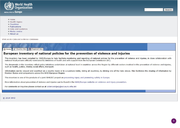
This inventory has been compiled by WHO/Europe to help facilitate monitoring and reporting of national policies for the prevention of violence and injuries, in close collaboration with national focal persons officially nominated by ministries of health
...
and with support from the European Commission (EC).
The documents in the inventory reflect policy initiatives undertaken at national level in countries across the Region by different sectors involved in the prevention of violence and injuries, such as health, justice, interior, social affairs, transport.
Information can be viewed and searched on a country basis or in a summary table, listing all countries, by clicking one of the tabs above. This facilitates the sharing of information by Member States and comparisons across the WHO European Region.
This inventory is one of the products of a joint WHO/EC project on preventing injury and promoting safety in Europe.
More information about prevention of violence and injuries can be found in the WHO/Europe website on violence and injury prevention.
more

The main objectives of these guidelines are to:
1. contribute to the quality assurance of medicinal plant materials used as the source for herbal medicines to improve the quality, safety and efficacy of finished herbal products; 2. guide the f ... ormulation of national and/or regional GACP guidelines and GACP monographs for medicinal plants and related standard operating procedures; and 3. encourage and support the sustainable cultivation and collection of medicinal plants of good quality in ways that respect and support the conservation of medicinal plants and the environment in general. These guidelines concern the cultivation and collection of medicinal plants and include certain post-harvest operations. more
1. contribute to the quality assurance of medicinal plant materials used as the source for herbal medicines to improve the quality, safety and efficacy of finished herbal products; 2. guide the f ... ormulation of national and/or regional GACP guidelines and GACP monographs for medicinal plants and related standard operating procedures; and 3. encourage and support the sustainable cultivation and collection of medicinal plants of good quality in ways that respect and support the conservation of medicinal plants and the environment in general. These guidelines concern the cultivation and collection of medicinal plants and include certain post-harvest operations. more
Q5.SCOPING QUESTION: In individuals with psychotic disorders (including schizophrenia) who require long-term antipsychotic treatment, what is the safety and role of depot antipsychotic medication?
Q7. SCOPING QUESTION: In adults with moderate-severe depressive disorder, what is the effectiveness and safety of antidepressant medication (ADM) in comparison with psychological treatment?
The WHO mhGAP programme’s existing guidelines recommen
...
d that either structured brief psychological treatments (e.g., interpersonal psychotherapy or cognitive behavioural therapy, including behavioural activation) or antidepressant medication (e.g., SSRIsi and tricyclic antidepressants) be considered in adults with moderate-severe depression. Health care workers need to know whether these treatments have different effects, including side-effects, in treating depressive disorder in the short and long term, in order to improve clinical decision-making.
more
Second-generation antipsychotic medications for psychotic disorders (including schizophrenia)
recommended
Q14. SCOPING QUESTION: In adults with psychotic disorders (including schizophrenia), what is the comparative effectiveness and safety of second-generation antipsychotic medications?
Module 5
Monitoring and Evaluation
October 2018
Module 5: Monitoring and evaluation. This module is for people responsible for monitoring PrEP programmes at the national and site levels. It provides information on how to monitor PrEP for safety
...
and effectiveness, suggesting core and additional indicators for site-level, national and global reporting.
more
Algorithm for COVID-19 triage and referral
recommended
Efficient triage of patients with COVID-19 at all health facility levels (primary, secondary and tertiary) will help the national response planning and case management system cope with patient influx, direct necessary medical resources to efficientl
...
y support the critically ill and protect the safety of health-care workers. The objective of this algorithm is to give overall guidance for the triage and referral of symptomatic COVID-19 patients. Intended for use by ministries of health, hospital administrators and health workers involved in response planning for COVID-19 and/or patient triage, management and referral, this algorithm provides a general framework to be adapted to local health systems in countries.
more
As vaccines get approved by national authorities, learn about National and WHO approval processes for vaccines and how safety is ensured during emergency approval of vaccines. Dr Mariângela Simão explains in Science in 5.
WHO PQS Devices Catalogue. Pre-qualified equipment for the Expanded Programme on Immunization (EPI)
recommended
The PQS on-line catalogue includes details of all immunization-related products currently pre-qualified by WHO for procurement by United Nations agencies. The catalogue is produced and maintained by the Quality, Safety and Standards group in the Imm
...
unization, Vaccine and Biologicals Department of WHO, Geneva. It replaces the old WHO/UNICEF Product Information Sheets (PIS), the last edition of which was published in 2000. Only products included in the PQS catalogue are now recommended to be purchased by UN agencies.
Large File: 120 MB
more
How far apart should the doses of vaccines be? What if I miss my second dose? Can I get two doses from two different manufacturers? How was safety of vaccines ensured? WHO’s Chief Scientist, Dr Soumya Swaminathan explains in Science in 5.
17 February 2021
This article is part of a series of explainers on vaccine development and distribution. Learn more about vaccines – from how they work and how they’re made to ensuring safety and equitable access – in WHO’s Vaccines Explain
...
ed series.
more
1 March 2021
This article is part of a series of explainers on vaccine development and distribution. Learn more about vaccines – from how they work and how they’re made to ensuring safety and equitable access – in WHO’s Vaccines Explained s
...
eries.
more
31 March 2021
This article is part of a series of explainers on vaccine development and distribution. Learn more about vaccines – from how they work and how they’re made to ensuring safety and equitable access – in WHO’s Vaccines Explained
...
series.
COVID-19 vaccines are safe, and getting vaccinated will help protect you against developing severe COVID-19 disease and dying from COVID-19. You may experience some mild side effects after getting vaccinated, which are signs that your body is building protection.
more
31 March 2021
This article is part of a series of explainers on vaccine development and distribution. Learn more about vaccines – from how they work and how they’re made to ensuring safety and equitable access – in WHO’s Vaccines Explained
...
series.
Vaccines are a critical tool in the battle against COVID-19, and getting vaccinated is one of the best ways to protect yourself and others from COVID-19.
more
Why does WHO recommend at this time, in June 2021, that vaccinating children is not a priority? When would their vaccination be prioritized? How is safety of these vaccines ensured? WHO’s Chief Scientist Dr Soumya Swaminathan explains in Science
...
in 5.
more
14 July 2021 This article is part of a series of explainers on vaccine development and distribution. Learn more about vaccines – from how they work and how they’re made to ensuring safety and equitable access – in WHO’s Vaccines Explained se
...
ries.
COVID-19 vaccines have proven to be safe, effective and life-saving. Like all vaccines, they do not fully protect everyone who is vaccinated, and we do not yet know how well they can prevent people from transmitting the virus to others. So as well as getting vaccinated, we must also continue with other measures to fight the pandemic.
Available in English, French, Spanish, Arabic, Chinese and Russian
more
This instructional video from the World Health Organization explains the evidence-based core components of infection prevention and control programmes, critical at both the national and acute health
...
care facility level for patient safety and for health systems to provide quality care. This video is brought to life by interviews from people in the field across a range of countries and describes the importance of the eight core components one by one. It will be a great addition to health care training sessions and the information is a key part of the infection prevention and control implementation and improvement process.
more
Many countries are using the approach of mixing vaccine doses from different manufacturers. What do we know about the safety and efficacy of this approach? What does the evidence tell us about using a fraction of the vaccine dose ? Dr Katherine O’
...
Brien explains in Science in 5 this week.
Closed Captioning is available for Science in 5 in several languages on YouTube:Spanish,Portuguese,Thai,Nepali,Maithili,BahasaandJapanese.
more
This e-course will guide you through the essentials of latest existing WHO guidelines and policy recommendations on drug-resistant TB. You will also learn more about the rationale behind the WHO recommendations for the management of DR-TB, implementation considerations for different regimens for eli
...
gible patient groups, adjunctive treatment, the active TB drug safety monitoring and management framework, and the analysis and interpretation of performance indicators.
The main focus of the e-course is programmatic; clinical aspects are only discussed when relevant to specific topics.
more
May 9, 2022.Since the onset of the COVID-19 pandemic, a large number of clinical trials have been planned and developed to assess the effectiveness and safety of various interventions that could prevent hospitalizations and progression to severe dis
...
ease in people infected with SARS-CoV-2. Currently, the WHO and the PAHO recommend the use of corticosteroids, tocilizumab, baricitinib, and casirivimab e imdevimab (the latter in seronegative COVID-19 patients) and propose the use of sotrovimab, casirivimab/imdevimab, and molnupiravir in patients with non-severe illness who are at high risk for complications
more

11 May 2022
What are WHO's recommendations for COVID-19 vaccines and children? And what does the evidence say so far about the safety of these vaccines in children? And if you live in a country where this vaccination is not available for your kids,
...
how can you keep them safe? WHO’s Dr Soumya Swaminathan explains in Science in 5.
more
Laboratory testing for the monkeypox virus
recommended
Any individual that meets the suspected case definition of monkeypox should be offered testing in appropriately equipped laboratories by staff trained in the relevant technical and safety procedures. Confirmation of monkeypox virus infection is base
...
d on nucleic acid amplification testing (NAAT), using real-time or conventional polymerase chain reaction (PCR), for detection of unique sequences of viral DNA. PCR can be used alone, or in combination with sequencing. The recommended specimen type for laboratory confirmation of monkeypox is skin lesion material, including swabs of lesion surface and/or exudate, roofs from more than one lesion, or lesion crusts.
more
This technical report summarizes the discussions on the status of programmatic transition to tenofovir, lamivudine and dolutegravir (TLD) in low– and middle- income countries, addressing the best practices and major challenges faced by HIV programmes.
The latest data on
...
safety and efficacy of dolutegravir (DTG) containing regimens were also reviewed. The document identified the remaining gaps in knowledge, research, monitoring, and surveillance on DTG and TLD transition and listed the future priorities.
more
These guidelines deal specifically with water, sanitation and hygiene, and are designed to be used in schools in low-cost settings in low- and medium-resource countries to:
• assess prevailing situations and plan for required improvements;
• develop and reach essential
...
safety standards as a first goal; and
• support the development and application of national policies.
more
The new WHO recommendations for rabies immunization supersede the 2010 WHO position
on pre-exposure prophylaxis (PrEP) and post-exposure prophylaxis (PEP) for rabies. These updated
recommendations are based on new evidence and directed by public health
...
needs that are cost-,
dose- and time-sparing, while assuring safety and clinical effectiveness. In addition, new guidance on
prudent use of rabies immunoglobulins (RIG) is provided.
The following sections summarize the main points of the updated WHO position as endorsed by the
Strategic Advisory Group of Experts on immunization (SAGE) at its meeting in October 20171. The full
version of the WHO position on rabies vaccines and immunoglobulins will be published in the Weekly
Epidemiological Record2 in April 2018.
Rabies prevention involves two main strategies: (i) dog vaccination to interrupt virus transmission to
humans; and (ii) human vaccination as a series of vaccine administrations before or after an exposure.
Currently, rabies vaccines made from inactivated cell cultures are extremely well tolerated and have no
contraindications.
more
Many vaccines and drugs hold the promise of reducing mortality and morbidity among pregnant women and infants living in low- and middle-income countries (LMICs). However, sufficient information on the safety of drugs and vaccines in pregnant women i
...
s rarely available at the time of product licensure or approval. To account for this, active safety surveillance efforts are needed during the post-licensure and post-approval
phase to assess the safety of drugs and vaccines in pregnant women and their offspring. Pregnancy exposure registries (PER) are used to monitor the safety of vaccines and drugs. PERs are observational studies that systematically collect health information on exposure to medical products such as drugs and vaccines during pregnancy. This review demonstrates that a number of resources presently exist in LMICs that perform active safety surveillance in pregnant populations. These results indicate such systems employ a wide variety of approaches, each with their own set of strengths and challenges, as summarized in the final section of the report.
more
Animicrobial resistance (AMR) was declared by the World Health Organization (WHO) as one of the
top 10 health threats facing humanity. The effects of AMR are far-reaching as it cuts across sectors
...
and affects food safety,
nutrition security, livelihoods, environment and, consequently, attainment of several sustainable development goals (SDGs)
more
In light of the decline in new Ebola cases, strategies are now needed to scale down the activities and bed capacities in Ebola care facilities. These facilities include Ebola treatment units, community care centres, Ebola treatment centres and isolation centres. The Governments of Guinea, Liberia an
...
d Sierra Leone; WHO; CDC; ICAN and UNICEF have jointly developed this rapid guidance and checklist to assist national governments and partners as they begin this process. This rapid guidance pertains to protecting the safety and repurposing of infrastructures and resources previously used for the Ebola outbreak to care for Ebola patients.
more
Ebola is a serious disease. Pre-deployment training and follow-up support is required to help personnel working in affected countries work safely and effectively. The ePROTECT course is a basic self-learning online introduction for personnel being deployed to work on the Ebola response. You can acce
...
ss the course from a computer or a tablet. Go to the website: http://www.who.int/csr/disease/ebola/training/health-safety/en/
more
People-centered approaches that help communities maintain protective behaviours and follow guidelines set out by public health and government agencies are more important than ever. The evidence is clear, communities play a role in preventing and con
...
trolling epidemics and they are best able to take action and slow or stop the spread of disease when properly engaged and empowered. This toolbox in 2 parts offers best practice approaches to community engagement with families. Promoting individual and joint responsibilities for the safety of the family, this toolbox aims to bring families and households together to manage shared risks and agree to safe behaviours critical for their safety and the safety of their community.
more
Laboratory biosafety manual
recommended
4th edition
The WHO Laboratory Biosafety Manual (LBM) has been in broad use at all levels of clinical and public health laboratories, and other biomedical sectors globally, serving as a de facto global standard that presents best practices and sets
...
trends in biosafety.
LBM encouraged countries to accept and implement basic concepts in biological safety and to develop national codes of practice for the safe handling of biological agents in laboratories within their geographical borders.
This fourth edition of the manual builds on the risk assessment framework introduced in the third edition. A thorough, evidence-based and transparent assessment of the risks allows safety measures to be balanced with the actual risk of working with biological agents on a case-by-case basis.
This novel evidence- and risk-based approach will allow optimised resource use and sustainable laboratory biosafety and biosecurity policies and practices that are relevant to their individual circumstances and priorities, enabling equitable access to clinical and public health laboratory tests and biomedical research opportunities without compromising safety.
more
This guide to local production of WHO-recommended handrub formulations is separated into two discrete but interrelated sections:
Part A provides a practical guide for use at the pharmacy bench during the actual preparation of the formulation. Users may want to display the material on the wall of
...
the production unit.
Part B summarizes some essential background technical information and is taken from WHO Guidelines on Hand Hygiene in Health Care (2009). Within Part B the user has access to important safety and cost information and supplementary material relating to dispensers and distribution.
more
Good primary care may lead to fewer avoidable hospitalizations, but unsafe primary care can cause avoidable illness and injury, leading to unnecessary hospitalizations, and in some cases, disability and even death.Implementing system changes and practices are crucial to improve
...
safety at all levels of health care. Recognizing the paucity of accessible information on primary care, World Health Organization (WHO) set up a Safer Primary Care Expert Working Group. The Working Group reviewed the literature, prioritized areas in need of further research and compiled a set of nine monographs which cover selected priority technical topics. WHO is publishing this technical series to make the work of these distinguished experts available to everyone with an interest in Safer Primary Care.The aim of this technical series is to provide a compendium of information on key issues that can impact safety in the provision of primary health care.
more
This guide is intended for people involved in the management and operation of small- to mediumsized organized water supply systems. The content has been developed with particular consideration for operational-level personnel with responsibility for chlorination (for example, water treatment plant op
...
erators and technicians). The material presented within this guide may also be relevant for engineers and representatives from public health, local government, non-governmental organizations, as well as any other individuals supporting water safety planning activities for the supply of safe drinking-water.
Part 1. Chlorination principles: Describes key chlorination concepts, providing a knowledge foundation for the implementation of effective chlorination practices.
Part 2. Chlorination practices: Describes the practical application of the concepts presented in Part 1, including calculations and procedures for safe and effective chlorination of drinking-water supplies. more
Part 1. Chlorination principles: Describes key chlorination concepts, providing a knowledge foundation for the implementation of effective chlorination practices.
Part 2. Chlorination practices: Describes the practical application of the concepts presented in Part 1, including calculations and procedures for safe and effective chlorination of drinking-water supplies. more
Small drinking-water supplies commonly experience operational, managerial, technical and resourcing challenges that impact their ability to deliver safe and reliable services. The needs and opportunities associated with these supplies therefore warrant explicit consideration in policies and regulati
...
ons.
These Guidelines, specifically tailored to small water supplies, build on over 60 years of guidance by the World Health Organization (WHO) on drinking-water quality and safety. They focus on establishing drinking-water quality regulations and standards that are health based and context appropriate; on proactively managing risks through water safety planning and sanitary inspections; and on carrying out independent surveillance. The guidance is intended primarily for decision-makers at national and subnational levels with responsibility for developing regulatory frameworks and support programmes related to these activities. Other stakeholders involved in water service provision will also benefit from the guidance in this document.
Designed to be practical and accessible, these Guidelines offer clear guidance that is rooted in the principle of progressive improvement. State-of-the-art recommendations and implementation guidance are provided, drawn from a comprehensive evidence review and established good practices. Additionally, case examples are provided from countries and areas around the world to demonstrate how the guidance in this publication has been implemented in practice in a wide variety of contexts.
Together with WHO’s 2024 Sanitary inspection packages – a supporting tool for the Guidelines for drinking-water quality: small water supplies, these Guidelines update and supersede WHO’s 1997 Guidelines for drinking-water quality. Volume 3: surveillance and control of community supplies. Key changes to this updated publication include a greater focus on preventive risk management and a broader range of small water supplies covered, including those managed by households, communities and professional entities.
more
Workplaces outside of healthcare facilities can be also settings for transmission of COVID-19. Outbreaks of COVID-19 has been reported in various types of workplaces and job categories.
All workers should be protected from acquiring COVID-19 because of their work. The prevention of COVID-19 in
...
work settings should be combined with measures for protecting physical and mental health, safety and wellbeing of workers from other occupational hazards in the operation, closures and reopening of workplaces.
This joint WHO/ILO policy brief provides a summary of the evidence for transmission of COVID-19 in general workplaces and an overview of WHO and ILO recommendations for prevention and mitigation of COVID-19 and for protecting health and safety at work in the context of the pandemic.
more

The Infection prevention and control in the context of coronavirus disease 2019 (COVID-19): a living guideline consolidates technical guidance developed and published during the COVID-19 pandemic into evidence-informed recommendations for infection prevention and control (IPC). This living guideline
...
is available both online and PDF.
**This version of the living guideline (version 5.0) **includes the following seven revised statements for the prevention, identification and management of SARS-CoV-2 infections among health and care workers:
a good practice statement on national and subnational testing strategies;
a good practice statement on passive syndromic surveillance of health and care workers;
a good practice statement on prioritizing health and care workers for SARS-CoV-2 testing;
a good practice statement on protocols for reporting and managing health and care worker exposures;
a good practice statement to limit in-person work of health and care workers with active SARS-CoV-2 infections;
a statement on high-risk exposures and quarantine; and,
a conditional recommendation on the duration of isolation for health and care workers.
Understanding the updated section
Prevention of infections in the health care setting includes a multi-pronged and multi-factorial approach that includes IPC and occupational health and safety measures and adherence to Public Health and Social Measures in the community by the health workforce. The underlying infection prevention and control strategy of this section is the notion that early identification of symptomatic cases, testing and quarantining/isolating health and care workers decreases the risk of nosocomial infection to patients and to other health and care workers.
more
The Guidelines for drinking-water quality: small water supplies have been developed to address the needs and opportunities associated with small supplies to facilitate progressive improvement towards safe and sustainable drinking-water services for all. These Guidelines are based on the principal re
...
commendation in the World Health Organization’s Guidelines for drinking-water quality, and they provide guidance on applying that recommendation to small water supplies in particular. These Guidelines aim to help governments and practitioners improve the safety of drinking-water delivered through small supplies.
more

Essential Medicines are those that satisfy the priority health care needs of the population. They are selected with due regard to public health relevance, evidence on efficacy,
...
safety and comparative cost-effectiveness. This edition of the Essential Medicines List (EML) 2017 for Ghana has been derived from its companion Standard Treatment Guidelines 2017 to ensure harmony in treatment, procurement and re-imbursements. The medicines listed have been coded according to the Health Commodity
Codes Catalogue of the Ministry of Health (2008) and their levels of use, based on the type of health facility, including midwifery practice, have been indicated.
more
Ethical considerations for use of unregistered interventions for Ebola viral disease
World Health Organization
(2014)
West Africa is experiencing the largest, most severe, most complex outbreak of Ebola virus disease in history. On 11 August 2014, WHO convened a consultation where the participants concluded that in the particular context of the current Ebola outbreak in West Africa, it is ethically acceptable to of
...
fer unproven interventions that have shown promising results in the laboratory and in animal models but have not yet been evaluat-
ed for safety and efficacy in humans as potential treatment or prevention
more
WHO Pharmacovigilance indicators: a practical manual for the assessment of pharmacovigilance systems
This manual provides a practical method for determining the pharmacovigilance indices. It is designed to be simple and can be understood by any worker in pharmacovigilance without formal training in monitoring and evaluation. Pharmacovigilance as a medical discipline is crucial in preventing medicin
...
e-related adverse effects in humans, promoting patient safety, and the rational use of medicines. The indicators proposed in this manual are based on the expected functions of pharmacovigilance centres as described in the WHO Mimimum Requirements for a Functional Pharmacovigilance System (1) (see Annex 1 of the manual).
more
Selection and Use of Essential Medicines 2021
recommended
The 23rd meeting of the WHO Expert Committee on Selection and Use of Essential Medicines was coordinated from Geneva, Switzerland, and held virtually from 21 June to 2 July 2021. The Committee considered 88 applications proposing additions, changes and deletions of medicines, medicine classes and fo
...
rmulations on the Model Lists of Essential Medicines. The Committee evaluated the scientific evidence for comparative effectiveness, safety and cost-effectiveness of the medicines in question. The Committee also considered a review of the therapeutic alternatives for medicines on the Model Lists, and update to the AWaRe classification of antibiotics, and reviews and reports relevant to the selection and use of essential medicines.
more
These guidelines provide a recommendation on iodine thyroid blocking (ITB), via oral administration of stable iodine, as an urgent protective action in responding to a nuclear accident. This recommendation aims to support emergency planners, policy makers, public
...
health specialists, clinicians and other relevant stakeholders, in order to strengthen public health preparedness for radiation emergencies in WHO Member States as required by the International Health Regulations (IHR) and in line with the international safety standards (GSR Part 7). The scope of the guidelines is confined to public health aspects of planning and implementation of ITB before and during a radiation emergency, such as dosage and timing of ITB administration, adverse effects of stable iodine, its packaging, storage, and distribution.
These guidelines supersede the 1999 WHO Guidelines for Iodine Prophylaxis following Nuclear Accidents.
more

WHO Regional Publications, Western Pacific Series No. 23
Reports the findings and recommendations of a working group convened to prepare guidelines for the use of herbal medicines in Western Pacific countries. Addressed to national health autho ... rities, the report responds to the widespread use of herbal medicine in this part of the world and the corresponding need for mechanisms to ensure that these products are safe and effective, yet remain broadly accessible. With this need in mind, the report sets out a comprehensive framework for developing national policies designed to control the safety, efficacy, and quality of herbal medicines, manufacturing practices, product registration, and labelling, marketing, and trade. more
Reports the findings and recommendations of a working group convened to prepare guidelines for the use of herbal medicines in Western Pacific countries. Addressed to national health autho ... rities, the report responds to the widespread use of herbal medicine in this part of the world and the corresponding need for mechanisms to ensure that these products are safe and effective, yet remain broadly accessible. With this need in mind, the report sets out a comprehensive framework for developing national policies designed to control the safety, efficacy, and quality of herbal medicines, manufacturing practices, product registration, and labelling, marketing, and trade. more

Guideline
Iron deficiency is one of the most common forms of nutritional deficiencies, particularly among vulnerable groups such as women, children and low-income populations. Iron deficiency often precedes anaemia, and anaemia during pregnancy is one of the strongest predictors of anaemia duri ... ng the postpartum period, beginning just after childbirth throughout the subsequent 6 weeks. The consequences of iron deficiency and anaemia during the postpartum period can be serious and have long-term health implications for the mother and her infant.
This guideline reviews the evidence on the safety and effectiveness of iron supplementation in postpartum women. more
Iron deficiency is one of the most common forms of nutritional deficiencies, particularly among vulnerable groups such as women, children and low-income populations. Iron deficiency often precedes anaemia, and anaemia during pregnancy is one of the strongest predictors of anaemia duri ... ng the postpartum period, beginning just after childbirth throughout the subsequent 6 weeks. The consequences of iron deficiency and anaemia during the postpartum period can be serious and have long-term health implications for the mother and her infant.
This guideline reviews the evidence on the safety and effectiveness of iron supplementation in postpartum women. more
Report of the 23rd WHO Expert Committee on the selection and use of essential medicines
This executive summary reports the recommendations made by the Expert Committee for the 2021 update of the WHO Model List of Essential Medicines (EML) and the Model List of Essential Medicine for Children (EMLc)
...
.
The 23rd meeting of the WHO Expert Committee on Selection and Use of Essential Medicines was coordinated from Geneva, Switzerland, and held virtually from 21 June to 2 July 2021. The Committee considered 88 applications proposing additions, changes and deletions of medicines, medicine classes and formulation on the Model Lists of Essential Medicines. The Committee evaluated the scientific evidence for comparative effectiveness, safety and cost-effectiveness of the medicines in question. The Committee also considered a review of the therapeutic alternatives for medicines on the Model Lists, and update to the AWaRe classification of antibiotics, and reviews and reports relevant to the selection and use of essential medicines.
more
The aims of these guidelines are to provide guidance to health-care providers (i.e. the end-users of these guidelines: physicians, nurses, pharmacists and caregivers) on the adequate relief of pain associated with cancer. They also assist policy-mak
...
ers, programme managers and public health personnel to create and facilitate appropriately balanced policies on opioids and prescribing regulations for effective and safe cancer pain management. Proper and effective stewardship of opioid analgesics in the cancer treatment setting is essential to ensure the safety of patients and to reduce the risk of diversion of medicine into society.
The goal of cancer pain management is to relieve pain to a level that allows for an acceptable quality of life.
more
Module 12:
Adolescents and young adults
July 2018
Module 12: Adolescents and young adults. This module is for people who are interested in providing PrEP services to older adolescents and young adults who are at substantial risk for HIV. It provides information on: factors that influence HIV
...
susceptibility among young people; clinical considerations for safety and continuation on PrEP; ways to improve access and service utilization; and inclusive monitoring approaches to improve the recording and reporting of data on young people.
more
Faith-based organizations (FBOs) and leaders can play a major role in saving lives and reducing illness related to COVID-19. They are a primary source of support and comfort for their members. Often trusted more than governments or health-agencies,
...
faith leaders can share health information to protect their communities that will be more likely to be accepted than from other sources.
By sharing simple steps to prevent COVID-19 faith organizations can promote helpful information, reduce fear and stigma, and provide reassurance to people in their communities. Because faith leaders are integrated into their communities through service and compassionate networks, they are often able to reach the most vulnerable among us with assistance and health information. In short, they are a critical link in the safety net for vulnerable people in their communities.
more
Migrants are less familiar in their new environment in which they temporarily live. They are prone to various social, psychological and emotional trauma in such situations, emanating from fear of neglect by the local community and concerns about wellbeing and
...
safety of their families waiting in their native places. Migrants are forced to leave their native places in search of better opportunities and earnings, sometime leaving behind their families. In many instances, the families in native places depend partially or entirely on the money sent by the migrant earning members of the family.
more
This document updates the earlier version published in April 2020. In recent weeks, information on the potential use of chloroquine or hydroxychloroquine for the treatment of people with COVID-19 has been disseminated in academic journals and public media. Although there are now ongoing clinical tri
...
als testing the efficacy and safety of several medicines for COVID-19, as of the date of this document, there is a lack of quality evidence to demonstrate chloroquine and/or hydroxychloroquine are effective in the treatment of COVID-19. Evidence is recently emerging via small studies with sub-optimal methodologies that are conflicting.
more
COVID-19 vaccine tracker and landscape
recommended
The COVID-19 vaccine tracker and landscape compiles detailed information of each COVID-19 vaccine candidate in development by closely monitoring their progress through the pipeline.
The COVID-19 vaccine tracker:
Provides summary tables of COVID-19 vaccine candidates in both clinical and pre-
...
clinical development;
Provides analysis and visualization for several COVID-19 vaccine candidate categories;
Tracks the progress of each vaccine from pre-clinical, Phase 1, Phase 2 through to Phase 3 efficacy studies and including Phase 4 registered as interventional studies;
Provides links to published reports on safety, immunogenicity and efficacy data of the vaccine candidates;
Includes information on key attributes of each vaccine candidate and
Allows users to search for COVID-19 vaccines through various criteria such as vaccine platform, schedule of vaccination, route of administration, developer, trial phase and clinical endpoints.
The database is updated regularly - twice a week (Tuesday and Friday, 17:00 CET).
more

The purpose of this document is to present and promote the minimum requirements for IPC programmes at the national and health care facility level, identified by expert consensus according to available evidence and in the context of the WHO core comp
...
onents.
The minimum requirements are defined as: IPC standards that should be in place at the national and facility level to provide minimum protection and safety to patients, HCWs and visitors, based on the WHO core components for IPC programmes.
more
People-centered approaches that help communities maintain protective behaviours and follow guidelines set out by public health and government agencies are more important than ever. The evidence is clear, communities play a role in preventing and con
...
trolling epidemics and they are best able to take action and slow or stop the spread of disease when properly engaged and empowered. This toolbox in 2 parts offers best practice approaches to community engagement with families. Promoting individual and joint responsibilities for the safety of the family, this toolbox aims to bring families and households together to manage shared risks and agree to safe behaviours critical for their safety and the safety of their community.
more
When situations occur in which unwanted events are rightly or wrongly connected with vaccination, they may erode confidence in vaccines and the authorities delivering them. This document presents the scientific evidence behind WHO’s recommendations on building and restoring confidence in vaccines
...
and vaccination, both in ongoing work and during crises. The evidence draws on a vast reserve of laboratory research and fieldwork within psychology and communication. It examines how people make decisions about vaccination; why some people are hesitant about vaccination; and the factors that drive a crisis, covering how building trust, listening to and understanding people, building relations, communicating risk and shaping messages to the audiences may mitigate crises. This document provides a knowledge base for stakeholders who develop communication strategies or facilitate workshops on communication and trust-building activities in relation to vaccines and immunization, such as immunization programme units, ministries of health, public relations and health promotion units, vaccine safety communication trainers and immunization advisory bodies.
more
Tackling COVID-19 misinformation. Ensuring communities have access to lifesaving public health information from trusted sources and are not misled by misinformation is essential to ending the COVID-19 pandemic.
In an effort to empower doctors an
...
d nurses – some of the most effective and trusted messengers of public health information – to actively address COVID-19 misinformation and build vaccine confidence globally, the WHO welcomes this social media toolkit for healthcare practitioners, developed by the Government of the United Kingdom.
This toolkit aims to provide healthcare workers with the tools, skills and content needed to effectively share authentic and reliable information online. Centered around three core vaccine confidence messages, Vaccine Safety, Vaccine Development and Vaccine Reducing Risk of Sickness; this toolkit sets out three approaches: creating your own posts, posting the images and videos provided in the toolkit, or resharing vaccine information from trusted sources.
more
This chronology of facts has challenged public health systems worldwide and regulatory bodies are no exception. Regulatory authorities with mechanisms in place to authorize the use of investigational products had to development guidelines and proced
...
ures, create task forces and alliances to maximize the efficiency of assessment, review and authorizations of medical products. Vaccines are undoubtedly the most complex medical products to develop, from concept to a stage where sufficient evidence of quality, safety and efficacy are collected to provide an assurance that their use will provide more benefits than risks when used in the context of a public health emergency.
more
Development of one or more vaccines for Neisseria gonorrhoeae is an important objective for sexual and reproductive health worldwide, and for the fight against antimicrobial resistance.
WHO preferred product characteristics (PPCs) provide strateg
...
ic guidance as to WHO’s preferences for new vaccines in priority disease areas. PPCs are intended to encourage innovation and development of vaccines for use in settings most relevant to the global unmet public health need.
Gonococcal vaccine PPCs describe global public health goals for gonococcal vaccines and preferred parameters pertaining to vaccine indications and target populations, safety and efficacy considerations, and immunization strategies.
more
The roadmap describes the actions needed to
achieve the three development goals for TB
vaccines set by the WHO:
1. A safe, effective and affordable TB vaccine
for adolescents and adults.
2. An affordable TB vaccine for neonates and
infants with improved
...
safety and efficacy.
3. A therapeutic vaccine to improve TB
treatment outcomes
more
Antimicrobial resistance (AMR) is a multifaceted, international public health problem, which poses a direct threat to the safety of the population of South Africa. A national response is required to
...
complement the development of a global plan, as articulated in the WHO’s draft resolution EB134/37 “Combating antimicrobial resistance including antibiotic resistance”, adopted by theWorld Health Assembly in May 2014. The overuse of antimicrobials is driving resistance. A return to appropriate, targeted antimicrobial use in humans, animals and the environment is critical if we are to conserve the antimicrobial armamentarium. Various interventions have been put in place to address antimicrobial resistance in South Africa. However, these are insufficient to effectively tackle the threat faced by the country. The strengths of the current system are outweighed by its weaknesses.
more
Acupuncture has been practised for more than 2500 years in the Western Pacific Region and has become a global therapeutic method in recent decades. However, it was reportedthat acupuncturists differed by up to 25% in the acupuncture points they used, raising doubts and uncertainty regarding the effi
...
cacy and safety of acupuncture treatment, as well as causing difficulties in the fields of acupuncture research and education.
more
National Guidelines for the Treatment of Malaria - 2019
South African Malaria Elimination Committee (SAMC)
National Department of Health South Africa
(2019)
CC
These guidelines are based on the 3rd Edition of the WHO Guidelines (Published 2015) World Health Organization’s Guidelines for the treatment of malaria. Additional literature surveys have been undertaken. Factors that were considered in the choic
...
e of therapeutic options included effectiveness, safety, and impact on malaria transmission and on the emergence and spread of antimalarial drug resistance. On-going surveillance is critical given the spread of artemisinin resistance in Southeast Asia, although not yet confirmed anywhere in Africa. The guidelines on the treatment of malaria in South Africa aim to facilitate effective, appropriate and timeous treatment of malaria, thereby reducing the burden of this disease in our communities. This is essential to further reduce the malaria case fatality rates currently recorded in South Africa, to decrease malaria transmission and to limit resistance to antimalarial drugs.
more
Welcome to Global Pharmacovigilance. This is an open-access collaborative forum for sharing experiences, knowledge and tools relating to pharmacovigilance and other patient/research participant safety-related issues.
On 15–16 December 2020, WHO and the Medicines for Malaria Venture co-convened a technical consultation to consider the preferred product characteristics (PPCs) for drugs used in malaria chemoprevention. The main goal of the technical consultation was to agree on the most important PPCs for drugs t
...
o protect populations from malaria (chemoprevention), while considering relevant measures of efficacy and the safety data needed to support WHO policy recommendations.
more

Dengue is the fastest spreading, mosquito-borne viral infectious disease worldwide, with remarkable morbidity and mortality. In the past decades, profound contributions have been made towards understanding its epidemiology, including disease burden and distributions, risk factors, and control and pr
...
evention practices. Dengue continues to disseminate to new areas, including high latitude regions, and a new serotype (dengue virus serotype 5) has been identified. Vaccine research has made new progress, in which the licensed yellow fever and dengue virus quadrivalent chimeric vaccine is now under further safety assessment. In disease surveillance, because of its operational simplicity, rapidity, capability, and utility as an indicator of disease severity, dengue virus NS1 antigen detection has great promotion and application value among primary health care institutions. Vector control progress has driven new breakthroughs in biotechnology, including Wolbachia-infected Aedes and genetically modified Aedes. Both Aedes variants have been used to block transmission of the dengue virus through population replacement and suppression. In the future, vector control should still be pursued as a key measure to prevent transmission, along with anti-viral drug and vaccine research.
more
A sanitary inspection is a simple, on-site evaluation (traditionally using a checklist) to help identify and support the management of priority risk factors that may lead to contamination of a drinking-water supply. Sanitary inspections are a well-established and widely-applied practice. They can su
...
pport water safety planning, and in some contexts, may be a simplified alternative to water safety plans.
This publication presents the World Health Organization’s (WHO’s) sanitary inspection packages. These packages update the sanitary inspection forms in WHO’s 1997 Guidelines for drinking-water quality. Volume 3: surveillance and control of community supplies. With more than 25 years of practical experience with the application of sanitary inspections, these packages have been developed from a comprehensive evidence review and established good practices.
more
The document, "Sustainable Management of Radiotherapy Facilities and Equipment," by WHO and IAEA, provides guidelines for managing radiotherapy equipment and facilities to ensure effective and safe cancer treatment. It covers essential aspects like preventive and corrective maintenance, funding, inf
...
rastructure, and staffing requirements for sustainable operation. The document aims to support radiotherapy departments, especially in low-resource settings, by outlining strategies for equipment procurement, maintenance, and replacement, emphasizing safety, quality assurance, and optimal patient care.
more
OpenWHO is an interactive, web-based, knowledge-transfer platform offering free online courses to improve the response to health emergencies. In summary, OpenWHO currently offers courses covering the following topics and languages to support the re
...
sponse to COVID-19:
A general introduction to emerging respiratory viruses, including novel coronaviruses (available in Arabic, Chinese, English, French, Russian, Spanish, Hindi, Hungarian, Indian Sign Language, Indonesian, Macedonian, Persian, Portuguese, Serbian, Turkish and Vietnamese);
Clinical care SARI (available in English, French, Russian, Spanish, Indonesian, Portuguese and Vietnamese);
Health and safety briefing for respiratory diseases – ePROTECT (available in Chinese, English, French, Russian, Spanish, Indonesian and Portuguese);
IPC for COVID-19 (available in Chinese, English, French, Russian, Spanish, Indonesian, Italian, Japanese, Macedonian, Portuguese, Serbian and Turkish);
COVID-19 operational planning guidelines and partners platform to support country preparedness and response (available in Chinese, English, French, Russian and Portuguese);
SARI treatment facility design (available in Arabic, English and Portuguese);
An introduction to Go.Data (available in English and in additional languages); and
How to put on and remove PPE for COVID-19 (available in English and in additional languages).
more
2nd edition. This is a revision of an illustrated booklet developed by the Pan American Health Organization and the Caribbean Development Bank. It is meant as a tool to help the general population of the Caribbean care for themselves and their commu
...
nities during crisis situation. The booklet explains in a simple language, with a simple language with the help of graphics, the main elements of psychological first aid (PFA). The revised edition includes special safety and disease prevention considerations due to the COVID-19 pandemic while providing PFA.
more
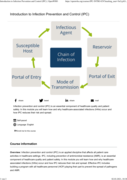
Online Course. Infection prevention and control (IPC) is an essential component of healthcare quality and patient safety. In this module you will learn how and why healthcare-associated infections (HAIs) occur and how IPC reduces their risk and spre
...
ad.
more
Antimicrobial resistance (AMR) represents a major global threat across human, animal, plant food and environmental sectors, threatening the effective treatment of an ever-increasing range of infections caused by bacteria, parasites, viruses and fungi, resulting in prolonged illness and increased mor
...
tality, often felt hardest by the most vulnerable populations. AMR also endangers the sustainability of agri-food systems and food safety.
Since 2010 there is a strong commitment from FAO, OIE and PAHO to fight AMR, working together to mitigate the risks in the interconnection among the human health, animal health and the environment. In this context, the organizations now joined forces in the implementation of the project ‘Working Together to Fight Antimicrobial Resistance’ to ensure a coherent “One Health” approach recognizing the multidimensionality and necessity of an intersectoral response that is needed to address the problem of AMR.
The overall strategic objective of the three-year project (2020-22) supported and financed by the European Union (EU) is to contribute to tackle AMR through the implementation of National AMR Action Plans by working with seven Latin American partner countries: Argentina, Brazil, Chile, Colombia, Paraguay, Peru and Uruguay.
more
Workplaces have played an important role in both the spread and mitigation of the COVID-19 pandemic throughout the world. Being provided a healthy and safe workplace throughout the pandemic and beyond is a human right. Maintaining open, safe and healthy workplaces is of vital importance to protectin
...
g livelihoods, wellbeing and public health. Critical public health measures can help protect workers, their clients, and the community at large. Through an introduction and 5 modules, this course aims to guide workers and their representatives, business leaders, employers, managers and occupational health and safety professionals on how to protect themselves and their workplace during the COVID-19 pandemic.
more
Textes du Codex concernant la résistance aux antimicrobiens d’origine alimentaire
Textos del Codex sobre la resistencia a los antimicrobianos transmitida por los alimentos
Antimicrobial resistance (AMR) is a major global public health conce
...
rn and a food safety issue. When pathogens become resistant to antimicrobial agents they can pose a greater human health risk as a result of potential treatment failure, loss of treatment options and increased likelihood and severity of disease
more
This guideline is intended to provide recommendations to applicants wishing to submit applications for the registration of medicines. It represents the Medicines Control Council’s current thinking on the safety, quality and efficacy of medicines.
...
more

The National Guidelines for HIV-1 Viral Load Laboratory Testing support plans to scale up viral load (VL) testing to reach the 90-90-90 targets in India. This phased scale-up includes the setup of 70 additional VL testing laboratories nationally. These guidelines include laboratory design considerat
...
ions, a summary of VL technologies, and specimen collection and handling as well as transportation and storage guidance. Quality control and quality assurance requirements are described as well as laboratory safety issues. The guidelines also describe the VL laboratory network to be developed with supply chain management issues and commodities described. Annexes include laboratory registers and reporting forms.
more
The global tripartite self-assessment survey of country progress in addressing antimicrobial resistance (AMR) is a component of a broader approach for monitoring and evaluation of the global action plan on AMR. This report analyses the results of the second tripartite self-assessment survey. It has
...
been developed and run by the three Tripartite organizations (Food and Agriculture Organization of the United Nations (FAO), World Organisation for Animal Health (OIE) and World Health Organization (WHO)) and reflects progress in the human, animal (terrestrial and aquatic), plant, food safety and environmental sectors. 154 countries out of 194 WHO Member States responded to this round of the self-assessment survey – a response rate of 79.4%.
more
The second ECDC/EFSA/EMA joint report on the integrated analysis of antimicrobial consumption (AMC) and antimicrobial resistance (AMR) in bacteria from humans and food-producing animals addressed data obtained by the Agencies’ EU-wide surveillance networks for 2013–2015. AMC in both sectors, exp
...
ressed in mg/kg of estimated biomass, were compared at country and European level. Substantial variations between countries were observed in both sectors. Estimated data on AMC for pigs and poultry were used for the first time. Univariate and multivariate analyses were applied to study associations between AMC and AMR. In 2014, the average AMC was higher in animals (152 mg/kg) than in humans (124 mg/kg), but the opposite applied to the median AMC (67 and 118 mg/kg, respectively). In 18 of 28 countries, AMC was lower in animals than in humans. Univariate analysis showed statistically-significant (p < 0.05) associations between AMC and AMR for fluoroquinolones and Escherichia coli in both sectors, for 3rd- and 4th-generation cephalosporins and E. coli in humans, and tetracyclines and polymyxins and E. coli in animals. In humans, there was a statistically-significant association between AMC and AMR for carbapenems and polymyxins in Klebsiella pneumoniae. Consumption of macrolides in animals was significantly associated with macrolide resistance in Campylobacter coli in animals and humans. Multivariate analyses provided a unique approach to assess the contributions of AMC in humans and animals and AMR in bacteria from animals to AMR in bacteria from humans. Multivariate analyses demonstrated that 3rd- and 4th-generation cephalosporin and fluoroquinolone resistance in E. coli from humans was associated with corresponding AMC in humans, whereas resistance to fluoroquinolones in Salmonella spp. and Campylobacter spp. from humans was related to consumption of fluoroquinolones in animals. These results suggest that from a ‘One-health’ perspective, there is potential in both sectors to further develop prudent use of antimicrobials and thereby reduce AMR.
more

Antimicrobial resistance (AMR) is a global human, animal, plant and environment health threat that needs to be addressed by every country. The impacts of AMR are wide-ranging in terms of human health
...
, animal health, food security and safety, environmental effects on ecosystems and biodiversity, and socioeconomic development. Just like the climate crisis, AMR poses a significant threat to the delivery of the 2030 Agenda for Sustainable Development. The response to the AMR crisis has been spearheaded through the global action plan on antimicrobial resistance (GAP-AMR), developed by the World Health Organization (WHO) in 2015, in close collaboration with the Food and Agriculture Organization of the United Nations (FAO) and the World Organisation for Animal Health (WOAH), and formally endorsed by the three organizations’ governing bodies and by the Political Declaration of the high-level meeting of the United Nations General Assembly on AMR in 2016. In 2022, the three organizations officially became the Quadripartite by welcoming the United Nations Environment Programme (UNEP) into the alliance “to accelerate coordination strategy on human, animal and ecosystem health”.
The aim of the GAP-AMR is to ensure the continuity of successful treatment with effective and safe medicines.
Its strategic objectives include:
• improving the awareness and understanding of AMR;
• strengthening the knowledge and evidence base through surveillance and research;
• reducing the incidence of infection through effective sanitation, hygiene and infection prevention measures; optimizing the use of antimicrobial medicines in human and animal health; and
• developing the economic case for sustainable investment that takes account of the needs of all countries and increasing investment in new medicines, diagnostic tools, vaccines and other interventions.
With the adoption of the GAP-AMR, countries agreed to develop national action plans (NAPs) aligned with the GAP-AMR to mainstream AMR interventions nationally. Individually, the Quadripartite took action to advance AMR interventions in their respective sectors. FAO adopted a resolution on AMR recognizing that it poses an increasingly serious threat to public health and sustainable food production, and developed an AMR action plan to support the resolution’s implementation. For its part, WOAH developed a strategy on AMR aligned with the GAP-AMR, acknowledging the importance of a One Health approach to AMR. Similarly, more recently, UNEP’s governing body, the United Nations Environment Assembly, recognized that AMR is a current and increasing threat and a challenge to global health, food security and the sustainable development of all countries, and welcomed the GAP-AMR and the NAPs developed in accordance with its five overarching strategic objectives
more
Infection prevention and control (IPC) in a CTC/ CTU IPC are all practical measures taken in the healthcare facility to prevent harm caused by infections to patients, health workers and communities.
The main goal of IPC in the cholera response is
...
to
• To reduce transmission of health care-associated infections of cholera and any other infectious disease
• To enhance the safety of staff, patients and visitors
• To enhance the ability of the organization/health care facility to respond to an outbreak
• To reduce the risk of the hospital (health care facility) itself amplifying the outbreak
Water, Sanitation and Hygiene (WASH)
WASH are all measures taken to guarantee environmental hygiene, safe water of all used within the health facility. It encompasses water, sanitation, waste management, cleaning within the health facility which in this case is CTU/C. A complete WASH package in the CTU/CTC reduces the risk of spread of Vibrio cholerae inside and outside the CTC/CTU.
The probability of spreading or acquiring cholera through a CTC/CTU can be highly reduced when proper IPC and WASH measures are respected, followed and monitored. These measures are, in principle, valid in CTC/CTUs and ORPs, although they need to be adapted to the specific characteristics of the facility concerned.
more
The safety of medicines in Zambia - why health workers need to take action | Produced by the National Pharmacovigilance Unit (NPVU)
Manufacturing Facility Assessment Toolkit
recommended
Tools and resources for occupational safety and health professionals and state and local public health officials assessing manufacturing facilities
...
.
Occupational safety and health professionals and state and local public health officials can use these tools to assess coronavirus disease 2019 (COVID-19) infection prevention and control measures at manufacturing facilities, as well as these facilities’ overall hazard assessment and control plans
more
