
Filter
2788
Text search:
Health
Care
without
Harm
Featured
312
642
Language
Document type
1541
409
405
207
88
65
40
15
7
6
2
2
1
Countries
126
112
66
58
49
46
45
40
38
33
33
31
31
29
26
26
26
21
20
20
19
19
18
18
17
16
16
13
13
12
12
11
11
11
10
10
10
10
9
9
8
8
8
8
8
8
8
7
7
6
6
6
5
5
5
5
5
4
4
4
4
4
4
4
3
3
3
3
3
3
3
3
3
2
2
2
2
2
2
2
2
2
2
2
2
2
2
1
1
1
1
1
1
1
1
1
1
1
1
1
1
1
1
1
1
1
1
1
1
1
1
1
1
1
1
1
1
1
Authors & Publishers
Publication Years
Category
691
224
221
144
140
84
23
2
Toolboxes
455
335
214
124
111
100
100
98
88
72
58
54
49
44
36
34
28
19
17
15
11
10
9
1
1
WHO/HTM/HIV/2007.01 WHO/HTM/TB/2007.380
This document is intended for a wide audience including national and local policymakers, implementers and managers of national and local maternal and child health programmes, non-governmental and other organizations and professional societies involv
...

Humanitarian emergencies and crises (Humanitarian emergencies and crises) are large-scale events that may result in the breakdown of health care systems and society, forced displacement, death, and
...
This is an open-access training course for frontline healthcare providers who manage acute illness and injury with limited resources. Produced in response to requests from multiple countries and international partners, the BEC package includes a Participant Workbook and electronic slide decks for ea
...
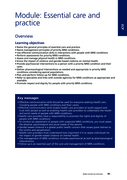
Overview
Learning objectives
• Name the general principles of essential care and practice.
• Name management principles of priority MNS conditions.
• Use effective communication skills in interactions with people with MNS conditions.
•
...
he WHO Guidelines on Integrated Care for Older People (ICOPE) propose evidence-based recommendations for health care professionals to prevent, slow
...
The ICOPE Implementation Framework provides a score card to help assess the overall capacity of health and social care services and systems to deliver integrated
...

This guideline aims to improve the quality of essential, routine postnatal care for women and newborns with the ultimate goal of improving maternal and newborn health and well-being. It recognizes a
...
Volume 1 covers emergency triage assessment and treatment, and acute care for a severely ill or acutely injured patient for approximately the first 24 hours of care. It describes the clinical proced
...
The objectives of these WHO guidelines are to provide updated evidence- based recommendations for the treatment of persons with hepatitis C infection using, where possible, all DAA-only combinations. The guidelines also provide recommendations on the preferred regimens based on a patient’s HCV gen
...
The manual is written for clinicians working at the district hospital (first-level referral care) who diagnose and manage sick adolescents and adults in resource constrained settings. It aims to support clinical reasoning, and to provide an effectiv
...
Health and Human Rights Journal
December 2016 / Volume 18 / Number 2 / Papers, 171-182
The recommendations in this guideline are intended to inform the development of relevant national- and local-level health policies and clinical protocols. Therefore, the target audience includes national and local public
...
Rapid review and case studies from Member States
Evaluation report
January 2014
WHO labour care guide: user’s manual
recommended
The WHO Labour Care Guide is a tool that aims to support good-quality, evidence-based, respectful care during labour and childbirth, irrespective of the setting or level of
...
Midwifery Capacity Building Strategy for Northern Syria
2017-2021
Available in Arabic
WHO recommendations on maternal and newborn care for a positive postnatal experience. Presentation
recommended
This guideline aims to improve the quality of essential, routine postnatal care for women and newborns with the ultimate goal of improving maternal and newborn health and well-being. It recognizes a
...
Integrated Management of Adolescent and Adult Illness
Integrated Management of Childhood Illness
Interim Guidelines for health workers at health centre or district hospital outpatient clinic
...

2016 Update
Key population
Guidelines
Key Populations

Just about everyone has experienced the joy that a healthy newborn child brings to parents, families and communities. But the arrival of a newborn who is small or sick often results in immediate worry and sadness. When the infant is at high risk of death or disability, these concerns can be a tremen
...
The guidelines address timing, number and place of postnatal contacts, and content of postnatal care for all mothers and babies during the six weeks after birth. The primary audience for these guidelines is
...

14–22 April 2015
This handbook is for health care providers involved in the care of girls and women who have been subjected to any form of female genital mutilation
...
Assessment in action series
Key Findings from Azerbaijan, Georgia, Kyrgyzstan, Russia, and Ukraine
Writing by Katya Burns
Editing by Paul Silva and Roxanne Saucier
10 years after the UN general assembly special session on drugs
Evaluation report
September 2014
A global call to action to protect the mental health of health and care workers
The recommendations in this guideline are intended to inform development of national and subnational health policies, clinical protocols and programmatic guides. The target audience includes national and subnational public
...
Consolidated Guidelines
Geneva, 2016
The End TB Strategy
Patient safety standards are critical for the establishment and assessment of patient safety programmes within hospitals. This third edition of the Patient safety assessment manual provides an updated set of standards and assessment criteria that reflect current best practice and WHO guidance. The m
...
Guidelines for essential trauma care
recommended
The Guidelines for essential trauma care seek to set achievable standards for trauma treatment services which could realistically be made available to almost every injured person in the world. They then seek to define the resources that would be nec
...
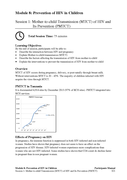

Chapter 8, Prison and Health, published
Alcohol contributes significantly to the disease and mortality burden in the WHO European Region, and primary health care systems play an important role in reducing the impact of harmful alcohol use
...
Blueprint for EECA countries, first edition
A Guide to the Application of the WHO Multimodal Hand HygieneImprovement Strategy and the “My Five Moments for Hand Hygiene”Αpproach
In line with the National Mental Health Strategy for Lebanon (2015-2020), this guide answers the objective of the Mental Health and Psychosocial Support task force: “Development and provision of s
...
Policy Brief
Consolidated Guidelines
Updated 2016
WHO/HIV/2017.05
English version - This handbook sets out a the new paradigm for pharmacy practice. Its aim is to guide pharmacy educators in pharmacy practice, to educate pharmacy students and to guide pharmacists in practice to update their skills. The handbook, which brings together practical tools and knowledge,
...
The "Questions and Answers on Prevention and control of Alcohol related harm" has been developed by WHO country office in Viet Nam with technical contribution from national and international experts in the field. This publication provides scientific
...
WHO operational handbook on tuberculosis: module 4: treatment: tuberculosis care and support
recommended
The consolidated guidelines are complemented by an operational handbook which is designed to assist with implementation of the WHO recommendations by Member States, technical partners and others who are involved in the management of patients with DR-TB. The WHO Operational Handbook on Tuberculosis,
...
Interim emergency guidelines
Updated Guideline.
The Emergency Triage Assessment and Treatment (ETAT) guidelines provide guidance on the most common emergency conditions in children presenting at the health facility. These include but are not limited to airway obstruction and o
...
The END TB Strategy
Интеграция совместного оказания услуг в связи с ТБ и ВИЧ во всеобъемлющий пакет помощи для потребителей инъекционных наркотиков

2nd edition.
T The Compendium has been developed as a clear and concise instrument to facilitate the understanding and planning of delivery of high-quality care for everybody affected by TB. It incorporates all recent policy guidance from WHO; foll
...
HIV, viral hepatitis and STI epidemics, particularly among people who inject drugs and other key populations, continue to be fuelled by laws and policies criminalizing sex work; drug use or possession; diverse forms of gender expression and sexuality; stigma and discrimination; gender discrimination
...
The purpose of the Clinical Practice Guideline for Treatment of Patients with Anxiety Disorders in Primary Care is to provide professionals with practical recommendations based on scientific evidence to assist in the detection and effective treatmen
...

Purpose of this document: to present eight practical steps that Member States can take at the national and sub-national level to improve WASH in health care facilities
National AIDS and STI Control Program
Responses to epidemics, emergencies and disasters raise many ethical issues for the people involved, including public health specialists and policy makers. This training manual provides material on ethical issues in research, surveillance and patie
...
The purpose of cancer screening tests is to detect pre-cancer or early-stage cancer in asymptomatic individuals so that timely diagnosis and early treatment can be offered, where this treatment can lead to better outcomes for some people.
The aim of a cancer screening programme is either to reduc
...
No Public Health without Refugee and Migrant health.
This report, the first of its kind, creates an evidence base with the aim of catalysing progr
...
The WHO Quality Toolkit: Navigating tools to improve the quality of health services helps easy identification and access to a wide range of WHO published materials to improve the quality of health s
...

Medical care for people caught up in armed conflict and other insecure environments saves lives and alleviates suffering. It is one of the most immediate and high priority needs of an affected population and is often the first type of response activ
...
Health, Rights and Drugs
recommended
Harm Reducation, Decriminalization and Zero Discrimination for People who use Drugs
Facilitator's Guide
Refresher Training Module for Health Care Providers implementing the MISP
Inter-agency Working Group on Reproductive Health
...
The Practical Approach to Care Kit (PACK) is a health systems improvement programme designed to support the work of primary care
...

This manual is a guide to psychosocial interventions to help people cope with the emotional effects of disasters. Some are direct responses to the trauma of disasters, while others are longer-term responses. Even more than the physical effects of disasters, the emotional effects cause long-lasting s
...
JOURNAL OF THE ASSOCIATION OF NURSES IN AIDS CARE, Vol. 28, No. 2, March/April 2017, 186-198
http://dx.doi.org/10.1016/j.jana.2015.09.003
The climate crisis has many consequences – among them widespread health impacts that will lead to immense societal, ecological, and economic harm.
Over the past two decades multiple large-scale r
...
This Rapid Gender Analysis provides preliminary information and observations on the different needs, capacities and coping strategies of Venezuelan migrant and refugee women, men, boys, and girls in Colombia. It seeks to understand how gender roles and relations have changed as a result of the crisi
...
A new frontier for integrated care.
Until now, most efforts to promote integrated care have focused on bridging the gaps between health and social
...
Scaling Up Mental Health Care In Rural India
Training for Health Care Providers
Facilitators’ Manual
Anxiety disorders
recommended
The document "Diabetes in Children and Young People" by NICE (National Institute for Health and Care Excellence) provides quality standards for the diagnosis, management, and support of diabetes in
...
Our spiritual health profoundly impacts our physical health, well-being, and quality of life. Just as medical professionals care for our bodies and
...
1. Provide treatment for mental disorders in primary care
2. Ensure wider accessibility to essential psychotropic drugs
3. Provide care in the community
4. Educate the public
5. Involve communit
...
