Filter
490
Text search:
Government
of
Nepal
Ministry
of
Health
and
Population,
National
Centre
for
AIDS
and
STD
Control
Featured
44
193
Language
Document type
346
68
31
25
11
4
2
1
1
1
Countries
138
22
19
18
16
15
9
6
6
6
5
5
4
4
4
4
3
3
3
3
3
3
3
3
3
3
3
2
2
2
2
2
2
2
2
2
2
2
2
2
2
2
2
2
1
1
1
1
1
1
1
1
1
1
1
1
1
1
1
1
1
1
1
1
Authors & Publishers
Publication Years
Category
191
30
27
21
19
5
5
Toolboxes
50
40
32
19
18
15
13
12
11
10
10
9
8
8
5
5
2
2
1
1
1
This integrated operational framework provides an overview of the connections between mental health, neurological and substance use (MNS) condition
...
An applied approach to the training of trainers who, in turn,
train teams to implement psychosocial and mental health
interventions in developing
...
This manual outlines proposals for the insertion of housing, land and property restitution rights simultaneously within the context of the ongoing
...
A Reference Guide for Program Managers and Policy Makers. Recently, a renewed interest in large-scale community health worker (CHW) programs has been seen globally. This renewal provides an opportun
...
A major problem facing the world is how to build peace following the ravages of increasingly protracted armed conflict. Armed conflicts leave behind shattered, divided societies that are at risk of
...

The scope of the Guidance is primarily the education in rural settings in Myanmar, but it covers some of the issues which have pan Myanmar implication and
...
The primary audience for the guideline is policy makers and health programme managers of MNCH and
...
No education system is effective unless it promotes the health and well-being of its students, staff an
...
This report makes the case for a major new initiative—to rapidly recruit, train and deploy 2 million community health workers in Africa. Drawing on a vast body
...
Policy and systems. Global Mental Health(2017),4, e7, page 1 of 6. doi:10.1017/gmh.2017.3

The objectives of this guidance document are to:
1. Strengthen the capacity of country teams to effectively scale up and manage programmes to ...
1. Strengthen the capacity of country teams to effectively scale up and manage programmes to ...
Procurement and supply management activities are fundamental to consistent and reliable access to essential medicines and
...
This report presents, for the first time, a global assessment of the extent to which health care facilities provide essential water, sanitation and
...

Submitted to the US Agency for International Development by the
Systems for Improved Access to Pharmaceuticals and Services (SIAPS) Program.
This manual provides a framework to identify problems and
...
The key updates include: content update in various sections based on new evidence; design changes for enhanced usability; a streamlined and simplified clinical assessment that includes an algorithm for follow-up; inclusion
...
Strengthening rehabilitation in health emergency preparedness, response, and resilience: policy brief outlines the evidence for rehabilitation in emergencies
...
In the aftermath of the April 2015 earthquake in Nepal, this paper looks at lessons drawn from previous comparable disasters and seeks to provide i
...
New funding requirements: CHF 2.8 billion IFRC-wide of which CHF 670 million is channelled through the IFRC Emergency Appeal in support of National
...
Journal of Virus Eradication 2016; 2 (Supplement 4): 1–6
Review
The infectious disease burden in India is among the highest in the world. A large amount of antibiot-ics are consumed in fighting infections, some of them saving lives, but every use adding to antib
...
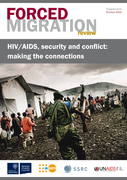
Supplement October 2010
HIV/AIDS, security and conflict: making the connections

At the threshold of Sustainable Development Goals (SDG) era, this document captures the remarkable achievements by Member States towards achieving MDGs 4 and 5. It acknowledges new opportunities in
...

The purpose of this handbook is to provide guidance to Member States on the practical aspects of maintaining sanitary standards at international borders at ports, airports,
...
At the end of 2023, WHO convened our first-ever annual WHO Stakeholder Review Conference for Prevention and Response to Sexual Misconduct. Aimed at joint learning
...
The GHS Index is intended to be a key resource in the face of increasing risks of high-consequence and globally catastrophic biological events
...
The 2023 Country Presence Report provides an overview of what WHO does in countries to advance towards the SDGs and implement GPW13, how we do it, with whom we work,
...
WHO published the first COVID-19 Strategic Response and Preparedness Plan (SPRP) on 3 February, 2020. This report highlights the main points of progress that were made up to 30 June 2020 under the t
...
WHO today released its first roadmap to tackle postpartum haemorrhage (PPH) – defined as excessive bleeding after childbirth - which affects millions of women annually and is the world’s leading
...
This report presents country, regional and global estimates of low birth weight for 2000, together with a detailed description of the methods used
...

A companion to the Child Friendly Schools Manual
WASH in Schools aims to improve the health and learning performance of school-aged chi ...
WASH in Schools aims to improve the health and learning performance of school-aged chi ...
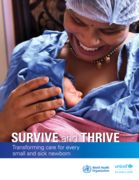
Just about everyone has experienced the joy that a healthy newborn child brings to parents, families and communities. But the arrival of a newborn who is small or sick often results in immediate wor
...
In an ambitious new era for health development under the 2030 Agenda for Sustainable Development, WHO and
its partners have a solid foundation of
...

Outstanding child and adolescent TB priorities include the need to: find the missing children with active TB and link them to TB care; prevent TB in children who are in contact with infectious TB ca
...
This study examines over 20 years of CBR implementation in Nepal. It includes an overview of CBR interventions, provides analysis
...

In this report a nutrition governance framework was applied to research and analyse the provincial experience with nutrition policy in Pakistan, looking both at chronic and acute malnutrition. Twent
...
Nepal: Urban Housing Sector Profile
recommended
Based on research by a team of Nepalese and international experts, this report carries an analysis of the five key elements in the sector - land, b
...
Many low-resource settings have a shortage of physicians and health workers. (1) In order to provide patient-centred continuous care more effective
...
CoPEH-Canada has generated a series of teaching and training resources over more than a decade. These resources began with the production of the Co
...
"This is the final report of the six-year collaboration between the WHO Department of Mental Health and
...
The Global Antibiotic Resistance Partnership (GARP)-Mozambique team, in partnership with the Center for Disease Dynamics, Economics & Policy (CDDEP), has produced this report as part of a solid com-mitment to develop actionable policy proposals to t
...
Applying the evidence of what works from HIV-related stigma and discrimination in six settings to the COVID-19 response
This brief provide evidence-informed guidance to countries on the intersectio
...

Access to safe blood and blood products is recognized as one of the key requirements for delivery of modern
...
This special issue on Newborn Health in Global Health Action is being launched to share the experience of how to scale up a cost-effective package
...

In April and May 2015, Nepal was hit by two major earthquakes killing around 9,000 people and leaving many thousands more injured
...
Measuring progress towards universal health coverage.
This sixth edition of Health at a Glance Asia/Pacific presents a set
...

Antibiotics and other antimicrobial agents are invaluable life savers, particularly in resource-limited countries where infectious diseases are abundant. Both uncomplicated and severe in
...
Burns are a global public health problem, accounting for close to 200,000 deaths annually. The majority of these occur in low- and middle-income co
...
The 2020 Report analyzes global health spending for 190 countries from 2000 to 2018 and provides insights as to the health spending trajectory from
...
This report reviews the latest evidence on what works to reduce HIV-related stigma and discrimination through key programmes to reduce stigma and discrimination
...
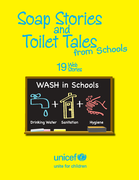
Water, sanitation and hygiene education in schools – WASH in Schools – provides safe drinking water, improves sanitation facilities and promotes lifelong
...
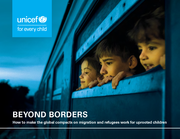
Beyond borders. How to make the global compacts on migration and refugees work for uprooted children
The report presents successful case studies from around the world, including the implementation of minimum protection standards for refugee children in Germany, cross border child protection systems in West Africa,
...
This South-East Asia Regional Strategy for Primary Health Care: 2022-2030 aims to accelerate progress in all countries of the Region towards universal hea
...

In 2024, we need US$1.5 billion to provide live-saving health care to millions of people in emergencies. An alarming combination of conflict, clima
...
Every year, nearly 250 million people move across borders temporarily or permanently for a job opportunity, studying, to flee a crisis back home, or for other reasons. Another 750 million move for similar reasons within the borders of their countrie
...
This report outlines and analyses the implementation of the Bridge Builder Model. This is a two-way, capacity-sharing model aimed at bringing together local faith actors (LFAs)
...
The Look Back Study (LBS) focuses on the water and sanitation and hygiene (WASH) component of the project but some additional information was colle
...
The availability of controlled medicines is crucial for patients requiring palliative care, pain relief and symptom management. Many individuals worldwide, especially in low-
...
The 2023 meeting of the WHO Clinical Consortium on Healthy Ageing (CCHA) was the group’s ninth gathering and took place in Geneva 5–7 December 2023. The meeting was structured around seven panel
...

The World Health Organization (WHO) and the global community of countries, partners, donors, technical experts, scientists
...

The goal of this Global Action Plan is to articulate synergistic actions that will be required to prevent HIVDR from undermining efforts to achieve global targets on health
...
mhGAP is based on evidence-based technical guidelines (4) and provides a set of tools and
training packages to extend service provision. The mhGAP
...

The WHO South-East Asia (SEA) Region bears a high burden of tuberculosis (TB) and MDR-TB. In 2015, the Region accounted for nearly 200 000 or 35%
...
The Strategic Framework for Emergency Preparedness is a unifying framework which identifies the principles and elements of effective country health
...

An Indicator-based Approach - This manual presents an indicator-based approach for rapidly assessing pharmaceutical management systems and programs. The manual contains a set of 46 indicators
...
Vitamin D deficiency is thought to be common among pregnant women, particularly during the winter months, and has been found to be associated with an increased risk of pre-eclampsia, gestational dia
...
he WHO South-East Region in 2019 accounted for nearly a million missing TB patients from the estimated incidence. Active case-finding (ACF) or systematic screening for tuberculosis is an important tool to reach out to missing TB patients. When appropriately implemented, the activity is cost effectiv
...
The WHO Framework Convention on Tobacco Control (WHO FCTC) is an evidence-based treaty that reaffirms the right of all people to the highest standard of
...
Suicides take a high toll. Over 800 000 people die by suicide every year and it is the second leading cause of
death in 15-29-year-olds. Most suicides occur in low-
...
Communities can play a critical role in suicide prevention. Facilitating community engagement in suicide prevention is an important task. The toolkit is a step-by-step guide for communities to engage in suicide prevention activities and have ownersh
...
The World Health Organization’s comprehensive antenatal care (ANC) guideline WHO recommendations on antenatal care for a positive pregnancy experience was published in 2016 with the objective of i
...
The manual has been designed in a comprehensive manner, the aim being to provide a holistic approach to the short-term development of human resources, with a focus on primary care physicians. This is a reference manual meant for primary care physici
...

39 examples of field practices, and learnings from 20 countries, for all phases of humanitarian response. The report shows that deliberate
...
New research exposes how women and children are disproportionally affected by climate migration, which puts them at greater risk of gender-based violence, child labour
...
Report of the Review Committee on the Functioning of the International Health Regulations (2005) in relation to Pandemic (H1N1) 2009
This publication by UNAIDS, UNDP and the International Organisation for Migration examines various dimensions related to migration and HIV and AIDS
...
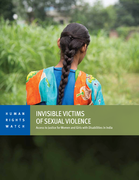
This report details the challenges many women and girls with disabilities face throughout the justice process: reporting abuse to the police, obtaining appropriate medical care, having complaints investigated, navigating the court system,
...
DHS Analytical Studies No. 51
Child Health, Family Planning, Geographic Information, HIV, Malaria, Maternal Health

Progress report of the Human Rights Council Advisory Committee (A/HRC/33/53) (Advance edited version)
Education on the move

An action research conducted in Bang Shau village Northern Shan State, Myanmar

Today there are Community-based Rehabilitation (CBR) programmes in a large number of countries. In many countries, the CBR approach is a part of the natio
...
The COVID-19 pandemic is a multiplier of vulnerability, compounding threats to food insecurity, while exposing weaknesses in food and health system
...

This study has been produced jointly by Gesellschaft für Internationale Zusammenarbeit (GIZ) GmbH, a federally owned enterprise, implementing development programmes on behalf of the German Government
...
A new publication - Waste Management during the COVID-19 Pandemic: from response to recovery - reviews current practices for managing waste from healthcare facilities, households and quarantine locations accommodating people with confirmed or suspec
...