
Filter
306
Text search:
Ernährung
Featured
34
77
Language
Document type
168
50
28
15
14
6
5
5
4
4
4
3
Countries
15
5
4
4
3
3
3
3
2
1
1
1
1
1
1
1
1
1
1
1
1
1
1
1
1
1
1
1
Authors & Publishers
Publication Years
Category
128
113
32
25
19
17
1
Toolboxes
40
24
20
19
10
9
8
3
2
2
1
1
1
1

Maternal and child malnutrition is a significant public health problem in South Sudan. Among children aged 6-59 months, 31% are stunted, 28% are underweight, and nearly 23% are acutely malnourished of which 13% are estimated to suffer from moderate acute malnutrition and 10% from severe acute malnut
...

Maternal, Infant and Young Child Nutrition Strategic Actions:
1 Endorse and disseminate key policies and regulations
2 Improve maternal nutrition
3 Protect, promote, and support optimal infant and young child feeding practices
4 Support optimal infant and young child feeding in ...
1 Endorse and disseminate key policies and regulations
2 Improve maternal nutrition
3 Protect, promote, and support optimal infant and young child feeding practices
4 Support optimal infant and young child feeding in ...
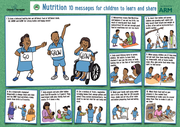
Large File: 28 MB
Global Health Media Project Videos
recommended
Creating Videos to train health workers and serve communities.
Global Health Media Project designs and develops videos that are tailored to the needs of health workers and populations in low-resource settings. Internet and mobile technology give us the power to reach large numbers, cost-effectively
...
IPCC Special Report on Climate Change and Land
recommended
An IPCC special report on climate change, desertification, land degradation, sustainable land management, food security, and greenhouse gas fluxes in terrestrial ecosystems
As more frequent droughts and floods threaten the global food supply, humans are increasing their demands on water and land,
...
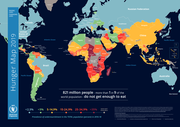
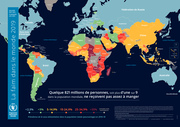
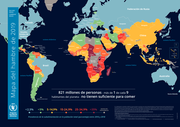
WFP's Hunger Map depicts the prevalence of undernourishment in the population of each country in 2016-18. From Africa and Asia to Latin America and the Near East, there are 821 million people - more than 1 in 9 of the world population - who do not get enough to eat. Our downloadable Hunger Map provi
...
This guideline examines the evidence and makes recommendations and remarks on the implementation of some of the details of breastfeeding counselling, such as frequency, timing, mode and provider of breastfeeding counselling, to improve breastfeeding practices. The objective of this guideline is to p
...
This publication’s primary purpose is to provide a compilation of actions to address malnutrition in all its forms, in a concise and user-friendly format to help in decision-making processes for integration of nutrition interventions in national health policies, strategies, and plans based on coun
...
Facing the global nutrition challenges, the World Health Organization (WHO) teamed up with the United Nations Institute for Training and Research (UNITAR) to design, under the guidance of the Department of Nutrition for Health and Development (NHD), a Nutrition Knowledge Hub. By building the techni
...
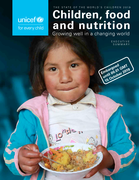
This 2019 edition of The State of the World’s Children (SOWC) examines the issue of children, food and nutrition, providing a fresh perspective on a rapidly evolving challenge. Despite progress in the past two decades, one third of children under age 5 are malnourished – stunted, wasted or overw
...

Crecer bien en un mundo en transformación
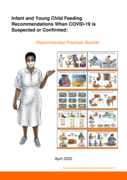
Recommended practices booklet (April 2020)
The set includes 10 Counselling Cards and a Recommended Practices Booklet. Infant and young child feeding (IYCF) counselling in the context of COVID-19 remains a critical nutrition intervention for the protection and support of pregnant women, caregivers,
...
Previous pandemics have demonstrated that more people could die from the indirect consequences of an outbreak than from the disease itself. As the fight against the pandemic is pushing millions into poverty and hunger, COVID-19 will likely be no different.
Community-Based Management of Acute Malnutrition (CMAM) is a decentralised community-based approach to treating acute malnutrition. Treatment is matched to the nutritional and clinical needs of the child, with the majority children receiving treatment at home using ready-to-use foods. In-patient car
...
Manual of Operations
First Edition 2016
Despite recommendations on the marketing of commercial baby and toddler foods, two new reports from WHO find widespread evidence of inappropriate promotion and poor nutritional quality of foods for infants and young children across the WHO European Region. To address these issues and help countries
...
These new reports from WHO document evidence of widespread inappropriate promotion of baby and toddler foods. Despite the WHO Guidance on ending inappropriate promotion of foods for infants and young children agreed in 2016 and nearly 40 years since the introduction of the International Code of Mark
...
In order to help Member States understand what commercial foods for infants and young children are currently on the market, and to support implementation of the Guidance on ending inappropriate promotion of foods for infants and young children at the European level, the WHO Regional Office for Europ
...
A discussion paper outlining the first steps in developing a nutrient profile model to drive changes to product composition and labelling and promotion practices in the WHO European Region
The aims of the guidance are to protect breastfeeding, prevent obesity and chronic diseases, promote a healthy
...
This Guidance Document provides practical assistance to Country Offices scaling up programmes to manage SAM in young children. It outlines a step-by-step process through which countries can analyse their current situation, identify barriers and bottlenecks through the MoRES approach, and plan action
...
A wide range of potential enablers and barriers were identified for influencing progress for the scale-up of severe wasting services within national health systems. Findings were categorised according to the six pillars of WHO’s health system strengthening framework.
This summary assesses the current state of evidence on each approach in tabular form, providing: the definition and objectives; evidence of effectiveness; operational considerations (e.g., training, staffing, and logistics); cost considerations and evidence on cost-effectiveness; operational success
...
A global hunger crisis -- fuelled by conflict, economic turbulence and climate-related shocks -- has been exacerbated by the COVID-19 pandemic. The number of people experiencing food insecurity and hunger has risen since the onset of the pandemic. The IRC estimates that the economic downturn alone w
...
We bring care to life. Engaging, crystal clear, short, and practical, our videos enable learners of all levels to easily understand, and remember critical teaching points.
This report - the largest of its kind to date - draws on the experiences of over 8,500 women and 300 health professionals across eight countries. It exposes the aggressive marketing practices used by the formula milk industry, and highlights impacts on families’ decisions about how to feed their b
...
The Infant and young child feeding counselling: an integrated course includes this Director’s guide, a Trainer’s guide and Participant’s manual. Additional tools include: Course handouts; Guidelines for follow-up after training; Supportive supervision/mentoring and monitoring and an accompanyi
...
The Participant’s manual contains summaries of information presented by the trainers, copies of worksheets and checklists for the clinical practice and practical sessions, and exercises that participants will do during the course. One manual should be provided for each participant, using the modul
...
The Director’s guide contains all the information that the course director needs in order to plan and prepare for the course, to decide which modules and sessions will be included in the training, and to select trainers and participants, starting several months before the actual training. It conta
...
Infant and young child feeding counselling: an integrated course: guidance on the use of counselling cards
recommended
This document provides guidance to health care workers on the use of the counselling cards. The Counselling cards depict key infant and young child feeding concepts and behaviours for health workers to share with mothers, fathers, grandparents and other caregivers.
This set of Counselling cards has been adapted from the Community infant and young child feeding counselling package and form part of the updated training course. They were developed for course participants and depict key infant and young child feeding concepts and behaviours for health workers to s
...
These Course handouts have been designed for use by directors and trainers to aid in registering participants and evaluating trainers, and include job aids, answer sheets, forms, checklists and other tools for course participants to use during the training sessions. Items not supplied in the Course
...
English Analysis on World about Agriculture, Climate Change and Environment, Epidemic and more; published on 15 Dec 2021 by FAO and UNICEF
The impact of disasters and crises on agriculture and food security: 2021
Food and Agriculture Organization of the United Nations
Rotafolio para el Agente Comunitario
y las Familias durante las visitas domiciliarias
This training guide applies a participatory approach, reflecting the considerable evidence that adults learn best by practicing and reflecting on their experiences. It thus emphasizes exercises to improve skills in counseling that support clients to adopt optimal nutrition practices. Women’s nutri
...

Globally, levels of hunger remain alarmingly high. In 2021, they surpassed all previous records as reported by the Global Report on Food Crises (GRFC), with close to 193 million people acutely food insecure and in need of urgent assistance across 53 countries/territories, according to the findings o
...
Global food insecurity has markedly increased over the last two-years due to conflict, economic and political instability, displacement, environmental degradation and disasters, and major disruptions to global food systems because of the Covid-19 pandemic. In 2021, levels of hunger surpassed all pre
...
Lancet Planet Health 2022;6: e760–68
The emergence of COVID-19 has drawn the attention of health researchers sharply back to the role that food systems can play in generating human disease burden. But emerging pandemic threats are just one dimension of the complex relationship between agriculture
...
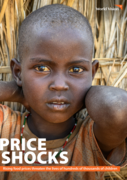
Conflict, climate change, the COVID-19 pandemic, and the economic effects of the Ukraine crisis are interacting to create new and worsen existing hunger hotspots, reversing the gains families had made to escape poverty.
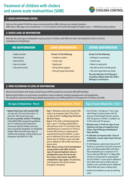
protocol if child has severe acute malnutrition (SAM), otherwise use standard protocols.
SAM criteria: Mid-upper arm circumference <11.5 cm (only for 6-59 months) OR weight for height z score < -3 OR bilteral pitting oedema
Analysis in French on World and 9 other countries about Agriculture, Climate Change and Environment, Drought and more;
published on 13 Oct 2022 by Concern and WHH
This is the seventeenth annual publication of the Global Hunger Index (GHI), a report jointly published by Concern Worldwide and Welthungerhilfe.
The 2022 Global Hunger Index (GHI) brings us face to face with a grim reality. The toxic cocktail of conflict, climate change, and the COVID-19 pandemi
...
This is the seventeenth annual publication of the Global Hunger Index (GHI), a report jointly published by Concern Worldwide and Welthungerhilfe.
The 2022 Global Hunger Index (GHI) brings us face to face with a grim reality. The toxic cocktail of conflict, climate change, and the COVID-19 pandemi
...
Global Food and Nutrition Security Dashboard
recommended
Interactive maps; country profiles and Studies
The Dashboard is designed to consolidate and present up-to-date data on food crisis severity, track global food security financing, and make available global and country-level research and analysis to improve coordination of the policy and financial re
...

Interactive Map

This Guide responds to requests from practitioners and country teams who have learned about the Nurturing care framework and want to understand how to adapt health and nutrition services to be supportive of nurturing care and strengthen caregivers’ capacity.
This fourth annual report monitors global progress towards the 2023 target for global elimination of industrially produced trans-fatty acids (TFA), highlighting achievements during the past year (October 2021 – September 2022). Countries are responding to the World Health Organization (WHO) call t
...
El maltrato infantil incluye la perpetración de violencia física, sexual y psicológica o emocional, y el descuido de bebés, niños, niñas y adolescentes de 0 a 17 años por parte de progenitores, cuidadores y otras figuras de autoridad, con mayor frecuencia en el hogar, pero también en entorno
...
The fifth World Food Safety Day (WFSD) will be celebrated on 7 June 2023 to draw attention and inspire action to help prevent, detect and manage foodborne risks, contributing to food security, human health, economic prosperity, agricultural production, market access, tourism and sustainable developm
...
El quinto Día Mundial de la Inocuidad de los Alimentos se celebrará el 7 de junio de 2023 con la finalidad de sensibilizar sobre el tema e inspirar medidas que ayuden a prevenir, detectar y gestionar los riesgos derivados de los alimentos, contribuyendo de esta forma a la seguridad alimentaria, la
...
Global Report on Food Crises 2023
recommended
The Global Report on Food Crises (GRFC) 2023 highlights that the number of people experiencing high levels of acute food insecurity and requiring urgent food and livelihood assistance increased for the fourth consecutive year in 2022. Over a quarter of a billion people were estimated to face acute h
...
Children continue to be exposed to powerful food marketing, which predominantly promotes foods high in saturated fatty acids, trans-fatty acids, free sugars and/or sodium and uses a wide variety of marketing strategies that are likely to appeal to children. Food marketing has a harmful impact on chi
...

There is growing international consensus that food systems transformation is important to address the challenges of malnutrition in all its forms, the burden of noncommunicable diseases (NCDs), environmental sustainability, increasing inequality and ensuring the welfare of workers and animals. In li
...

This report is the annual global monitoring report documenting progress towards Sustainable Development Goal (SDG) 2 targets 2.1 and 2.2. This year’s report explores the links between urbanization and changing food systems and how these changes are impacting the availability, affordability and des
...
In October 2022, President Biden signed the Global Malnutrition Prevention and Treatment Act (GMPTA) into law, which directs USAID to prevent and treat malnutrition globally. The GMPTA further codifies USAID’s leadership on nutrition, with a focus on evidence-based interventions across health syst
...
Climate-induced water insecurity poses one of the biggest threats to humanity and will lead to more hunger, disease and displacement
Oxfam water engineers are having to drill deeper, more expensive and harder-to-maintain water boreholes used by some of the poorest communities around the world, mo
...
Complementary feeding, defined as the process of providing foods in addition to milk when breast milk or milk formula alone are no longer adequate to meet nutritional requirements, generally starts at age 6 months and continues until 23 months of age. This is a developmental period when it is critic
...
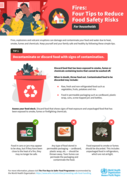
Fires, explosions and volcanic eruptions can damage and contaminate food and water due to heat, smoke, fumes and chemicals. These flyers include tips to reduce food safety risks during a fire incident for households, food suppliers, vendors, food industry inspectors and workers.
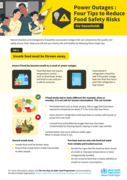
Natural disasters and emergencies frequently cause power outages that can compromise the quality and safety of food. These flyers include tips to reduce food safety risks during a power outage for households, food suppliers, vendors, food industry inspectors and workers.
Food inspection is crucial for ensuring food safety, using risk-based approaches to target high-risk products and businesses. This guidance aids national authorities in designing and implementing risk-based systems, offering step-by-step instructions, examples, and tools for prioritization and inspe
...
The Food and Agriculture Organization of the United Nations has launched a new Compendium of forgotten foods in Africa which is a first-of-its-kind comprehensive collection of 100 African forgotten food crops.
Also referred to as neglected, underutilized or orphan crops, these species offer valua
...
Marketing of breast-milk substitutes: national implementation of the International Code, status report 2024
recommended
This report provides updated information on the status of implementation of the International Code of Marketing of Breast-milk Substitutes (BMS) and subsequent relevant World Health Assembly (WHA) resolutions (collectively referred to as “the Code”) in countries. It presents the legal status of
...
Infografia
Women and children, especially pregnant girls and women, infants and young children and postpartum women, are populations that are extremely vulnerable in emergencies. Breastfeeding provides children with hydration, comfort, connection, high quality nutrition and protection against disease, shieldin
...
El asesoramiento sobre lactancia materna es una interacción bidireccional entre un/a asesor/a con formación en lactancia
materna y una o varias mujeres embarazadas, madres u otras personas cuidadoras de niños/as menores de dos años
(normalmente). El proceso consiste en escuchar inquietudes, ab
...
Harmonising proven strategies beyond the emergency phase. Zero Hunger Phase 2

. Interim Guidelines. This interim guideline lays out some basic principles of optimal nutritional care for adults and paediatric patients during treatment and convalescence in Ebola treatment units, community care centres or to other centres where Ebola patients are receiving care and support. It h
...

Este manual proporciona directrices prácticas para el tratamiento de los pacientes con malnutrición grave. Su objetivo es fomentar el mejor tratamiento disponible para reducir el riesgo de defunción, acortar la estancia hospitalaria y facilitar la rehabilitación y una
recuperación completa.
Public Health Action PHA 2017; 7(2): 110–115
In where under-five mortality is high and vitamin A deficiency is a public health problem, two high-dose supplements of vitamin A per year, spaced four to six months apart, can strengthen children’s immune systems and improve their chances of survival.
During much of early childhood – from ...
During much of early childhood – from ...
Vitamin A supplementation (VAS) programs targeted at children aged 6–59 months are implemented in many countries. By improving immune function, vitamin A (VA) reduces mortality associated with measles, diarrhea, and other illnesses. There is currently a debate regarding the relevance of VAS, but a
...
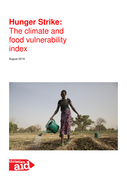
Top 10 hungriest countries contribute just 0.08% of global CO2.
-Climate & Food Vulnerability Index shows 10 most food insecure countries emit less than half a tonne of CO2 per person
-Burundi is the world's most food insecure and smallest per capita emitter
-The average Briton gener
...
National Guidelines on Nutrition, Care, Support, and Treatment (NCST) for Adolescents and Adults
These guidelines are intended to:
• Establish a consistent set of nutrition interventions and recommendations aimed at managing and preventing undernutrition and overnutrition in adolescents and ad
...
Today, the World Health Organization (WHO) is advancing the global fight against acute malnutrition in children under 5 with the launch of its new guideline on the prevention and management of wasting and nutritional oedema (acute malnutrition). This milestone is a crucial response to the persistent
...

WHO TEchnical REport SEries No. 849
In view of the ongoing political, peace and reconciliation, administrative and economic reforms as well as plans to establish the United Nations Development Assistance Framework (UNDAF) in 2018, WFP extended the current Protracted Relief and Recovery Operation (PRRO 200299), launched in January 2
...
. To echo this extension and provide a more appropriate response to the country's rapid and multi-pronged transition, WFP adopted a transition strategy with gradually reduced emphasis on humanitarian assistance and greater focus on early recovery and development interventions. WFP's strategic engagement in-country was driven by the overarching goal to assist Myanmar to achieve the national Zero Hunger Challenge by 2025, and was guided by three priorities: emergency preparedness and response; nutrition; and provision of social safety nets.
Le présent guide a donc pour objet de servir d’orientation de base et de point de référence pour l’élaboration d’un projet pilote de marché-santé. Si les principes énumérés dans ce guide s’appliquent de fait à tous les marchés, certains d’entre eux devront sans doute faire preuv
...
For practitioners in humanitarian and development contexts
For 50 SAM children with medical complications and for a paediatric ward of 10-15 beds for 3 months
The PED/SAM kit is especially designed to provide medicines, renewables and equipment suitable for children and to treat the common childhood illness including severe acute malnutrition with medica
...
WHO's Severe acute malnutrition with medical complications kit (SAM/MC) kit is a standard kit designed to provide medical treatment for 50 children under five suffering from severe malnutrition with medical complications. The SAM/MC kit includes antibiotics, antifungal, de-worming, antimalarial and
...
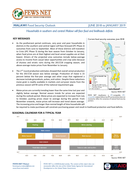
MALAWI Food Security Outlook JUNE 2018 to JANUARY 2019
As the postharvest period continues, very poor and poor households in districts in the southern and central region will face Stressed (IPC Phase 2) outcomes from June to September. Most of these districts will transition to Crisis (IPC Pha ...
As the postharvest period continues, very poor and poor households in districts in the southern and central region will face Stressed (IPC Phase 2) outcomes from June to September. Most of these districts will transition to Crisis (IPC Pha ...
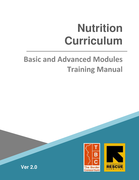
The Border Consortium (TBC) developed a comprehensive Training of Trainers Nutrition Curriculum which includes 12 Modules (6 Basic and 6 Advanced topics). The Manual provides trainers with standardized methods and content to deliver nutrition training.
Original file: 25 MB
Original file: 25 MB
The Sphere Handbook. Humanitarian Charter and Minimum Standards in Humanitarian Response. New Edition
recommended
Humanitarian Charter and Minimum Standards in Humanitarian Response.
The 2018 Sphere Handbook builds on the latest developments and learning in the humanitarian sector. Among the improvements of the new edition, readers will find a stronger focus on the role of local authorities and communities as
...
This year’s report should dispel any lingering doubts that the world is moving backwards in its efforts to end hunger, food insecurity and malnutrition in all its forms. We are now only eight years away from 2030, but the distance to reach many of the SDG 2 targets is growing wider each year. Ther
...
Medical Aid Films uses innovative media to enable everyone to enjoy healthy lives .We bring together health experts with film makers to create engaging, accessible films – empowering health workers and communities with vital knowledge and skills about women’s and child health.
Available in diff
...
Se espera que el Panorama 2020 ayude a visibilizar los desafíos de los territorios con peores indicadores en términos de alimentación y nutrición, y que sirva para movilizar el compromiso político y la atención pública en los lugares que sufren mayores rezagos respecto a los promedios naciona
...
Climate change triggers mounting food insecurity, poverty and displacement in Africa
The Essential Nutrition Actions and Essential Hygiene Actions Training Guide: Community Workers strengthens the capacity of community workers to deliver and promote the essential nutrition and hygiene actions. It introduces technical content within hands-on sessions to practice counseling and negoti
...
