Filter
337
Text search:
CHW
training
program
Featured
24
134
Language
Document type
232
45
15
15
14
9
4
1
1
1
Countries
32
29
21
18
14
13
13
12
12
12
10
8
7
7
6
6
6
5
5
4
3
3
3
3
3
3
2
2
2
2
2
1
1
1
1
1
1
1
1
1
1
1
1
1
1
1
1
Authors & Publishers
Publication Years
Category
232
31
19
13
13
8
1
Toolboxes
38
20
20
12
9
7
4
4
2
2
1
1
1
1
1
1
1
Updated to Reflect the 2009 Medical Eligibility Criteria of the World Health Organization

Further analysis of the 2011 Nepal Demographic and Health Survey
Moving from accelerated burden reduction to malaria elimination in Zambia
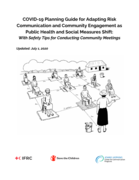
With Safety Tips for Conducting Community Meetings
Updated July 2020
This document includes key Risk Communication and Community Engagement (RCCE) considerations during shifting lockdown measures, safety measures for conducting in-person community meetings, and a template that brings both of these
...
Chromoblastomycosis (CBM), represents one of the primary implantation mycoses caused by melanized fungi widely found in nature. It is characterized as a Neglected Tropical Disease (NTD) and mainly affects populations living in poverty with significant morbidity, including stigma and discrimination.
Malawi’s first National Community Health Strategy (NCHS, 2017-2022) defines a new community health system in which community health cadres, both formal and non-formal, deliver services of the Essential Health Package, with a focus on child and maternal health. It envisages an integrated approach t
...
Despite recent global declines, under-five mortality remains high in many of the poorest countries. Barriers to timely
quality care, including user fees, distance to facilities and the availability of trained health workers and medical supplies,
hinder progress in further reducing morbidity and m
...

In 2014, the Ministry of Health (MOH) in Malawi conducted a nationwide assessment of emergency obstetric and newborn care (EmONC) services. This cross-sectional facility-based survey used 10 data collection modules. Data collection began on 23rd September 2014 and concluded on 17th October 2014, in
...
Primary Surgery Vol. One: Non-Trauma
recommended
This comprehensive book has established itself as the most useful text for the medical practitioner in poor-resource settings who is obliged to manage surgical cases. It is particularly adapted for those whose surgical experience is basic or minimal. Importantly, it has extensive advice about pitfal
...
Community health worker teams are potential game-changers in ensuring access to care in vulnerable communities. Who are they? What do they actually do? Can they help South Africa realize universal health coverage? As the proactive arm of the health services, community health workers teams provide ho
...
Expanding access to quality health services through task sharing
Malar J (2017) 16:174 DOI 10.1186/s12936-017-1808-x
Background: Since 2004, artemisinin-based combination therapy (ACT) has been the first-line treatment for uncomplicated malaria in Benin. In 2016, a medicine outlet survey was implemented to investigate the availability, price, and market share of
...
Frontline health workers (FHWs) provide services directly to communities where they are most needed, especially in remote and rural areas. Many are community health workers and midwives, though they can also include local emergency responders/paramedics, pharmacists, nurses, and doctors who serve in
...

This Clinic Supervisor’s Manual is helpful for focusing managers on the key elements of integrated primary health care as they simultaneously integrate new interventions for HIV/AIDS, tuberculosis, and malaria. This tool contains 12 sections. Section 1 explains how to use the manual. Section 2 hel
...
Last Mile delivery presents a unique challenge in making health commodities available in the developing world. This guide, designed for in-country practitioners and decisionmakers, uses a range of real world examples to support selection and design of last mile distribution approaches which respond
...

Findings from field research in Malawi and current literature.
PLoS ONE 11(1): e0144662. doi:10.1371/journal.pone.0144662
Accessed November, 2017
Standard Operating Procedures for Implementation of TB Activities at HIV/AIDS Service Delivery Sites
Transforming Health: Accelerating attainment of Health Goals | THE SECOND MEDIUM TERM PLAN FOR HEALTH
Fever Diagnostic Technology Landscape
recommended
1st edition.
Unitaid’s report describes a slate of new devices that can more efficiently identify dangerously ill children so that they can be treated immediately. These tools make it easier to recognize danger signs, and support integrated approaches to reducing childhood deaths from the three
...

Prepared for the Stunting Prevention and Reduction Project - The project Medical Waste Management Plan’s (MWMP) overall objective is to prevent and/or mitigate the negative effects of increased generation of medical waste on human health and the environment. The plan proposes measures to prevent t
...
The National Tuberculosis Programme (NTP) of Rwanda (known as TB & ORD Division/IHDPC/RBC) is preparing to write their next National Strategic Plan and for this reason Rwanda was selected as a country to received technical assistance (TA) to conduct an assessment of their surveillance system using t
...
For the Fiscal Year 2015-2016, the Health Sector continued to implement actions meant to improve the availability, and access to quality healthcare. The following report highlights achievements registered by the health sector for the fiscal 2015-2016 in different health programs, as well as in the a
...

This report outlines the Ministry of Health’s National Health Research Agenda in which it identifies research priorities in health. It will be implemented in the same time frame as the Health Sector Strategic Plain 2012-2018. The Ministry of Health being the implementing agency of this document, i
...

The Third Rwandan Health Sector Strategic Plan (HSSP III) provides strategic guidance to the health sector for six years, between July 2012 and June 2018. HSSP III has been inspired and guided by the VISION 2020, which will make Rwanda a lower-middle-income country by 2020; the Rwandan Health Policy
...
The aim of this report is to: (1) synthesize the findings from selected maternal and newborn related studies in Nepal conducted during 2011-2014, (2) identify areas of improvement in existing interventions, and (3) recommend possible strategies to fulfill such gaps.

In many of Myanmar’s contested regions, healthcare services are provided through two parallel governance systems – by the government’s Ministry of Health, and by providers linked to ethnic armed organizations. Building upon efforts to build trust between these two actors following ceasefires s
...

Maternal and child malnutrition is a significant public health problem in South Sudan. Among children aged 6-59 months, 31% are stunted, 28% are underweight, and nearly 23% are acutely malnourished of which 13% are estimated to suffer from moderate acute malnutrition and 10% from severe acute malnut
...

People younger than 20 years comprise 35% of the global population and 40% of the global population of least-developed nations. The number of children - neonates, infants, children, and adolescents up to 19 years of age - who need pediatric palliative care (PPC) each year may be as high as 21 millio
...
The report offers 20 top recommendations for getting ahead of future outbreaks in Yemen and similarly complex humanitarian settings.
In 2015, Yemen was declared a Level 3 emergency by the UN, kicking into gear the highest level of humanitarian support. A massive cholera outbreak followed, leading t
...
This document contains a series of desk reviews for the eight ENGAGE-TB priority countries supported by the Global Fund (DRC, Kenya, Indonesia, Mozambique, Myanmar, Nigeria, Pakistan and Tanzania). The document provides a situation assessment and gap analysis about the state of community based TB ac
...
Accessed: 26.10.2019
Report
A Project of the Joep Lange Institute July, 2018

Community-based interventions are vital for facilitating poststroke recovery, increasing community participation, and raising awareness about stroke survivors. To optimize recovery and community reintegration, there is a need to understand research findings on community-based interventions that focu
...
These guidelines provide a framework for effective action to facilitate access to safe and ethical
testing services for different population groups. The implementation of the a comprehensive
approach, known as HIV Testing Services (HTS) is cardinal as an effective package of services
that diminis
...
Low- and middle-income countries (LMICs) experience a high disease burden for epilepsy, a chronic neurological condition.The authors evaluate the cost-effectiveness of community health workers (CHWs) to improve adherence to medication for epilepsy in South Africa. They found that utilizing CHWs to i
...
The HIV/AIDS Sustainability Index Dashboard is a tool completed every two years by President’s Emergency Plan for AIDS Relief (PEPFAR) teams, host government and partner stakeholders to sharpen the understanding of each country’s sustainability landscape and to assist PEPFAR and other donors in
...

During the implementation of the National Strategic Plan 2009–2012 on HIV and AIDS, Rwanda has continued its progress towards universal access to HIV and AIDS services. The new HIV and AIDS National Strategic Plan July 2013–June 2018 (thereafter referred to as ‘the NSP’) presented here is se
...
As a lower-middle-income country (LMIC), South Africa (SA) bears
the burden of maternal and neonatal mortality similar to other sub-
Saharan African countries. According to the Saving Mothers Report
2017/19, there has been a progressive and sustained reduction
in institutional maternal mortality
...
The Government of Malawi is committed to improving health and livelihoods in Malawi through community health – the
provision of basic health services in rural and urban communities with the participation of people who live there.
Historically, Community Health has significantly contributed to im
...

The Early Childhood Development Policy and its Strategic Plan seek to provide a framework to ensure such a holistic and integrated approach to the development of young children. International research has demonstrated the high economic returns on ECD investment and its positive impact on health and
...
Operational Guideline
5th edition.
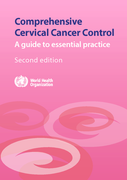
This publication gives a broad vision of what a comprehensive approach to cervical cancer prevention and control means. In particular, it outlines the complementary strategies for comprehensive cervical cancer prevention and control, and highlights the neners. This new guide updates the 2006 edition
...

front cover © Hannah Maule-Ffinch/Save the Children
Disease Control Priorities –3rdEdition, Volume 2.
This book focuses on maternal conditions, childhood illness, and malnutrition. Specifically, the chapters address acute illness and undernutrition in children, principally under age 5. It also covers maternal mortality, morbidity, stillbirth, and
...
Disease Control Priorities, 3rdEdition: Volume 4.
Mental, neurological, and substance use disorders are common, highly disabling, and associated with significant premature mortality. The impact of these disorders on the social and economic well-beingof individuals, families, and societies is large
...
Each unit builds on the one prior, and they all combine to provide key information for developing an SBCC strategy. It is not essential, however, to work through the I-Kit from start to finish. Users can choose to focus on specific aspects for which they need support in their emergency communication
...