
Filter
67
Text search:
ресурсы
Featured
17
18
Language
Document type
45
10
9
1
1
1
Countries / Regions
5
3
3
2
2
1
1
1
1
1
Authors & Publishers
Publication Years
Category
56
5
4
4
2
1
1
Toolboxes
8
7
6
5
4
3
1
1
The Handbook is primarily addressed to child protection coordination teams, which may include coordinators, co-leads and information managers, the guidance is equally valid for all members of the child protection coordination group, including national and international nongovernmental organizations
...
Sphere for Monitoring and Evaluation
recommended
Sphere Unpacked
Les Standards Minimums de la Protection de l’Enfant (SMPE) définis en 2012 par le GTPE présentent 26 normes nécessaires pour assurer une protection adéquate des enfants dans les situations d’urgence.
Currently there is no publicly available source of consolidated information on attacks on health care in emergencies. This report is a first attempt to consolidate and analyse the data that is available from open sources. While the data are not comprehensive, the findings shed light on the severity
...
Despite the stated centrality of protection in humanitarian action and a growing attention to protection activities, the evaluation of protection has received relatively little attention. This pilot guide seeks to fill this gap, providing insights and guidance to those evaluating protection in the c
...
Section One
summarizes UNHCR’s mandate of international protecdtion and the aim and principles of emergency
response;
Section Two
deals with emergency management;
Section Three
covers the vital sectors and problem areas in refugee emergencies, including health, food, sanitation
and water, a
...

Conceived as part of the CWS-A/P project on regional security and risk management, this book presents a
collection of testimonies from aid workers in some of the most insecure and volatile environments in the world.
The participants recount a broad array of security incidents, such as kidnappings,
...
This note sets out actions to be undertaken throughout the humanitarian programme cycle (HPC) to fulfill commitments on Accountability to Affected Populations (AAP) and to ensure that protection is central to humanitarian response. It sets out the fundamental link between accountability systems and
...
The magnitude of urban disasters, high population densities, and a complex social, political and institutional environment has challenged the manner in which humanitarian agencies are used to working. Humanitarian agencies are now grappling with how to change their approaches to this reality. This d
...
"Achieving, maintaining and improving accuracy, timeliness and reliability are major challenges for health laboratories. Countries worldwide committed themselves to build national capacities for the detection of, and response to, public health events of international concern when they decided to eng
...

This Code of Conduct seeks to guard our standards of behaviour. It is not about operational details, such as how one should calculate food rations or set up a refugee camp. Rather, it seeks to maintain the high standards of independence, effectiveness and impact to which disaster response NGOs and t
...

Emergency response framework, 2nd ed.
recommended
The purpose of this Emergency Response Framework (ERF) is to clarify WHO’s roles and responsibilities in this regard and to provide a common approach for its work in emergencies. Ultimately, the ERF requires WHO to act with urgency and predictability to best serve and be accountable to populations
...
La deuxième édition de ce manuel fournit des directives simples, concrètes et faciles à suivre pour la récupération et le stockage des corps des personnes décédées lors de catastrophes et l’enregistrement des informations les concernant, l’objectif étant d’aider les premiers interven
...
The Feedback Starter-Kit responds to key questions ( ) and provides the most important tips ( ) for setting up and running a simple feedback mechanism. At the end of this document there is an overview of the templates needed to plan the mechanism and collect, answer, analyse and share community feed
...
La gestión de cadáveres en situaciones de desastre: Guía práctica para equipos de respuesta
recommended
Segunda edición (revisada). Este manual tiene dos objetivos: en primer lugar, promover la gestión apropiada y digna de los cadavers y, en segundo lugar, facilitar su identificación. Luego de muchos desastres, en particular los de mayor magnitud, la recuperación y la gestión inmediata de los cad
...
Proper and dignified management of the dead in disasters is one of the three key pillars of humanitarian response and a fundamental factor in facilitating identification of the deceased and helping families discover the fate of their loved ones. This second and updated edition of this hugely success
...

Cholera kits 2020
recommended
For several years, agencies supporting preparedness and response to cholera outbreaks have supplied medicines and medical devices through the Interagency Diarrhoeal Disease Kits (IDDK).
In an effort to better align the presentation and content of the kits to field needs, the composition of the ch
...
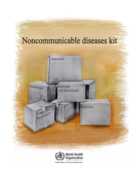
WHO has developed a new health kit to support treatment for chronic disease patients in emergency settings. The prevalence of NCDs is increasing worldwide, including in emergency/crisis-prone areas. Yet current humanitarian response has not accounted for this emerging burden. The NCD kit attends to
...
Методические рекомендации «Правила работы нейрохирургических отделений при подозрении на новую коронавирусную инфекцию COVID-19», Методические рекомендации «Анест
...
