Filter
588
Text search:
undernutrition
Featured
59
199
Language
Document type
335
141
46
23
19
18
2
2
1
1
Countries
42
29
23
23
17
15
11
9
9
9
9
8
7
7
7
6
6
6
5
5
5
5
4
4
4
4
4
3
3
3
3
3
3
3
2
2
2
2
2
2
2
2
2
2
2
2
2
2
2
1
1
1
1
1
1
1
1
1
1
1
1
1
1
1
1
1
1
Authors & Publishers
Publication Years
Category
237
90
59
40
38
20
2
Toolboxes
65
32
30
25
24
21
16
13
11
10
8
5
5
3
3
2
1
1
1
1
Noncommunicable diseases (NCDs) – chief among them, cardiovascular diseases (heart disease and stroke), cancer, diabetes and chronic respiratory diseases – along with mental health, cause nearly three quarters of deaths in the world. Their drivers are social, environmental, commercial and geneti
...
Noncommunicable diseases (NCDs) – chief among them, cardiovascular diseases (heart disease and stroke), cancer, diabetes and chronic respiratory diseases – along with mental health, cause nearly three quarters of deaths in the world. Their drivers are social, environmental, commercial and geneti
...
The WHO document "Integrating the prevention and control of noncommunicable diseases in HIV/AIDS, tuberculosis, and sexual and reproductive health programmes: implementation guidance" provides a framework for integrating noncommunicable diseases (NCDs) into existing health programs for HIV/AIDS, tub
...
Non-Communicable Diseases (NCDs), including mental disorders, currently pose one of the biggest threats to health and development globally, particularly in low and middle income countries2. It is predicted that unless proven interventions are rapidly implemented in countries, in the short to medium
...
This module covers common Non-Communicable Diseases such as Hypertension, Diabetes and three common cancers (Cervical,
Breast and Oral cancer). The focus of this module is on building the knowledge and skills of the Multi-Purpose Workers (MPW) in
undertaking Population Based Screening, identifi ca
...
About one fourth of the world’s population is estimated to have been infected with the tuberculosis (TB) bacilli, and about 5–10% of those infected develop TB disease in their lifetime. The risk for TB disease after infection depends on several factors, the most important being the person’s im
...
The 2023 meeting of the WHO Clinical Consortium on Healthy Ageing (CCHA) was the group’s ninth gathering and took place in Geneva 5–7 December 2023. The meeting was structured around seven panels, with a series of technical presentations, plenary discussions and group work, and a final session o
...
The WHO Global tuberculosis report 2024 provides a comprehensive and up-to-date assessment of the TB epidemic, and of progress in prevention, diagnosis and treatment of the disease, at global, regional and country levels. This is done in the context of global TB commitments, strategies and targets.
The social protection landscape for people affected by TB in the WHO South-East Asia Region
This paper focuses on the role of health systems in improving child nutrition and also acknowledges that need to adequately address key determinants, improve governance and enhance civil society action for accountability in order to make progress towards improving child nutrition
Este documento pretende ser una herramienta de trabajo que ayude
a comprender las dimensiones de la desnutrición infantil en el mundo, sus causas y consecuencias, pero también y muy especialmente las líneas básicas de intervención en las que trabajamos para luchar contra ella en los contextos
...
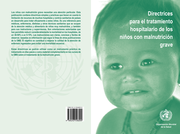
Las directrices terapéuticas descritas en este documento pueden aplicarse no sólo en los hospitales, sino también en centros de alimentación terapéutica en situaciones de emergencia y en centros de nutrición para rehabilitación tras el tratamiento inicial en un hospital. [OMS]

Este manual proporciona directrices prácticas para el tratamiento de los pacientes con malnutrición grave. Su objetivo es fomentar el mejor tratamiento disponible para reducir el riesgo de defunción, acortar la estancia hospitalaria y facilitar la rehabilitación y una
recuperación completa.