
Filter
991
Text search:
Price,
R.
Featured
Recommendations
87
New Publications
242
Language
Document type
No document type
505
Studies & Reports
265
Guidelines
125
Manuals
40
Strategic & Response Plan
23
Fact sheets
14
Training Material
10
Situation Updates
3
Resource Platforms
3
Brochures
1
Infographics
1
Online Courses
1
Countries / Regions
Global
51
South Africa
28
India
27
Nepal
19
Ethiopia
16
Uganda
16
Kenya
16
Ukraine
16
Western and Central Europe
16
Sierra Leone
14
Liberia
14
Africa
14
Congo, Democratic Republic of
13
Philippines
11
Zambia
11
Bangladesh
11
Myanmar / Burma
11
Nigeria
10
Syria
10
Ghana
9
South Sudan
9
Cambodia
9
Sudan
9
Latin America and the Carribbean
9
Afghanistan
8
Tanzania
8
Rwanda
8
Mozambique
8
Brazil
8
South–East Asia Region
8
Eastern Europe
8
Malawi
7
Zimbabwe
6
Venezuela
6
Russia
6
Guinea
5
Germany
5
Namibia
5
Middle East and North Africa
5
Cameroon
4
Haiti
4
Benin
4
Botswana
4
Lesotho
4
East and Southern Africa
4
Eastern Europe and Central Asia
4
Asia
4
Albania
4
Tajikistan
4
North America
4
Jamaica
4
USA
3
Somalia
3
Pakistan
3
Turkey
3
China
3
Indonesia
3
Angola
3
Sri Lanka
3
West and Central Africa
3
Kyrgyzstan
3
Vietnam
3
Portugal
3
Spain
3
Burkina Faso
2
Senegal
2
Chad
2
Thailand
2
Central African Republic
2
Eswatini/ Swaziland
2
North Macedonia
2
Colombia
2
Madagascar
2
Yemen
2
Paraguay
2
Southern Africa
2
Kazakhstan
2
Turkmenistan
2
United Kingdom
2
Bosnia and Herzegovina
2
Mali
1
Côte d’Ivoire / Ivory Coast
1
Jordan
1
Egypt
1
Papua New Guinea
1
Argentina
1
Peru
1
Serbia
1
Ecuador
1
Bhutan
1
North Korea
1
Timor Leste/ East Timor
1
Estonia
1
Lithuania
1
Moldova
1
Japan
1
Denmark
1
France
1
Israel
1
Authors & Publishers
Publication Years
Category
Countries
294
Clinical Guidelines
106
Public Health
65
Women & Child Health
38
Key Resources
32
Pharmacy & Technologies
19
Capacity Building
5
General Guidelines
1
Toolboxes
Mental Health
104
HIV
90
COVID-19
77
Planetary Health
74
TB
38
Conflict
37
Pharmacy
34
NCDs
33
Global Health Education
31
AMR
28
Disability
22
Health Financing Toolbox
22
Ebola
16
Natural Hazards
16
Refugee
13
Caregiver
13
NTDs
13
Rapid Response
11
Social Ethics
9
Specific Hazards
3
Cholera
2
Zika
2
Polio
1
South Sudan
1
Typhoon
1
This publication provides directions for a logical, evidence informed approach to selecting, developing, implementing and monitoring population-based interventions within the context of the double-burden of malnutrition in South-East Asia. The focus of this guide is on processed or ultra-processed p
...
The plan contains the latest available evidence on the extent of insecticide resistance around the world, and puts forward a strategy for global and country levels, identifying clear roles and timelines for all stakeholders. The GPIRM also summarizes information about innovative new products being d
...
An estimated 59 000 people die from rabies each year. That’s one person every nine minutes of every day, 40% of whom are children living in Asia and Africa. As dog bites cause almost all human cases, we can prevent rabies deaths by increasing awareness, vaccinating dogs to prevent the disease at i
...

Policy Research Working Paper 6100 | Impact Evaluation Series No. 60 | This study examines the effect of performance incentives for health care providers to provide more and higher quality care in Rwanda on child health outcomes. The authors find that the incentives had a large and significant effec
...
Health Systems for Outcomes Publication | Using qualitative data from Rwanda, this study focuses on four institutional factors that affect health worker performance and career choice: incentives, monitoring arrangements, professional norms and health workers’ intrinsic motivation. It also provides
...

The uneven distribution of HIV risks and burdens across populations is a well-substantiated fact, though seldom publicly acknowledged. Gay men and other men who have sex with men, people who inject drugs, sex workers, and transgender women are 24, 24, 13.5, and 49 times more likely to acquire HIV,
...

This working paper is a case study on South Sudan as an important refugee country of origin. The case study looks at issues of forced displacement in South Sudan and underscores the linkages between internally displaced persons and South Sudanese refugees. The case study highlights the importance of
...

The overall goal of the programme, to reduce the malaria morbidity and mortality by 75% (using 2012 as baseline) by the year 2020, continued to be pursued in 2014. The following areas were identified as some of the priorities for the year: Malaria Case Management under which we have Malaria in Pregn
...

Non-Wood Forest Products 11
Traditional medicine and its use of medicinal plants is dependent on reliable supply of plant materials. The book focuses on the interface between medicinal plant use and conservation of medicinal plants.
Chinese Medicine, (2016) 11:37
Medicinal plants are globally valuable sources of herbal products, and they are disappearing at a high speed. This article reviews global trends, developments and prospects for the strategies and methodologies concerning the conservation and sustainable use of me ...
Medicinal plants are globally valuable sources of herbal products, and they are disappearing at a high speed. This article reviews global trends, developments and prospects for the strategies and methodologies concerning the conservation and sustainable use of me ...

This article examines the activities of national and international actors in Pharmaceutical Services (PS) in Mozambique from 2007 to 2012, focusing on the public provision of HIV/Aids, malaria and tuberculosis medicines. It describes how PS functions in the country, what actors are involved in this
...

Sectors in which Priority Adaptation Projects should be implemented first include:
- 1) Agriculture, Early Warning Systems and Forest (First Priority Level Sectors). This is followed by:
- 2) Public Health and Water Resources (Second Priority Level Sectors);
- 3) Coastal Zone (Thir ...
- 1) Agriculture, Early Warning Systems and Forest (First Priority Level Sectors). This is followed by:
- 2) Public Health and Water Resources (Second Priority Level Sectors);
- 3) Coastal Zone (Thir ...
The GCF aims to support developing countries in achieving a paradigm shift to low-emission and climate-resilient pathways. This is achieved by funding innovative and transformative lowemission (mitigation) and climate-resilient (adaptation) projects and programmes developed by the public and private
...


This document was prepared in response to a need to review and potentially update the current recommendations for the antibiotic treatment of both inpatient and outpatient management of severe acute malnutrition (SAM). The current recommendations (Table 1) are based on guidelines published in 2013 i
...

With the goal of ending viral hepatitis as a public health threat by 2030, the Regional Action Plan will provide an actionable framework for implementing evidence-based interventions at scale. It will be informed through strategic monitoring of the response, that must be equitable and sustainable an
...
Over the period 2015 to 2019, scaling up a package of selected nutrition-specific and nutrition sensitive interventions to cover 90 per cent of Sudan would:
- Reduce the under-five mortality rate to 49/1,000 live births
- Reduce the prevalence of stunting to 25 per cent
- Reduce the ...
- Reduce the under-five mortality rate to 49/1,000 live births
- Reduce the prevalence of stunting to 25 per cent
- Reduce the ...
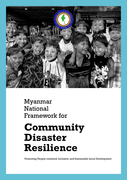
The Myanmar National Framework seeks to achieve people-centered, inclusive, and sustainable socioeconomic development in the face of disasters triggered by natural hazards and climate change. The framework articulates a common understanding, proposes a coherent approach, and identifies potential opp
...

An evaluation of WFP’s operation. Evaluation Report
The Protracted Relief and Recovery Operation (PRRO) main components include: relief assistance; food assistance for assets (FFA); nutrition support to women, children and HIV/TB patients; school feeding (SF) and capacity building. The evalua ...
The Protracted Relief and Recovery Operation (PRRO) main components include: relief assistance; food assistance for assets (FFA); nutrition support to women, children and HIV/TB patients; school feeding (SF) and capacity building. The evalua ...
