
Filter
739
Text search:
Pan
American
Health
organization
PAHO
Featured
Recommendations
60
New Publications
147
Language
Document type
No document type
268
Studies & Reports
163
Guidelines
122
Manuals
51
Fact sheets
36
Strategic & Response Plan
29
Training Material
20
Infographics
16
Situation Updates
14
Brochures
7
Resource Platforms
4
Dashboards/Maps
3
Online Courses
3
Videos
3
Countries / Regions
Latin America and the Carribbean
164
Global
44
Brazil
41
Paraguay
23
Venezuela
22
Haiti
17
Colombia
17
Mozambique
16
Angola
15
North America
14
Argentina
10
Guinea-Bissau
7
Peru
7
Bolivia
7
Ecuador
4
Chile
4
Asia
4
Bangladesh
3
Ukraine
3
Myanmar / Burma
3
Africa
3
Ghana
2
Zambia
2
Syria
2
Mexico
2
Yemen
2
Russia
2
Jamaica
2
Nigeria
1
Nepal
1
Cambodia
1
China
1
Benin
1
Dominican Republic
1
Honduras
1
El Salvador
1
Guatemala
1
Lesotho
1
Bahamas
1
East and Southern Africa
1
West and Central Africa
1
Middle East and North Africa
1
South–East Asia Region
1
Western Pacific Region
1
Western and Central Europe
1
Eastern Europe
1
Laos
1
Tajikistan
1
Estonia
1
Moldova
1
Iran
1
Vietnam
1
Uruguay
1
Japan
1
Portugal
1
Spain
1
Authors & Publishers
Publication Years
Category
Countries
208
Clinical Guidelines
86
Public Health
60
Women & Child Health
49
Key Resources
28
Capacity Building
14
Pharmacy & Technologies
13
General Guidelines
4
Toolboxes
COVID-19
151
Mental Health
65
Rapid Response
52
NTDs
41
Zika
40
HIV
40
NCDs
35
Planetary Health
32
TB
20
Caregiver
19
Global Health Education
18
Natural Hazards
16
Cholera
12
AMR
12
Refugee
9
Pharmacy
8
Conflict
6
Health Financing Toolbox
6
Disability
5
Specific Hazards
5
Ebola
3
Polio
2
Typhoon
2
Social Ethics
1
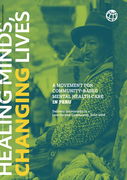
This report explores community-focused change initiatives in the financing, organization, and delivery of mental health services in Peru from 2013 to 2016. It examines the national dimension of refo
...
Rabies is a global public health problem with important socioeconomic impacts. Human rabies is preventable; almost all cases are transmitted through the bite of a rabid dog. Elimination of human rabies is possible. Technical support and tools are av
...
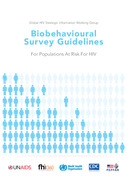
Global HIV Strategic Information Working Group
For Populations At Risk For HIV
Reduce Risk, Protect Health Facilities, Save Lives
Practical Guideline for collaborative interventions

salud pública de méxico / vol. 50, suplemento 2 de 2008, pp.167-177.
In response to the emerging global concern regarding health and people with intellectual disabilities (ID), several developed countries have established national initiatives to
...
Global HIV Strategic Information Working Group
The purpose of this report is to provide an overview of the issues in regulating and managing international emergency in a selection of large and small-scale sudden onset disasters (SODs). In doing so, it aims to contribute to several key international commitments as well as its objective in disaste
...

World Psychiatry. 2010 Jun;9(2):67-77.
The main recommendations are presented in relation to: the need for coordinated policies, plans and programmes, the requirement to scale up services for whole populations, the importance of promoting community awareness about mental illness to increase levels
...
The Global Status Report on Noncommunicable Diseases (NCDs) 2014 by the World Health Organization outlines the global impact of NCDs, including cardiovascular diseases, cancer, diabetes, and chronic
...
Rev Panam Salud Publica. 2021;45:e74.
Some characteristics of patients and healthcare providers influence treatment success in MDR-TB cases. Physicians’ and nurses’ knowledge about MDR-TB must be improved, and follow-up of MDR-TB patients who are living with HIV and of those affiliated with the
...

This fourth annual report monitors global progress towards the 2023 target for global elimination of industrially produced trans-fatty acids (TFA), highlighting achievements during the past year (October 2021 – September 2022). Countries are responding to the World
...
Emergency medical teams (EMT) are first response health care providers – doctors, nurses, paramedics, and others – during outbreaks and emergencies or disasters, working with governments, charities such as nongovernmental organizations (NGOs), a
...
In 2012, all Member States of the World Health Organization (WHO) endorsed a historical target to reduce premature mortality from noncommunicable diseases
(NCD). This commitment was echoed in 2015
...

Chagas disease (CD) is endemic in the Americas, being present in 21 countries, where it affects about 6 million
people.(1) With such relevant numbers of people affected and disability adjusted life years lost, CD is a poverty-related
and poverty-promoting disease.
Although data describe a relevan
...
April 2022 Volume 35 Issue 2 e00152-21
Population movements have turned Chagas disease (CD) into a global public health problem. Despite the successful implementation of subregional initiatives to control vectorial and transfusional Trypanosoma cr
...
There are indigenous communities at high risk in every country of the region. At stake are the lives of 45 million people who belong to more than 800 indigenous peoples. Of these, some 100 are spread across several countries, around 200 maintain voluntary isolation or are in initial contact, and nea
...
This fact sheet is based on a systematic review of the literature on HPV and cervical cancer epidemiology, and a survey on policies and practices related to the prevention and control of cervical cancer among women living with HIV (WLHIV) to PAHO Me
...
Violence against women and girls is widespread in the Region of the Americas, resulting in enormous consequences for the health and wellbeing of women and girls, their families and communities. These costs are unacceptable and they can be prevented
...
Rev Panam Salud Publica. 2018;42:e45. https://doi.org/10.26633/RPSP.2018.45
