Filter
867
Text search:
EU
European
Union
Featured
Recommendations
49
New Publications
215
Language
Document type
No document type
439
Studies & Reports
240
Guidelines
76
Strategic & Response Plan
28
Manuals
27
Fact sheets
23
Situation Updates
12
Training Material
9
Resource Platforms
9
Brochures
2
Online Courses
1
Videos
1
Countries / Regions
Western and Central Europe
126
Ukraine
36
Germany
30
Eastern Europe
28
Global
26
Sierra Leone
23
Syria
19
Eastern Europe and Central Asia
16
Liberia
15
Zambia
15
Myanmar / Burma
12
Zimbabwe
10
Malawi
10
Africa
10
Guinea
8
Kenya
8
Moldova
8
Nigeria
7
Rwanda
7
Lesotho
7
Venezuela
7
Ethiopia
6
Ghana
6
Nepal
6
Central African Republic
6
Uganda
5
Eswatini/ Swaziland
5
Greece
5
Poland
5
Congo, Democratic Republic of
4
Philippines
4
India
4
Turkey
4
Cambodia
4
Bangladesh
4
Namibia
4
Libya
4
West and Central Africa
4
Asia
4
Albania
4
Romania
4
Côte d’Ivoire / Ivory Coast
3
Somalia
3
Afghanistan
3
Tanzania
3
Thailand
3
South Africa
3
Hungary
3
Middle East and North Africa
3
Latin America and the Carribbean
3
Russia
3
Haiti
2
Pakistan
2
Iraq
2
Jordan
2
Mozambique
2
North Macedonia
2
Croatia
2
Botswana
2
Sri Lanka
2
Yemen
2
East and Southern Africa
2
Western Pacific Region
2
Italy
2
Laos
2
Bulgaria
2
Lithuania
2
Slovakia
2
Georgia
2
Burkina Faso
1
Mali
1
Niger
1
South Sudan
1
Lebanon
1
China
1
Ireland
1
Sudan
1
Brazil
1
Serbia
1
Colombia
1
Madagascar
1
Mexico
1
Chile
1
South–East Asia Region
1
Estonia
1
Iran
1
Vietnam
1
North America
1
Turkmenistan
1
Denmark
1
United Kingdom
1
Portugal
1
Spain
1
Israel
1
Authors & Publishers
Publication Years
Category
Countries
231
Key Resources
40
Public Health
33
Women & Child Health
19
Clinical Guidelines
17
Capacity Building
5
Pharmacy & Technologies
5
Toolboxes
Mental Health
93
Refugee
87
COVID-19
75
HIV
56
Conflict
55
Planetary Health
55
AMR
54
TB
42
Disability
27
Ebola
24
Global Health Education
23
Pharmacy
23
Health Financing Toolbox
19
Rapid Response
18
Natural Hazards
11
Specific Hazards
10
NCDs
9
Caregiver
6
Social Ethics
4
NTDs
4
Zika
3
A guide for hospital trusts' hotel services, procurement teams and caterers to provide more sustainable food.
Clinical Microbiology and Infection Volume 21, Issue 5, May 2015, Pages 433-443;
The neglected zoonotic diseases (NZDs) have been all but eradicated in wealthier countries, but remain major causes of ill-health and mortality across Africa, Asia, and Latin America. This neglect is, in part, a conse
...
This paper summarizes the evidence about the health effects of air pollution from particulate matter and their implications for policy-makers, with the aim of stimulating the development of more effective strategies to reduce
air pollution and its health effects in the countries of eastern Europe,
...
Current evidence that the climate is changing is overwhelming. Impacts of climate change and variability are being observed: more intense heat-waves, fires and floods; and increased prevalence of food- water- and vector-borne diseases. Climate change will put pressure on environmental and health det
...
This policy paper outlines key health financing policy actions for countries to ensure universal access to health services and financial protection for people fleeing conflict. It focuses on three policy areas – granting entitlement and ensure access to the full range of needed health services for
...

National-scale databases and reliability issue
Background report
Saving lives is the priority of WHO’s response in Ukraine. WHO works to ensure time-critical, lifesaving multisectoral assistance, non-discriminatory access to emergency and essential health services and priority prevention programmes, and laying the foundation for longer-term health systems recov
...
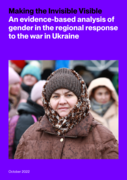
The escalation of the war in Ukraine began on 24 February 2022, causing thousands of civilian
casualties; destroying civilian infrastructure, including hospitals, and triggering the fastest-
growing displacement crisis in Europe since World War II. The demographic profile of Ukraine,
combined wit
...
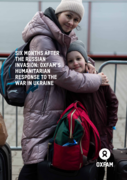
After eight years of armed conflict in the east of the country, the Russian Federation started a military offensive in Ukraine on 24 February 2022. The impact of this war has been devastating. It has so far caused 16,200 civilian casualties and destroyed key infrastructure, such as hospitals, school
...
As countries aim to progress towards the Sustainable Development Goals (SDGs) and achieving universal health coverage, health inequities driven by racial discrimination and intersecting factors remain pervasive. Inequities experienced by indigenous peoples as well as people of African descent, Roma
...
Since 24 February 2022, the war in Ukraine has caused widespread suffering to its people and serious damage
to the country’s infrastructure. Attacks on the country’s health system and its power network threaten people, compromise the provision of health care, and complicate the distribution of
...
The military offensive by the Russian Federation in Ukraine which began February 2022 has triggered one of the world’s fastest-growing displacement and humanitarian crisis, with geopolitical and economic ripples felt across the globe. The ongoing war has caused large-scale disruptions to the deliv
...

In Control: A Practical Handbook for Professionals Working in Health Emergencies Internationally RKI
The greatest risk to persons engaging in international medical emergency response is poor preparation.
The In Control handbook hopes to provide a remedy.
At the time of writing, we are living through the Coronavirus (COVID-19) pandemic, a health emergency that disregards physical borders, brin
...
This report provides an analysis of donor government funding to address the HIV response in low- and
middle-income countries in 2022, the latest year available, as well as trends over time. It includes both
bilateral funding from donors and their contributions to the Global Fund to Fight AIDS, Tub
...
Time has seen management for Cystic Fibrosis (CF) advance drastically, most recently in the development of the disease-modifying triple combination therapy ivacaftor/tezacaftor/elexacaftor. There is currently limited evidence regarding both the global epidemiology of CF and access to this transforma
...
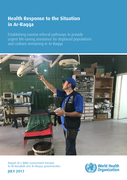
Establishing trauma referral pathways to provide urgent life-saving assistance for displaced populations and civilians remaining in Ar-Raqqa.
In July 2017, a WHO team comprising an external trauma care specialist and two WHO staff members visited the governorates of Ar-Raqqa and neighbouring Al-Ha
...
World's largest Science, Technology & Medicine Open Access book publisher
Chapter 7 from the book People's Movements in the 21st Century - Risks, Challenges and Benefits