
Filter
865
Text search:
Ministry
de
la
Santé
Featured
Recommendations
45
New Publications
338
Language
Document type
No document type
565
Studies & Reports
128
Guidelines
52
Training Material
41
Manuals
36
Fact sheets
18
Strategic & Response Plan
16
Situation Updates
5
Infographics
2
Online Courses
1
Videos
1
Countries / Regions
India
89
Kenya
54
Nepal
43
Rwanda
43
Tanzania
35
Nigeria
34
Uganda
32
Malawi
32
Ethiopia
30
Sierra Leone
27
Bangladesh
26
Senegal
25
Myanmar / Burma
24
Zambia
20
Congo, Democratic Republic of
18
Indonesia
16
Burkina Faso
15
Haiti
14
Ghana
13
Namibia
13
Liberia
12
Cameroon
12
Cambodia
11
Global
11
Zimbabwe
9
Benin
8
Syria
7
Lesotho
7
Mali
5
Pakistan
5
Afghanistan
5
Mozambique
5
Africa
5
South–East Asia Region
4
Latin America and the Carribbean
4
Guinea
3
South Sudan
3
South Africa
3
Ukraine
3
Botswana
3
Western and Central Europe
3
Togo
2
Eswatini/ Swaziland
2
Sri Lanka
2
Asia
2
Tajikistan
2
Guinea-Bissau
1
Niger
1
Somalia
1
Germany
1
Chad
1
Central African Republic
1
Argentina
1
North Macedonia
1
Yemen
1
East and Southern Africa
1
Paraguay
1
Venezuela
1
Eastern Europe
1
Southern Africa
1
Russia
1
Estonia
1
Romania
1
Iran
1
Kyrgyzstan
1
North America
1
Jamaica
1
Belarus
1
Latvia
1
Authors & Publishers
Publication Years
Category
Countries
667
Women & Child Health
98
Capacity Building
50
Public Health
35
Clinical Guidelines
32
Key Resources
9
Pharmacy & Technologies
1
Toolboxes
Mental Health
35
Caregiver
26
COVID-19
22
Conflict
12
Refugee
10
Disability
9
Rapid Response
9
TB
9
Ebola
8
HIV
8
Planetary Health
8
Global Health Education
7
Cholera
5
AMR
5
Pharmacy
4
Health Financing Toolbox
4
Natural Hazards
3
Zika
3
NTDs
3
NCDs
3
Polio
1
The information provided here can be used to understand the current situation, increase attention to preterm births in Rwanda and to inform dialogue and action among stakeholders. Data can be used to identify the most important risk factors to target and gaps in care in order to identify and impleme
...
The information provided here can be used to understand the current situation, increase attention to preterm births in Rwanda and to inform dialogue and action among stakeholders. Data can be used to identify the most important risk factors to target and gaps in care in order to identify and impleme
...
This study examined the quality of facility-based maternal and newborn health care by describing the implementation of recommended practices for maternal and newborn care among health care facilities to determine whether increased training, supervision, and incentives for health workers were associa
...
Maternal Child Nutrition. 2017;e12478
This paper analyzes individual level and household level determinants of anemia among children and women in Nepal and Pakistan. Applying multivariate modified Poisson models to recent national survey data, we find that the prevalence of anemia was significa ...
This paper analyzes individual level and household level determinants of anemia among children and women in Nepal and Pakistan. Applying multivariate modified Poisson models to recent national survey data, we find that the prevalence of anemia was significa ...
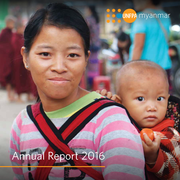
Census data shows that Myanmar can harness a double dividend – both youth and gender. This year’s annual report provides many facets of the journey to gender equality. It tells a story of widening horizons for women and girls who are capable in their own right. It is also a story of women fulfil
...

The study sought to understand the factors that facilitate women to adhere to treatment and return to health facilities for routine care from their own perspective. The researchers focused on Malawi, Uganda and Zambia, early adopters of the global guidance to provide lifelong treatment for pregnant
...
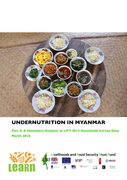
In order to better understand the contributing factors of undernutrition in LIFT program areas and the links between child nutritional status and independent variables of programmatic importance to LIFT (such as income, livelihoods, food security, and water, sanitation and hygiene [WASH]), LEARN com
...


The report studied child poverty in nine dimensions – development/stunting, nutrition, health, water, sanitation, and housing. Other dimensions included education, health related knowledge, and information and participation.
An estimated 36 million of a total population of 41 million children und
...
This compendium collates current tools and resources on quality improvement developed by the WHO Service Delivery and Safety Department and provides examples of how the tools and resources have been applied in country settings. The target audience for this document are ministries of health, facility
...
What is Violence Against Women? Why does it happen? What does it have to do with development? What does Oxfam do to end violence against women? What does it mean to do that work with a transformative approach?
Available in: English, Arabic, French, Spanish: https://policy-practice.oxfam.org.uk/publ
...

Demographic and Health Surveys, Working Paper
The maternal deaths audit is one of the three major strategies recommended by WHO for the
reduction of maternal and neonatal mortality.
Objective: To measure the impact of maternal death and nears miss review on maternal mortality and morbidity
after 7 years of practice at the University Hospital
...

BMC Public Health (2019) 19:1608
https://doi.org/10.1186/s12889-019-7853-3
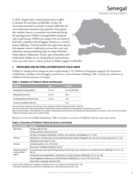
In 2016, Senegal made a minimal advancement in efforts to eliminate the worst forms of child labor. In June, the Government launched an initiative to remove tailbés from the street and prosecute marabouts that perpetrate crimes against their students; however, no marabouts were prosecuted during th
...
Trainer Manual Introduction (Section 1-3)
Afghanistan has one of the largest populations per capita of persons with disabilities in the world. At least one in five Afghan households includes an adult or child with a serious physical, sensory, intellectual, or psychosocial disability. More than 40 years of war have left more than one million
...
BMJ Open2018;8:e020423. doi:10.1136/bmjopen-2017-02042
EC has been increasingly used in the evaluation of maternal and child health programmes.12–15 For instance, Nesbitt et al compared crude coverage and EC of pregnant women with facility-based obstetric services in Ghana and estimated that alth
...
