
Filter
2715
Text search:
Government
of
India
Featured
168
811
Language
2620
49
46
41
33
20
16
13
6
5
5
4
4
3
3
3
3
2
2
2
2
2
2
2
2
2
1
1
1
1
1
1
1
1
1
1
1
1
1
1
1
1
Document type
1649
521
221
121
63
38
34
30
15
13
7
2
Countries
612
154
109
60
59
42
40
40
39
37
29
25
22
22
21
21
19
17
16
15
15
14
14
14
13
13
12
12
12
11
11
11
11
10
9
9
9
9
7
7
7
7
6
6
6
6
6
5
5
5
5
4
4
4
4
4
4
4
4
4
3
3
3
3
3
3
3
2
2
2
2
2
2
2
2
2
2
2
1
1
1
1
1
1
1
1
1
1
1
1
1
1
1
1
1
1
1
1
1
1
1
1
1
1
1
1
1
1
1
1
1
1
Authors & Publishers
276
146
120
94
83
82
80
61
48
36
33
27
27
26
25
24
24
23
22
20
17
16
15
15
14
14
13
13
13
12
11
11
11
10
10
10
9
9
9
9
9
8
8
8
8
8
7
7
7
7
7
7
7
7
7
7
6
6
6
6
6
6
6
6
6
6
6
5
5
5
5
5
5
5
5
5
5
5
5
5
5
4
4
4
4
4
4
4
4
4
4
4
4
4
4
4
4
4
4
4
4
4
3
3
3
3
3
3
3
3
3
3
3
3
3
3
3
3
3
3
3
3
3
3
3
3
3
3
3
3
3
3
3
3
3
3
3
3
3
3
3
3
3
3
3
3
3
3
3
3
3
3
3
3
3
3
3
3
3
3
2
2
2
2
2
2
2
2
2
2
2
2
2
2
2
2
2
2
2
2
2
2
2
2
2
2
2
2
2
2
2
2
2
2
2
2
2
2
2
2
2
2
2
2
2
2
2
2
2
2
2
2
2
2
2
2
2
2
2
2
2
2
2
2
2
2
2
2
2
2
2
2
2
2
2
2
2
2
2
2
2
2
2
2
2
2
2
2
2
2
2
2
2
2
2
2
2
2
2
2
2
2
2
2
2
2
2
2
2
2
2
2
2
2
2
2
2
2
2
2
2
2
2
2
2
2
2
2
2
2
2
2
2
2
2
2
2
2
2
2
2
2
2
2
2
2
2
2
2
2
2
2
2
2
2
2
2
2
2
2
2
2
2
2
2
2
2
2
2
1
1
1
1
1
1
1
1
1
1
1
1
1
1
1
1
1
1
1
1
1
1
1
1
1
1
1
1
1
1
1
1
1
1
1
1
1
1
1
1
1
1
1
1
1
1
1
1
1
1
1
1
1
1
1
1
1
1
1
1
1
1
1
1
1
1
1
1
1
1
1
1
1
1
1
1
1
1
1
1
1
1
1
1
1
1
1
1
1
1
1
1
1
1
1
1
1
1
1
1
1
1
1
1
1
1
1
1
1
1
1
1
1
1
1
1
1
1
1
1
1
1
1
1
1
1
1
1
1
1
1
1
1
1
1
1
1
1
1
1
1
1
1
1
1
1
1
1
1
1
1
1
1
1
1
1
1
1
1
1
1
1
1
1
1
1
1
1
1
1
1
1
1
1
1
1
1
1
1
1
1
1
1
1
1
1
1
1
1
1
1
1
1
1
1
1
1
1
1
1
1
1
1
1
1
1
1
1
1
1
1
1
1
1
1
1
1
1
1
1
1
1
1
1
1
1
1
1
1
1
1
1
1
1
1
1
1
1
1
1
1
1
1
1
1
1
1
1
1
1
1
1
1
1
1
1
1
1
1
1
1
1
1
1
1
1
1
1
1
1
1
1
1
1
1
1
1
1
1
1
1
1
1
1
1
1
1
1
1
1
1
1
1
1
1
1
1
1
1
1
1
1
1
1
1
1
1
1
1
1
1
1
1
1
1
1
1
1
1
1
1
1
1
1
1
1
1
1
1
1
1
1
1
1
1
1
1
1
1
1
1
1
1
1
1
1
1
1
1
1
1
1
1
1
1
1
1
1
1
1
1
1
1
1
1
1
1
1
1
1
1
1
1
1
1
1
1
1
1
1
1
1
1
1
1
1
1
1
1
1
1
1
1
1
1
1
1
1
1
1
1
1
1
1
1
1
1
1
1
1
1
1
1
1
1
1
1
1
1
1
1
1
1
1
1
1
1
1
1
1
1
1
1
1
1
1
1
1
1
1
1
1
1
1
1
1
1
1
1
1
1
1
1
1
1
1
1
1
1
1
1
1
1
1
1
1
1
1
1
1
1
1
1
1
1
1
1
1
1
1
1
1
1
1
1
1
1
1
1
1
1
1
1
1
1
1
1
1
1
1
1
1
1
1
1
1
1
1
1
1
1
1
1
1
1
1
1
1
1
1
1
1
1
1
1
1
1
1
1
1
1
1
1
1
1
1
1
1
1
1
1
1
1
1
1
1
1
1
1
1
1
1
1
1
1
1
1
1
1
1
1
1
1
1
1
1
1
1
1
1
1
1
1
1
1
1
1
1
1
1
1
1
1
1
1
1
1
1
1
1
1
1
1
1
1
1
1
1
1
1
1
1
1
1
1
1
1
1
1
1
1
1
1
1
1
1
1
1
1
1
1
1
1
1
1
1
1
1
1
1
1
1
1
1
1
1
1
1
1
1
1
1
1
1
1
1
1
1
1
1
1
1
1
1
1
1
1
1
1
1
1
1
1
1
1
1
1
1
1
1
1
1
1
1
1
1
1
1
1
1
1
1
1
1
1
1
1
1
1
1
1
1
1
1
1
1
1
1
1
1
1
1
1
1
1
1
1
1
1
1
1
1
1
1
1
1
1
1
1
1
1
1
1
1
1
1
1
1
1
1
1
1
1
1
1
1
1
1
1
1
1
1
1
1
1
1
1
1
1
1
1
1
1
1
1
1
1
1
1
1
1
1
1
1
1
1
1
1
1
1
1
1
1
1
1
1
1
1
1
1
1
1
1
1
1
1
1
1
1
1
1
1
1
1
1
1
1
1
1
1
1
1
1
1
1
1
1
1
1
1
1
1
1
1
1
1
1
1
1
1
1
1
1
1
1
1
1
1
1
1
1
1
1
1
1
1
1
1
1
1
1
1
1
1
1
1
1
1
1
1
1
1
1
1
1
1
1
1
1
1
1
1
1
1
1
1
1
1
1
1
1
1
1
1
1
1
1
1
1
1
1
1
1
1
1
1
1
1
1
1
1
1
1
1
1
1
1
1
1
1
1
1
1
1
1
1
1
1
1
1
1
1
1
1
1
1
1
1
1
1
1
1
1
1
1
1
1
1
1
1
1
1
1
1
1
1
1
1
1
1
1
1
1
1
1
1
1
1
1
1
1
1
1
1
1
1
1
1
1
1
1
1
1
1
1
1
1
1
1
1
1
1
1
1
1
1
1
1
1
1
1
1
1
1
1
1
1
1
1
1
1
1
1
1
1
1
1
1
1
1
1
1
1
1
1
1
1
1
1
1
1
1
1
1
1
1
1
1
1
1
1
1
1
1
1
1
1
1
1
1
1
1
1
1
1
1
1
1
1
1
1
1
1
1
1
1
1
1
1
1
1
1
1
1
1
1
1
1
1
1
1
1
1
1
1
1
1
1
1
1
1
1
1
1
1
1
1
1
1
1
1
1
1
1
1
1
1
1
1
1
1
1
1
1
1
1
1
1
1
1
1
1
1
1
1
1
1
1
1
1
1
1
1
1
1
1
1
1
1
1
1
1
1
1
1
1
1
1
1
1
1
1
1
1
1
1
1
1
1
1
1
1
1
1
1
1
1
1
1
1
1
1
1
1
1
1
1
1
1
1
1
1
1
1
1
1
1
1
1
1
1
1
1
1
1
1
1
1
1
1
1
1
1
1
1
1
1
1
1
1
1
1
1
1
1
1
1
1
1
1
1
1
1
1
1
1
1
1
1
1
1
1
1
1
1
1
1
1
1
1
1
1
1
1
1
1
1
1
1
1
1
1
1
1
1
1
1
1
1
1
1
1
1
1
1
1
1
1
1
1
1
1
1
1
1
1
1
1
1
1
1
1
1
1
1
1
1
1
1
1
1
1
1
1
1
1
1
1
1
1
1
1
1
1
1
1
1
1
1
1
1
1
1
1
1
1
1
1
1
1
1
1
1
1
1
1
1
1
1
1
1
1
1
1
1
1
1
1
1
1
1
1
1
1
1
1
1
1
1
1
1
1
1
1
1
1
1
1
1
1
1
1
1
1
1
1
1
1
1
1
1
1
1
1
1
1
1
1
1
1
1
1
1
1
1
1
1
1
1
1
1
1
1
1
1
1
1
1
1
1
1
1
1
1
1
1
1
1
1
1
1
1
1
1
1
1
1
1
1
1
1
1
1
1
1
1
1
1
1
1
1
1
1
1
1
1
1
1
1
1
1
1
1
1
1
1
1
1
1
1
1
1
1
1
1
1
1
1
1
1
1
1
1
1
1
1
1
1
1
1
1
1
1
1
1
1
1
1
1
1
1
1
1
1
1
1
1
1
1
1
1
1
1
1
1
1
1
1
1
1
1
1
1
1
1
1
1
1
1
1
1
1
1
1
1
1
1
1
1
1
1
1
1
1
1
1
1
1
1
1
1
1
1
1
1
1
1
1
1
1
1
1
1
1
1
1
1
1
1
1
1
1
1
1
1
1
1
1
1
1
1
1
1
1
1
1
1
1
1
1
1
1
1
1
1
1
1
1
1
1
1
1
1
1
1
1
1
1
1
1
1
1
1
1
1
1
1
1
1
1
1
1
1
1
1
1
1
1
1
1
1
1
1
1
1
1
1
1
1
1
1
1
1
1
1
1
1
1
1
1
1
1
1
1
1
1
1
1
1
1
1
1
1
1
1
1
1
1
1
1
1
1
1
1
1
1
1
1
1
1
1
1
1
1
1
1
1
1
1
1
1
1
1
1
1
1
1
1
1
1
1
1
1
1
1
1
1
1
1
1
1
1
1
1
1
1
1
1
1
1
1
1
1
1
1
1
1
1
1
1
1
1
1
1
1
1
1
1
1
1
1
1
1
1
1
1
1
1
1
1
1
1
1
1
1
1
1
1
1
1
1
1
1
1
1
1
1
1
1
1
1
1
1
1
1
1
1
1
1
1
1
1
1
1
1
1
1
1
1
1
1
1
1
1
1
1
1
1
1
1
1
1
1
1
1
1
1
1
1
1
1
1
1
1
1
1
1
1
1
1
1
1
1
1
1
1
1
1
1
1
1
1
1
1
1
1
1
1
1
1
1
1
1
1
1
1
1
1
1
1
1
1
1
1
1
1
1
1
1
1
1
1
1
1
1
1
1
1
1
1
1
1
1
1
1
1
1
1
1
1
1
1
1
1
1
1
1
1
1
1
1
1
1
1
1
1
1
1
1
1
1
1
1
1
1
1
1
1
1
1
1
1
1
1
1
1
1
1
1
1
1
1
1
1
1
1
1
1
1
1
1
1
1
1
1
1
1
1
1
1
1
1
1
1
1
1
1
1
1
1
1
1
1
1
1
1
1
1
1
1
1
1
1
1
1
1
1
1
1
1
1
1
1
1
1
1
1
1
1
1
1
1
1
1
1
1
1
1
1
1
1
1
1
1
1
1
1
1
1
1
1
1
1
1
1
1
1
1
1
1
1
1
1
1
1
1
1
1
1
1
1
1
1
1
1
1
1
1
1
1
1
1
1
1
1
1
1
1
1
1
1
1
1
1
1
1
1
1
1
1
1
1
1
1
1
1
1
1
1
1
1
1
1
1
1
1
1
1
1
1
1
1
1
1
1
1
1
1
1
1
1
1
1
1
1
1
1
1
1
1
1
1
1
1
1
1
1
1
1
1
1
1
1
1
1
1
1
1
1
1
1
1
1
1
1
1
1
1
1
1
1
1
1
1
1
1
1
1
1
1
1
1
1
1
1
1
1
1
1
1
1
1
1
1
1
1
1
1
1
1
1
1
1
1
1
1
1
1
1
1
1
1
1
1
1
1
1
1
1
1
1
1
1
1
1
1
1
1
Publication Years
704
1696
299
15
1
Category
1102
169
156
125
101
34
20
5
1
1
Toolboxes
246
225
171
164
127
113
68
66
63
59
58
56
53
45
41
37
35
22
16
13
11
7
2
1
1
1
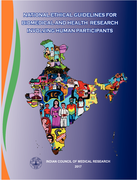
These guidelines are applicable to all biomedical, social and behavioural science research for health conducted in India involving human participants, their biological material and data.
The purpose of
...
such research should be: i. directed towards enhancing knowledge about the human condition while maintaining sensitivity to the Indian cultural, social and natural environment; ii. conducted under conditions such that no person or persons become mere means for the betterment of others and that human beings who are participating in any biomedical and/or health research or scientific experimentation are dealt with in a manner conducive to and consistent with their dignity and well-being, under conditions of professional fair treatment and transparency; and iii. subjected to a regime of evaluation at all stages of the research, such as design, conduct and reporting of the results thereof.
more
Today more people are exposed to hazards. While humanitarian action to mitigate the impact of disasters will always be vitally important, the community is facing critical challenge- how to better anticipate, manage and reduce - disaster risks by int
...
egrating the potential threat into its planning and policies at the community level. This manual aims to improve the capacity of the Panchayati Raj Institutions - the local self government and communities that face hazards due to environmental reasons. To help such capacity development efforts, we need learning materials focusing on key areas - water supply, environmental sanitation for better disaster management and preparedness.
more
High prevalence of target diseases in rural and developing nations, increased prevalence of malnutrition across the globe, lack of hygiene and poor
...
sanitation facilities, Migratory patterns of population, introduction of new chemical entity in the field of therapeutics, favorable government regulations, and increased R&D investments are key factors contributing to high CAGR of point of care diagnostics market during the forecast period.
more
The 2007 Rwanda Service Provision Assessment (RSPA) was a national representative survey conducted in 538 health facilities throughout Rwanda. The survey covered hospitals, health centers, dispensaries and
health posts, including all public facilities such as
...
government and government-assisted health facilities. The 2007 RSPA used interviews with health service providers and clients and observations of provider client consultations to obtain information on the capacity of facilities to provide quality services and the existence of functioning systems to support quality services. The areas addressed were the overall facility
infrastructure, maternal and child health, reproductive health, tuberculosis, malaria services; and services for sexually transmitted infections and HIV/AIDS. The objective was to assess the strengths and
weaknesses of the infrastructure and systems supporting these services, and to assess the adherence to standards in the delivery of services.
more
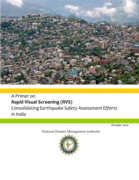
Consolidating Earthquake Safety Assessment Efforts in India. This document provides succinct instructions on how to perform rapid visual screening (RVS), a quick method of earthquake assessment
...
of buildings. It covers a brief description of RVS and its role as a simplified qualitative assessment in the wider methodology of earthquake assessment of buildings, and the recommended forms for pre-earthquake and post-earthquake Level 1 Assessments for seven building typologies. The method recommended by the primer is the BMTPC method which provides both Seismic Safety Index and Performance Rating to a particular building.
more
Myanmar: A Political Economy Analysis
Kristian Stokke, Roman Vakulchuk, Indra Øverland
Norwegian Institute of International Affairs
(2018)
C2
After almost 50 years of military dictatorship, and following the 2010 general elections which were rigged in favour of the military Union Solidarity and Development Party (USDP), Myanmar underwent
...
a series of political reforms from 2011 onwards. In November 2015, the first free general elections since the 1990 elections resulted in a victory for the National League for Democracy (NLD). The NLD formed a new government in 2016 with Htin Kyaw as the first non-military president since 1962, and with Aung San Suu Kyi in the newly-created position of State Counsellor.
more

The Newborn Situational Analysis reports of 2009 and 2011, as well as the “Bottleneck analysis on neonatal health” of 2013, culminated in the Nigeria launch
...
of “Call to action on Newborn health” at the first National Newborn Health Conference in 2014. This call to action provided the framework for the development of the Nigeria Every Newborn Action
Plan (NiENAP). The NiENAP lays out a vision to end preventable stillbirths and newborn deaths by accelerating progress and scaling up evidence- based high-impact and cost effective interventions. The plan is guided by the principles of country-leadership, integration, accountability, equity, human rights, innovation and research. This blue print outlines our commitment as government and stakeholders to repositioning newborn health as we implement approaches that impact on the lives of newborns for improved health outcome.
more

Eradication of yaws in India | Éradication du pian en Inde - 17 April 2015, 90th Year / 17 Avril 2015, 90e Année | No. 16, 2015, 90, 161–168 | http://www.who.int/wer
Education of children with disabilities in India and Pakistan: An analysis of developments since 2000 | Background paper prepared for the Education
...
for All Global Monitoring Report 2015 | Education for All 2000-2015: achievements and challenges
more

Examination of the business behavior of Boehringer Ingelheim, Bayer and Baxter in India

Report of a regional workshop, New Delhi, India, 29–30 September 2014
To reduce the burden of cardiovascular disease and its subsequent prob ... lems, the WHO Regional Office for South-East Asia organized a regional workshop on sodium intake and iodized salt for Member States in the South-East Asia Region. The general objective of the workshop was to strengthen an integrated approach for sodium reduction and salt iodization programmes in the Member States of the Region. The specific objectives included reviewing the current sodium reduction and salt iodization strategies in the Member States of South-East Asia, provide training to the participants in standardized approaches for dietary estimation of salt/sodium and urinary iodine estimation. more
To reduce the burden of cardiovascular disease and its subsequent prob ... lems, the WHO Regional Office for South-East Asia organized a regional workshop on sodium intake and iodized salt for Member States in the South-East Asia Region. The general objective of the workshop was to strengthen an integrated approach for sodium reduction and salt iodization programmes in the Member States of the Region. The specific objectives included reviewing the current sodium reduction and salt iodization strategies in the Member States of South-East Asia, provide training to the participants in standardized approaches for dietary estimation of salt/sodium and urinary iodine estimation. more
The Republic of the Union of Myanmar is at a historic moment, with a new civilian government assuming power in 2016. The country graduated to lower
...
-middle-income status in 2015, and has made significant progress in reducing poverty, improving food security and addressing malnutrition.
The remaining challenges to food and nutrition security and achievement of Sustainable Development Goal 2 targets include continued population displacements resulting from conflict, vulnerability to extreme weather events, poverty, limited social protection coverage, high malnutrition and persistent gender inequalities. more
The remaining challenges to food and nutrition security and achievement of Sustainable Development Goal 2 targets include continued population displacements resulting from conflict, vulnerability to extreme weather events, poverty, limited social protection coverage, high malnutrition and persistent gender inequalities. more
Global Vaccine Summit 2020 - Chair’s Summary
Global Alliance for Vaccines and Immunisation (Gavi)
Global Alliance for Vaccines and Immunisation (Gavi)
(2020)
CC
The UK government hosted the Global Vaccine Summit on June 4, 2020 under the patronage of the Rt. Hon. Boris Johnson, Prime Minister of the United
...
Kingdom of Great Britain and Northern Ireland. The meeting was held by videoconference in light of the ongoing COVID-19 pandemic. 2. The Summit brought together more than 300 people, including 42 Heads of State and Government. 62 countries were represented, notably 14 Gavi implementing countries, all of the G7 nations and 19 governments of the G20. Eminent participants also included H.E. Antonio Guterres, Secretary-General of the United Nations; H.E. Moussa Faki Mahamat, Chairperson of the African Union Commission; H.E. Dr Tedros Adhanom Ghebreyesus, WHO Director-General; H.E. Henrietta Fore, UNICEF Executive Director; Bill Gates, Co-Chair of the Bill & Melinda Gates Foundation; Ministers from implementing and donor countries; CEOs of vaccine manufacturing companies and private sector partners; leaders of UN and other international agencies; senior civil society representatives; and Gavi champions. A full list of the participants can be found in Annex.
more

Access to Services and Barriers faced by People with Disabilities: A Quantitative Survey
Nathan Grills, Lawrence Singh, Hira Pant, Jubin Varghese, GVS Murthy, Monsurul Hoq, Manjula Marella
Disability, CBR & Inclusive Development Journal (DCIDJ)
(2017)
CC
In low- and middle-income middle-income countries, reliable and disaggregated disability data on prevalence, participation and barriers are often unavailable. This study aimed to estimate disability prevalence, determine associated socio-demographic factors and compare access in the community betwee
...
n people with and without disability in Dehradun district of Uttarakhand, India, using the Rapid Assessment of Disability survey.
more
BUKO Pharma-Kampagne has investigated the causes and consequences of antibiotic resistance in India, South Africa, Tanzania and Germany. Together with our partners we collected data and did intervie
...
ws with numerous stakeholders. The outcome is presented in a brochure that is now available in English
Resistant bacteria are spreading worldwide. In collaboration with partners in India, Tanzania, South Africa and Germany, we have investigated the causes and consequences of this spread.2 This Pharma-Brief Special presents the results. It examines the risks for humans, animals and the environment. It focuses on local problems and approaches, international interactions and the re-sponsibility of doctors, farmers and consumers.
more
Slum population in India is growing fast (25.1% decadal growth – Census 2011). Its health and nutrition indicators are worse than that of the non slum urban areas and comparable to that
...
of rural India.
The National Urban Health Mission (HUHM), launched in 2013, focuses on improving the health of urban slum population through a needs based, city-specific urban health care system that includes a revamped primary care system, targeted outreach, equitable access, and involvement of the community and urban local bodies (ULBs).
The HUHM recognizes that lack of disaggregated data collected at local and/or city level impedes efficient planning with focus on the urban poor, and that data availability is a critical need.
more

The Indonesian government has reformed its laws, policies, and institutions to better manage disaster risk since the significant 2004 Indian Ocean Tsunami. The Government
...
of Indonesia now has contingency plans for every disaster-prone city which identifies its vulnerabilities, outlines the relief response, and builds overall preparedness. In 2007, the government introduced a disaster management bill that incorporated disaster management prevention into disaster management response. In 2008, Indonesia created the National Disaster Management Agency (Badan Nasional Penanggulangan Bencana, BNPB). The new shift led to the strengthening of the country’s disaster management agency, and the addition of district branches and representatives. Despite the progress made, more work is needed at the local level as well as integration of disaster risk reduction in government departments.11 Under Indonesia’s 2007 Disaster Management law, provincial and district administrations are mandated to head disaster management during a crisis.
more
The Philippine Government, International Non-government Organizations (INGOs) and local NGOs are all making attempts to address the impact of disas
...
ters and climate change at various levels. The Philippine Government has made significant strides in the implementation of disaster risk reduction (DRR) planning and activities through the development of the National Disaster Risk Reduction and Management Council (NDRRMC) which acts as the lead agency for DRR in the Philippines. The disaster focal points are the NDRRMC and the Office of Civil Defence (OCD). The Department of Social Welfare and Development (DSWD) is responsible for leading immediate disaster relief efforts.
The Armed Forces of the Philippines (AFP) is a primary responder in disasters and have been deployed frequently to several disaster relief operations in the country in recent years. The Philippines has endured disasters that involve national and international assistance. more
The Armed Forces of the Philippines (AFP) is a primary responder in disasters and have been deployed frequently to several disaster relief operations in the country in recent years. The Philippines has endured disasters that involve national and international assistance. more
Resource Manual on Flash Flood Risk Management - Module 3: Structural Measures
A. Bhakta Shrestha; E. GC; R. Prasad Adhikary; S. Kumar Rai
International Centre for Integrated Mountain Development, ICIMOD, Nepal
(2012)
This publication, the third module of a resource manual to support the training of planners and practitioners in managing flash flood risk, deals with structural measures. It presents bioengineering
...
techniques, physical measures for slope stabilisation and erosion control, and physical measures for river training. It also presents the concept of integrated flood management as a component of integrated water resource management. It emphasizes that structural measures are most effective and sustainable when implemented together with appropriate non-structural measures. The manual is aimed at junior to mid-level professionals with a civil engineering background working on flash flood risk management at the district level.
Flash floods are among the most destructive natural disasters in the Hindu Kush Himalayan region. Flash flood mitigation is generally addressed by community-based organisations, local non-governmental organisations, or district and local-level staff in government organisations. But these groups often lack adequate understanding of the processes causing flash floods and knowledge of flash flood risk management measures.
more

This second edition of the “living paper” contributes to the global knowledge on how countries are responding to the pandemic by documenting real-time actions in a key area of response – that
...
is, social protection measures planned or implemented by governments.
For the purpose of this review, we organized interventions by social assistance, social insurance and labor market programs. For the latter measures, we deliberately focused on supply-side programs (e.g., mostly wage subsidies and other activation programs). In most cases, data sources include official information published in government websites, while in many cases we reported information from global and national news outlets. In some cases, information was provided directly by country-based experts, while the full database was validated and integrated by regional and country social protection teams at the World Bank. Overall, findings should be considered preliminary and interpreted with caution.
more
